When it comes to plants one’s trash is another’s treasure


A weed to one person can be a beautiful flower or table delicacy to someone else. I can think of numerous plants that fit that bill. It seems every season of the year is full of examples.
Sometimes we even domesticate some of these weeds and cultivate them for ornamental use. Many garden centers sell an ornamental variety of dead nettle, an invasive mint. It’s one of those pink to purple weeds that floods our local fields in early spring. Deer don’t even like it, but it is edible and usually gone before warm weather sets in.
Buttercups attract a lot of attention but can be a menace to livestock, especially when pastures are lean. This is often the case in spring around here. Most buttercups are quite invasive, largely for this reason. If animals find them unpalatable they become more competitive.
Ironweed, Joe-Pye weed and goldenrod are three other noxious pasture weeds that have been domesticated and selected for flower gardens. They like warm weather. My father-in-law would turn over in his grave if he saw people actually buying these to plant in their beds. These weeds cut down on pasture productivity, because livestock don’t eat them and they spread so productive forage can’t grow.
One weed that defies that logic is a favorite of mine. Lambsquarter can be a menace in a vegetable garden or a field of greens. However, there isn’t a species of cultivated greens I like to eat more as a cooked green than lambsquarter. It’s in the beet family, has toothed leaves, whitish new growth and tastes nearly identical to spinach.
Livestock and wildlife love it too, but they can’t eradicate it. Lambsquarter produces too much seed. In fact, animals serve as vectors to spread it everywhere. Use cattle or horse manure on your garden and you’ll no doubt introduce more lambsquarter.
One weed I battle in the greenhouse is toothed spurge. It tolerates dryness and temperature extremes well. This one gets covered with tiny white flowers and has the appearance of baby’s breath. One of my friends loves the ornamental version called diamond frost. I tell her it’s a noxious weed but we still grow it since many people love it.
Another horrible greenhouse weed is bittercress. It’s a great addition to my salad, but plants spit seeds everywhere. Usually outside it’s only a problem in cool weather, and it’s another one that livestock enjoy.
White clover is one my dad always liked in the lawn because it filled in bare places and didn’t grow too tall. He also liked the flowers and it attracted bees which pollinated the garden and fruit trees. Most people despise clover in their lawns and invest large sums of money every year to remove it.
We’ve all heard it said that a weed is merely a plant out of place. Maybe plants are just like politicians. A hero to some might be a menace to others, but we all can make up our own minds.

Ted Manzer teaches agriculture at Northeastern High School.
Posted in foraging | Tagged , , , , , , , , , , , | Leave a comment

Lenten roses are a well-kept garden secret


Lenten roses, probably known more by their scientific name of Hellebore, are curious perennials that fill a unique garden niche. They bloom in late winter to early spring, and few people visit garden centers early enough to see them in bloom. Consequently, few establishments sell many of them so they’re hard to find. Serious garden enthusiasts snap them up and are willing to pay top dollar for them.
Hellebore leaves are somewhat leathery and evergreen. Plants often appear as splashes of green among the dead leaves of the rest of the landscape. Nodding saucer-shaped flowers emerge from the foliage in generally odd color combinations. Common colors are white, green tinged with pink, yellow and purple. One type has flowers that are nearly black. Blooms can sometimes last for two months.
Flowering is better if plants receive nearly full sunlight in the blooming season. However, plants grown in sunny locations will struggle. The key is to plant Lenten roses under the partial shade of deciduous trees or large shrubs. That way they receive adequate sunlight during blooming and are protected from the hot sun the rest of the year. Hellebores should never be planted in areas of evergreen shade.
Hellebores are also tolerant of drought, though they grow best in moist well-drained soil. Their ability to withstand dryness stems from the fact that they go into summer dormancy and grow mostly in cool weather. Plants are not heavy fertilizer users and often are healthier if neglected. Therefore these unique perennials are easy to grow if planted in the right location. They also persist for many years.
Lenten roses reproduce prolifically from seed. Young seedlings can be transplanted in cool weather and babied throughout the summer in a shady location. By the second year they are usually vigorous enough to be returned to the garden and will usually bloom the following year.
Plants that flower at a time when few show any color are a valuable commodity for any landscape. Deer resistant plants are too. These perennials are deer resistant largely because every part of the plant is poisonous to eat. One need not be a biochemist to come to that conclusion. Lenten roses are members of the buttercup family, and buttercups are notorious for poisoning livestock.
I wouldn’t worry too much about poisoning pets and livestock though. Animals generally leave them alone. Even grazing animals won’t touch Lenten roses unless no other forage is available and they are extremely underfed. This is also true with other toxic plants like daffodils. Animals generally won’t eat them unless they are starving.
Believe it or not, several species of Lenten rose are still used medicinally by herbalists today for several ailments. Common uses are nausea, constipation, kidney infections and intestinal worms. Side-effects abound as do interactions to several antibiotics and stimulant laxatives, just to name a few medications. This is not an herbal medicine for amateurs. I recommend avoiding consuming it in any fashion. There are far safer remedies available for all of these maladies.

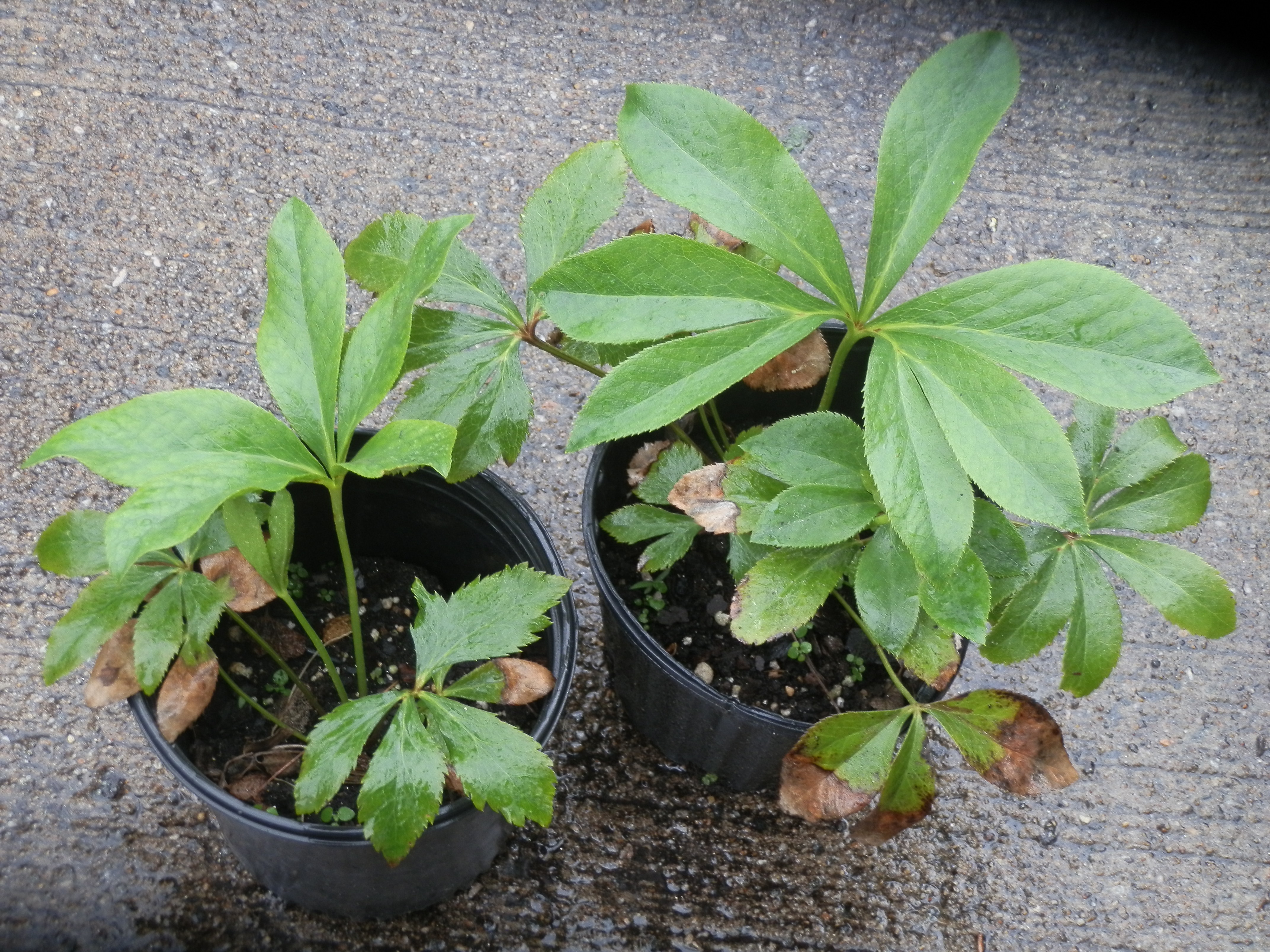
Two yearling Hellebores ready for spring transplanting

Two yearling Hellebores ready for spring transplanting

Ted Manzer teaches agriculture at Northeastern High School.
Posted in foraging | Tagged , , , , , , , , , , , , | 2 Comments

Eastern Redbud is a native spring bloomer that really stands out


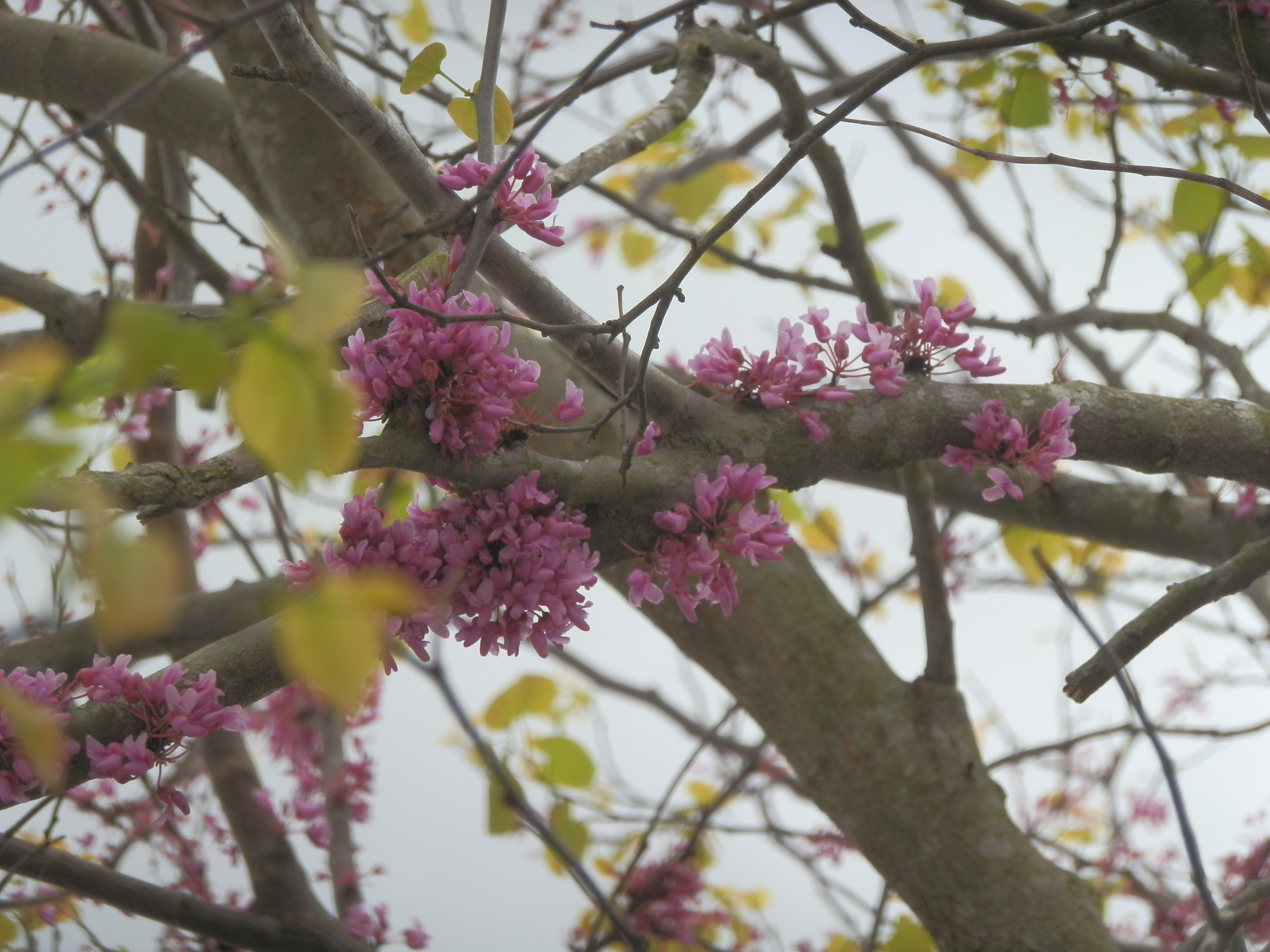
From central Canada to Florida and Texas, this pea and bean relative is hard to miss. Eastern Redbud (Cercis canadensis) packs copious amounts of hot pink to lavender flowers. Sometimes stands of these small trees are so dense that it appears the whole forest edge is pink.
Redbud is a vase-shaped understory tree that can attain heights of 30 feet with nearly similar spread, but specimens rarely get that large. Flowering is much more prolific when the trees receive adequate sunlight, so densest blooming borders open areas.
Redbud is one of the first trees to bloom in spring. Flowers emerge before the leaves and that makes the color even more dramatic. Often the bright color is the only visible sign of life in a brown mass of branches and dead leaves.
Heart-shaped leaves about three inches across emerge singly on dark brown zigzagging twigs. Flat pods resembling snow peas develop from the pink flowers. Some ornamental cultivars have striking purple pods. Each pod contains five to ten dark colored seeds.
Trees are more vigorous at higher soil pH ranges, but they tolerate acid soils if they are well drained. They are often planted as ornamental specimen trees and they are easy to grow. However, transplanting them from the wild is often unsuccessful. The reason for this is they possess a strong central root called a taproot. This taproot is difficult to extract without severely damaging it, so best transplanting results will mean digging smaller trees and always when they’re dormant.
Another name for redbud is Judas tree. According to legend, after betraying Christ Judas Iscariot hanged himself from a branch of a redbud species that grew in southern Europe and around the Mediterranean Sea. It’s interesting that the tree is often in bloom at Easter throughout much of its range.
Redbud flowers are not only beautiful, they are also edible. Some people eat them in salads or steep them in hot water for tea. Some use them to decorate wedding cakes. They are a striking contrast against white icing. I even saw some recipes using unopened flower buds as substitutes for capers.
Young tender pods can be consumed as well, but they should be cooked. If eaten raw, pods are so astringent they will dry out your mouth almost immediately. Native Americans ate the seeds raw and cooked, but I bet they didn’t eat very many at a time if they consumed them raw.
A tea made from the inner bark is a strong astringent too. It’s also quite bitter. Herbalists use it to treat fever, lung congestion and diarrhea.
Extracts from Redbud bark, pods and roots contain chemicals called saponins. Native Americans once used Redbud and other saponin rich plants to kill fish. Although toxic, saponins are poorly absorbed by our digestive system, so most travel though us without incident. Cooking breaks them down too, which helps explain why using them as a snow pea substitute rarely makes anyone sick. Saponins are found in many foods, particularly in the bean family.

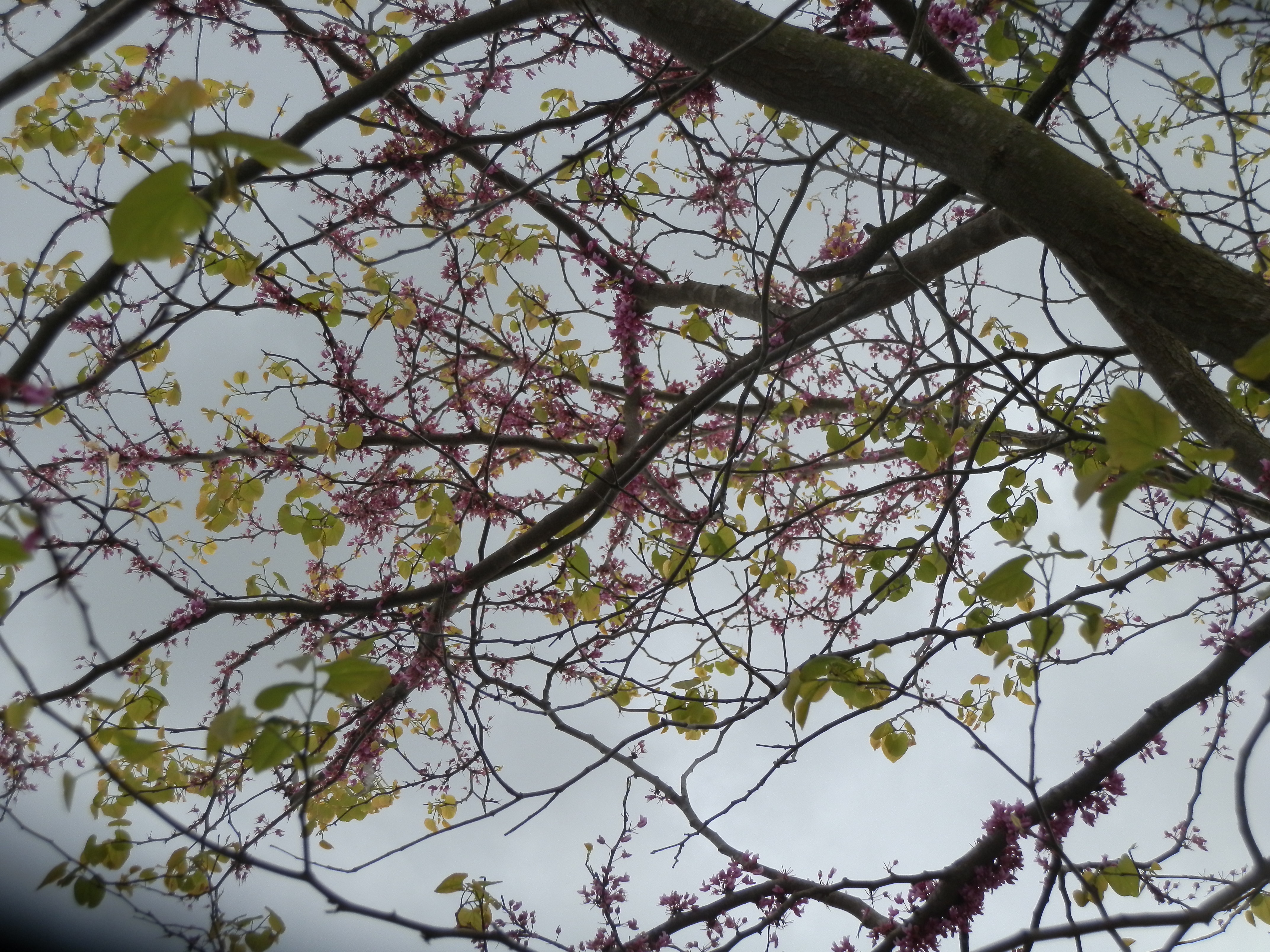
New redbus foiagle beginning to emerge through disappearing bloosoms

New redbud foliage beginning to emerge through disappearing blossoms

Close-up of redbud blossoms

Close-up of redbud blossoms

New redbud leaves emerging on zigzag stems

New redbud leaves emerging on zigzag stems

Ted Manzer teaches agriculture at Northeastern High School.
Posted in foraging | Tagged , , , , , , , , , , , , , | Leave a comment

You can grow stevia at home to satisfy your sweet side


Those of us who struggle with our weight love something sweet at least once in a while. Sugar tastes great and works well in baking, but at 16 calories per teaspoon, most of us must conserve. The substitutes don’t quite taste right and the whole synthetic concept can be a turnoff.
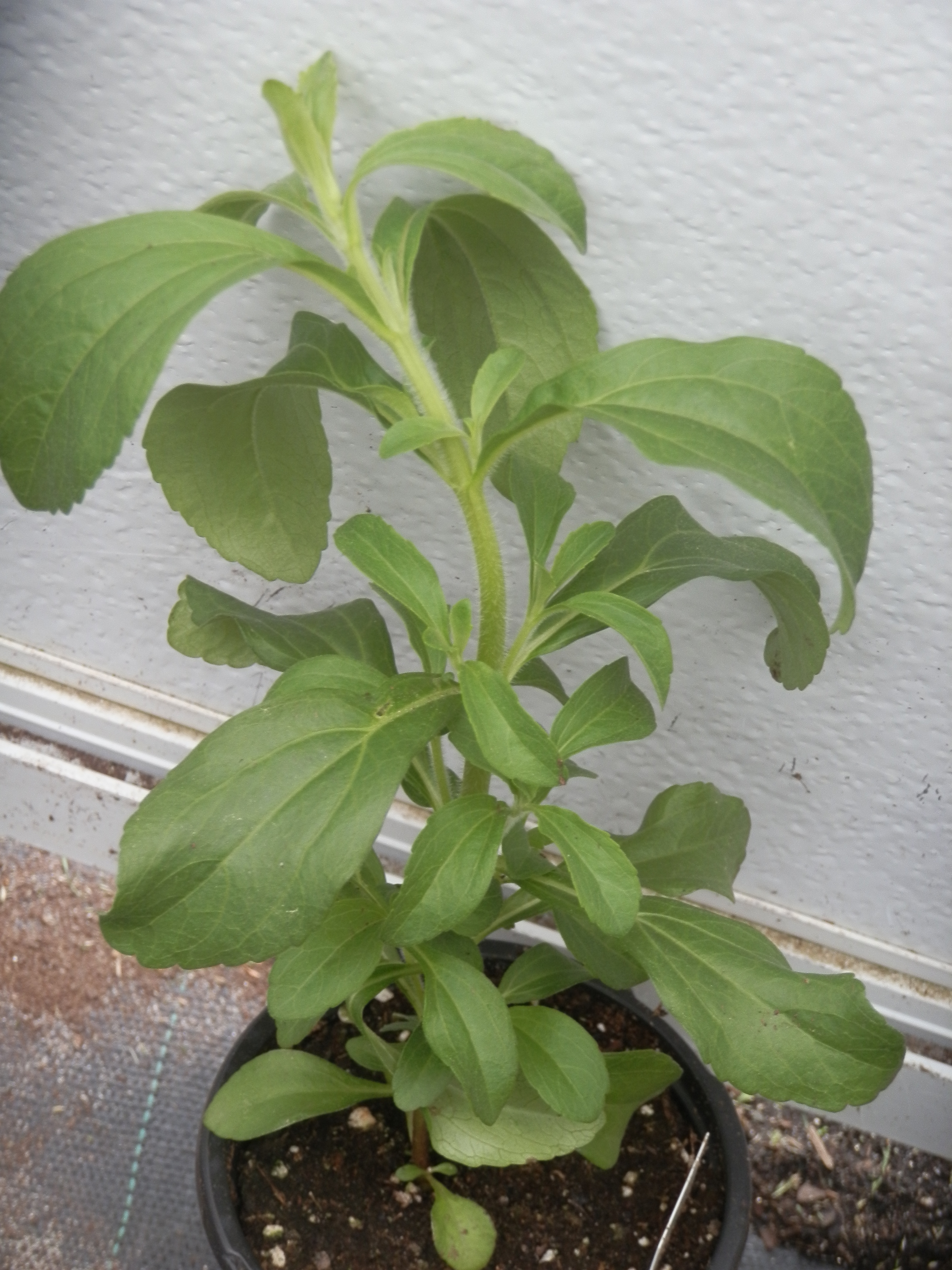
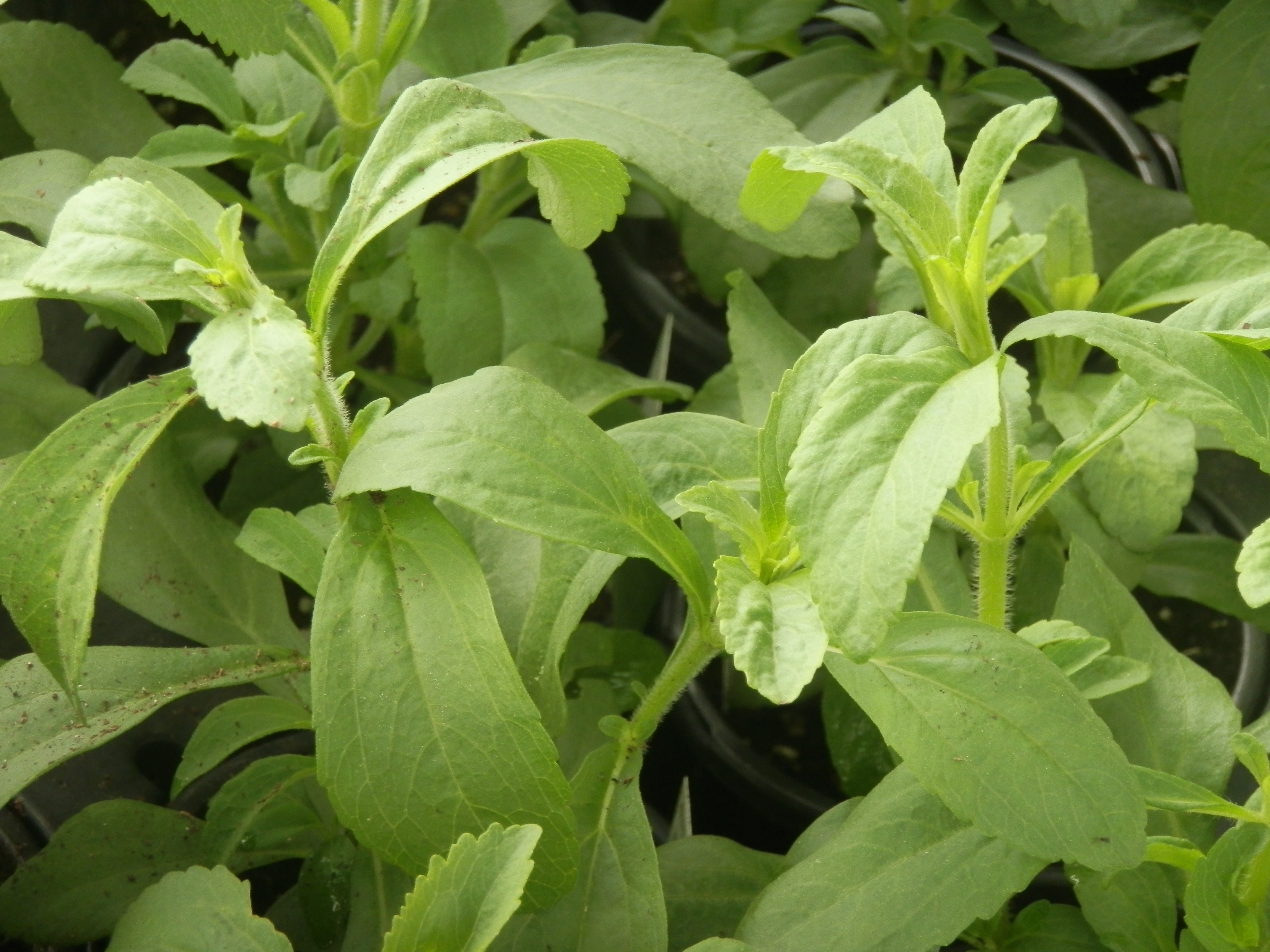
Enter stevia (Stevia rebaudiana). It is a member of the aster family and its dry leaves are 30 to 40 times sweeter than sugar. Leaf extracts can be 300 times sweeter. Stevia is safe and commercial products are in most grocery stores, but the best part is it’s easy to grow.
Stevia can attain heights over three feet but it is easily maintained much shorter. Regular pruning keeps it branched and compact. Plants grow best in well-drained soil and warm conditions. While they are heat lovers, maximum leaf sweetness occurs when temperatures begin to dip in the fall. Stevia tolerates some shade but thrives in full sun.
Leaves emerge from hairy stems in groups of two. The toothed edged foliage reminds many of mint plants but stems are not square. Clusters of small white flowers will appear during the season, but it pays to keep them from developing. Plants lose vigor once flowers mature and produce seed. Keep pinching them back regularly to produce healthy foliage throughout the growing season.
Stevia is a tender perennial that is marginally hardy here with some protection. However, it makes an attractive houseplant in a south facing window. Stevia can be propagated from stem cuttings or from seed. Plants should not be set outdoors until frost danger has passed and soils have warmed well above 50 degrees. Patience pays off.
Stevia leaves can be used fresh or dried. They are delightful fresh for sweetening drinks. They’re great when steeped with tea. Chopping and garnishing fresh leaves on fruit salads adds additional sweetness. Fresh leaves are less sweet than dried ones. However, gram for gram they are still much sweeter than sugar.
Stevia leaves are easy to dry. Bundle fresh stems and hang them upside down in a warm dry location until leaves are crispy. Strip the leaves and crush them into a fine powder. A coffee grinder or other mechanical food processor works great. Generally speaking finely ground preparations are more efficient.
Stevia use has been linked to lower blood glucose levels and some research has indicated it may be better for dieters than other low calorie sweeteners too. Many consider stevia healthy simply because it is natural. Poison hemlock, jimsonweed and Amanita mushrooms are also natural, so I wouldn’t endorse anything if natural was its only attribute.
Stevia has been used as a sweetener throughout much of the world for centuries, but it’s relatively new to this country. The FDA regards stevia as safe. However, nausea, bloating, dizziness, muscle pain and numbness have been reported by people after ingesting it. I have experienced no ill effects from fresh, dried or processed stevia and will continue to buy it as well as grow it myself.

Developing young stevia plant

Developing young stevia plant

Mass of stevia plants at our school greenhouses

Mass of stevia plants at our school greenhouses

Ted Manzer teaches agriculture at Northeastern High School.

Posted in foraging | Tagged , , , , , , , , , | Leave a comment

Pineapple guava makes a showy edible hedge


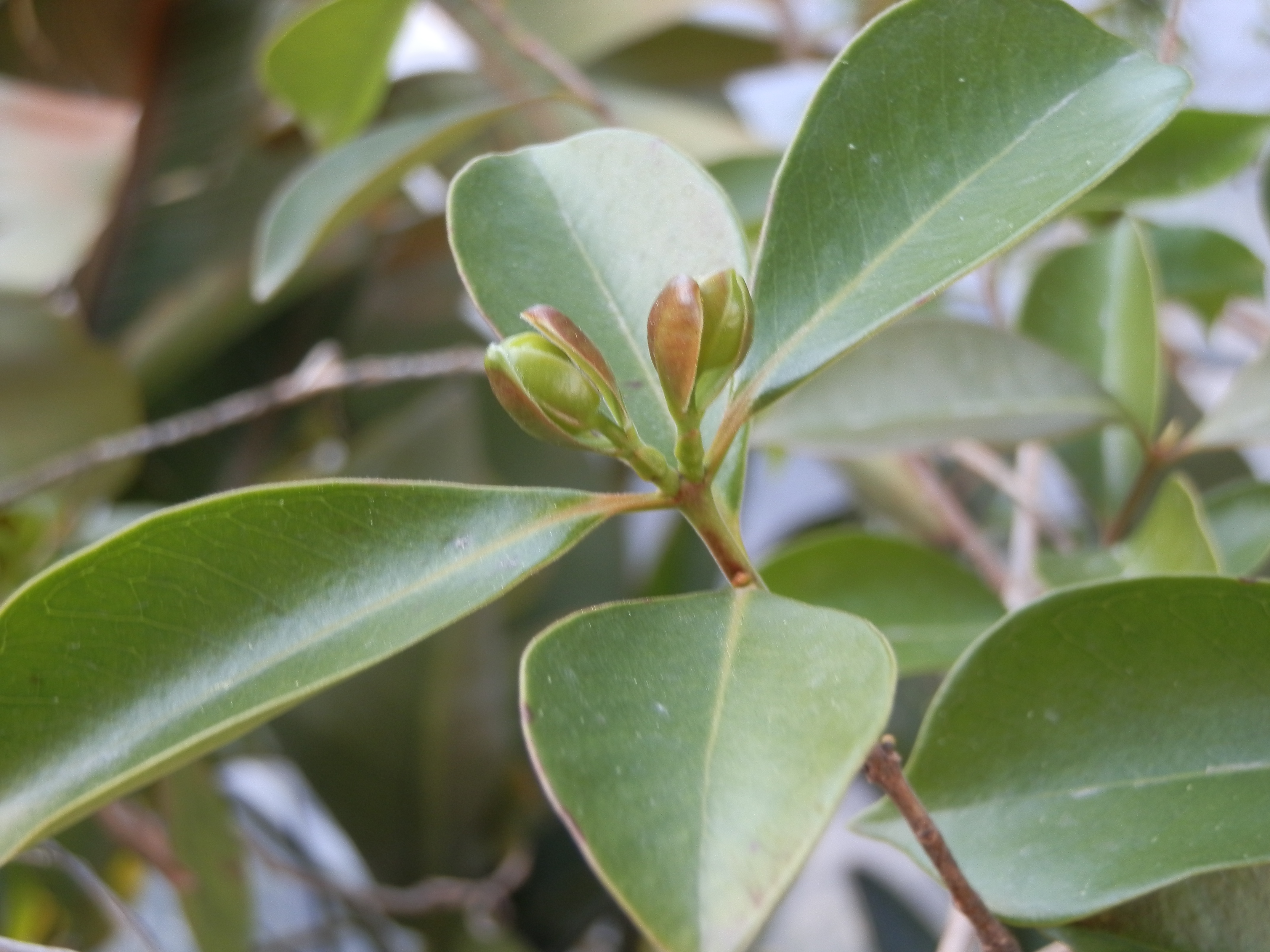
I’m always on the lookout for unusual adaptable landscape material. Recently a couple showed me their yard and on one edge was a beautiful hedge of pineapple guava. Even after our recent severe cold the foliage looked healthy. This excited me since we are roughly at its northern hardiness range.
Pineapple guava, sometimes called feijoa, makes a large showy hedge or it can be used as a specimen plant. Shrubs are roughly ball-shaped and grow 15 feet tall. Growth rate is relatively slow. They also perform well in a large container but will be much smaller.
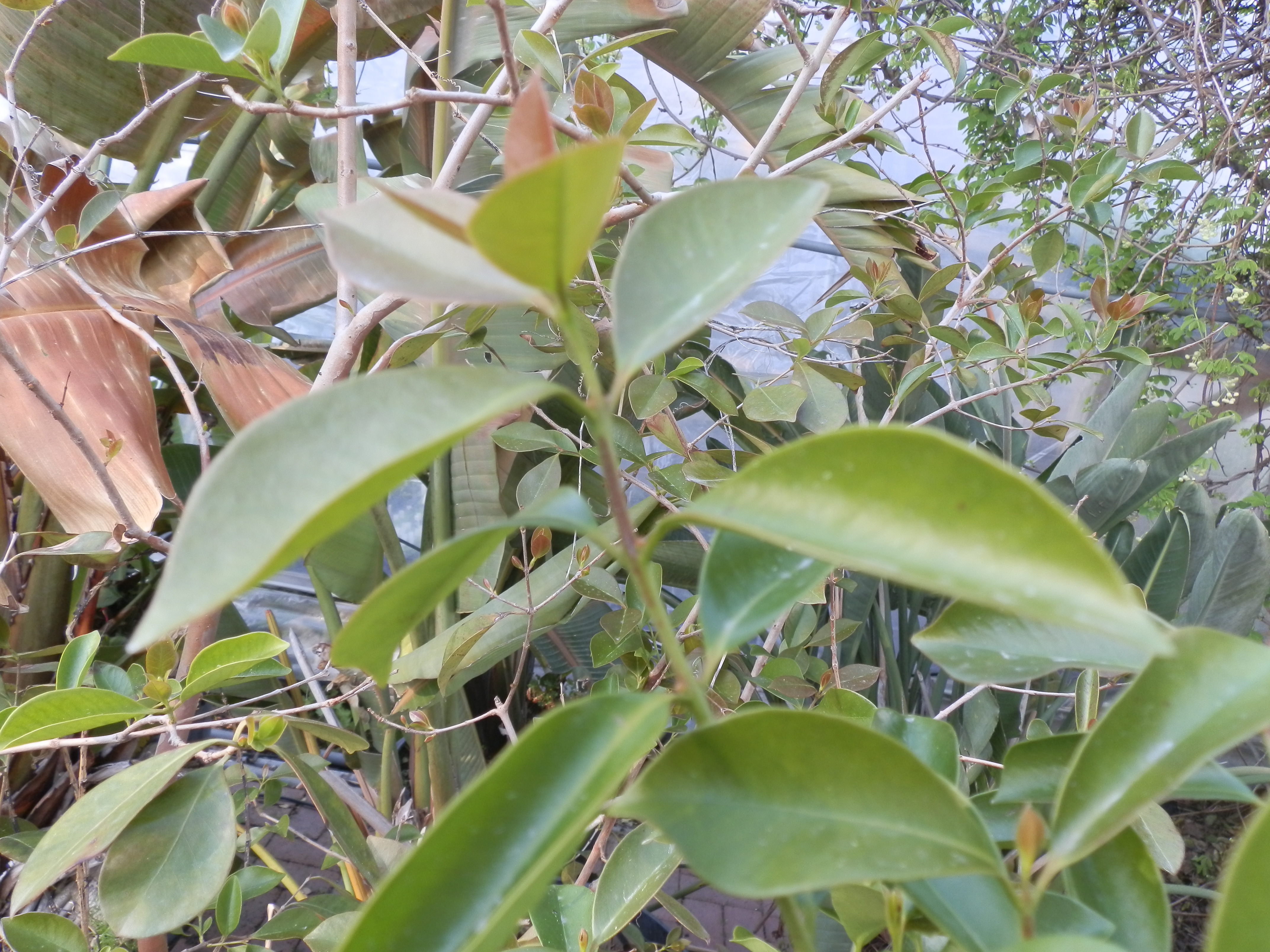
Leaves are thick, oval and silvery green. They remind me a little of olives and emerge from the stems in groups of two. Being tightly packed on the branches, the foliage gives plants a thick full appearance. These shrubs respond well to heavy pruning but this reduces fruit set.
They perform best in full sun, but tolerate some shade, particularly in the hot afternoon. Plants adapt to a wide range of soil types and moisture regimes. Once established, feijoa tolerates drought well. However, with heavy fruit set they might benefit from some additional water in dry years. Individual plants will set fruit, but fruiting is better if there is crosspollination.
In spring the bloom is spectacular. Flowers remind me a little of fuchsia with their bright colors and similar shape. Petals are pink and the centers are bright red. Flowers are also edible and can be used on salads, as cake decorations or eaten like candy. They even make a great jelly. Birds love them too, so you might have to compete for them. Bees and butterflies flock to them too.
Oval fruits two to three inches long ripen in fall and are another plus. Fruits have a greyish-green skin and yellowish flesh. Full flavor resembles a mixture of tart pineapple, mango, strawberry and papaya. Gritty texture is similar to pears. Seeds are tiny and edible. Use fruits promptly after cutting or immerse them in lemon juice so they won’t brown.
Usually fruits fall when they are ripe and the insides become jelly-like and somewhat clear. A good way to harvest is to place a tarp under them and gently shake the shrubs to let the ripe fruits fall.
Each fruit is only about 25 calories and there are roughly 40 calories per half cup (100 gram) serving. They are also high in vitamin C. Lycopene, an antioxidant found in tomatoes is also present in pineapple guava.
One great quality of these shrubs is that deer leave them alone. Insects and disease aren’t normally a major issue either. They even tolerate salt spray fairly well and make a great windbreak. Being evergreen they are attractive in every season.
I think they have great potential for eastern North Carolina as they are tough and easy to grow. They also aren’t invasive and won’t take over an area. Slow growing shrubs are in demand and when they also are deer resistant that makes them even more intriguing.

Pineapple guava foliage making a comeback after a hard winter

Pineapple guava foliage making a comeback after a hard winter

Hopefully flower buds weren't damaged

Hopefully flower buds weren’t damaged

Ted Manzer teaches agriculture at Northeastern High School.
Posted in foraging | Tagged , , , , , , , , | Leave a comment

It’s Easter, so what’s the deal with bunnies and eggs?


Hopefully Christians all know why we celebrate Easter. The crucifixion of Jesus and his resurrection three days later are the most significant events in the history of Christianity.
So how did we get to the multimillion dollar industry featuring bunnies and painted eggs? If you answered that it came from Pagan celebrations you are right. We associate rabbits with spring and countless rabbits are bred for spring adoption by youngsters. Likely most of them will be abandoned or deceased before summer is over, but that’s another story.
Supposedly Eostre, the German Goddess of Spring, traveled with a hare. It symbolized fertility and rebirth and rabbits have quite a reputation for their fecundity.
We have also named the female hormone estrogen after this fertility goddess who was also known by the names of Eastre and Ostara. Later Christians hijacked the rabbit symbol, likely to draw more followers into the fold and the Easter bunny was born.
Eggs are also symbols of fertility for many Pagan rituals. According to numerous sources they were also once forbidden for consumption during the Lenten season. In medieval times they were painted and consumed after Easter. Another association is that early Christians believed egg hatching symbolizes Christ’s resurrection. It sounds like a stretch to me.
So why does a rabbit distribute eggs in decorative baskets no less? Rabbits don’t lay eggs. They don’t even eat them or baby chicks either. Yet, nearly every Christian society has stories of egg toting lagomorphs.
We are all taught from a young age how meek and harmless rabbits are. Most gardeners will sing a different tune. Rabbits can be destructive to young flowers and vegetables. I’ve had many battles with them and generally have lost.
I have to grant rabbits one thing though. They are tasty critters and I’ve eaten my share of them; so have my cats and dogs. I’d have to say my favorite recipe is to cook them with onions and garlic and add sour cream right before serving. It’s delicious!
That said, I don’t think I’ve put much of a dent into their population. Their reproductive productivity is staggering, much like mice and many other small herbivores. They form a staple of food for the whole food chain. Our predator populations greatly suffer during times of low rabbit populations.
Why are rabbits so prolific? Gestation for rabbits is thirty-one days and females can become pregnant almost immediately after giving birth. They are what we call induced ovulators, which means the mere reproductive act causes a female to release eggs. There is no estrous or menstrual cycle.
Rabbits are also efficient with their food, so efficient they often run it through their system a second time. We call that coprophagy and rabbits can salvage large amounts of otherwise lost nutrients that way. Don’t try this at home.
As for their Easter season significance I’ll take a pass. Christ is what should be on the minds of Christians. However, we can still appreciate the contributions rabbits make to the circle of life. It’s also hard to turn down a good chocolate bunny or egg.

Ted Manzer teaches agriculture at Northeastern High School.
Posted in foraging | Tagged , , , , , , , , , , , | Leave a comment

My Moment of Proof


It’s Easter weekend and we believers need no convincing. Many can point to an event in their lives and swear they witnessed a miracle. It doesn’t matter what skeptics might say or any evidence to the contrary, the moment is galvanized in the human brain and nothing can dislodge it.
In early August twelve years ago I lost my father-in-law to a rare neuromuscular disease called amyloidosis. He suffered with it for years as it continued to go undiagnosed. When doctors finally identified the problem it was too late, but even in the ten or so years he dealt with it he continued to enjoy the outdoors, particularly hunting.
Ezra (Jr.) Minney was an exceptional hunter who had great respect for the game he pursued, particularly the white-tailed deer. His casket was even adorned with deer paraphernalia. Though his hunting success tally was in the hundreds over his lifetime, he saved every antler, even pathetic spike horns. He kept all but the most impressive ones in boxes in the barn, where he would use pieces of them to fix knives and such. It was amazing how he could tell where each was bagged, what gun was used, and particulars of the hunt for all his and his wife’s mementos. Elloise Minney was a crack shot herself, maybe a better marksman than he.
In his last year the debilitating disease robbed him of any hunting activity, but he never tired of listening to or telling stories. My children sucked them up. As I watched him decline I never noticed he showed any bitterness of his situation. While he didn’t attend church regularly, he never lost faith that the Lord was with him. Anyone who knew him had no doubt he was a believer.
I’ve been a Christian and have accepted Jesus Christ for as long as I remember. I can’t really recall any one incident that made me believe, I just did. If I ever had any doubts, though, they surely would have been erased on that blistering hot day of Ezra’s funeral. It was about 95 degrees and the funeral home was about a ten mile drive from the cemetery. I needed a spiritual lift and the Lord provided it to me.
Anyone who knows anything at all about deer can tell you that they seldom are seen in the middle of the day standing out in the open in 95 degree weather. The scene was eerie. We had to have seen over forty deer, mostly large bucks, in that short stretch of road. Many were standing but a few feet from the pavement as we passed, and the spectacle wasn’t lost on a single member of the precession. For several minutes ‘did you see all those bucks?’ was all anyone could say.
I’ve never seen anything like that before or since, even under conditions favorable to seeing deer. Watching those majestic creatures stand there in reverence still gives me chills. Some might laugh at my story but I don’t care. It might not be comparable to bringing Lazarus back from the dead, healing the blind, feeding a huge mob with two fish and five loaves of bread, or any other miracles mentioned in the scriptures, but this was a miracle of sorts Jesus gave me. It sure helped ease the pain of losing one of the finest men I’ve ever met.

Ted Manzer teaches agriculture at Northeastern High School.
Posted in Uncategorized | Tagged , , , , , | Leave a comment

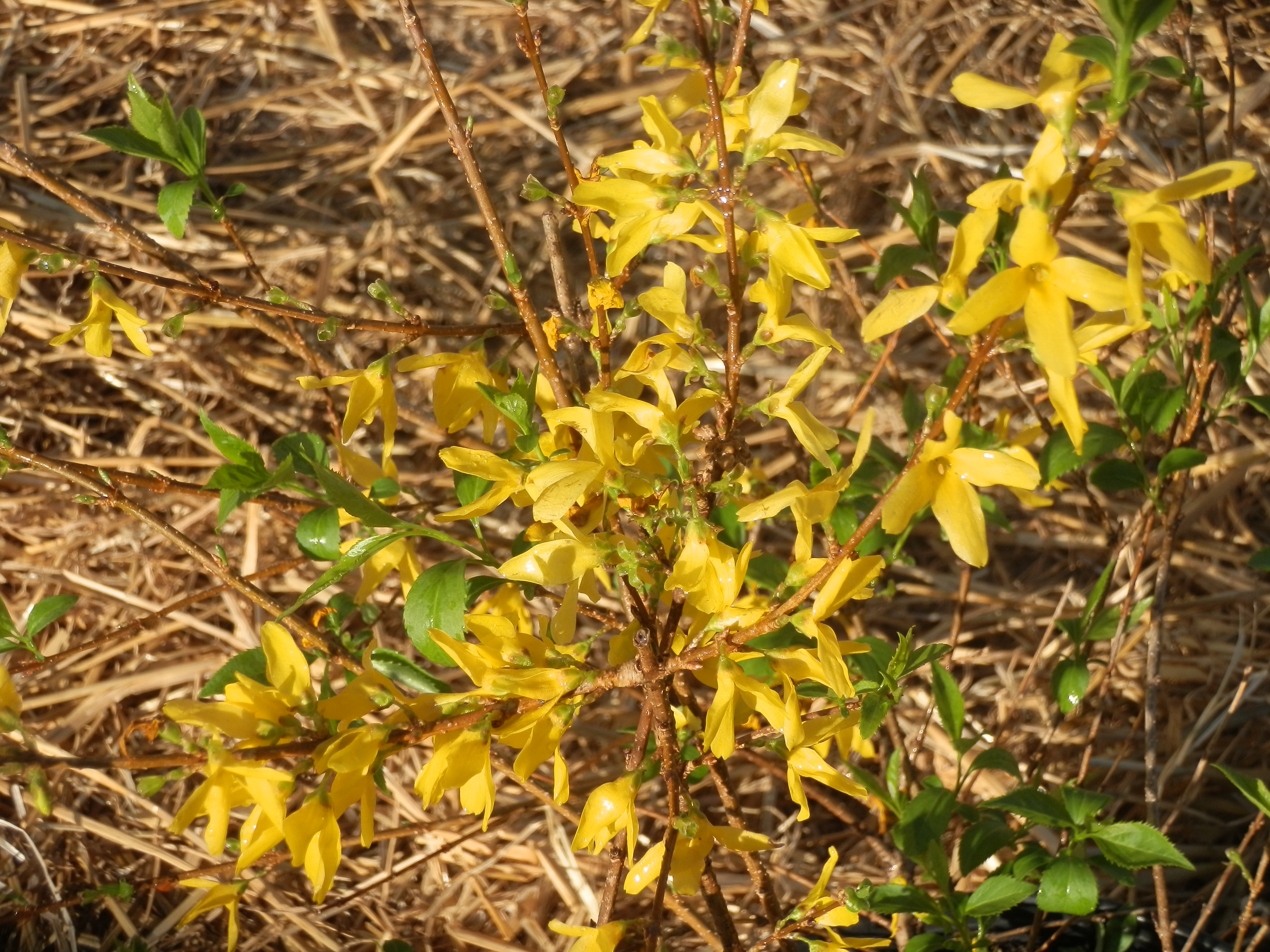
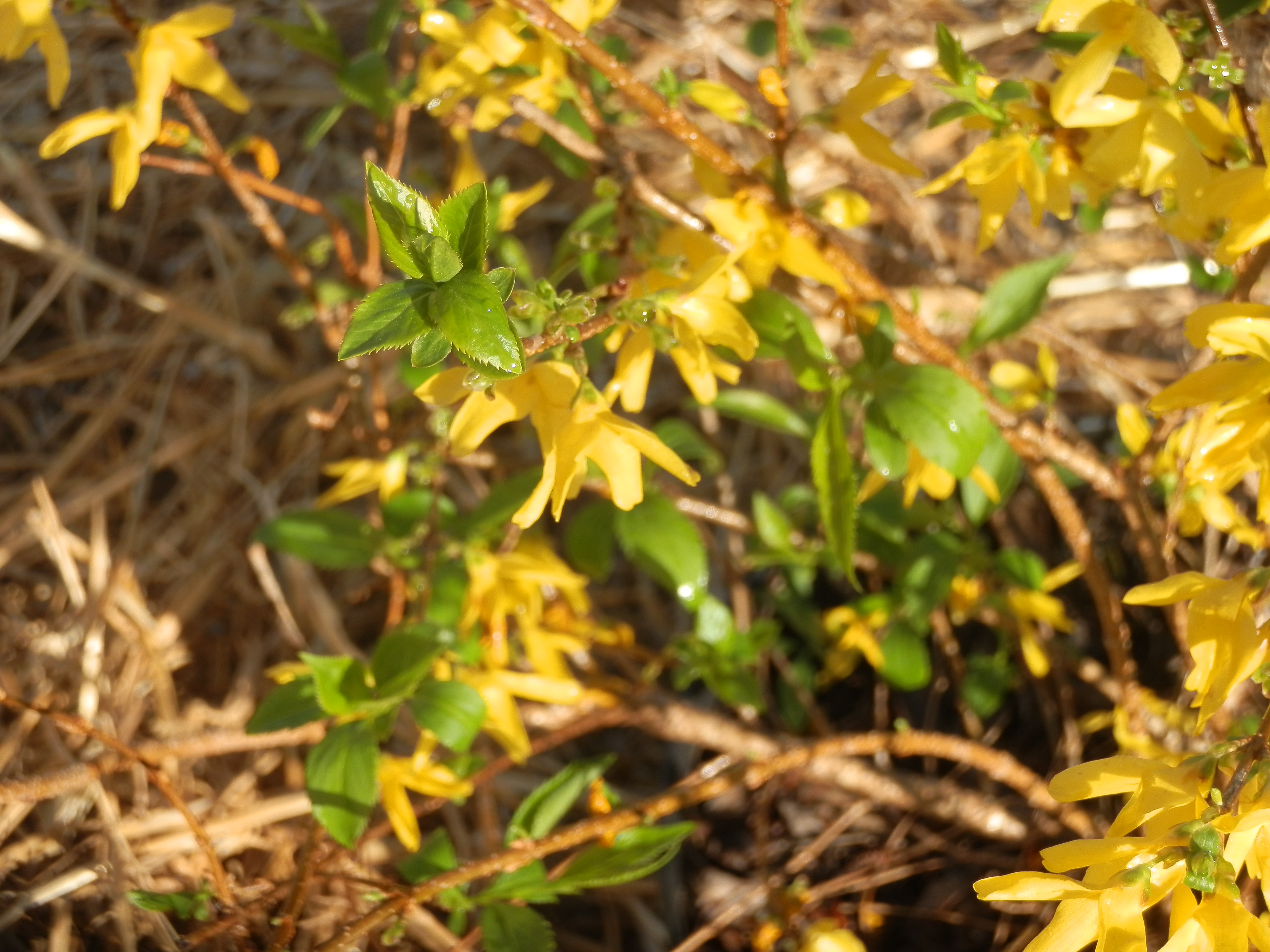
Forsythia bushes now signal spring


I always look forward to an explosion of yellow forsythia blooms every spring and the mass of color can be quite dramatic. They are often the first of the spring blooming deciduous shrubs, and after a hard winter they are very welcome. They also signal all the spring garden chores are imminent. Weeding, preparing ground and pruning are just a few.
Forsythia should be pruned shortly after blooms fade. Unfortunately, that often doesn’t take long. The mass of yellow only lasts a couple weeks, so enjoy it while it’s here.
Forsythias (Forsythia intermedia) grow best in moist but well drained soil. Prolonged periods of wet soils stress the plants. Drought can sometimes be a problem in mid-summer, particularly in southern climates.
Flowering will be more dramatic if these shrubs are allowed to grow in a natural, semi-wild state. They can be formed into a hedge but the bloom will suffer. Regular thinning is necessary to produce strong new stems and more flowers. Forsythia only blooms on one-year-old wood.
Forsythias grow to be large shrubs and a common problem is placing them too close together. They can easily overpower some of the other landscape plants. They’ll compete with each other too and the result is spindly growth. They are best used on property borders or as accent plants and should be allowed to retain a somewhat wild flowing shape, thinning out the weak stems.
Periodically renewal pruning (cutting all stems down to the ground) is necessary to retain vigorous shoots which produce more flowers. You should never do this in the fall. In fact, avoid any forsythia pruning past mid-spring. That way you still have ample growing season to generate plenty of young wood. One reason I like them as an ornamental is that they are non-invasive. I’ve rarely encountered them in areas where they were not actually planted.
These shrubs need full sunlight to bloom. Most sources recommend at least six hours of sun. Sometimes landscape trees shade them enough to suppress flowering and shrubs should either be moved or removed. If plants are large bloom might have to be sacrificed for a year. Forsythias always should be moved when dormant and severely pruned when moved.
Sometimes harsh winters can severely affect forsythia bloom. Plants are hardy to zone 4 but often bloom is spotty. I remember many years growing up in Maine where forsythias wouldn’t flower above the snow level, so they often were spectacular following winters with deep snow. During relatively open winters they sometimes never bloomed at all.
Forsythia flowers are pretty in landscapes and table vases. They also add color to a salad. Many sources recommend them, as they are quite pleasing to the eye. I’ve also seen simple recipes for making forsythia flower syrup. While the flowers are edible and have a delicate aroma, they are on the bitter side. Forsythias aren’t on my consumption list despite the history of Asian medicinal use of several forsythia species.
During the bulk of the season these shrubs aren’t spectacular. Some may even wonder why folks plant them. Forsythias only bloom for a week or two and then only if you don’t manicure them much. That said, they sure ring in spring.

Forsythia a little past is peak of flowering

Forsythia a little past is peak of flowering

New leaves are beginning to take over.

New leaves are beginning to take over.

Ted Manzer teaches agriculture at Northeastern High School.
Posted in foraging | Tagged , , , , , , , , , | Leave a comment

Why can’t landscapers refrain from using weedy ornamental pears?


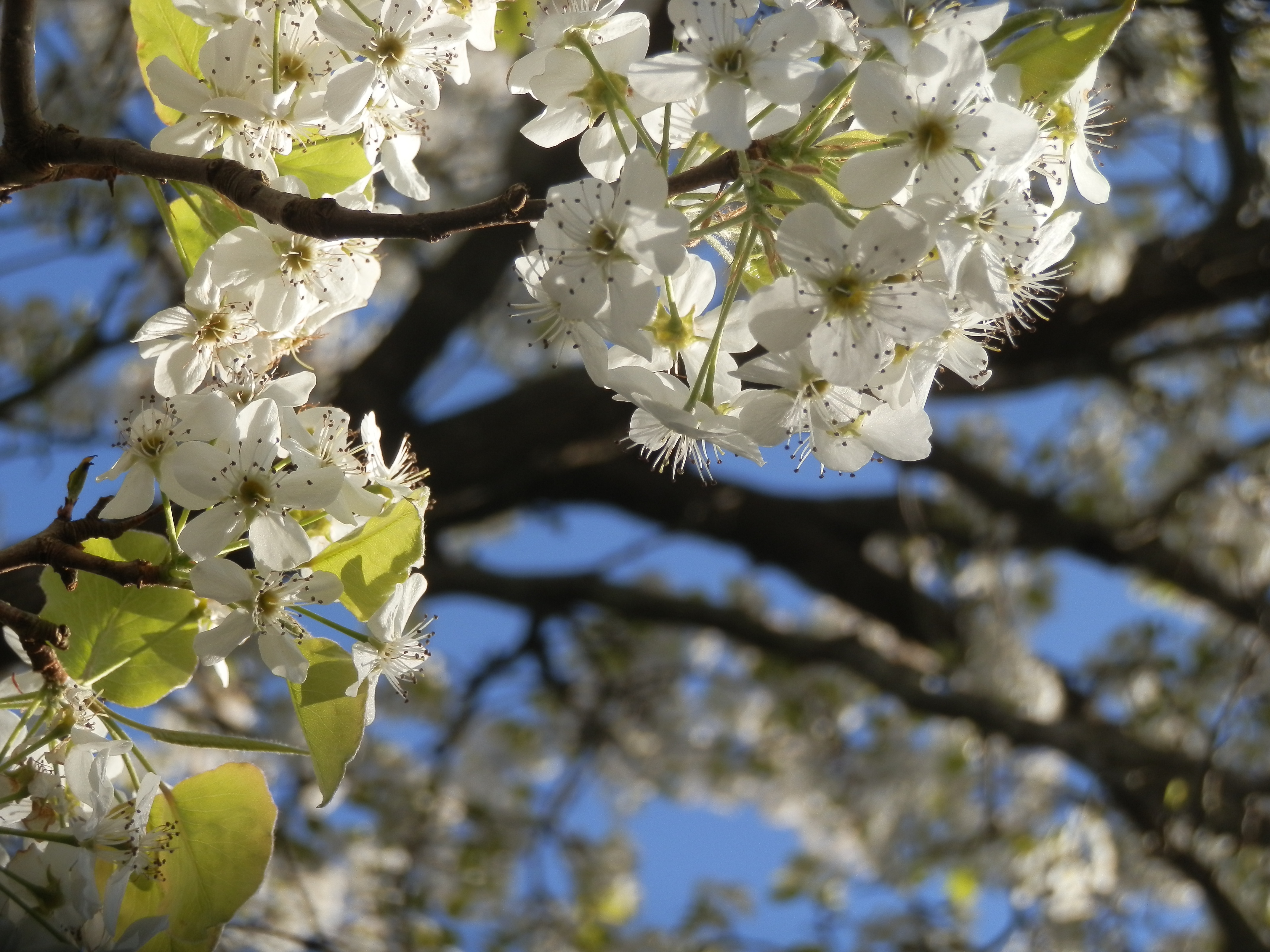
We need some warm spring weather to rid us of those fetid white blossoms on the ornamental pears (Pyrus calleryana). While the bloom can be spectacular, I dread the musky fishy stench every spring. It’s even worse than that of the American Chestnut in the summer.
We call them ‘Bradford’ pears, although that is just the most common cultivar. Correctly called callery pear, they are a fast growing tree with smooth triangular to nearly round dark green leaves and a symmetrical shape. They usually require little pruning to maintain that but would benefit from some thinning out to lessen their susceptibility to wind damage.
Callery pear is native to China and was introduced for potential use as rootstock for cultivated pears. Scientists planted thousands of seeds and selected one vigorous, non-spiny seedling and named it “Bradford”. The ‘Bradford’ cultivar proved to be an attractive landscape specimen with a symmetrical growth form, showy flowers and shiny foliage.
It was also pest resistant and was nearly resistant to fireblight. Furthermore, the original selection was not self-pollinating, which meant it produced no fruit or seeds. Grafting was easy and soon these pears adorned numerous landscapes, commercial and residential.
Unfortunately, it didn’t end there. Other callery pear cultivars were developed and introduced into the nursery trade. Crosspollination resulted and the rest is history. Seeds spread everywhere and this demon escaped to torment us all. Their progeny have sharp thorns and reproduce at a rate that would make any rabbit or feral cat jealous. The spread of callery pear along roadsides and the edges of fields was first noticed in southern Maryland and around Washington, DC. Now they are considered among the most invasive of all landscape plants nationwide.
I honestly can’t comprehend what would possess someone to plant one, particularly around here in Hurricane Alley. The wood is brittle and trees branch at acute angles and form dense crowns. This contributes to a bad scenario. They split and pieces wind up on the lawn after every significant summer storm. Misshapen trees result and fruits a little larger than garden peas litter the sidewalks. While they aren’t poisonous, these little pomes don’t make acceptable table fare except to birds which disseminate them all over the countryside .
Bradford Pears once adorned the front lawn of Northeastern High School. I remember back in the fall of 2003 I took my horticulture class out for a walk right before Hurricane Isabel. I told the kids that if the storm was anything like it was advertised they would never see those trees standing again. Only one tree is left, probably because that specimen received a little shelter from a big willow oak tree on one side and the school building on the other.
Do these trees have any redeeming features? Well, they are cheap, grow quickly, have nice reddish purple fall color and the birds like the astringent little fruits which taste like unripe persimmons. Other than that the answer is no.
Redbud, serviceberry, dogwood, flowering cherry and crabapple are suitable spring-flowering substitutes, though dogwoods usually struggle in sunny places and we are pushing the southern limit for serviceberry. Crape myrtles bloom later in the year and are adaptable and attractive, though arguably overused. Chinese elms are nice, but don’t offer the showy bloom of the others. Still, nearly anything would be better than Pyrus calleryana regardless of the cultivar.

Showy callery pear flowers aren't so inviting to olfactory senses

Showy callery pear flowers aren’t so inviting to olfactory senses

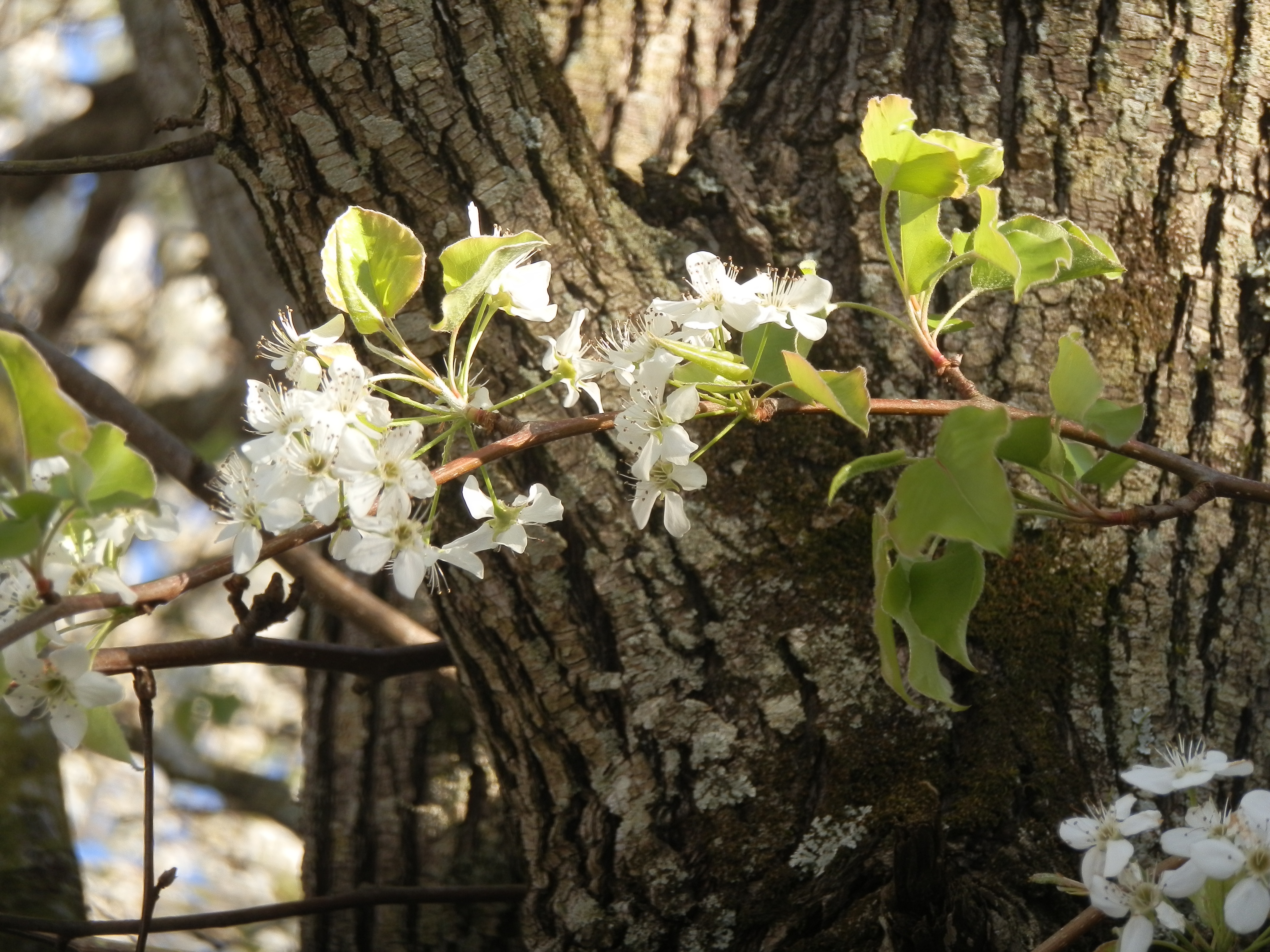
Thank the Lord new foliage is starting to emerge and these flowers will soon be gone.

Thank the Lord new foliage is starting to emerge and these flowers will soon be gone.

Ted Manzer teaches agriculture at Northeastern High School.
Posted in foraging | Tagged , , , , , , , , , , , , , , | Leave a comment

Now is a good time to clean those pests off your houseplants


Most people don’t like to spray pesticides inside their homes. I don’t blame them. I do like houseplants but so don’t certain insects and other critters. Sometimes we can use soil applied granular chemicals, but some people with pets are even hesitant to do that.
One method I sometimes use is soaping foliage in the shower with a mild dishwashing detergent. I leave the lather on the plants for a while. Then I rinse it off and send the nasty critters down the drain. This technique works great for a small number of plants. However, some people feel funny about using their shower as a plant washing station.
With recent milder weather we can treat our plants outside, either with commercial pesticides or the soap treatment. Either way, doing it outside eliminates some of the odor and mess. If we get several mild nights we can even let them stay outside for a while. If you do this make sure to keep plants out of direct sunlight. You’d be surprised how different light intensities are, even in a well-lighted south-facing room.
I have found the biggest culprits of houseplants to be mealybugs, spider mites, scale, and fungus gnats. With the exception of fungus gnats they are all difficult to control. Scale, mealy bugs and spider mites often require multiple treatments.
Fungus gnats are pretty easy. The first step usually involves reducing soil moisture levels. This is most important as these insects feed on fungi growing in the soil. Eliminating that alone is often enough to control them, but most insecticides are effective as is the soap treatment.
The other three require systemic insecticides, since those three arthropods have sucking mouthparts. This means they feed from inside the plant. Systemic means the chemicals are absorbed into the plant and aren’t simply resting on the leaf surface.
Acephate and Imidacloprid are two chemicals that are effective and labeled for most houseplants. They are also readily available and don’t require a pesticide applicators license. The most common application method is to spray the foliage completely. Usually two or three applications at ten to fourteen day intervals are recommended.
Another option is to use soil applied granules and add additional soil to cover the residue. These usually can be effective for several months. Sometimes I use an initial soap cleaning followed by systemic granules. This is also effective for aphids, which often attack tropical hibiscus, especially the flowers.
It is important not to exceed labeled rates. They are established through thorough research. Never assume if a little is good, then more is better. Many chemicals are toxic to plants at higher levels and they certainly can be unsafe to people applying or living around them.
I try to minimize my use of pesticides, but sometimes they are the best option to control pests on your houseplants. Always keep records of what, when and how much you applied. Also, it’s helpful to rotate chemicals and not use the same pesticide all the time.

Ted Manzer teaches agriculture at Northeastern High School.
Posted in Uncategorized | Tagged , , , , , , , , , , | 1 Comment