Peonies are an old fashioned flower with a sweet scent


A few weeks ago I wrote about lilacs. Many northern transplants love lilacs and often have difficulty growing them here in eastern North Carolina. Peonies are herbaceous perennials with fantastic aroma. However, they also struggle with our hot summers.

When I was a kid I remember my grandparents had a couple clumps in their front yard. They were awesome. I still remember how nice they smelled. Their plants always seemed to bloom around Memorial Day, when we often visited.

It’s a shame peonies don’t have a long blooming period. They are also expensive so they often aren’t used much in landscaping. Peonies sure have longevity though. It’s not uncommon for established clumps to be over a hundred years old.

When I was in Maine last summer I remember reading a local newspaper article about some century old peonies being stolen from the Presque Isle Historical Society. Somebody just dug them up and hauled them off. I don’t know what kind of person steals flowers, but they were valued at over $1000.

Peonies come in a range of colors, though combinations of white and pink are most common. Plant height of different varieties can vary substantially. Flowers are usually large and come with different types of blooms.

Singles have the fewest petals with a large center containing the male and female parts. Japanese and anemone types have many of the male parts transformed into petal-like structures. Semi-double and double peonies have multiple rows of petals and bomb-double types have long blooms which don’t produce any pollen.

These aromatic beauties are most adapted to sunny locations with well-drained soil. Unfortunately, in eastern North Carolina we are at the southern range of their adaptability. Peonies, like lilacs, are better adapted to northern locations. They even tolerate winter temperatures as cold as -50F.

Southern growers must cheat on the sunlight a little and try to avoid the afternoon heat as much as possible by providing peony plants a little shade. The problem is that if we reduce the light too much they won’t flower. They also may develop weak stems and fall over.

Most peonies should have some type of support. Large flowered cultivars are especially susceptible to wind damage. I find that tomato cages work well. Foliage generally covers the wire and the cages protect against our strong winds.

Generally, peony plants are pretty low maintenance. They rarely need to be divided. In fact, constantly splitting them up will lead to their downfall. That’s probably one reason peonies are so expensive. Newly divided plants likely won’t bloom for at least two years, so once plants are established they should be left alone.

It seems everyone wants plants that bloom constantly. That won’t happen with peonies. Their blooming season is short, so peony enthusiasts often grow several varieties. People who love irises and daylilies often did the same thing before continuous blooming cultivars became available. Many folks still do.

Maybe one of these days someone might develop a re-blooming peony cultivar. I’d love to enjoy that peony fragrance throughout the entire growing season.

Attractive single peony showing all flower parts

Attractive single peony showing all flower parts

Ted Manzer teaches agriculture at Northeastern High School (tmanzer@ecpps.k12.nc.us).

Posted in Uncategorized | Tagged , , , , , , , , , | 1 Comment

Native plants can be invasive too


There is a new landscaping trend to incorporate more native species. In general I am in favor of that, but people need to learn a little about terminology before embarking on a drastic revamping of their environment. Just because something is native doesn’t mean it won’t have weedy qualities.

Most of our troublesome weedy species are exotic species. That just means they were brought here from some other place, most likely Europe or Asia. Many have become naturalized and people don’t even consider them exotic. Queen Anne’s lace, gaillardia and yarrow are examples.

Plants that are invasive spread and choke out less aggressive native ones. This reduces the genetic diversity and that can cause a variety of problems. The same can be said for invasive exotic animals like nutrias. Invasive species change the environment.

Think of your lawn. Let’s say crabgrass, an exotic annual weed, gets established and chokes out much of your desirable perennial lawn grasses. Bare spots will develop and more weeds can come in and add to the carnage. Similar scenarios occur in our wild areas but we are usually unaware of it.

In past history we have polluted our environment with exotic plants such as kudzu, multiflora rose, wisteria, Japanese honeysuckle, several privets, and countless other trees, shrubs, vines and herbs. Some have simply escaped cultivation. Others were purposely planted for erosion control.

Whenever a single species dominates an ecosystem bad things happen. Animals that depend on certain plants for their survival begin to disappear. We don’t care about this until the struggling species are dear to us.

This brings us back to protecting native species. Some are just as bad as the exotic ones. At our greenhouse plant sales I’ve had people request trumpet vine and Virginia creeper. These are two strongly invasive native species. Once you have them on your property you’ll never get rid of them. They’ll climb all over your house and shrubbery. Passion vine can be put in that group too.

Poison Ivy is a native plant, but we don’t need to encourage it. It invades enough on its own. Copperheads and timber rattlers are native species too, but we’d rather they stay in less populated areas and not take up residence near our homes.

I haven’t received any requests for poison ivy, but people have inquired about Joe Pye weed, ironweed, hemp dogbane and goldenrod. Ask any cattle farmer about the headaches caused by any of those species. I know my father-in-law struggled with all of them.

In general, I must admit that most native species don’t overpower their environment. For that reason I am firmly in the corner of native plant enthusiasts. My only qualm is when people make statements that all natives are good and all exotics are bad.

Not all exotic plant species are invasive. Too often people use the terms exotic and invasive interchangeably. Exotic simply means the plants were imported from somewhere else and invasive means they have a tendency to spread all over the country. Some native species do that too.


Ted Manzer teaches agriculture at Northeastern High School (tmanzer@ecpps.k12.nc.us).

Posted in Uncategorized | Tagged , , , , , , , , , , , , , , , , , , | Leave a comment

Taking steps to prevent mosquitoes is just smart


We’ve had some wet weather in eastern North Carolina this spring. Everyone knows that standing water means more potential mosquito breeding grounds, but we don’t always realize other things besides low spots also fill up with water. Old tires, bottles, cans, buckets, toys and anything else that holds water is a potential mosquito breeding haven. It’s a good idea to dump standing water in bird baths and plant drain trays every few days too. Don’t let those larvae develop.

Even backyard ornamental fountains with reflection pools can be breeding grounds for mosquitoes. Keeping fish in these pools can be an effective means of control. Encouraging predatory insects like dragonflies can be helpful too. Keeping swimming pool water treated is also important even if the pool is covered and not in use.

Eliminating breeding habitat is not 100% effective, but it’s a low cost safe way to cut down mosquito numbers, which reduces the amount of times we get bitten. Other insects and related arthropods can be a problem, but mosquitoes seem to be our number one foe.

Why do we need to be concerned about these blood sucking pests other than our own personal discomfort? Mosquitoes spread many serious diseases. They are the mechanism that our pets become infected with heartworms among other things.

Potential human problems such as the Zika virus encephalitis and West Nile virus are concerns too. Zika virus has been in the news a lot lately, likely because the Olympic Games will be played in Rio de Janeiro. This virus is of great concern in Brazil and it has affected thousands of people.

Simply removing most of the mosquitoes won’t save us or our pets from these problems. We need to treat our pets with heartworm preventative anyway. They will get bitten. If they don’t die of something else, heartworm has a good chance of killing them eventually if they remain untreated. Attacking adult heartworms is not always effective for a multitude of reasons. It’s certainly not the best option.

Protecting ourselves with insecticide is smart as is trying to lessen our exposure. Sealing cracks around doors and windows is also helpful. While there are many mosquito repellents on the market, those containing DEET are still considered to be most effective.

There are many devices people buy that claim to control mosquitoes. Several of these are somewhat effective, but somewhat still means you and your pets are going to get bitten. Wearing protective clothing and using products proven to repel these insects is just smart. The fewer times we get bitten the less chance we have of contracting a mosquito vectored disease.

This said, we can’t spend all of our lives indoors in hopes of avoiding mosquitoes. Even if we did they’d still get us. Doors don’t always remain closed and insects can enter buildings through small crevasses. We need not be foolish though.

Using repellents, wearing protective clothing and removing breeding habitat can go a long way toward reducing exposure. We can’t let ourselves get paranoid, for not every mosquito carries a deadly disease. We still must respect the little bloodsuckers though. They’re not very ladylike.


Ted Manzer teaches agriculture at Northeastern High School (tmanzer@ecpps.k12.nc.us).

Posted in Uncategorized | Tagged , , , , , , , | Leave a comment

Why do so many people hate math?


My students say it all the time. “This isn’t math class, why do we have to do math, especially word problems?” It’s frustrating. Math is all around us. “Life is a series of word problems,” I tell them.

In high school we often concentrate on higher mathematics, and I’m not criticizing that at all. However, it pains me when I try to teach simple algebra and geometry and some of the students give up. They have no confidence in their math skills. Maybe it’s the calculator generation.

Even something as simple as figuring percentages can be problematic, and for students having experience with calculus no less. The problem is they know how to solve the equations. They often don’t know how to set them up.

Wading through information to write the equation can be confusing, but experience makes it easy. In the real world solving problems is a daily occurrence. Often it involves math.

There are no jobs where you get a piece of paper with equations for you to solve. However, many jobs require algebra almost every day. We must calculate supplies and costs among other things.

Sometimes kids say if they owned a business they would hire someone to figure that stuff out. That inevitably leads us to a discussion on trusting others with our money without any means of verification. That doesn’t sound too shrewd to me.

I’m sure every farmer worth his salt knows how much each acre costs to plant, fertilize, control pests, harvest and market. They also know what their yields and crop prices must be to turn a profit. To be successful they’d better. I bet they all have a pretty good idea how to calculate how big an acre is too. Carpenters can use algebra and geometry to make their buildings square too. The Pythagorean Theorem is useful in everyday life as is knowing that if opposite diagonals are the same length then the corners must be square.

Medical people know how to calculate dosages of various drugs based on recommended rates and patient size. It becomes second nature pretty fast. We all may not be doctors, but we can save money at the grocery store if we can extrapolate prices per unit value. Math isn’t just for professionals.

I guess the crux of the problem lies in getting kids to like math. That sounds difficult, but it shouldn’t be. Developing confidence through success is a formula for liking anything. If you become good at something you generally like it. If you struggle at it you usually don’t.

Too many times when we teach things we never revisit them enough, or at least that’s my theory. Some skills are honed over time. Even veteran major league baseball players continue to practice fielding ground balls. It improves their confidence and confidence is critical for success.

I admit I’ve forgotten my calculus. I’m a little rusty on trigonometry too, but I’m proficient in the math I use every day. I also enjoy being able to solve problems. I like to filter through information, figure out what is pertinent and come to a conclusion. I wish I could get all of my students into that mindset. Parents, we need your help too. Help us challenge the kids. Don’t let them settle.


Ted Manzer teaches agriculture at Northeastern High School (tmanzer@ecpps.k12.nc.us).
Posted in Uncategorized | Tagged , , , | 2 Comments

Staying active can be the greatest asset toward longevity


This weekend was Mother’s Day and normally I write some type of Mother’s Day column. It’s also gardening season and planting a garden can be a ritual that makes some people feel alive. I picked gardening this time.

A few days ago one of my friends approached me about obtaining some large pots for container gardening. As we filled them he told me about how much gardening was part of his father’s life. Growing vegetables brought him joy.

That was easy for me to understand. It was a major part of my life growing up. Home grown vegetables were important for my wife and her parents as well. Tending a garden can give one a sense of accomplishment, just like raising children can. Your children grow up and move away, but you can always have your garden.

My friend’s father is in his nineties. He’s nearly blind and doesn’t get around too well either, but he still longs for home grown tomatoes. Who can blame him? There’s nothing like a warm ripened tomato only minutes removed from the vine.

A conventional garden was out of the question, so my friend suggested the container garden idea. It was a hit and gave his father the joy of having a real garden again. It’s funny how putting ones hands in the soil can be great therapy. I’m sure before the summer is over he’ll enjoy several tomato sandwiches.

Adapting to aging is not an easy thing. Most people struggle with it. Some don’t adapt and their final years aren’t what they could have been. That certainly doesn’t appear to be the case here.

My wife and I have always said we’re never retiring. We might not be working in our present jobs forever, but I’m not planning to stop working every day. It’s too fulfilling, and there’s too much I haven’t learned yet. I want to continue teaching and to a broader audience.

I think us old guys still have a lot to offer society. Experience is something that must be passed on. I wish I’d written down some of the old-time remedies my father-in-law often talked about. He didn’t know why they worked, but they were effective.

I’m a why person. I want to know the reasoning why something works. To learn why, we must ask questions. Therefore we need to take advantage of the wisdom from our elders. Once they’re gone, part of society’s knowledge base is gone too. Let’s glean what we can and elevate our seniors to the respected status they deserve.

In another month it will be Father’s Day. I hope H.P. gets to enjoy some homegrown tomatoes with his father. The timeframe might be pushing it a little at least for ripe fruits, but much of the enjoyment and satisfaction is watching them grow anyway.

It’s the same with our children, and our kids never stop being our kids no matter how old they get. Family activities like gardening never get old. They keep us young. Can you spell centurion?


Ted Manzer teaches agriculture at Northeastern High School (tmanzer@ecpps.k12.nc.us).


Posted in Uncategorized | Tagged , , , , | Leave a comment

New foods should be sampled in small quantities


It seems like every day I get asked about eating wild foods. People inquire about their safety. Some folks shake their heads that anyone would collect weeds in the first place

First of all, despite what some may think I follow a few basic rules when it comes to eating any foods new to my palate. The first one is to know where the item came from. I’d never eat from an area I might think was riddled with pathogens or pesticides.

The second and extremely important rule is to eat only small quantities of any new food. It doesn’t matter if the cuisine was wild or just something you’ve never eaten before. For example, parsnips are a rare crop in this region but popular in other areas. If you’ve never consumed them before, and they are delicious, eat only a few the first time. Try a few more on subsequent occasions. That’s good common sense.

I’m not a doctor or a nutritionist, but I can comfortably say people shouldn’t avoid trying new foods. I’m not advocating sampling all the weeds in your lawn. Also, some folks aren’t comfortable with anything that wasn’t specifically grown as a crop and that’s fine. I’m simply suggesting it can be fun to try new things.

People with multiple food allergies are often afraid to try new things. I can certainly understand that. People with sensitivity to mold might wish to avoid mushrooms. Checking with doctors, herbalists or nutritionists could be helpful for determining related foods that might pose a problem.

Another common question I’m often asked is whether it’s possible to outgrow childhood food allergies. It is but not uniformly. Some, such as seafood allergies show a very low percentage of success, so I strongly suggest discussing this matter with your medical professional. Tree nuts and peanuts show a slightly greater possibility of success, but I suggest not experimenting with them either.

Egg allergies are often outgrown. This is important since eggs are a hidden component in many foods. This constant low inoculation rate might be a reason why. Some studies show success rate of outgrowing symptoms can be over 50% by adulthood. That’s promising.

The real sticking point deals with symptom severity. Much of the success in overcoming a food allergy or intolerance deals with the severity of the problem. Individuals who are strongly allergic or intolerant should never experiment without medical supervision. Chances for success aren’t good.

I’ve thrown around the terms allergy and intolerance. To many sufferers, the final result is the same. Chemically, there is a difference. An allergy is caused by a protein which triggers an immune system reaction that can affect numerous organs. Sometimes an allergic reaction can be life-threatening.

In contrast, food intolerance symptoms are generally less serious and often limited to digestive problems. If you have food intolerance, you can often eat small amounts of the problematic item without consequences. You’re a better judge of your digestive system than I am. Just remember, if you’re trying anything new follow the basic safety rules whether the food is wild or cultivated.


Ted Manzer teaches agriculture at Northeastern High School (tmanzer@ecpps.k12.nc.us).

Posted in foraging | Tagged , , , , , | Leave a comment

Gaillardia is a great perennial plant to cut your water bill


Whether to save money or the environment, more people today are trying to conserve water in their landscape. We all are familiar with succulents that have thick fleshy leaves and/or stems. Other plants may not look like water misers but they are.

If you’ve ever observed the native vegetation on the Outer Banks you might have noticed daisy-like basically orange flowers. Upon closer inspection these plants have leaves that resemble dandelion foliage only with a hairy surface. Flowers often have reddish centers with yellow edges, making them from a distance look orange.

These are called Gaillardia or blanket flower and they thrive in dry sandy soils. Plants bloom from mid-spring throughout much of the summer. They attain heights of about two feet. However, most specimens often are shorter, because they reside in dry places. They tolerate the dry conditions of the sandy Outer Banks, but it somewhat stunts their growth.

In our climate these plants are perennial. They have a deep taproot, which helps them survive drought. Blanket flowers are also prolific seed producers and don’t need high fertility.

Their biggest requirement is that they must have full sun for a good part of the day. I’d say six hours or more. They also will flower for a longer period of time if expired flowers are removed (deadheaded) regularly.

As prevalent as they are on the Outer Banks one might assume Gaillardias are indigenous to this area, but they aren’t. Blanket flowers are a native species to many parts of the country, particularly the western prairies. Since their introduction to our beach areas they have thrived. I’ve collected seed on a few occasions. It’s easy to grow.

According to numerous sources a gentleman named Joe Bell established patches of these sunflower relatives as far south as Ocracoke as a gesture to his wife Josephine. This was about a hundred years ago. Some people even call Gaillardia ‘Joe Bells’.

Whether that’s true or just a story doesn’t really matter to me. What does is that these flowers are a symbol of the Outer Banks to me. Their continued presence indicates they work well where drought tolerant plants are desired. Despite their proximity to water, these soils are dry.

Gaillardias also have other good points. When cut they hold up well in a vase. Plants also thrive when planted in pots. Often they will even survive our harshest temperatures when kept in outside containers over the winter.

Gaillardias also attract butterflies. Furthermore, while plants don’t require much water they also tolerate salt spray and can even be irrigated with brackish water with no ill effects. Deer generally don’t prize them either.

Blanket flowers are low maintenance. They have few problems with insect pests other than a few butterfly larvae, and they usually have few disease problems. Root rot can be a problem on wet soils and powdery mildew can be troublesome during periods of high humidity if airflow is poor. Like most perennials, weeds can overtake them too so they’re not indestructible. Considering their toughness I’m surprised they aren’t more popular in local gardens.

Gaillardia flowers peeking through a thick stand of Carolina cranesbill

Gaillardia flowers peeking through a thick stand of Carolina cranesbill

Ted Manzer teaches agriculture at Northeastern High School (tmanzer@ecpps.k12.nc.us).
Posted in foraging | Tagged , , , , , , , , , , | Leave a comment

Aroma of lilacs


Every spring I look forward to my lilacs. I have a clump each of purple and white. Their bloom is short lived but is worth every breath. My apologies to gardenia, jasmine, magnolia, osmanthus and a few others, but lilac is my favorite floral aroma.

I look forward to cutting a few and placing them in a vase on the dining room table. They are now showing color and awaiting my shears. I always look forward to seeing how much time passes before Roberta notices. It’s never very long.

The smell of lilac brings back so many memories. I dug my purple lilac from my grandfather’s farm. I idolized him and he was best man at my wedding thirty-two years ago. Every time I see a lilac, particularly a purple one I think of him.

In the cooler climate of southern Maine his lilacs were glorious. When I was a kid blooming lilacs also signaled peak trout fishing and fiddlehead foraging. My grandfather was always game for either one. He always cut purple lilacs for interior enjoyment too.

I’ve struggled to keep that purple lilac of mine healthy over the years. Hurricane Isabel took down my neighbor’s large cedar tree that provided necessary afternoon shade. Summer heat and encroaching trumpet vine have pestered it ever since, but my grandfather’s lilac is hanging in there.

I brought my white lilac back from West Virginia. I dug it up from my wife’s parents’ property. We planted it at the northwest corner of the house and it is shaded during the heat of the day by the house and a huge sycamore tree.

Ezra and Elliose have both passed, but the fragrance of that white lilac brings back fond memories. It’s funny how plants can keep these feelings alive.

We are a little too far south for lilacs to thrive. Keeping them is usually a struggle, so it’s satisfying to have them in the landscape for so long. These fragrant beauties must have some sun to grow and flower, but too much will be their downfall. In northern climates they usually can be found growing in full sun.

Lilacs require at least six hours of sunlight for optimal bloom, but here in eastern North Carolina they can’t handle mid-day sun. They struggle in acid soils and also can’t tolerate wet feet.

As is true with most spring blooming species, lilacs flower on the previous season’s wood. Therefore, they should be pruned shortly after blooming. They also benefit from severe pruning from time to time particularly in the south. Younger vigorous growth is best.

Many people like lilac but have trouble growing them. If you like small trees that favor lilac there is an option. I have a few vitex in my yard and at school, and they have somewhat of a lilac appearance. They are about the same size and flower clusters look similar. Vitex even bloom for a much longer period and are easier to grow. They just don’t stimulate the olfactory senses the same way.

White lilac blooms

White lilac blooms

My West Virginia white lilac

My West Virginia white lilac

My old purple lilac is still hanging in there.

My old purple lilac is still hanging in there.

Ted Manzer teaches agriculture at Northeastern High School (tmanzer@ecpps.k12.nc.us).

Posted in Uncategorized | Tagged , , , , , , , , , | 5 Comments

Timing can be critical to pruning


This recent warm weather has enticed many to get outside and work on their yards. I’m all for that. In fact, now is a good time to prune many things. Some shrubs and trees probably could have been cut back even before now.

I’m not a big fan of most fall pruning since I have to stare at butchered plants all winter. If severe pruning is necessary as is sometimes the case on red tip photinia, fortune tea olive and a few others, I prefer to do it shortly before spring bud swell. In a month or so the painful sight of ugly stumps will be covered with lush greenery.

When pruning shrubbery take note of any insects that might have overwintered. This spring I’ve noticed severe infestations of tea scale on hollies and pittosporum. Usually there’s a black mold associated with it. Make sure you remove all pruned material from the area.

There is another thing you must remember. Some plants won’t regenerate from drastic renewal pruning. Most narrow-leaf evergreens like pines, yews, hemlocks and junipers will die if you remove all green growth.

Other factors should be considered, too. Most spring-blooming trees and shrubs bloom on the previous season’s wood. Apples bloom on two-year-old wood. This is important, since removing wood will reduce bloom. In the case of apples and other fruit trees that can be advantageous. Too much bloom often means excess fruit set and that leads to smaller fruit size.

Other plants respond to spring pruning negatively. If you wish to destroy this year’s bloom on your azaleas, dogwoods, lilacs or any other spring blooming ornamental prune them now. The flower buds were initiated last summer and shortening any branches will remove flowers. If these plants are overgrown you should wait until the bloom is past. Then you can cut them back to your heart’s content.

Maple trees and other species that produce large amounts of sap should not be pruned now either. They should have been pruned in early winter or better yet, when the leaf canopy has developed later this spring. Trees pruned now will bleed and this sugary substance will be unsightly. It could also lead to a greater incidence of disease and insect damage.

Now is the time when most people prune crape myrtles. Don’t get me wrong, some pruning is necessary and now is a great time to do it. The problem is that removing too much wood promotes a thick flush of growth right below the cut and at the base of the trees.

I suggest thinning to a desired shape and heading back slightly. If little shaping and thinning are necessary growth will be more natural. It is true that pruning crape myrtles can stimulate larger flower clusters. It’s also true that these larger inflorescences catch more rain and branches will easily snap in a thunderstorm.

Gentle thoughtful pruning is best with crape myrtles. I’d no more take a chainsaw to a crape myrtle than I’d assemble a picture frame with a sledgehammer.

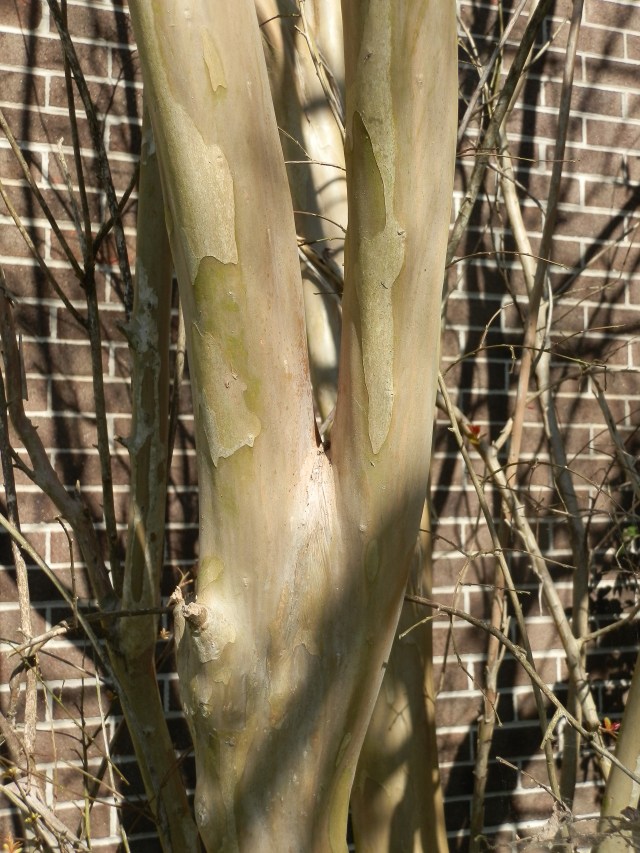
this picture shows a weak narrow branching angle.

this picture shows a weak narrow branching angle.

Branching angle on this Vitex is more desirable.

Branching angle on this Vitex is more desirable.

Ted Manzer teaches agriculture at Northeastern High School (tmanzer@ecpps.k12.nc.us).

Posted in Uncategorized | Tagged , , , , , , , , , , , | Leave a comment

Proper post-bloom care keeps spring bulbs healthy for generations


My daffodil blooms have all but disappeared. This was a short season due to a warm stretch this March. I don’t have any tulips or hyacinths, but the ones I’ve seen around town are following the same path. Once these plants have flowered they have lost their attractiveness.

Every spring people ask me when they can cut their bulbs back. Ideally they should be allowed to die and dry up naturally, but aesthetically that’s not always possible. Some pruning is advantageous though.

Most Dutch bulbs should be deadheaded as soon as the flowers wither. Remove the seedpods before they develop. That will conserve energy and result in more vigorous bulbs for next season. Pruning flower stalks close to the ground is even better as all energy can go into the foliage and back to the bulbs. Stronger bulbs mean showier blooms next spring.

That doesn’t usually satisfy people. They want to know when they can cut off the foliage and plant their summer flowers or mow their lawn. The quick answer is that leaves should be allowed to grow until they turn yellow. That probably means five or six weeks.

Some folks braid daffodil foliage after flowering. This concentrates the leaves in a smaller space and makes room for bedding plants to take over. Folding over the leaves and gathering them with a rubber band is another method I’ve seen. I’m not a big fan of either technique. Both hinder photosynthesis and can make foliage more prone to disease.

My preferred approach is to camouflage daffodil, tulip or hyacinth foliage. Planting perennials like daylilies, Shasta daisies or hosta around Dutch bulbs can be effective. These will start to grow and mask the offending plants. Annual flowers will work, too, but it’s often too cold right now for them to thrive.

If companion plants are used there is often no need to prune the leaves. They can die down naturally. If pruning is necessary, once the leaves turn yellow they should be cut as close to the ground as possible. A layer of mulch is also helpful as is will help keep the ground cooler.

When daffodils are surrounded by grass we have to split the difference between what’s healthiest for the turf and what’s best for the flowers. This is far from an ideal situation and I don’t recommend mixing bulbs and grass, especially tall bulbs like daffodils.

If you already have them and want to maintain the pair you’ll have to let the lawn stay long for a while. If you have warm-season turf like bemudagrass, that might not be a big problem. Mow around the areas containing bulbs until you notice leaves turning yellow. Then go ahead and mow the lawn, remembering you’ll probably have raking or bagging to do.

Shorter flowers like crocus, grape hyacinth or snowdrops are better companions with lawn grasses. Still, the same rules apply. If you trim back the bulbs before foliage turns yellow you soon won’t have any more flowers.

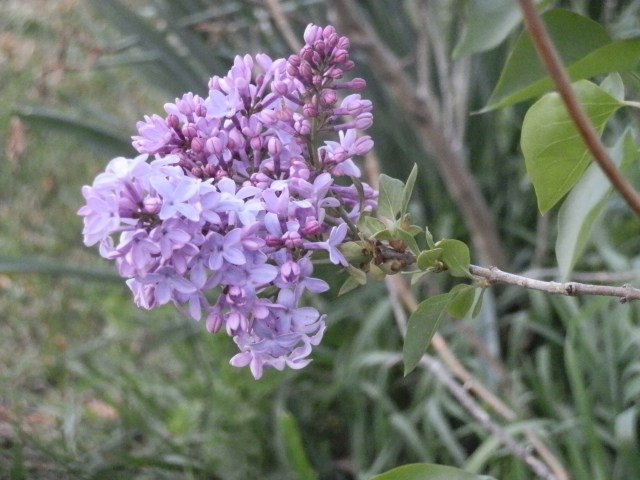
Lilac seed pods need to be removed.

Lilac seed pods need to be removed.

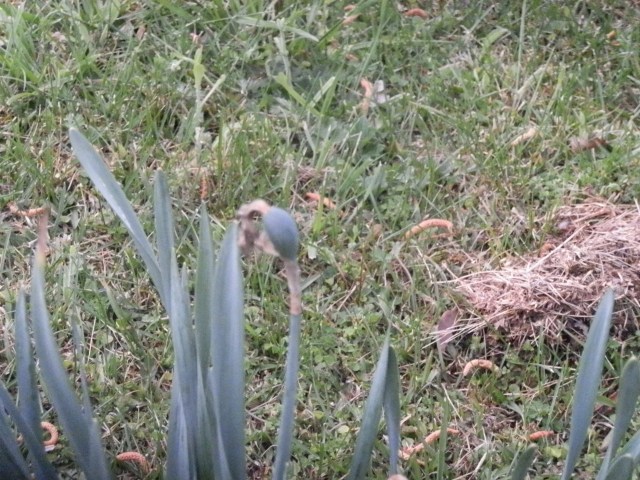
These daffodil leaves detract from a lawn for a few weeks but they're worth it.

These daffodil leaves detract from a lawn for a few weeks but they’re worth it.


Ted Manzer teaches agriculture at Northeastern High School (tmanzer@ecpps.k12.nc.us).


Posted in Uncategorized | Tagged , , , , , , , , , | Leave a comment