A Jewel for Poison Ivy


Poison ivy, a ubiquitous woody vine, is responsible for many people avoiding the brushy outdoors.  The culprit is a chemical called urushiol.  The toxin can bind to skin proteins within 15 minutes.  Once that happens, soap and water won’t remove it.  How the body reacts to urushiol determines the severity of the dermatitis.

Some people have no reaction at all and are for all practical purposes resistant to poison ivy, oak, and sumac.  The same toxin is present in all three, though exposure to poison sumac is much more severe.  According to most estimates about one person in 10 is resistant or nearly so.

Here’s where most people get confused.  The toxin is present in the plant at any time of the year.  It can even be spread by the smoke if plants are burned.  Urushiol can be spread from pets and clothing to other people and other clothing that have contacted it.  What can’t happen is the toxin cannot be spread from person to person once it enters the body.  In other words, once you get the rash you can’t rub it on someone and give them the same symptoms.

There are numerous over the counter remedies to treat the dermatitis, which can last as long as a month.  Treatment can be costly and stain clothing.  Other solutions might be in your backyard.

Jewelweed, (Impatiens capensis), is very common in moist shady areas around here, usually near water.  It has a yellowish orange flower that resembles domestic impatiens.  The stems are also brittle and juicy, just like the impatiens in flower gardens.  This juice is what will cure the problem.

Crush the stems and rub the juice on the affected area immediately after thoroughly washing exposed skin with soap and water. If soap isn’t immediately available, flush the skin with jewelweed juice.  It will help relieve symptoms even after the rash has developed.

If you happen to venture into other parts of the country where poison ivy and its relatives are common, don’t despair.  Jewelweed can be found in every state and province of Canada east of the Rockies.  Around here it begins to emerge in mid-April and strongly resembles the common impatiens.

There is an old wives tale that states where poison ivy grows so will jewelweed.  This is not entirely true.  Poison ivy can tolerate much drier soil and sunnier conditions than jewelweed.  In these sunny, more open areas there is also another poison ivy solution.  Common broadleaf plantain, (Plantago major), also relieves the symptoms of urushiol as well as the swelling and irritation from bee stings.  Simply crush the leaves, especially the petioles (stem-like portion of the leaf) and massage the juice into the affected area.

Broadleaf plantain is that ugly lawn weed with the spike-like inflorescence and the rosettes of round to oval leaves that lay flat against the turf.  While not a favorite in lawns, plantains are edible as a pot herb and not all that bad when young.   Just be careful not to eat them if you have treated your yard with a broadleaf herbicide.

Ted Manzer teaches agriculture at Northeastern High School in Elizabeth City (tmanzer@ecpps.k12.nc.us).
Posted in foraging | Tagged , , , , | 8 Comments

Wild Muscadines


Until I moved to North Carolina in 1996, my only experience with wild grapes was with the American labrusca types, or fox grapes from which the Concord variety was selected.  They were great for making jelly and juice, but were usually tart and not the greatest table grapes.

Yields are also variable.  They are susceptible to several diseases though nothing compared to the European types.  Neither of these perform well here, so you rarely see them fruiting in the wild.  Cold temperature tolerance is their greatest plus.

Our Muscadine types, (Vitis muscadinia rotundifolia), have such a unique pleasing flavor that we take it for granted how lucky we are.  They don’t flourish where temperatures plunge below zero in the winter and their skins are thick and leathery.  However, their resistance to disease renders them extremely abundant.  Warm southern climate with longer summers is responsible for their high sugar content.

Wild muscadines have a long history.  In 1584 Sir Walter Raleigh commented on their abundance.  They have been a valuable food source for southerners ever since.  More than four and a quarter centuries later I share his affinity for them.  They make great jelly and the juice is to die for as far as I’m concerned.  The green or Scuppernong types are just as delectable as purple ones.

Muscadines contain large amounts of a cancer fighting compound called resveratrol.  This chemical has also been linked to lowering cholesterol levels and the risk of coronary heart disease.  It is also important in establishing the disease resistance of the plant itself.  Another compound found in muscadines is ellagic acid, thought to be a cancer inhibitor as well. Additionally, grapes are very high in fiber, particularly soluble fiber.

Should you wander through the edges of the woods in the fall you might notice that some vines are prolific and others are not.  Part of the reason for this is that muscadines are dioeceous.  Functional male and female flowers reside on different plants. The leaves have a toothy appearance compared to other types of grapes, which makes them easy to spot.  Fruit is also borne in smaller clusters than on the bunch type grapes.

Despite the smaller clusters of fruit it is rarely difficult to find gallons of them.  Muscadines thrive in many types of soil.  You’ll probably see plenty of wildlife too and there will still be abundant grapes to go around.  Best of all they are good for you and no poisonous species closely resemble them.

On the down side the fruits can be out of reach and difficult to harvest.  Furthermore, vines of any kind damage trees and shrubs.  Fortunately, most of the trees affected by grapes are on the edges of the woods.  These trees usually have many branches and aren’t prime timber anyway.

Wild muscadine grapes are tasty and abundant.  I like to take my students behind the school in the fall so they can enjoy some.  The season can be a month long in a cool autumn, leaving plenty of time to gather a good gob of them.  They’re everywhere.

Ted Manzer teaches agriculture at Northeastern High School.

Posted in foraging | Tagged , , , , , | Leave a comment

Rediscovering Waxmyrtle


Today we take much of our surroundings for granted.  We never stop to think how essential our natural resources used to be for everyday life.  Our own wellbeing depends much more on the resourcefulness of others rather than that of our own.  The grocery store has replaced the woods, fields and water.

Wax myrtle, (Myrica cerifera), was once a useful staple, but now its chief use seems to be that of inexpensive naturalizing landscaping.   It is quite adaptable to different soil types and grows from full sun to dense shade.  It even has the ability to fix nitrogen like legumes can.  This lessens the need for added fertilizer.  Also, the birds love the fruits and will be plentiful in the winter.

This native evergreen shrub, known also as Southern bayberry, has been used as a spice, a tea, an insecticide and a medicinal plant to treat numerous ailments.  The waxy fruits were also used to make aromatic candles and the foliage rich in aromatic oils was used as a fire starting material.

This spicy herb is one of the more common woody plants in the area.  It can be found in any environment, yet few probably recognize much less use it.  Nevertheless, it is a very versatile plant.  I don’t buy bay leaves for spaghetti and seafood when I can use wax myrtle.

Use it to replace your Old Bay seasoning the next time you steam some crab or shrimp.  Finely crush some leaves and incorporate them in your poultry stuffing or enjoy a cup of herbal tea.  It also makes a great simmering potpourri.  Use it fresh or dried.  I prefer fresh and since it is evergreen and available all year.

Wax myrtle is a large shrub with a dense covering of slender leaves that are slightly widest in the middle.  They get much smaller toward the branch tips.  Some leaves are almost smooth on the edges; others have a toothed edge.  The stems are covered with aromatic glands.  Female plants, yes it’s one of those dioecious species, are covered with waxy gray nutlets.  This odiferous coating is prized by craftspeople for making scented candles.

Historically, people have crushed the leaves and rubbed them on the skin for a mosquito repellant.  Wax myrtle has also been used to repel fleas.  Some people even placed small branches in their cupboards to repel cockroaches.

Leaves contain flavonoids, tannins, resins and phenols.  Leaves and bark, especially root bark, contain myricitrin.  This compound has been used to treat menstrual problems and heal wounds. Preparations are also effective at soothing sore throats.  Medicinally, wax myrtle acts as a stimulating astringent and a nutritive blood purifier, known as an alterative.  It stimulates the absorption of nutrients.

There are no major side effects for taking wax myrtle leaf and bark extracts internally.  Large doses could cause upset stomach and vomiting, but so couldn’t large doses of just about anything.  The waxy fruits contain some compounds that may be linked to cancer, but these would have to be taken internally.  Simply burning candles made from wax myrtle is totally safe.

Ted Manzer teaches agriculture at Northeastern High School.

Posted in foraging | Tagged , , , , , , | Leave a comment

Backyard Pink Lemonade


Sumacs are short lived weedy shrubs to small trees that take over open areas if given the chance.  Three species found in North Carolina are quite useful.  Three close cousins are downright despicable.

Let’s start with the three cashew family members that can be useful to us.  Staghorn sumac (Rhus typhina) and smooth sumac (Rhus glabra) are both common around here.  Fragrant sumac (Rhus aromatica) is common in the piedmont and mountains of North Carolina.

These three species have clusters of red berry-like drupes. Red is important.  Sumacs with red fruits are not poisonous, even the fragrant sumac, which has leaves in clusters of three.  Beware of sumacs and their relatives with white berries though.

An old saying warns that if leaves are in three, then let it be.  I’d like to add if fruits are white, run with fright.

Poison ivy, poison oak, and poison sumac all have white berry-like drupes.  Poison oak and poison ivy are much more common here.  Anyone venturing into brushy or wooded areas should learn to recognize them.  Poison sumac is less common, but more powerful.  Urushiol is much more concentrated in poison sumac.

Smooth, staghorn, and poison sumacs all have leaves that emerge from the stems singly and are comprised of multiple blades or leaflets with toothed edges.  Botanists call them pinnately compound serrated leaves.  Stem tips of staghorn sumac are velvety, much like deer horns are in summer.  Smooth sumac stems are somewhat waxy and the leaves are whitish underneath.

So what’s so special about these two cashew relatives?  They can make great beverages that can be consumed warm or cold.  Many call the cold version wild lemonade or Indian lemonade.

Fruits begin to ripen in midsummer.  The strength of the flavor depends on when you collect it.  You can gather fruit in the fall or winter, but its flavor won’t be as strong or as good.

Collect from areas away from road dist.  If you gather fruit clusters when they are wet, like after a rain, flavor from the plant acids will be diluted. Once you taste a few samples you will get the feel for it.  If they have a strong tartness, they’ll make great juice.

Fill your pitcher a third to half full of fruit clusters.  Don’t rinse them off as this dilutes their flavor.  Fill the container with cold water.  Warm or hot water will leach out the tannins producing sumac tea and not the lemonade flavor.  Sumac tea is also fine, but it is not our goal.

Let the mixture stand for 15-20 minutes and remove as much of the fruit and twigs as you can.  Use a piece of clean cotton cloth to sieve out the remaining solid material.  Sweeten your masterpiece to taste.  I drink mine straight, just like my iced tea.

Dried and ground sumac fruits also make a great seasoning for poultry and fish.  They add color and tang to rice and potato salad too.

Those who are allergic to cashews and pistachios should stay away from sumac preparations unless their doctor advises otherwise.

Ted Manzer teaches agriculture at Northeastern High School.

Posted in foraging | Tagged , , , , , , | Leave a comment

A Spicy Lawn Weed


To the many people who have cursed the ubiquitous wild garlic, (Allium vineale), I offer somewhat of a truce.  This is one useful spice that can add flavor to many foods.  They are not poisonous, grow everywhere and don’t cost anything.

Many refer to this invasive aromatic herb incorrectly as wild onion. All parts are edible.  These perennial members of the lily family sprout from underground bulbs which produce bulbets.  These are flat on one side and surrounded by a membrane. When crushed, they have strong garlic scent.  Leaves are hollow in cross-section and resemble chives.  Their flavor is somewhat of an intermingling of onion, chives, and garlic.  Bulbs have a more distinctive garlic-like taste.

The best time to collect wild garlic is from late fall to early spring.  That is, of course, if you are collecting from your lawn and interested in leaves, mostly.  That’s what I’m generally after.  Bulbs are fine, but you’ll spend valuable time cleaning and not really get that much for the same amount of work.  Soil adheres to the roots and membranes and is tedious to remove.  However, if your goal is to rid these plants from your lawn, then pulling up the entire specimen might be helpful.

You can collect wild garlic in all seasons. Since I harvest most of mine from my lawn, I gather it when the grass is dormant and not mowed regularly.  I can get enough in the winter to chop and dry and use as a garnish for potatoes, casseroles, roasts, and other foods where chives might be recommended.

Eat them fresh or dried.  I like them fresh in a salad, but I dry some to use in cooking throughout the year. Be careful storing fresh leaves in your refrigerator.  Make sure you use tightly sealed containers as your garlic will transmit an odor to other foods, especially dairy products.

To dry them, separate the green leaves from any debris, rinse them, and chop into pieces a quarter of an inch or shorter.  Place on paper towels or hang them in a fine mesh bag.  Let the chopped leaves air dry until they have a little crunch.  Then pour into sealed containers and store in a cool dry place.

This plant is difficult to control in lawns without chemicals.  Tillage isn’t practical there either.  Leaving any traces of bulbs in the ground will make your efforts futile, so if you expect to control your wild garlic problem by harvesting it, you’ll likely be disappointed.

Wild garlic imparts a taste to the meat and especially milk of the animals who consume it.  For this reason it should be eliminated in areas where livestock, particularly dairy animals, graze.  Sometimes that’s not possible.  According to many sources removing animals for several days prior to slaughter will eliminate any garlic/onion odor and flavor.

This is one species I have learned to live with.  It’s a useful and versatile spice.  The only drawbacks I see are mowing my lawn a couple times in the winter and an increased use of breath mints.

Ted Manzer teaches agriculture at Northeastern High School.

Posted in foraging | Tagged , , , , , , | 1 Comment

West Virginia Banana


Many people have heard the name Pawpaw, but few could identify it and fewer have eaten it.  Pawpaw, (Asimina triloba), is a common understory tree around here.  It is the only member of the custard apple family adapted to temperate areas.  Pawpaws can be found as far north as Ohio (it’s the state’s official native fruit), New York and southern Ontario.

Growth requirements are interesting.  They must be shaded the first year or two to survive.  After that they can grow in the shade as an understory tree, but if they do they seldom fruit much.  When a stand of trees has been removed or thinned the fruit set is usually heavier.

Another problem can occur though.  Pollination is often poor.  Furthermore, even though the flowers have both male and female parts they must be cross-pollinated with another tree.  Many plums are like that.  When grown in an ideal environment they can be quite prolific, but most I’ve come across in the wild around here are barren.

So what do they look like?  Pawpaws have rather large alternate dark green leaves with a smooth edge. They are a small tree and never get over 25 feet tall.  These trees are usually the last to leaf out in the spring.  They bloom from late March to early May, usually before leaves emerge. Maroon upside-down flowers are about two inches across.

Fruits ripen from late August to early October and often grow in clusters.  They have large dark seeds.  Individual fruits often can weight close to a pound apiece.  I consider the flavor to be somewhat of a cross between banana and mango.

Pawpaws freeze well and can be eaten fresh.  The flavor is much better if they are used in recipes where they are not cooked.

We’ve only begun to scratch the surface on this mystical fruit. Pawpaws helped feed the Lewis & Clark expedition on their return trip in the fall of 1810, when in western Missouri their rations ran low and game was scarce.  Pawpaws are high in Vitamins A and C, very high in Potassium and Magnesium and a good source of most essential amino acids.

Pawpaw trees contain many bioactive compounds that may be either beneficial or toxic in the human diet, depending on dosage and a person’s sensitivity.  Bark and seeds are high in acetogenins, chemicals poisonous to most insects and fungi attacking the plant.  These chemicals also help lower the production of ATP (the energy source) in cancer cells.  This reduces the growth of blood vessels that nourish these cells.

Because of this pawpaw extracts are marketed as anticarcinogens.  Studies have been conducted at Purdue University for the past 30 years.  According to their research Pawpaw can also reduce the side-effects of chemotherapy.  Other research claims these products can kill cancer cells resistant to chemotherapy.  Upjohn studies stated Pawpaw compounds were up to 300 times more potent than Taxol.

Other findings conclude pawpaw extracts to be toxic to humans. Many standardized extracts are now on the market.  I suggest consulting your doctor before making any decisions.

OLYMPUS DIGITAL CAMERA

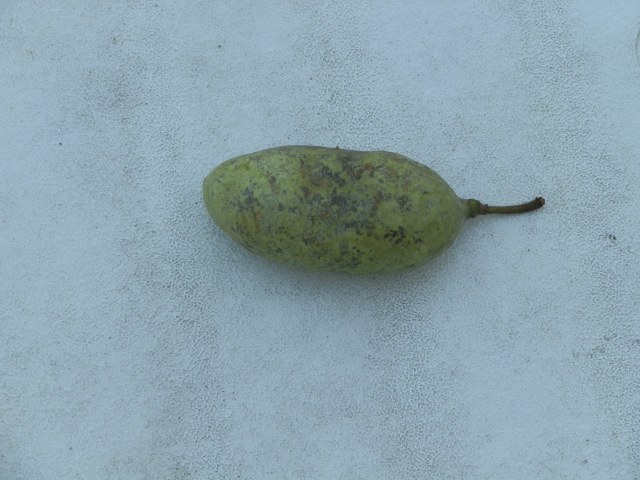
Mature Pawpaw

mature pawpaw showing flesh

mature pawpaw showing flesh

OLYMPUS DIGITAL CAMERA

Pawpaw flower in mid-April on the edge of the canebrakes in eastern North Carolina

Pawpaw flower in mid-April on the edge of the canebrakes in eastern North Carolina

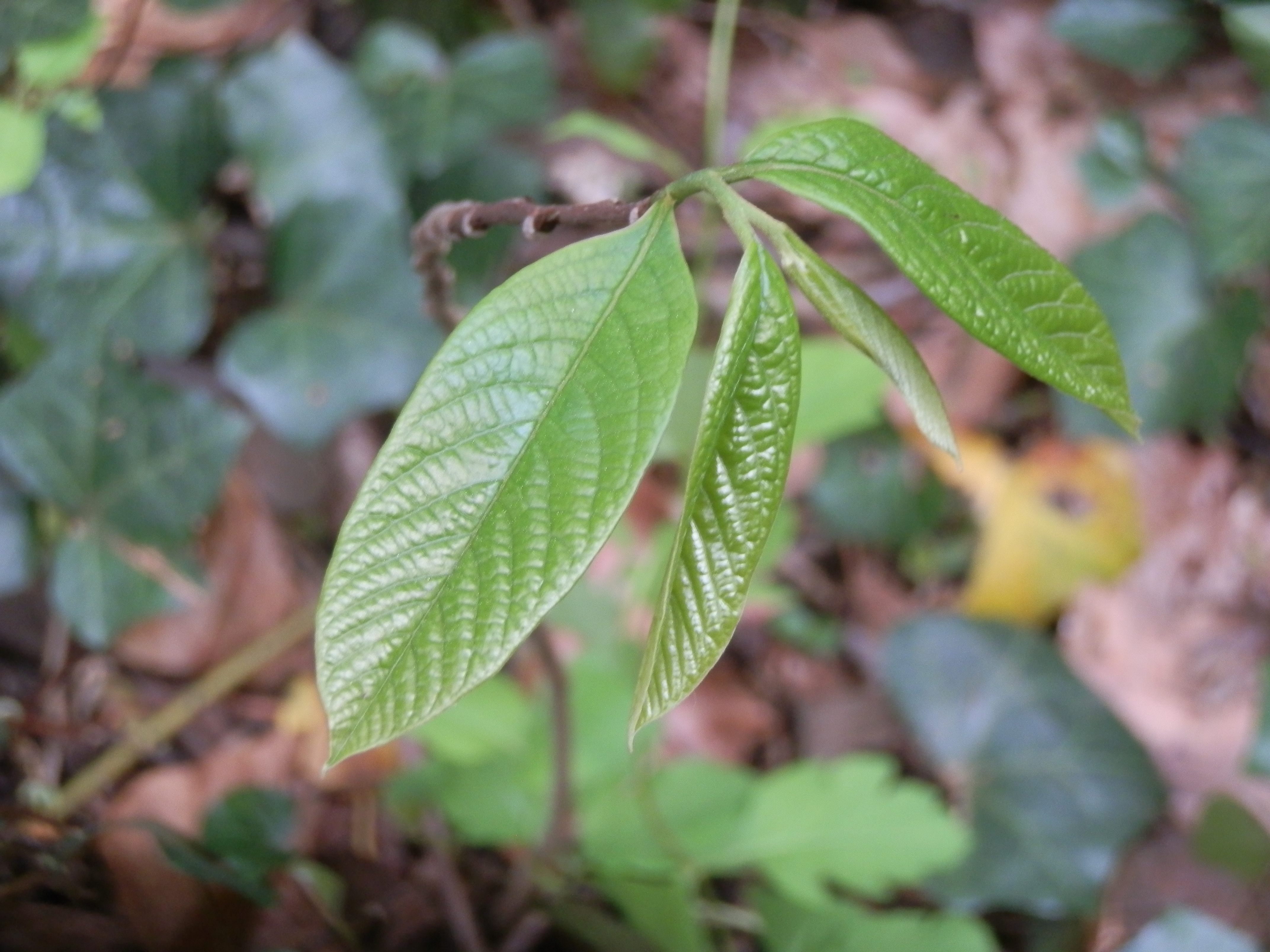
Emerging foliage on pawpaw seedling

Emerging foliage on pawpaw seedling

Ted Manzer teaches agriculture at Northeastern High School.

Posted in foraging | Tagged , , , , , | Leave a comment

Cattails – Supermarket of the Swamp


In his book, Stalking the Wild Asparagus, the late Euell Gibbons referred to the lowly cattail as the “supermarket of the swamp.”  I don’t think I’ve ever picked up a field guide on wild foods that didn’t profile these wetland dwellers and brag on what a delicacy they were.

Gibbons praised the cattail for its abundance and versatility, hence the nickname.  Just about every part of the plant is useful at some part of the year.  Not every part is edible, but even the unpalatable leaves can be woven into baskets and hats.  Mature seed heads make great insulation or tinder.

These seed heads have distinct male and female components much like corn has a tassel and an ear.  The top few inches is where the male portion exists and the thicker brown fuzzy section is the female part.  Both are edible in the immature stage.

In spring, the young female part of the seed head can be boiled and eaten like miniature corn on the cob.  Many report the flavor as pleasingly mild.  To me they simply taste like the seasonings you use on them.

Pollen from the male portion can be used as flour in pancakes, cornbread and similar quick breads.  Cattails produce copious amounts of the yellow stuff and reports on internet sites are glowing.  I’ve never tried this but feel obligated to sample it next spring.

Roots, rhizomes (underground stems like those on irises and many grasses), and young stems are all edible.  Moreover, their accessibility makes cattails invaluable as survival food.  You can’t go any place in North America where wet soils dominate and not find them.

The common cattail, (Typha latifolia), is by far the most prevalent species, though three others exist in our range.  All are readily identified by the brown seed head.  They have long grass-like leaves, and the only plants that even remotely resemble them are the wild irises and then only young plants in early spring.  Unfortunately, Irises are poisonous, so be careful.

So why does it sound like a but is coming? I guess I’m throwing a wet blanket on cattails because exaggeration always bothers me?  In my opinion they are overrated.  I’ve eaten the young stems, roots and rhizomes.  They are difficult to clean and to me taste a lot like their surroundings.

Maybe I haven’t taken adequate time to cleanse all the stagnant mud and swamp water from them.  Perhaps I have little appreciation for all the prep work.  After all, I love lobster and crab.  They both require significant effort and are certainly worth it. Furthermore, they are bottom dwelling scavengers and I don’t have a problem with their environment.

I don’t mean to offend lovers of the cattail.  I don’t like boiled peanuts either.  I love peanuts just about any other way though, even raw.  To me cattails and boiled peanuts are very similar.  I’d just as soon eat the substrate from which they grew.

Still I look forward to collecting pollen flour for cattail pancakes next spring.  I’ll let you know how they turn out.

Ted Manzer teaches agriculture at Northeastern High School.

Posted in foraging | Tagged , , , , , | Leave a comment

Invasive Olives


Some landscaping can just be too adaptable.  The genus Eleagnus is a good example.  They make beautiful accent shrubs with pleasant fall aroma.  The undersides of the leaves have a silvery color that almost dances in the wind.  Oblong fruits are sought after by songbirds and they are not bad table fare either, and good for you to boot.  They also tolerate drought well, so even a summer like this past one won’t faze them.

But here’s where the trouble starts.  The common thorny eleagnus or silverthorn, (Eleagnus pungens), is probably the least invasive of these, but it still grows like wildfire.  A large evergreen shrub, it thrives in the salt spray near the beach.

They flower in the fall and early winter and fruit matures in late spring.  These shrubs can be found in most nurseries and can be controlled by timely pruning.  Don’t let the fruits mature and birds won’t carry them off.

The Russian olive, (Eleagnus angustifolia), is a little more problematic.  Few nurseries around here carry it, but it can be ordered by mail.  Russian olive looks somewhat like the previous species, but leaves are only semi-evergreen.  It is super aggressive and will take over an abandoned field or pasture.  This one flowers in late spring and fruits mature in the fall.  Other than providing a fast growing screen the only good thing I can say about Russian olive is that the fruit is pretty good and can be eaten fresh or in preserves.

Autumn olive, (Eleagnus umbellata), looks very similar to Russian olive, but it even more winter hardy and more invasive.  Don’t ever be talked into planting this one.  You won’t control it.

Obviously the best method of controlling these species is to prevent them from becoming established. Plants should be removed as soon possible if they are found newly colonizing an area.

What can we do if they get a strong foothold?  We have two options.  The first is to attack them with bush hogs and herbicides.  Apply a 10 to 20 percent solution of glyphosate (Round-up) immediately to the cut stumps.  Foliar treatments are also somewhat effective for smaller patches.

If chemicals aren’t your thing you might have to live with some of it, but it’s not all bad.  The fruits are tasty and very high in lycopene, a strong antioxidant found in tomatoes.  Lycopene gives them their red color and has been linked to good prostate health.  Both Autumn olive and Russian olive are prolific, so you will have plenty of fruits to pick.  They have a rather large seed and it’s a trick to separate it from the flesh, but they’re not bad.  I consider these reddish drupes are a major wild food secret.

Fruits are best when eaten after a few frosts, much like wild persimmons.  They are somewhat astringent and sour before that but still edible.  They make an attractive reddish orange jelly with a smooth texture.  Flavor is similar to a cross between pomegranate and cranberry.  Make sure to add additional fruit pectin when making jelly, as natural levels are low.

Ted Manzer teaches agriculture at Northeastern High School.

Posted in foraging | Tagged , , , , , | Leave a comment

Edible Landscaping


Sometimes when your landscaping goes to seed it creates a smelly and unsightly mess.  Other times it can just be an added benefit.  The flowering crabapple is a good example here.

Crabapples, (Malus sp.), make a gorgeous small specimen tree with great color and fragrance in the spring and showy fruit in the fall.  We don’t normally eat them, but maybe we should.  The fruits are small and have a core, so eating them fresh isn’t a good option.  Depending upon the cultivar they are also quite tart, but that doesn’t render them useless, far from it.

Crabapples make a great jelly, and since they are naturally high in pectin no commercial pectin is usually necessary for a good set.  They also make a great accent for other fruits.  Add them to homemade applesauce.  They impart an enticing color and accentuate the flavor, all without red dye #40.

Oh, I must admit that some of the hype about food colorings might be a bit overblown, yet I feel more comfortable the less food is modified and refined.  Unfortunately, the same can be said for the crabapple.  Raw crabapples contain significant amounts of vitamin C if kept below 118 F.  Temperatures higher than this destroy enzymes and some other beneficial organic compounds.

The problem is that with the exception of a few varieties, most are just too sour for fresh consumption.  Cooking reduces many of the positive nutritional properties.  This is true for nearly all fruits, but it alone will never deter me from homemade preserves or pie.  In fact, crabapple might just be my favorite jelly and here’s why.

The high pectin levels allow for the production of a very viscous product.  Thicker jelly is just the ticket for making filled cookies.  It doesn’t run during the baking process.  There is no caramelized mess on the cookie sheets.

Another great use for these underutilized fruits is to cook them in a little water and strain out the seeds, leaving a brightly colored pulp.  Use this material to substitute for the crushed bananas in your favorite banana bread recipe.  You will have to increase the sugar a bit, but you might be surprised how creative you can be.

If all this is a bit of a stretch for you from a culinary standpoint, don’t despair.  Crabapples are just fine if left in the landscape.  They hold their fruit for a long time, and the apples are small enough for the birds to clean up.  There is seldom much mess.

Color of the blossoms varies from nearly pure white, through the pinks and reds to almost purple.  Fruit color ranges from yellow to red to deep burgundy.  Fruit size ranges from garden peas to golf balls.  Foliage can be solid green or variegated green and cream to reddish or purplish.

Some cultivars can be maintained as small shrubs, while others reach heights of more than 25 feet.  Although sometimes escaping to the wild they are not nearly as invasive as the Bradford pear. Also the wood is much harder, making them better for our storm-prone area.

Ted Manzer teaches agriculture at Northeastern High School.

Posted in foraging | Tagged , , , , , | Leave a comment

Wild Passionflower – Friend or Fiend


It’s funny how you can look at some plants in the wild or in the domestic landscape and want to have them in your own backyard.  Wild passionflower or Maypop (Passiflora incarnata), is a prime example.  The flowers are so unique they almost don’t look real.  They can be three to five inches wide and have a soft pleasant aroma.  Butterflies love them.

Each flower lasts about a day and the plant blooms from early summer to fall and at times can be quite profuse.  The leaves have three main lobes but are otherwise smooth.  Green fruits resemble eggs in size and shape and persist until they get soft.  They are basically hollow and lightweight and will pop if you step on them.  The flesh is spongy and off-white to yellow.  It is edible, but not very flavorful.

Maypops require full sunlight for about half of the day and can be grown in total sun.  They tolerate a wide variety of soil types

Now comes some of the bad news.  Passionflower is a vine and can be invasive.  Leaves are evergreen and it climbs using tendrils, so it will cover your other shrubbery and be difficult to remove without damaging delicate plants.  It grows fast and spreads by seeds all over your lawn and in your flowerbeds.  The dark-colored flattened seeds are slow to germinate if you are trying to grow them.  They contain natural internal inhibitors, but somehow seedlings find their way into your landscaping all by themselves.

Maypops are native to Florida but have escaped and naturalized to our area.  In an unusually hard winter they might get damaged, but basically they are quite hardy in eastern North Carolina.  In fact, passionflower is the official wildflower of Tennessee, where the climate is somewhat harsher than ours.

Passionflower has been used medicinally to treat many ailments.  Plant extracts can be natural bactericides and are used to treat eye infections and inflammations.  Many commercial preparations are available to induce relaxation and sleep without the dangers of narcotic addiction.   Chemicals involved are likely flavinoids.  Herbal tea enthusiasts use roots, leaves, and flowers to concoct their medicinal beverages.

Chemicals in passionflower are also said relieve back pain, since they relax the nerves.  Some researchers even claim its calming properties might be useful for treating ADD and ADHD.  However, this has not been thoroughly studied, so I’d suggest consulting your doctor.  Passionflower is on the FDA’s “generally considered safe” list, but it might interact with other medicines.

Like anything else in nature, certain people might have a sensitivity to chemicals in passionflower.  There have been reports of people getting sick, but the numbers don’t indicate a problem or trend.  Food allergies are commonplace, so it’s always advisable to try small amounts of something new.  You never know how your body might react.

Plant extracts may make you dizzy or drowsy. Do not drive, use machinery, or do any activity that requires dexterity until you are fully alert. Some commercially available forms may contain sugar and/or alcohol, so beware if you have diabetes or liver problems.

Ted Manzer teaches agriculture at Northeastern High School.

Posted in foraging | Tagged , , , , | 3 Comments