Serviceberry is a Tasty windbreak


I tire of the same old landscaping everywhere, especially when it won’t tolerate our growing conditions. So often we see ornamental pear trees ravaged by our strong winds. Other more adaptable species could be used, but familiarity and cheap prices usually win out.
When it comes to small flowering trees and tall hedges I’d like to see more serviceberry
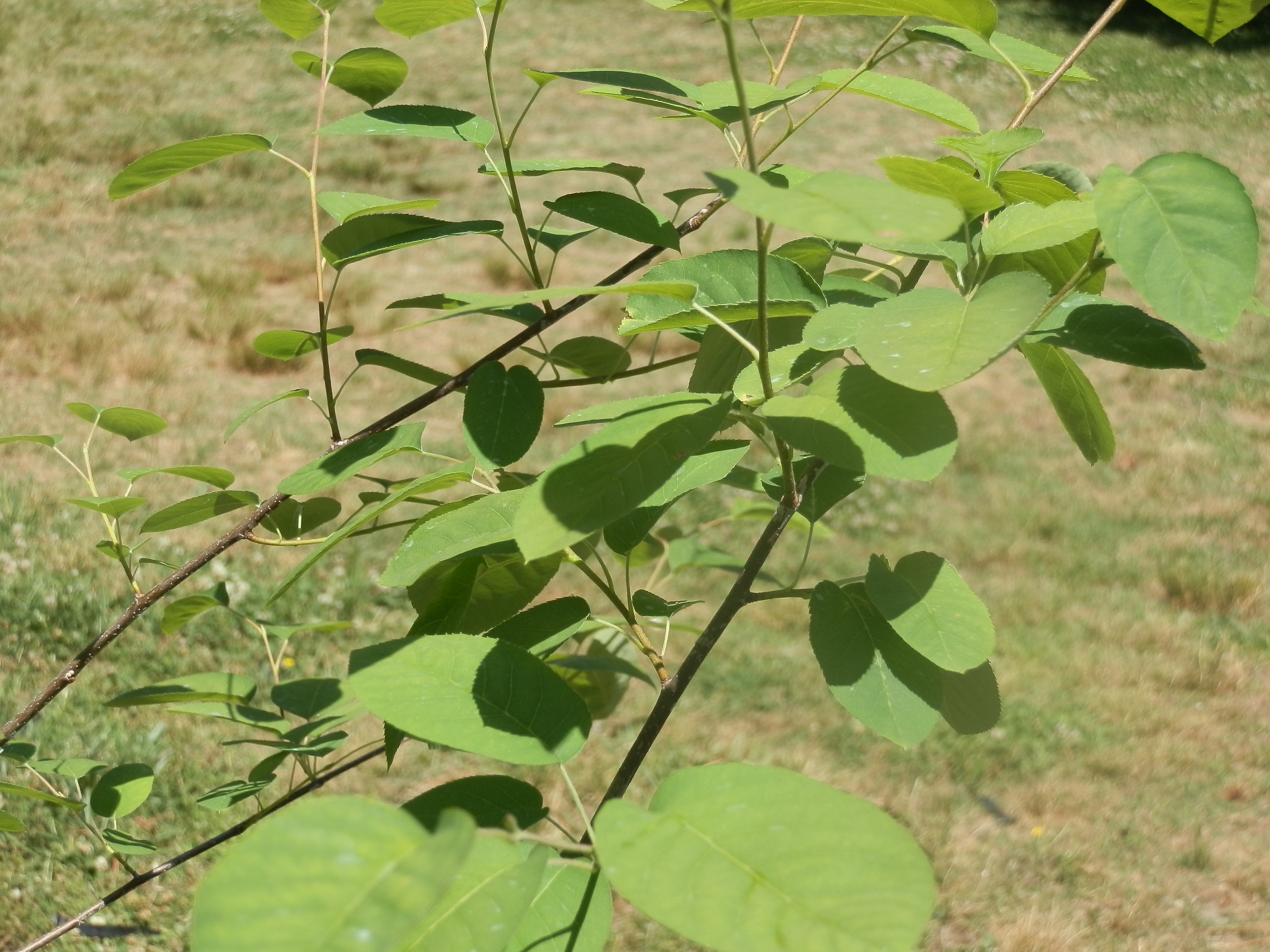
serviceberry foliage

serviceberry foliage

(Amelanchier sp.)trees planted. Also called shadbush, they have beautiful white flowers like the pears but without the fetid odor. They also have relatively strong wood that is far less susceptible to wind damage.
Serviceberries can sometimes grow 30 feet tall, but 15-18 feet is typical. They prefer a slightly acid soil and full to partial sun. Trees grow in full shade but won’t flower or fruit very much. Plants are also tolerant of wet soil. Butterflies and bees like the nectar. Since trees flower so early in spring they could be a valuable nectar and pollen source for beekeepers.
Serviceberries are native plants, though not common in this area. At least 20 different Amelanchier species inhabit North America. They are great for naturalizing. Fall foliage color ranges from yellowish gold to an orange-red. Trees may be single or multi-trunk form.
Best of all, they have edible fruits. These sweet morsels look like half ripe blueberries. They remind me a little of large huckleberries. Some say their flavor favors apple. Typical size is about a half inch in diameter.
Elongated seeds are somewhat larger than those in blueberries but not as big as blackberry seeds. Mature trees can bear several pounds of fruit. Individual plants can be productive for over 30 years. Some folks call them Juneberries, but fruits ripen in mid to late May in this area.
Fruit production is usually concentrated into a short time window, which is good. However, you have to be ready when the fruit is. There is another problem. Birds love them. So don’t other wildlife. Again, that’s not a concern if you wish to attract birds to your property and don’t care about harvesting fruit. The trees are rarely browsed much by deer.
When I lived in Maine and West Virginia I knew where many wild ones grew. I’d bring several tarps along and spread them under each tree. Then I’d climb as high as I could and shake the whole crown. Often the birds beat me to them and pickings were slim. Occasionally I’d hit the jackpot.
I’d pour the fruits into a large bucket and take them to a windy place or in front of a large box fan and winnow them. Pouring the fruit back and forth from one container to the other a few times was all that was necessary to filter out leaves, twigs and other debris.
Fruits have a short shelf life, so have a plan of action. They freeze and can well and can also be dried similar to raisins. Substitute them in any recipe calling for blueberries. Color will be less intense and flavor slightly different, but quality of the product won’t suffer.
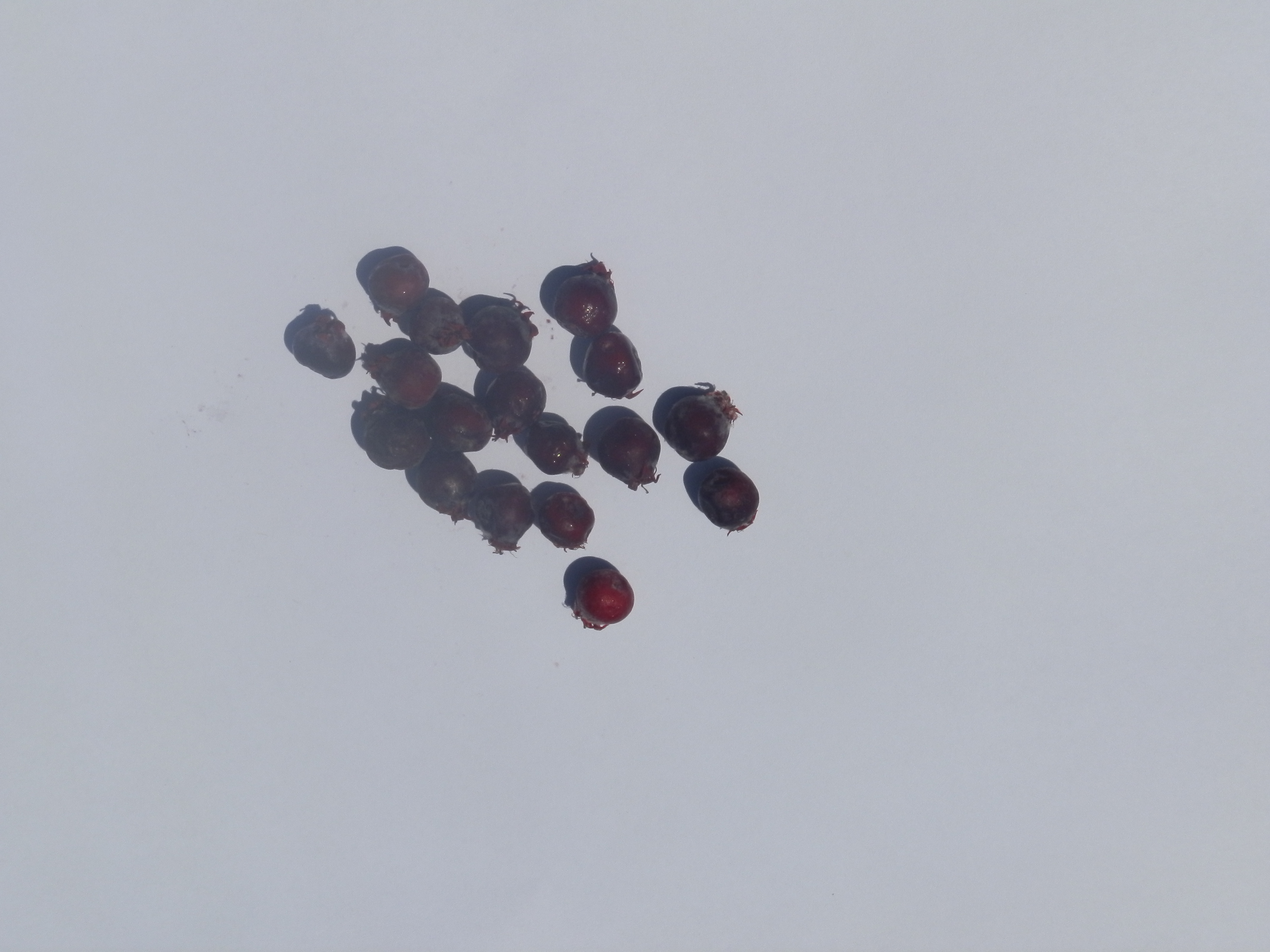
serviceberry fruits

serviceberry fruits

Ted Manzer teaches agriculture at Northeastern High School.
Posted in foraging | Tagged , , , , , | Leave a comment

Playing with Bobwhites


I love the sound of bobwhites. I was working outside last spring in a brushy place and their call rang in my ears all day. I couldn’t resist calling back.
Quail usually continue the conversation. I’ve called some to within a few yards, closer than I’ve ever been able to call a turkey. It’s a shame there aren’t more bobwhites around. Food and cover appear more than sufficient.
However, when you look closer we don’t have adequate winter food or cover in the Elizabeth City area. Quail like thickets and need seed from wild grasses to sustain them through the cold weather when little is growing. In winter, much of our land is open and more or less barren.
Quail do better when fields are smaller and there is more fringe area between fields and open woods. Lack of cover and increasing predators paint a dismal picture for the quail.
Dove populations aren’t suffering the same way. They thrive in open areas. Doves fly better than quail and for longer distances. This means they can travel further for food. Our farming practices have benefited doves. They have hindered quail. Bobwhites require food, water and cover concentrated in much smaller areas. This makes them even more subject to predation.
Quail also eat insects, so pesticide use can cut down on a large potential feed source. Quail also nest on the ground, whereas doves usually roost in trees. While that doesn’t ensure safety, it increases it.
Quail lay up to 15 eggs per clutch and may lay three clutches per year. Incubation period is 23 days, and both males and females incubate the eggs. This all sounds promising for a healthy population, but entire broods can be wiped out more easily on the ground.
Quail have an annual turnover rate of about 80 percent, which means that eight out of every ten birds will die each year whether they are hunted or not. They try to protect themselves by traveling in what we call coveys. These small groups are arranged more or less in a circle. When danger strikes the birds scatter in all directions. It can be quite startling.
At school last year we hatched over 70 of these little chicken-like birds. Several students took them home and about a dozen escaped when a door was not closed in time. This covey has hung around close for a few weeks now. They occasionally have entered the shop in search of food. They are now old enough to call and I’ve entertained myself by whistling to them and watching them come toward me. Later in the fall they won’t answer or play the game.
I thought about trying to catch them, but I decided I didn’t want to stress them out. They fly into the pen shortly after we feed our other birds. Already a few have disappeared, likely casualties to local predators.
There may not be many wild quail to play with, but spring offers us an opportunity to hear that classic ‘bob bobwhite’ sound. It’s a treat for me. If there were a good supply of wild ones, I’d put a few  on my plate once the season opened. They taste great! You could serve them in a chicken dish and nobody would notice.

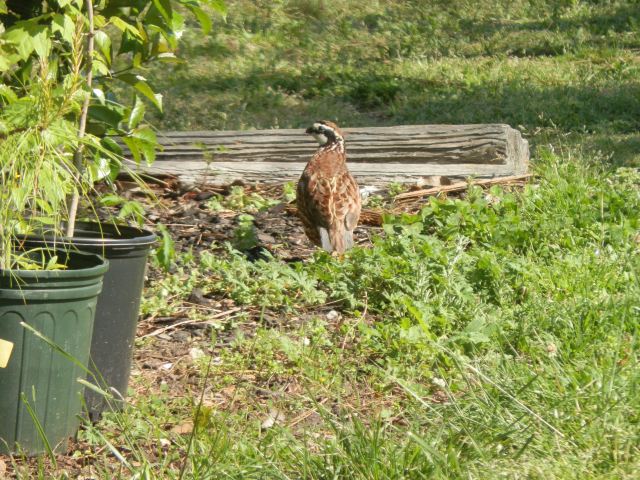
He hears me but he's confused.

He hears me but he’s confused.

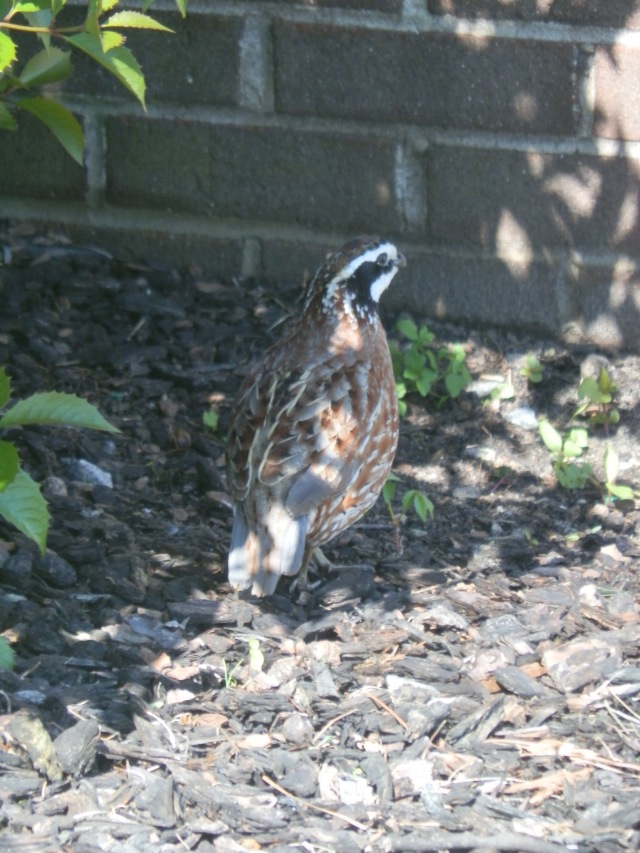
He still can't find me.

He still can’t find me.

Ted Manzer teaches agriculture at Northeastern High School.
Posted in foraging | Tagged , , , , , | Leave a comment

For Wisteria, Timing is Everything


A while ago I wrote about mayapples. In almost every stage of growth the plant is completely poisonous. Only the ripe fruit is edible. A similar example of that phenomenon is Wisteria, which is blooms in the spring.
Wisteria is that woody vine with clusters of purple flowers. It climbs and tears down trees, fences and just about everything else that gets in its way. It doesn’t grow as fast as kudzu but it’s heavier, much more like grapevine. Cut them down and they’ll grow back like gangbusters. Deer and rabbits won’t even eat the sprouts.
Most wisteria is either part of existing landscaping or has escaped cultivation. It’s somewhat similar to English ivy or passion vine in that people who don’t have it think it’s gorgeous, but those blessed with it wish it were less aggressive. It can take over a landscape. Three species are common, but be they Chinese (Wisteria sinensis), Japanese (Wisteria floribunda) or our native species the American wisteria (Wisteria frutescens), they are all invasive. Some people give a pass to the native species, but it will dominate and spread as well. Training them into a standard tree form is possible, but it requires frequent pruning to achieve the desired effect. When left alone even the grafted tree types will sprawl all over everything.
I don’t mean to badmouth this traditional landscape favorite. Wisteria has a few redeeming features. Its color is spectacular and the blooms have a sweet aroma. It’s enjoyable to stroll around the neighborhood when they’re blooming.
Wisteria tolerates a wide range of growing conditions. They thrive in almost any light regime, but flower better when given adequate sunlight. Plants tolerate a wide variety of soil types and require little maintenance. They only need something to climb on.
Animals leave them alone, and summer heat doesn’t bother them. Wisterias lose their leaves in fall but form a dense privacy barrier for summer. They also suffer few problems with diseases and insects. These showy vines only bloom for a few weeks but during that time they are heavenly.
Those lovely purple flowers are quite tasty, too. They make great tea and are also delectable in a salad. Another creative use is to chop up some flowers and fold them into pancake batter. Some even use them to flavor ice cream.
I can’t really describe the flavor. Honey is about as close as I can come. They don’t really taste like berries or another type of fruit. As a drink I prefer them steeped cold rather than hot, much like sumac, which I discussed a couple years ago. The flavor is much more delicate when extracted cold.
Pick a bunch of flowers and remove all the stems. Remember, all other parts of the plant are toxic. Only the flowers are edible. Place them in a pitcher of cool water and refrigerate overnight. In the morning your wisteria concoction is ready to drink. Strain, pour over ice and enjoy.
If you are not so inclined, wisteria can be controlled by many common herbicides. I think the best method is to cut the stumps near the ground and treat immediately with a strong solution of glyphosate. Triclopyr and Imazapyr work good too. I don’t recommend spraying the foliage as other desirable plants could be damaged.
Wisteria is an aggressive vine and can harm trees, fences and buildings. It’s wonderful if kept where it belongs, but with many vines that can be the tricky part.

Ted Manzer teaches agriculture at Northeastern High School.
Posted in foraging | Tagged , , , , , | Leave a comment

You’ve got to love those ladybugs


A little girl came by the greenhouses with her parents this past weekend, excited about seeing some ladybugs. She thought they were pretty, but she didn’t know whether she wanted them on her plants. I told her they were one of my favorites because they eat bad bugs and that I’d write about them this week.
Lady beetles (Coccinella sp.) are one of the most recognizable and prevalent beneficial insects. There are over 450 species in North America. Only the Mexican bean beetle and the squash beetle feed on plants. All other lady beetle species eat soft bodied insects like aphids, mealybugs and thrips. These attack our crops, garden flowers and houseplants. Lady beetles also eat moth eggs, pollen and nectar.
Adult females lay their yellowish eggs on the undersides of leaves in clusters. Individual beetles can lay as many as 1000 eggs. Some deposit them for up to three months.
These hatch into larvae that look a little like tiny alligators. Most are some shade of bluish gray with orange markings. Some people think these crawling baby ladybugs are plant pests and kill them, so it’s important to learn to recognize them. Your computer can help.
In three to four weeks these immature insects grow to almost half an inch long. They usually molt or shed their skin four times. During this time these voracious critters can consume as many as 300 crop damaging aphids.
At the end of the larval stage these insects enter the pupa or resting phase of their lives. They usually attach themselves to the underside of a leaf or twig and remain there for a few days to nearly two weeks. Adults emerge, mate, and the reproductive process starts all over again. Adult beetles usually live for a few months, but some can stay active for over a year, consuming crop damaging pests the whole time.
The most common species I see around here is the seven spotted lady beetle (Coccinella septempunctata). It is also one of the more efficient pest controllers. Populations are active from mid-spring until fall.
Sometimes gardeners purchase lady beetles to control pests in their gardens, since companies brag about the voracious nature of these bright red eating machines. This seldom works out as well as advertised. The beetles often fly to greener pastures so to speak, if a heavy pest population isn’t present. Also, beetles reared in dense populations are more likely to be parasitized by other insects.
Ladybugs can be overly friendly, especially in the fall. They are just trying to avoid the cold weather. They don’t cause damage to our homes, but they still can be a nuisance, since they often accumulate in large numbers. If they enter your home don’t kill them with fly swatters or similar means. You’ll be sorry.
Ladybugs emit a strong odor when smashed. That’s probably one reason other insects don’t prey on them. I suggest vacuuming them up and disposing of them outside. Most will probably die but that’s nature. During the summer they’ll certainly earn their keep.

Ted Manzer teaches agriculture at Northeastern High School.
Posted in foraging | Tagged , , , , , , , , | Leave a comment

North Carolina’s State Flower: The Flowering Dogwood Tree


Woodland edges are now fringed with white, mostly from flowering dogwood flowers. They delight us before the leaves emerge. Many view dogwood (Cornus florida) as our state tree, but it isn’t. It’s our state flower and has been officially that since 1941.
In 1963, the General Assembly designated our state tree as the pine. I figure none of them were botanists as there are eight native species of pine in North Carolina. I wish they’d have picked one.
The most common to this area are the loblolly and the longleaf pine. However, shortleaf, Virginia, eastern white, pond, pitch, and Table Mountain Pine also dot our state forestland. A few others like Scot’s pine can also be found but they aren’t native. Dogwoods often grow under the shade of them all.
The native range of the flowering dogwood extends from southern Maine westward to Illinois and southward from Florida to Texas. While they sometimes grow in sunny places, dogwoods are primarily understory forest trees. They rarely reach 30 feet. When grown in dense shade, bloom is less spectacular.
Flowers are small clusters and not showy at all. The parts that catch our eye are the bracts that are immediately adjacent to the blooms. These white petal-like structures (pink on some ornamental varieties) form a cross-like pattern. Because of this, many legends link the dogwood to the crucifixion, but this is highly unlikely.
Legend states that dogwoods once were a large straight tree, but once Christ was nailed to a dogwood cross these trees never again were tall or straight. Also, the edges of the bracts appear to be tinged with brown, signifying blood stains.
All this makes for an interesting story, but dogwoods don’t grow in the Middle East. They are native to Europe and North America and there is no record of them ever growing in that region.
Dogwoods are shallow rooted trees. Because of this they don’t tolerate drought very well. When exposed to intense heat, wind and little rainfall, leaves brown starting from the edges and sometimes entire leaves shrivel up and fall off. This condition is called leaf scorch and is very common from our area southward.
Since these small trees often struggle in the heat one might assume they would thrive in wet areas. They don’t. If you want to grow one in your yard, pick a sheltered spot where water doesn’t collect. Dogwoods don’t like wet feet.
The most common disease to flowering dogwood is Anthracnose. This fungal pathogen causes dead spots on the foliage. In severe cases much of the canopy is affected.
If you are a dogwood lover and have trouble growing them due to this disease, try planting a Kousa (Chinese) dogwood. This species doesn’t have problems with anthracnose. The major difference between flowering and Kousa dogwoods is that Chinese dogwoods flower after leaves have developed. Edible mature Kousa fruits look like raspberries.
Clusters of red, single seeded fruits mature on flowering dogwoods in fall. Birds love them and they are edible for humans, but are a little bitter. Another common dogwood species, the Cornelian cherry, has delicious nutritious fruits.

Ted Manzer teaches agriculture at Northeastern High School.

Posted in foraging | Tagged , , , , , | Leave a comment

The Paradoxical Mayapple


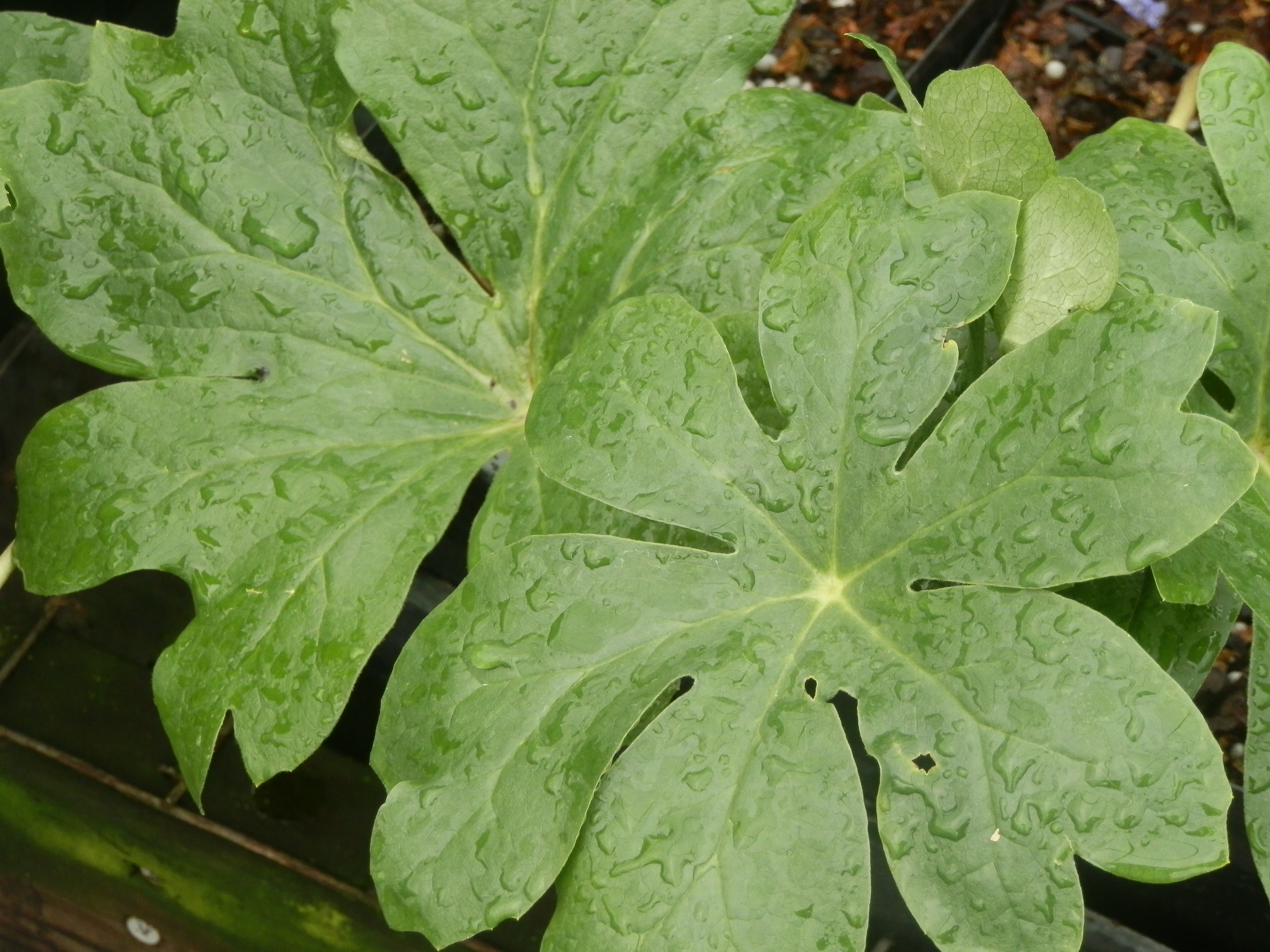
Take a walk in many wooded areas now and you might see low growing herbs with large umbrella-like leaves. They look a little like Lenten roses. Plants are found throughout the eastern half of North America from Canada to Florida.
One of my students brought me a sample recently for identification, so I thought I’d write about it. Deer, rabbits, birds and other wildlife never eat these leaves, so plants can form a solid carpet on the forest floor. If you look closely you’ll notice some have white flowers, which are mostly hidden by dense foliage.
Plants have either one or two leaves. If comprised of two leaves, these herbs will have a flower. Single leaved plants will not.
This plant is the mayapple (Podophyllum peltatum), also known as devil’s apple, hog apple, Indian apple, umbrella plant, wild lemon, and American mandrake. It is in the barberry family.
There is good reason why animals avoid mayapple leaves and don’t dig out roots. In almost all stages this non-woody plant is poisonous, in fact deadly poisonous.
Underground parts of the plant are the most toxic, but they have anticancer properties and are used in chemotherapy. The compound in question is podophyllotoxin, an alkaloid that is highly poisonous in even moderate quantity. Some Native American tribes even fashioned preparations rich in this chemical as a suicide drug. In my native Maine,

Healthy mayapple growing in moist woodland

Healthy mayapple growing in moist woodland

Penobscot Indians prepared mayapple roots and rhizomes in poultice form to control skin warts.
Podophyllotoxin is used to synthesize etoposide, teniposide and etopophos. These compounds have been used for the treatment of lung and testicular cancers as well as certain leukemias. These chemicals work, because they stop cell division and also restrain tumor production. Podophyllotoxin is also being modified and tested for rheumatoid arthritis treatment in Europe. Several podophyllotoxin preparations also can be purchased to treat genital warts.
Another medicinal use for this plant is as a laxative. If you are my age or older you might recall ‘Carter’s little liver pills.’ Mayapple comprised the active ingredient of these powerful laxatives. It’s probably good that the pills were little. Too much could have been a major problem.
The only part of the mayapple that is edible is the fruit, and that is only when it is fully ripe. Contrary to its name, fruits ripen in July or August, not May. When they ripen, deer will aggressively consume them. A patch of ripe mayapples is also a good place to find box turtles.
Egg-shaped fruits with multiple seeds are ripe when soft and emit a lemon-like aroma. Flavor of these berries is like a cross between a lemon and a fig. Fully ripe fruits can be eaten fresh, fashioned into preserves or used in baking. Discard seeds if possible, as they contain toxic compounds. This likely wouldn’t be a problem if you don’t chew any seeds.
Some people might be confused how a plant can be so toxic and yet other parts are edible. Don’t be. Mayapple is just one of countless plants like this.

Ted Manzer teaches agriculture at Northeastern High School.

Posted in foraging | Tagged , , , , , , , | Leave a comment

Can you beat a good salad?


This time of year we’re all looking forward to milder weather. Many of us have a tendency to eat heartier in the winter and for that we’ve found a few extra pounds. Oh, I know we can find fresh produce year-round, but it’s not local and old habits are hard to break anyway.
I love a good salad. Whether it’s from greens purchased at a grocery store or some wild ones I’ve foraged myself, fresh raw veggies with a little tangy dressing are top notch. I feel better about myself even if I have a second helping.
Salads let us express our artistic side. Practically nothing is out of bounds. I like hard boiled eggs, a little cheese, and a plethora of colors. Red onions and tomatoes, multi-colored peppers, black olives, orange shredded carrots, dark spinach and light colored lettuce all contribute to a meal that is as enticing to the eyes as it is to the palate. Fruits add sweetness, crunch and even more color.
Many of my favorite wild greens have begun to show themselves. Common chickweed, sheep sorrel, hairy bittercress, sowthistle, and field garlic are now in abundance. Florida betony tubers provide a great crunch and are nearing maturity. I can top it all off with some pecans or hickory nuts saved from last fall.
Salad greens are high in fiber. Eating a high-fiber diet can help lower bad cholesterol levels. If you frequently eat raw vegetables, you’ll likely have higher blood levels of powerful antioxidants like vitamin C and E, folic acid, lycopene, and beta-carotene. Antioxidants help protect the body from damage caused by harmful molecules called free radicals.
There are numerous diets out there and many promote the benefits of incorporating more raw food. I love to cook and don’t recommend we eat only celery, coleslaw and carrot sticks. Balance is what I’m after.
Many vitamins and a few minerals are water soluble and often the majority of them can be poured down the sink, especially if we overcook our vegetables and fruits. Even fat soluble vitamins like vitamin A can be lost by boiling and draining off the liquid.
The way that food is cooked is absolutely essential for avoiding unnecessary nutrient loss. We have to be careful not to overcook our vegetables. Five minutes can make an enormous difference in the nutritional quality of a meal.
I grew up with home canned vegetables, and the canning process destroys nearly all vitamin C and folic acid. That doesn’t mean I’ll stop eating home canned peaches or vegetable soup. I’ll make sacrifices elsewhere.
On the downside, we must understand that if we eat raw food we reduce a valuable safeguard. Cooking can destroy essential nutrients, but it also kills pathogens that can make us sick. Proper sanitation is especially important if we eat our foods raw. The bacteria E. coli, Listeria and Salmonella quickly come to mind, so it’s important that we keep our food prep area clean and wash our hands thoroughly. Protect your salad and protect yourself.

Ted Manzer teaches agriculture at Northeastern High School.

Posted in foraging | Tagged , , , , , , , , | Leave a comment

Flowering Quince is an old time favorite


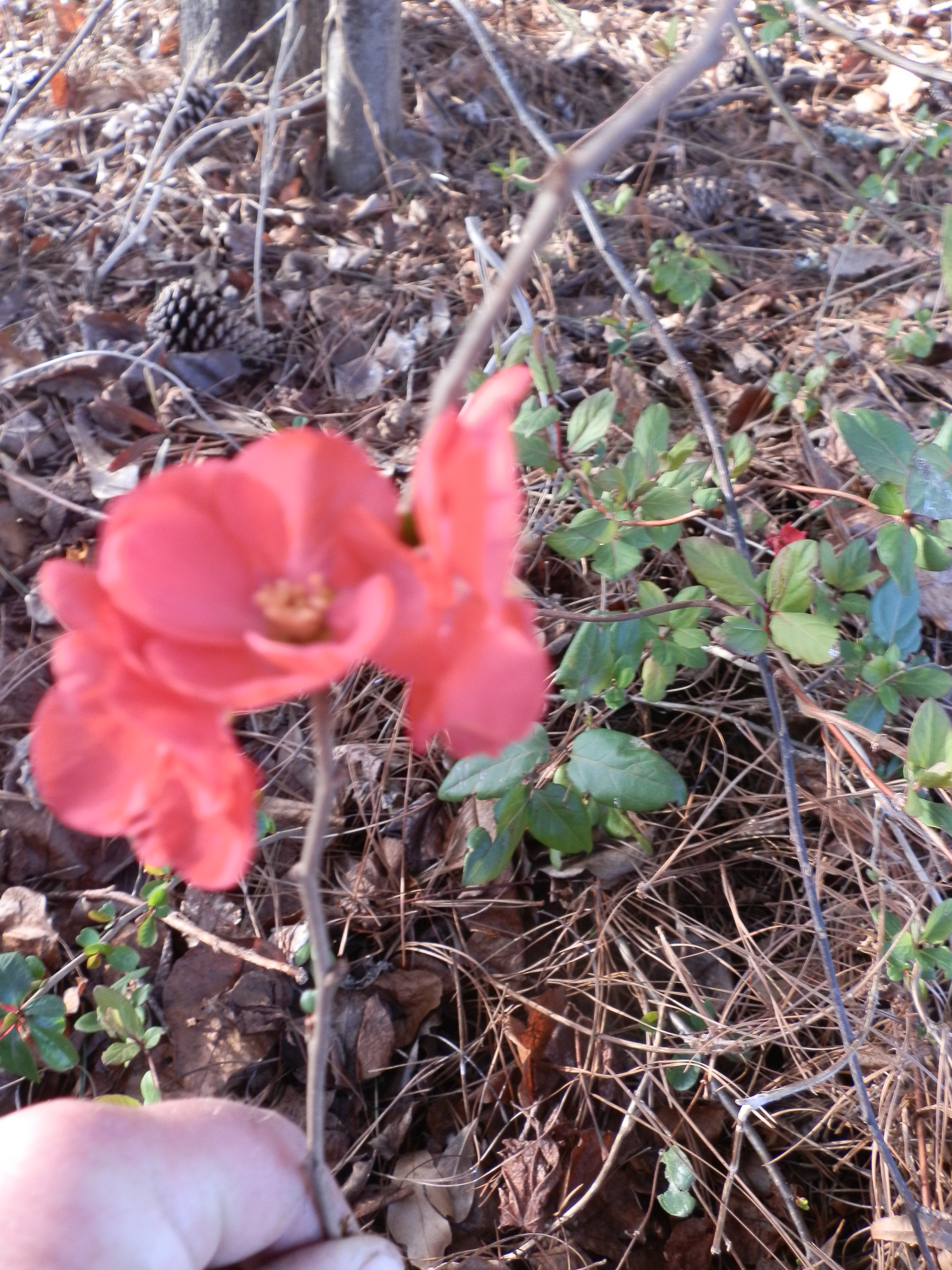
Despite this recent cold weather, spring is on its way. Many of the flowering trees and shrubs are budding and some are even blooming. There’s a beautiful flowering quince in my neighborhood that’s already showing lots of color. Its clusters of coral colored blooms, each a little over an inch in diameter catch my eye every time I drive by. White flowering varieties are less common but all quince flowers are fragrant.
Some newer cultivars are thornless, but many older types will tear you up when you prune them. Thorns are sharp and sturdy, so keep heavy gloves handy. The wood is springy, strong and will snap back at you. Shrubs can grow to ten feet tall with a spread slightly more than that if left unpruned.
Individual specimens are very long lived, perhaps for as much as a hundred years. I remember seeing a pair in an old West Virginia cemetery while studying soils in Graduate School. All the gravestones were set before 1900 and the place hadn’t seen any maintenance in years, but these two shrubs were still going strong.
These apple and pear relatives have small toothed leaves and grow well in a variety of locations. They tolerate poor soil, shade, and winter temperatures to -30 F. Bloom will be reduced in shady places though. Another drawback is that this spectacular bloom usually only lasts for a couple weeks. For this reason it is not as popular as it once was, but some newer cultivars are repeat bloomers.
Quince foliage turns yellow to red in the fall, providing color to the landscape. Dense thorny stems make flowering quince an excellent choice for a hedge to discourage your neighbor’s dog. People aren’t likely to wade through it either and it will puncture a football in short order.
Fruits ripen in the fall. They are edible, have a pineapple smell and are rich in vitamin C. Few people eat them fresh since they’re so sour. Yields are quite variable but they make a great addition to jellies. High pectin levels often make adding commercial pectin unnecessary. Flowering quince fruits are a great match for blueberries or elderberries, which are low in natural pectin.
Flowering quince foliage is food for the larvae of some butterflies, and the flowers attract bees. Hummingbirds flock to it. Since this shrub blooms so early, its nectar will draw the birds to your yard before you set out your feeders.
Fruits contain tannin compounds which are anti-inflammatory. Tannins inhibit histamine release, causing less swelling. Chlorogenic acid is found in these fruits and is responsible for the anti-inflammatory effects. Because of this, several herbal sources recommend flowering quince for treatment of rheumatoid arthritis.
Other reports claim the fruits have anti-microbial properties and strengthen the immune system. Still other sources tout this fruit as a remedy for migraines. It also is supposed to improve digestion. I was unable to find any known drug interactions associated with this fruit, but always check with your doctor before ingesting large doses of herbal supplements.

Escaped quince seedling in bloom

Escaped quince seedling in bloom

Ted Manzer teaches agriculture at Northeastern High School.

Posted in foraging | Tagged , , , , , , , | Leave a comment

English or French, Lavenders are a useful perennial herb


A week ago I was in a meeting when a colleague scribbled a note that I should write a column on lavender. I have not addressed that herb yet. A day later a student asked me about herbs for mouth sores. I decided it was time to put two and two together.
Lavender is a common decorative herb that has been used medicinally for centuries. The name comes from a Latin word meaning “to wash.” It is a common component in perfumes. Lavender is easily dried and also used in floral design both fresh and dried.
There are several species but all originated in the Mediterranean region. The two most common types are English and French lavender, (Lavandula angustifolia) and (Lavandula dentata) respectively, though neither is from England or France. English types are milder and better suited for culinary use. Camphor content is lower and bitterness is less.
All types tolerate dry soils and will struggle in wet areas. Soil pH should be near neutral for best growth and plants must receive full sun for at least six hours per day. They don’t require much fertilizer.
Lavender is a small shrub with dense narrow gray leaves and blue to violet flowers, which grow in compact or interrupted spikes. Plants bloom from late spring through most of the summer. Individual specimens seldom get taller than two feet and half that is more typical.
Many people confuse lavender with rosemary when plants are young. Even the aroma is somewhat similar. This small shrub occasionally escapes into the wild, but it is not invasive my any means.
Plants are susceptible to leaf spot and root rot fungi in our humid climate. One culturally redeeming feature is that few insects bother them. Deer and rabbits seldom do either. Lavender is also planted to repel pests of other plants. Fleas and moths are also discouraged by using lavender in closets and living areas.
You might not want to plant it near where cats can get hold of it though. There is conflicting information as to whether excessive amounts can be toxic to cats. Additionally, cats love the strong aroma and will tear the stuff up like they do catnip.
Flowers make a soothing tea and can be used fresh or dried. They have anti-bacterial, anti-fungal, anti-inflammatory and anti-depressant properties. Numerous commercial preparations of lavender essential oils abound. Most boast amazing claims of relieving indigestion, irritability, anxiety, exhaustion, tension headaches, migraine and bronchial problems.
I’m always wary of taking these concentrated products internally. It’s easy to get too much into your system and serious complications can result. Externally, the worst that usually happens is a little skin irritation and with lavender that is rare. Lavender external preparations are used to treat cuts, scrapes, burns, stings, rashes, muscle aches, mouth and lip sores, blisters and athlete’s foot.
Lavender can be a natural depressant. Therefore, people taking medication for this could easily be overdosed. If you are on any medication, always consult your doctor before consuming more than an occasional cup of tea or consuming large quantities in cooking.

Ted Manzer teaches agriculture at Northeastern High School.

Posted in foraging | Tagged , , , , , , , | Leave a comment

Osage Orange – Nature’s Barbed Wire Fence


These trees aren’t as common as they used to be. Years ago, Osage-orange (Maclura pomifera) was a common landscape and fence line tree. Some people called them hedge apples, since they were often planted and maintained as a hedge. When growing singly, they can get over 40 feet tall.
Wood is strong, dense, durable and flexible. Back when bows were made of wood it was a desired species for them. The grain is coarse and yellow to orange colored. Wood shavings produce a yellow dye, which can also be used to tan hides or color fabric.
The lumber is dense to the point where it generally doesn’t float in water. Density is 30 percent greater than most oaks. It is highly resistant to decay and hence was often used for fence posts. As firewood, it produces more heat than any other American species.
This tree, a member of the mulberry family, is easily identified by its large grapefruit-like fruits and sharp thorns. These fruits have a pebbly surface and look a little like oversized sycamore balls. While fruits are inedible they emit a citrus-like aroma.
Egg shaped leaves with pointed tips are smooth edged and emerge singly on the stems. Foliage and bark exude a white milky juice when bruised. Osage-orange is another one of those dioecious species, meaning entire trees are either male or female.
It’s a shame the fruits aren’t edible as female trees produce bushels of them. They are tough and fibrous and many a cow has choked to death trying to swallow them whole. I’ve heard the seeds are edible and similar to sunflower seeds, but I’ve never tried them. Extracting seeds and drying them down is a dirty process. The tannin containing latex is also in the fruits and stains ones hands much like black walnuts do. Cleaning the small seeds would certainly be tedious.
Prior to the invention of barbed wire around 1880, people planted Osage-orange hedges to contain livestock. These hedges were said to be ‘horse-high, bull-strong, and pig-tight.’ This is one of those trees kids rarely climbed either. The thorns are a killer.
So do these trees have any potential in the modern world? I think so. They are resistant to most pests and diseases, so they would make great landscaping trees if the thorn and fruit problem were overcome. Propagating mature growth cuttings from male trees is one answer. Several thornless cultivars are now on the market.
Other uses revolve around the milky juices found in the foliage, bark and fruit. This sap contains substances that repel insects. Some people even place fruits in cupboards for that reason. This sap also contains strong antioxidant compounds. One is tetrahydroxystilbene, which is a close chemical relative to resveratrol, an anti-inflammatory chemical found in muscadine grapes.
I’ll always have a soft spot for the Osage-orange. They were always great for pitching practice when I was a kid. This one tree had so many I could hurl them all afternoon without worrying about losing them. They were much cheaper than baseballs.

Ted Manzer teaches agriculture at Northeastern High School.

Posted in foraging | Tagged , , , , , , , , | 3 Comments