Black Walnut – Tree of Many Uses


Black walnut (Juglans nigra) is one of the most valuable native hardwood trees.  It has dark straight grained wood used for furniture and gunstocks.  If trunks are straight and no foreign material like nails are inside it likely would command the highest price per board foot of any tree on your property.

Black walnuts range over most of the eastern states from New York southward to Georgia and west to eastern Texas.  It is quite common in our region.  Leaves are alternate on the stem and each leaf contains many elongated blades.  If you cut a stem lengthwise you will notice a dark center that has air pockets or chambers in it.  This is called a chambered pith and is a primary identifying characteristic of black walnut and its cousin the butternut (Juglans cineria), whose range is a little more northern.  The only butternuts (white walnuts) found in North Carolina are in the western mountains.

Our native species has rich flavored nuts high in linolenic acid, an Omega 3 compound.  They also contain a compound called ellagic acid, an antioxidant which fights free radicals.  This compound also helps discourage cancer cells.

Nuts can be harvested once leaves begin to yellow and fall off.  If the squirrel population is high you will compete for them.  Nuts are covered by a thick light green husk, making them look a little like lemons or small tennis balls.  This husk must be removed or the bitter tannins in it along with mold residue can taint the nuts.  This task can be accomplished in several ways.  Commercial hullers are available but I use one of two methods, depending upon how many I have.

The first technique is to roll them under my foot on a concrete driveway until the husk loosens and comes off.  This works well if I have only a half bushel or so.  Large quantities can be hulled by spreading them out on a gravel driveway and driving over them for a few days.  You might damage a few, but you’ll get satisfactory results.  Once hulled the nuts can be dried and stored for a long time.

You can also crack them and seal the meats in freezer bags.  You can even lightly roast and seal them in heated canning jars with lids.  Now the cracking part can be a trick.  Shells are thick and you have to smack them firmly with a hammer.  The problem is that if you hit them too hard you will crush the delicate meats.  With a little practice it becomes easy.

Black walnut shells are very hard and used to polish metals.  Shells are ground and used in sand blasting equipment.  They can also be used in paints, cosmetics and explosives.

Walnut husks and inner bark can be used for many things, especially dyes.  Many cultures have used them medicinally, but any product that high in tannins would give me dosage concerns.  I’ve used bark and hulls to boil traps and tan hides.  I have some home recipes but will have to share them some other time.

Ted Manzer teaches agriculture at Northeastern High School.
Posted in foraging | Tagged , , , | 1 Comment

Elderberries – An Old-Fashioned Treat


Elderberries:  An Old-fashioned treat

I know you all have seen those saucer shaped clusters (umbels) of white flowers on the roadsides in early summer.  Toward the middle of the summer, reddish black berries about a quarter inch in diameter replace the white.  They are mildly sweet but should not be eaten raw, at least in large quantities.  Some people are sensitive to toxins they contain when not cooked.  Once processed into jelly, syrup or wine any concerns are eliminated.

These are elderberries (Sambucus canadensis) and can be identified by their leaves, which come out in pairs and are divided into multiple opposite blades.  It is one of the few native woody plants with opposite compound leaves.

The shrubs seldom grow over 10 or 12 feet tall, but can reach heights of 20 feet.  They produce large quantities of fruit and can thrive in wet areas like the edges of our ditches.

Probably most people have heard of elderberry wine, but since I’m not a winemaker I have other uses for them.  I like elderberry jelly, though I don’t take mine straight so to speak.  Elderberries make a fine jelly, but they are very low in pectin, so the mixture doesn’t jell well unless you cheat.  I like to mix in crabapple juice to coax it along a little.  I’ve never had trouble getting the concoction to set if I mixed elderberries about half and half with wild apple or crabapple juice.

If you don’t want to pollute your elderberries, simply cook down the sweetened syrup a little and can it to use on pancakes and other quick breads.  It’s even good on ice cream.  If you’re not into canning, you can freeze the berries in either a dry pack or a wet sugar pack.  It’s up to you.

Elderberries are high in Vitamins A and C.  Several chemicals in the berries, particularly flavonoids and anthocyanins, have strong antioxidant properties.  The Native Americans used elderberries for various ailments.  They contain a natural antiviral agent, and some people use it as part of their treatment regimen for colds.  Commercial preparations are available at many natural foods outlets.

There is one caution, however.  The stems, leaves, and green fruits of elderberry contain a toxin which releases poisonous cyanides.  These in large quantities could be fatal.  More than likely they would give you a mild upset stomach.  I have eaten copious amounts of raw elderberries with no adverse effects.  To be on the safe side it is important to clean your berries well and remove any bits of leaves, stems, and unripe fruits. As with anything new, always start with small quantities.

Cooking for any length of time will remove these toxins, but if you like to savor elderberry tea, you might wish to use caution in its preparation.  Use only ripe berries and never include any stems or leaves in it.

There is another reason for removing the leaves and stems.  They have a fetid odor.  You won’t want to reek of elderberries.  If you’re not a Monte Python fan, that last comment might slip by you.

Ted Manzer teaches agriculture at Northeastern High School in Elizabeth City (tmanzer@ecpps.k12.nc.us).

Posted in foraging | Tagged , | Leave a comment

Black Cherry


Discovering Black Cherry

Last November I was strolling around in a local hospital lobby when I noticed a chart showing common local poisonous plants.  Among them were several of my favorites, notably black cherry (Prunus serotina).

The leaves and stems contain a cyanogenic glycoside which can be fatal if consumed.  Though some sources claim medicinal qualities, I don’t recommend cherry tea in large quantities. I teach my students to identify black cherry by the fetid almond-like odor of the twigs.  I get a kick out of watching their noses wrinkle.

The fruits on the other hand are flavorful, though small and slightly astringent.  These drupes make terrific jams and jellies if you can beat the birds to them.  Most likely you will have trouble.

According to the chart I mentioned earlier these fruits are poisonous.  This is misleading as only the seed inside the pit contains cyanide producing compounds found in the leaves and stems.  The fruit is totally safe.  Simply discard the pits.  Combine the juice with apple for beautiful tasty jelly.

How and where do you find black cherry?  It is common throughout the eastern states to the Great Plains.  It is one of the first to leaf out in the spring.  The alternate leaves are roughly oval with a toothed edge.  They also have two small glands at the base of the leaf blade.

Twigs are covered with white dots called lenticels.  Elongated flower clusters bloom in spring and the fruits ripen from a dark red to nearly black.  When the tree matures the bark breaks out into flint-like platy scales with upturned edges.

Black cherry is a valuable timber producer.  For this reason alone it should be encouraged.  Fruits also provide wildlife food.  According to some sources young saplings can be poisonous to browsing livestock.  I question this as they are an important food source to deer and rabbits and I’ve never heard concrete documentation of cherry poisoning.

A less-common species with quality fruit is the choke cherry, (Prunus virginiana).  It lacks timber value and is often considered a woodland weed.  The fruits have a great cherry flavor, but are much sourer than black cherries.  Again, be sure to discard the pits.

Should you try to cultivate either of these two species or another more northern adapted one called the pin cherry (Prunus pensylvanica) you will encounter a problem called black knot.  This fungus disease causes stem cankers that look something like dried up animal droppings.  They don’t affect fruit quality, but they depress yields and look unsightly.

Eastern tent caterpillars are another problem.  These furry voracious creatures can strip all foliage from an average sized cherry tree in a matter of days.  Their droppings along with those from birds can litter cars, walks, picnic tables and anything else that might be beneath them.

Several effective insecticides control them, however.  If your eyes are keen you can destroy nests before they pose a problem.  Don’t let the downside discourage you.  Wild cherries are tasty and healthy if properly collected and consumed.  This is another bright colored fruit high in antioxidants.

Ted Manzer teaches agriculture at Northeastern High School.

Posted in foraging | Tagged , , , | Leave a comment

Alligatorweed


Alligator weed:  Kudzu of the Waterways

Alligator weed (Alternanthera philixeroides) is an invasive exotic menace.  It was first introduced to this country about a hundred years ago from South America in ballast water from ships.  Many exotic species have spread this way.

This perennial is generally an emergent or rooted floating plant, but it can invade adjoining uplands throughout the southern portions of the United States.  It has become a common terrestrial weed here.

Plants have hollow stems and can grow to 3 feet tall. Opposite, elliptical leaves are thick but non-succulent and are up to 4 inches long. Plants flower in summer with white, miniature clover-like heads at the leaf bases.

When alligator weed spreads it slows water flow.  This clogs our ditches, displaces native vegetation, restricts oxygen levels of water, increases sedimentation, interferes with irrigation and prevents drainage.  When plants die, decomposition lowers the free oxygen in the water and endangers many types of aquatic life.

Another problem is that by slowing down water movement, it is responsible for an increase in mosquito populations.  Mosquitoes prefer shallow stagnant pools and alligator weed facilitates that.

Several chemicals are labeled to control alligator weed, but applying anything to our water can raise red flags.  Concerns about water contamination can be real, especially immediately after treatment.  Only trained and certified applicators should ever apply pesticides to aquatic areas.

There are other solutions.  An insect called the alligator weed flea beetle, (Agasticles hygrophila), is quite effective at controlling this weed.  More importantly, the insect is quite specific in its appetite for alligator weed.

The alligator weed stem borer and the alligator weed thrips also help stifle this pest.  The thrips (distant cousins to the irritants that inhabit our wheat fields in late spring) are the only critters that effectively control terrestrial alligator weed.

Does it have any uses?  It makes a suitable aquarium plant, and yes, you can eat it.  It is readily available in spring, summer, and fall.  Mineral and protein content are high, though some essential amino acids are limited compared to meat proteins.  Taste is not objectionable, either.  That is provided you didn’t harvest it from some stagnant mud hole.

When eaten raw the taste is improved with salt and some type of dressing.  When cooked it also benefits from a little salt and butter or pork fat.  Many palates prefer some vinegar, but I don’t like it on my cooked greens.

Alligator weed would not be near the top of my list simply because of where it grows and the potential problems that could arise.  As mentioned earlier, it accumulates high levels of minerals.  It also accumulates heavy metals readily if they are present, so contaminated waters could pose major problems.

I look upon alligator weed strictly as a survival food, and not a sought after delicacy like some I’ve profiled.  The downside far exceeds the upside, and we would be fortunate if we could eradicate this foreigner from our landscape.  It’s the nutria of the plant world, but it does taste better than cattail, so I guess that’s a start.

Ted Manzer teaches agriculture at Northeastern High School.
Posted in foraging | Tagged , , , | Leave a comment

Wild Mint


Too much of a good thing?

There are few things more satisfying on a hot summer day than a tall glass of iced tea with mint.  If you’ve ever feasted on a thick slice of lamb roast with a generous slab of homemade mint jelly you know the meaning of the word decadence.  However, if your mint patch decides to encroach on more territory your opinion of the aromatic square stemmed herb might take a step back, maybe several steps.

We have numerous exotic species of mint that have found their way into our landscape. To us they are all wild, but there is only one native species, the wild or field mint, (Mentha arvensis).  The genetic variability of this species is large.  Some ecotypes have a slightly bitter aftertaste and others are tame.

The easiest way to distinguish this species from cultivated ones like spearmint (Mentha spicata) is by observing the flowers.  Cultivated mints have most of their bloom at the stem tips.  The flowers of field mint are borne in the axils of the leaves.  Flower color varies from white to pink to purple.  The leaves also vary from quite hairy to almost an absence of pubescence.  The shiny leaved ecotypes bear strong resemblance to their popular relative, Peppermint (Mentha piperita).

Nearly all mints spread vigorously by seed and by creeping underground and above ground stems.  Because of this they are invasive and their cultivation should be monitored closely in your garden.  Even a tiny sprig can root and form a new plant in as little as a week.

Several herbicides are labeled to control field mint and its exotic cousins.  However, most perennial weeds that spread rapidly by seed and vegetative parts are tough to control even with proven chemicals.

On the positive side, I like to consume mint fresh if possible, but it can be dried and stored in a sealed container for future use.  I feel it loses flavor and potency even under the best curing conditions.  This is especially true for candy, jelly, and tea.  Dried mint isn’t objectionable when used to spice meats and cassaroles.

Menthol is the main chemical extracted from field mint and is used worldwide for various ailments.  Menthol related chemicals are found in numerous types of products such as food, drinks, skin creams, cough preparations, and cigarettes. Candy, jelly and tea are my favorite uses.

Medicinally, mint has been used throughout history from one end of the body to the other.  It is used for oral care, upset stomach and flatulence.  Extracts can be applied topically to soothe muscle pain and spasms.

Numerous scientific studies show wild mint has antispasmodic, carminative, cholagogic, and antimicrobial properties, as well as cooling effects on the skin. The oil contains 95% of menthol and offers cytotoxic properties.  Mints show great promise for insect and disease control; I hope the research continues.

Used in their natural form mints are totally safe, but extracting the oils and using them internally can be a different story.  A dosage of 2 grams of pure menthol can be fatal.  Avoid mega doses of most things.


Ted Manzer teaches agriculture at Northeastern High School.
Posted in foraging | Tagged , , , | Leave a comment

Hairy Bittercress – A Treat


Hairy Bittercress – A Delightful Misnomer

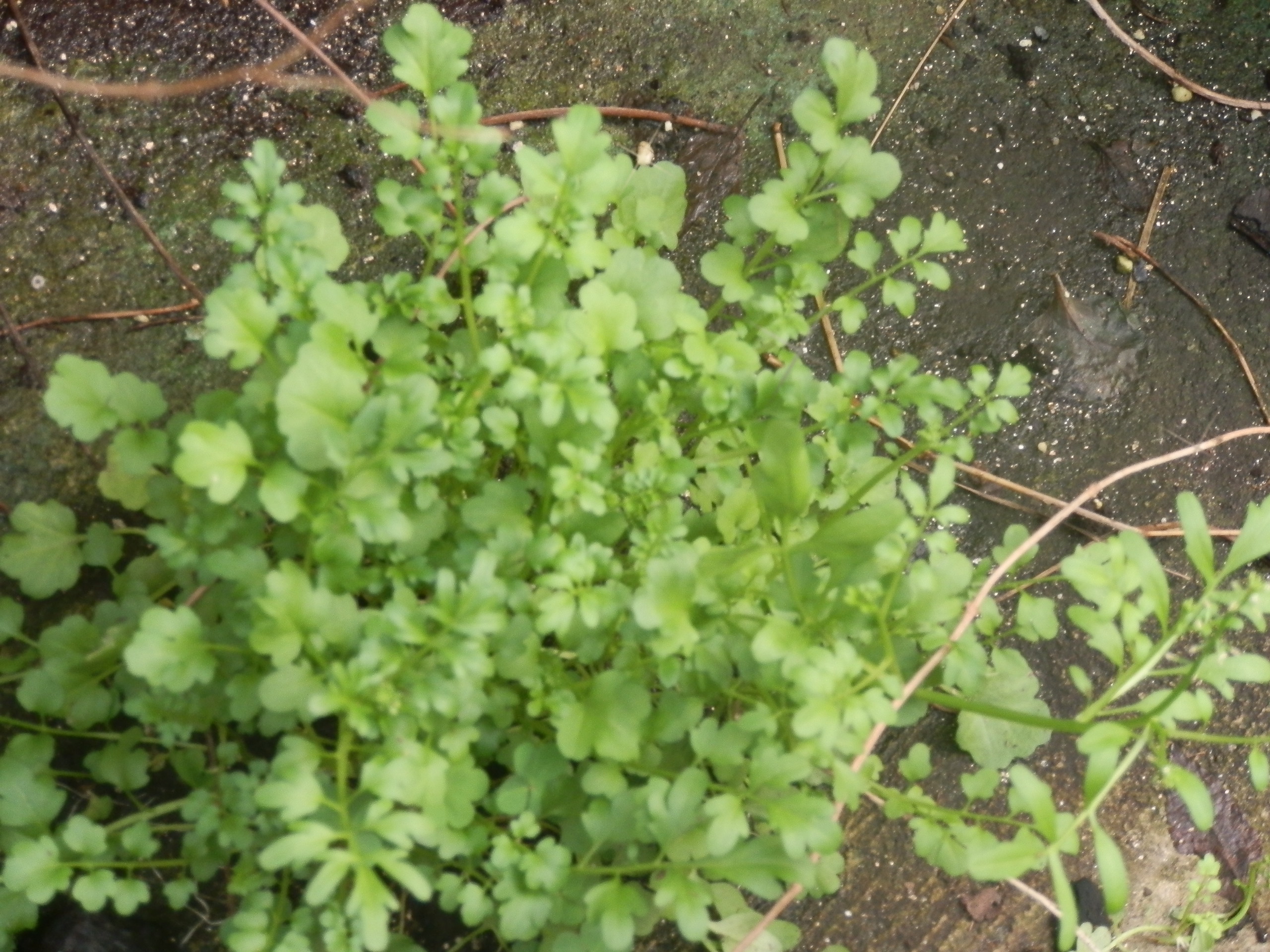
As far as I’m concerned, hairy bittercress (Cardamine hirsuta) is neither hairy nor bitter.  While the leaves have a slight pubescence (you need a hand lens to see it) it is certainly not objectionable as a fresh green.  As for bitter, I prefer to classify the flavor as slightly pungent and peppery, like a really mild horseradish or mustard.  The taste reminds me of kale, and the tender delicate texture, similar to alfalfa sprouts, makes it ideal for a salad.

Bittercress is an annual in the cabbage family and thrives in cool weather.  In eastern North Carolina, that means from November until mid-April.  After that the plants generally go to seed and quite likely might be bitter or at least hot like strong horseradish by then.  I never eat them once they set fruit.

Leaves emerge from the stem one at a time, but each leaf has multiple leaf blades.  The plant has a circular growth habit.  A basal rosette of leaves eventually gives way to spreading stems.  The flowers are composed of four white petals and are borne in terminal clusters.  Once they flower the plants mature rather quickly and soon form long slender pods called siliques.  When these are ripe you’ll know it.  Just touch one and watch it spew seeds everywhere.

As you might guess they can be difficult to control if you don’t want them.  The seeds are so prolific that you’ll want to spray or hand weed them before they mature.  These plants develop quickly, going from seedlings to adult plants in less than a month.  Seeds usually lay dormant through the summer and germinate in mid to late fall.

Bittercress is a common weed to flower and vegetable gardens and depending upon the size of the beds can be found in large enough numbers to be worth collecting.  Gathering enough for a good mess can be deceiving though.  The plants are delicate and largely water, so they cook down a lot if you desire them for cooked greens.  My favorite use is to spice up and stretch a salad.  You don’t need as much that way.

In either case, select young plants that have not flowered much or most certainly have not gone to seed.  Wash them off and use them like you would domestic watercress.  You can also mix them in with a mild green like spinach to give it a little zip.  My only suggestion is that you don’t overcook them.  Bittercress is tender and will turn to mush in a hurry if you’re not careful.

If salads are your pleasure, chop a few bunches of wild field garlic leaves and mix them in a salad with some bittercress.  It livens the lettuce.  Combine minced Cardamine and field garlic leaves with your favorite mild cheese, a little sour cream, and a little softened cream cheese for a smooth texture and cook in a crock-pot until thoroughly mixed.  Add a little dill weed if you like.  It makes a great hot dip for celery, carrots, pretzels, or even French fries.

bittercress - just the right size

Bittercress - just the right size

Older bittercress - showing siliques

Older bittercress - showing siliques

Ted Manzer teaches agriculture at Northeastern High School in Elizabeth City (tmanzer@ecpps.k12.nc.us.)

Posted in foraging | Tagged , , , , | Leave a comment

Wild Hickory Nuts


Wild Hickory Nuts:  Know Your Botany

I remember Euell Gibbons and his Grape-Nuts commercials.  He used to say that the malty taste of the cereal reminded him of wild hickory nuts.  I suppose many went and collected some just to check it out.  The problem is that there are many species of hickories in our range and some of them aren’t particularly delectable.

Hickories belong to the genus Carya, as does the beloved pecan tree (Carya illinoensis).  Pecans are common in older landscaping, and everyone has several in the neighborhood.  They are easy to harvest.  Just pick them up if you can beat the squirrels to them.  They are also easy to crack and extract the meats, which are sweet, mild and familiar.  Pecans are rare in the woods but common around town.  Take advantage of them, for so many go to waste.

Among the wild hickories espoused by the late Mr. Gibbons and common around here are shagbark (Carya ovata) and mockernut (Carya tomentosa).  They are both flavorful, though I prefer the shagbark even more than the prized pecan.  Shagbarks are rarer near the coast.

One disadvantage of these two hickories is that they have thick shells.  You’ll work for your rewards.  They are tough to crack even with a sturdy nutcracker, so a hammer is the preferred tool.

Another problem is that there are far more common species that are not tasty at all.  I suppose they are tasty, but the flavor is not pleasant.  The pignut (Carya glabra) and the bitternut (Carya cordiformis) are easy to find and squirrels eat them.  Red Hickory (Carya ovalis) is similar to pignut, but the seed is not as bitter.

All hickories have alternate compound leaves.  That means the leaves protrude from the stems singly, but each one has multiple blades or leaflets.  Red, pignut and shagbark usually have five leaflets.  Mockernut and bitternut have seven to nine leaflets, but the leaves on mockernut have a rough feel.  The species name tomentosa (Latin for hairy) implies just that.

The best way to distinguish shagbark from the rest is the bark.  See it once and you will never forget it.  Mockernut hickory has dark gray bark with a network of shallow ridges, usually in a diamond-shaped pattern.  Bitternut bark is much smoother.

Once you find a shagbark or mockernut tree, harvesting is a matter of finding the nuts among the litter of the forest floor.  Look for the bright cream-colored gems under the canopy.  Size varies from tree to tree and year to year.

Assuming you have identified the correct species, you’re still not out of the woods.  Another problem is the hickory nut weevil, which can ruin two thirds of the nut crop.  Look for small holes in the shells and discard any which have them.

If you can bring home a bucketful, crack them out, and separate meat from shells.  The taste will be worth it.  Use hickory nuts to substitute for pecans or walnuts in all of your favorite recipes.  Above all, learn your botany and taste a few before you collect too many.

Ted Manzer teaches agriculture at Northeastern High School

Posted in foraging | Tagged , , | Leave a comment

Florida Betony


Florida Betony – If you can’t beat it, eat it

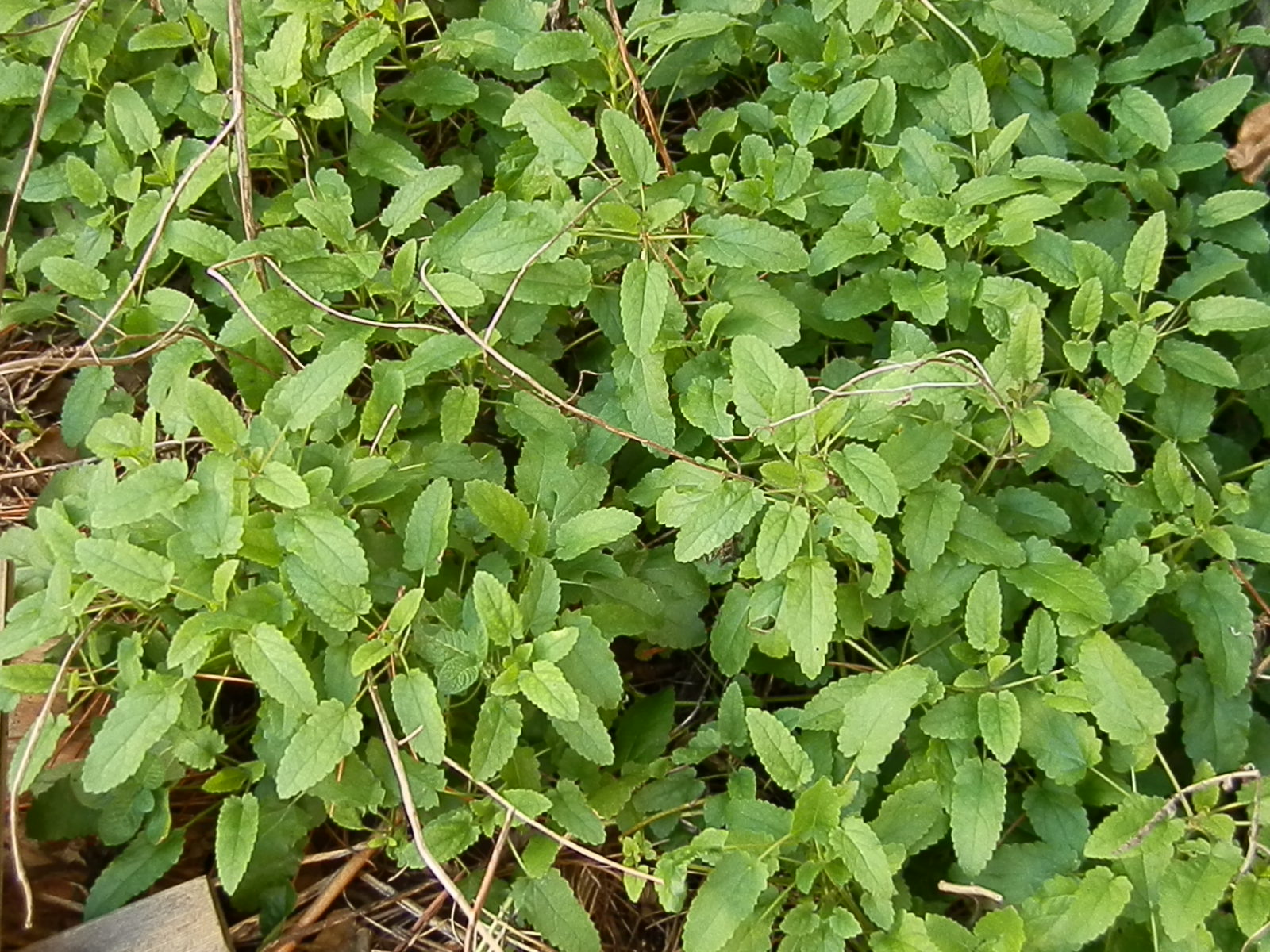
Sometimes the battle can seem hopeless.  Florida Betony (Stachys floridana) is a highly invasive cool season weed.  To make matters worse the square-stemmed devil is a member of the mint family, which causes most gardeners to draw a deep sigh.  Worse yet, it’s a perennial to boot.  Simply getting rid of the seed won’t save you when winter arrives.

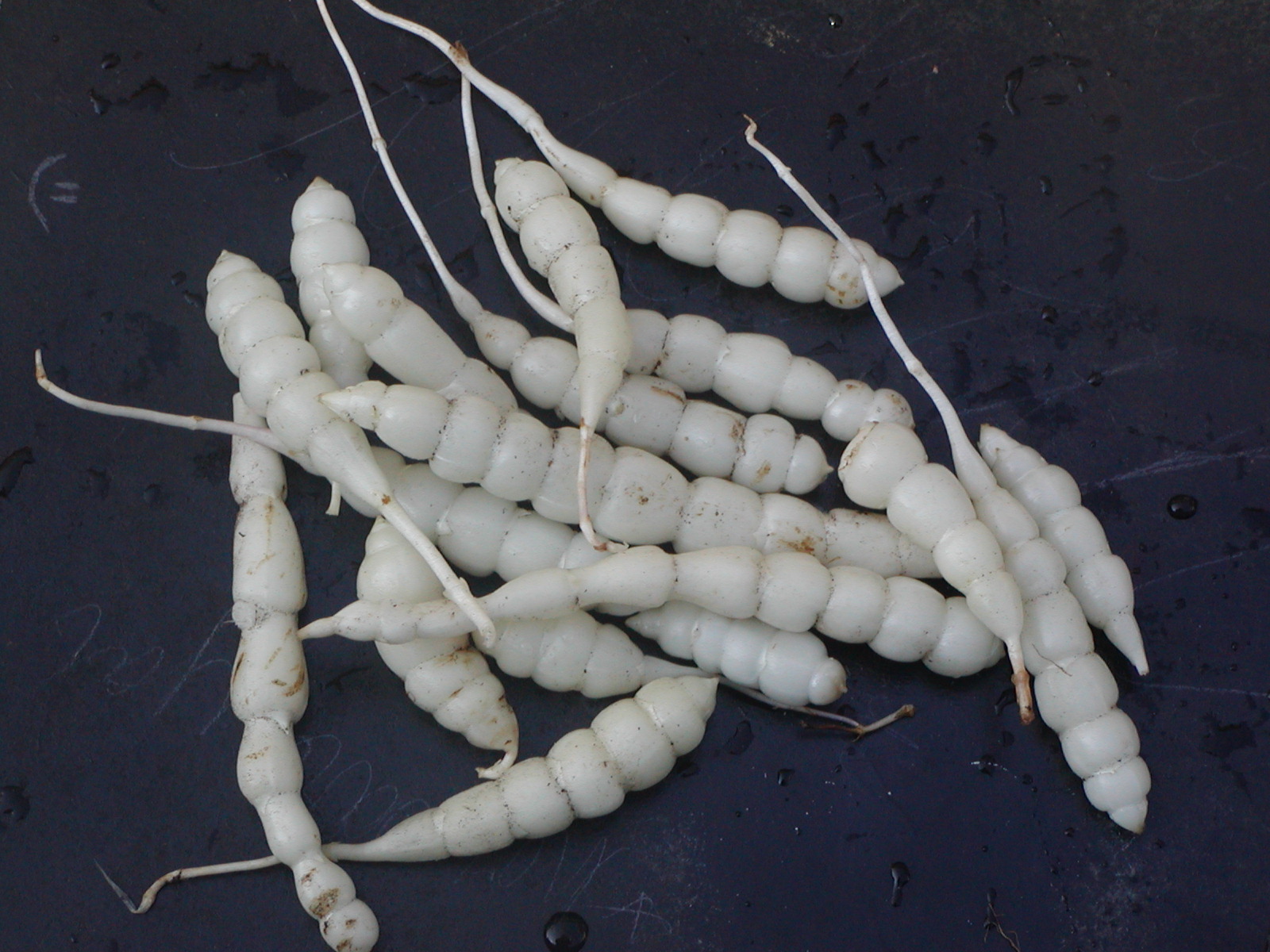
It spreads by long rhizomes with white tubers on the end that look like rattlesnake rattles, hence the common name of rattlesnake weed.  These tubers can reach lengths of well over a foot long on sandy soils, but three to five inches is more common.  I’ve been able to control it with Round-up, but the process can take several applications.  The detached tubers aren’t affected by the herbicide and can sprout when conditions are right.  Also, Round-up is non-selective and will kill your ornamentals if the spray hits them.

If the problem is in your lawn there are broadleaf weed killers that are labeled to do the trick, but repeat applications are also necessary.  Even if used properly they are not always totally effective.  I have found formulations containing Mecoprop to be the most effective, but this chemical is also very effective at killing flowers and shrubbery.  For those who prefer not to use herbicides, be prepared for hours of hand weeding and I mean copious amounts.  You’ll still lose.

There is a silver lining though.  Those long slender tubers are not only edible, they’re quite good.  They have a pleasing crunchy texture. The flavor reminds me of a cross between a water chestnut and a very mild radish.  I like them raw or stir fried. There are only about 75 calories per hundred grams and virtually no fat.

They make a great crunchy addition to a salad and can be pickled using your favorite brine recipe.  My mother has a sweet one that calls for peeled ripe cucumbers without the seeds.  This recipe also makes great pickled cauliflower.

Scrub them with a stiff plastic bristled brush or rough wet cloth to remove any soil residue.  The skin is not objectionable.  The tubers may be sliced and used as a substitute for water chestnuts.  Likely none of your friends will even notice.  Those that do might think they are eating expensive French crosnes or Chinese Artichokes, close cousins (Stachys affinis.), which can sell for as much as $150.00 per pound.  Sometimes you hear them called chorogi in Asian recipes.

I was playing around on the internet recently and found a website selling Florida Betony tubers for $20 per pound.  On a few occasions I’ve discussed this weed with my friend, Tom Campbell, Horticulture Extension Agent for Pasquotank County.  I have no extra time to fool with marketing it and neither does he, but we’ve both speculated that some enterprising soul could take it and run with it.  I’d like to see more of that.  Collecting and selling Florida Betony might fill a niche market and make some ambitious gardener a little money.  Let’s hope so.

Sweet Pickle Brine for Florida Betony

5 qts. Betony tubers                                                            1  1/2 tsp. turmeric

4 medium onions, chopped (optional)                             6 c, sugar

2 sweet red peppers (optional)                                         1  1/2 Tbsp. mustard seed

1 qt. vinegar                                                                          2  Tbsp. celery seed

I usually use an even mix of                                               3 Tbsp. salt (I use pickling salt)

cider vinegar and 1/2 qt. white vinegar.

Scrub tubers and cut if necessary to fit into jars.  Mix in peppers and put into kettle with chopped onions and add vinegar to only 3/4 depth of vegetable(about 1 quart).  Mix sugar, turmeric, mustard seed, celery seed, and salt; add to contents of the kettle.  Mix well and cook slowly at simmering temperature until pieces are just tender and can be pierced with a fork.  Ladle into hot sterilized jars and seal. Recipe is great for ripe cucumbers or cauliflower.

Florida betony tubers

Florida betony tubers

Young Florida betony foliage

Young Florida betony foliage

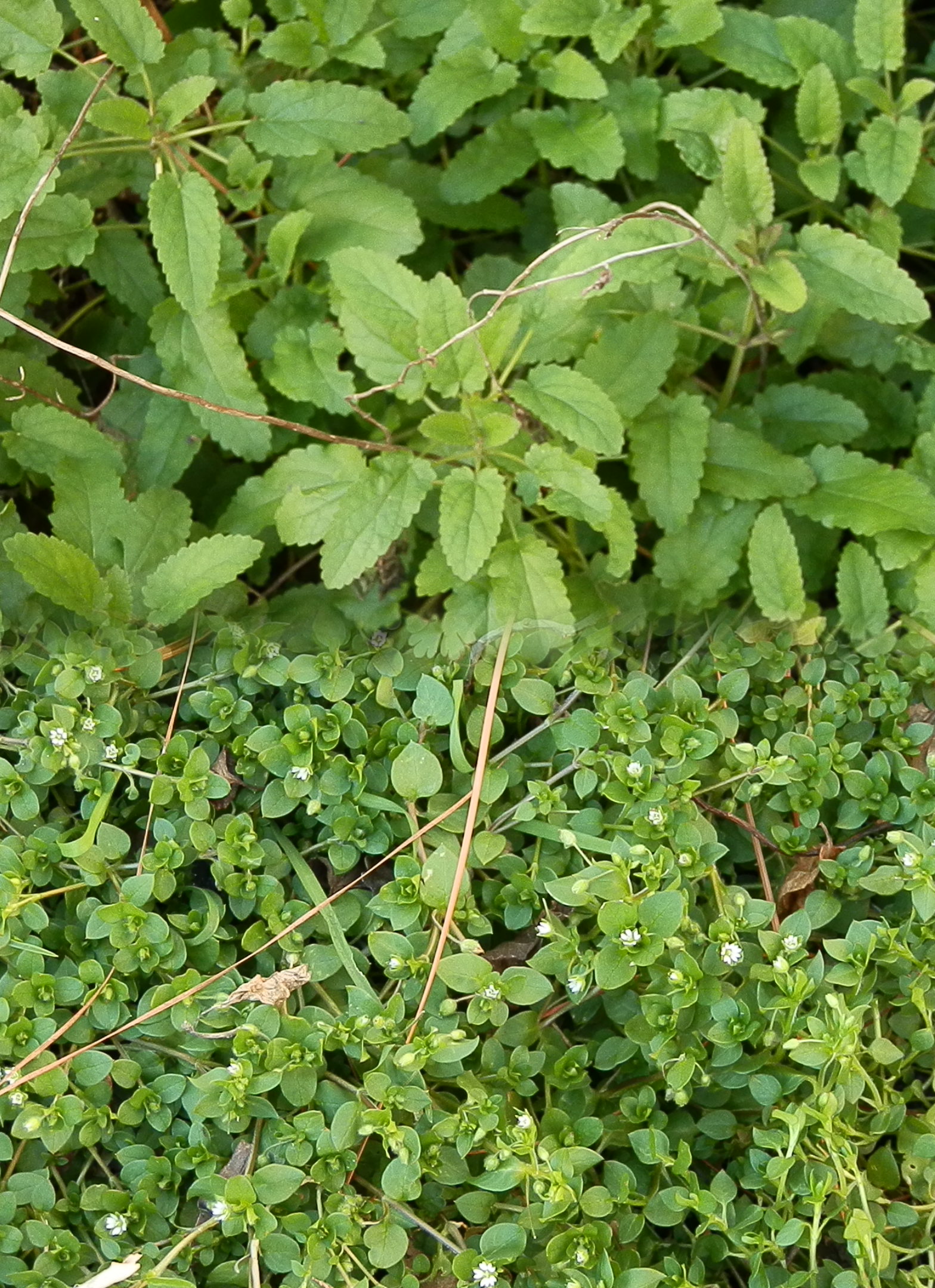
Florida betony above, common chickweed below

Florida betony above common chickweed below


Florida Betony Pickles - Two years old but still tasty and crisp

Florida Betony Pickles – Two years old but still tasty and crisp

Ted Manzer teaches agriculture at Northeastern High School.
Posted in foraging | Tagged , , , | 9 Comments

Love of Foraging


Collecting and utilizing items from the wild has long been a hobby and passion of mine.  I have been extremely fortunate to have many outstanding teachers.

First on the list would have to be my father, Dr. Frank Manzer, a retired Plant pathologist at the University of Maine.  He introduced me to identification and utilization of various weeds, berries, and fungi.  While my mother and I did most of the collecting, our entire family got in on the act.

My wife’s parents, who were struggling farmers in impoverished central West Virginia, were also avid foragers largely out of necessity.  I enjoyed collecting nuts, greens, berries, and other native bounties in West Virginia with them.

In college I was also lucky to have at my disposal two highly renowned plant taxonomists in Drs. Faye Hyland and Charles Richards.  These two were indispensable in my gaining proficiency identifying all types of wild plants.

While I (purposely) haven’t addressed any edible fungi in this column, I owe gratitude to the late Dr. Richard Homola.  He taught me mycology and was an all around great guy.  Through his tutelage I learned the importance of collecting spore prints and studying the entire sporophyte, not simply a section of it.

The reason I don’t wish to include mushroom foraging is simple.  It’s too easy to make a mistake and one error could cost a life.  The common meadow mushroom (Agaricus campestris) is nearly identical to the commercially raised ones (Agaricus bisporus) in all the grocery stores. It is completely safe and very good.  Some people call them the pink bottom mushroom. One problem is that they closely resemble the destroying angel (Aminita verna), which is also white, but with a white spore print and not a black one.

Aminita also has a cup-like base called a volva that holds the mushroom.  Both species have cream colored caps with scales and a ring on the stipe.  The genus Aminita accounts for about 90 percent of mushroom related deaths.

What is a spore print?  It is like a fingerprint for mushrooms; that’s one more identifying factor.  The spores may be light or dark colored, so it’s helpful to take a print on both white and dark paper.

Separate the cap from the stem (stipe) and lay it gills down on the paper.  In a few hours the spores will be released and the print will appear.  Note the color and don’t take any chances.

One destroying angel in a whole basket of meadow mushrooms could be enough to kill.  The two species are often found growing in the same areas at the same times.

There are numerous common, safer, and less confusing species, but unless someone is a serious aspiring student of mycology I suggest avoiding wild mushrooms.  We have so many wild greens, berries, and nuts, why take the chance?

Most of the best greens are available during the spring, fall, and winter.  Berries abound in the summer, and grapes, nuts, paw paws, and persimmons are plentiful in the fall.  I’ll continue to cover them as their seasons’ progress.

Ted Manzer teaches Agriculture at Northeastern High School

Posted in foraging | Tagged , , , | 2 Comments

Nature’s Aspirin


Nature’s Aspirin

I enjoy harvesting plants from the wild and we have numerous useful plants.  Black Willow (Salix nigra) is our most common willow species.  Willows are one of the most common trees used in making baskets, because the stems are so flexible. The wood is commonly used for many crafts.  Willow bark also makes a great medicinal tea.

Willows are common to wet areas, especially along ditches and stream beds.  They are among the first trees to leaf out in the spring and they grow very fast.  The bark has deep fissures and interlacing ridges.  Leaves are much longer than they are wide, finely serrated on the edges and the buds are covered with a single scale.  The plants are also dioecious, meaning male and female flowers are on different trees.

One thing to consider about medicinal plants is that dosage can vary greatly.  Bark, leaves, roots, flowers, and fruit don’t always have the same concentration of the desired ingredient.  Time of year, growth stage, weather, and mineral nutrition are main factors that can cause a variation.  We don’t always know how much to use. Just because plant is considered a non-poisonous, and it has not been altered in a laboratory doesn’t mean it is entirely safe.

A few months ago I had flu symptoms along with a terrible headache.  To remedy this I collected some nearby black willow bark and made a mug of medicinal tea.  It was very soothing.  Willow species contain a compound called salicin, which in earlier times was used in the synthesis of aspirin.  Salicin is an effective pain reliever and in no time my headache was gone.

Unfortunately, I became quite groggy and was pretty much wiped out for the rest of the day.  I assume my dosage might have been a little high, though I’m not totally sure.  That’s the problem.  Had I taken a known dosage of analgesic I could eliminate that variable.  It’s possible I might have consumed the equivalent of eight or nine aspirin, perhaps more.  It’s also possible the drowsiness was unrelated to the salicin.

Nevertheless I knew better, but I didn’t think.  Always consume small amounts of any wild oral pain reliever, unless you are fairly certain of the dose.  Topical preparations are a little different.  Jewelweed (Impatiens capensis) and various species of common plantains (Plantago sp.) can be used to control the dermatitis caused by poison ivy, oak, or sumac.  Simply crushing the leaves and stems and rubbing the mixture on infected areas is all it takes.  There is no danger of overdose.

My willow experience was not a major concern, since as soon as I could feel the effects taking hold I set the mug aside.  Also, I have no problems with aspirin.  It doesn’t upset my stomach and I am not on any medication that might interact with it.  Those who have trouble with aspirin should not consume willow or sweet birch tea either.  Both contain derivatives of aspirin.  To the rest of us they are great if used wisely.

One thing to remember is that when a plant is considered medicinal, that should be an indication it should be consumed in moderation.  We can eat our fill of wild greens, nuts and berries without worry.  You would never purposely pop a dozen aspirin at a time, so be careful with wild medicinal plants.

Ted Manzer teaches Agriculture at Northeastern High School in Elizabeth City (tmanzer@ecpps.k12.nc.us)

Posted in foraging | Tagged , , , , | Leave a comment