Cloching lets you enjoy your vegetable garden longer


I guess we always want what we don’t have. When I was living in Maine I wanted to grow crops that wouldn’t quite make it there. Our sandy loam soils were great for cucumbers, squash and pumpkins, but we had trouble maturing cantaloupes and watermelons. The season was too short. Even plastic mulches didn’t buy us enough extra growing time.

Growing tomatoes could also be tough if you were too generous with fertilizer. One of our neighbors learned that. Frost destroyed bushels of beautiful green ones. He never did harvest any ripe fruit.

Forget about sweet potatoes. We tried that once and most of the roots were no bigger around than your finger. When I moved to West Virginia my wife and I were able to grow many things I never could in Maine. I still wanted more and be able to harvest even later in the year.

Eastern North Carolina has a long enough season to mature just about any garden vegetable. That said, I still want to push the envelope even further. In a typical winter a fall garden can produce broccoli sporadically even through the coldest weather. Last year was an exception.

By cloching our garden we can stretch the season a month or so on each end and moderate the environment somewhat throughout the winter. There are several types of cloches. The word comes from the French word bell. The first ones were sections of glass in a bell shape designed to cover individual plants.

Some people use milk jugs or clear plastic bowls over plants. Some contraptions even have reservoirs to hold water. Advertisers boast plants can survive night temperatures in the low teens. This theory takes advantage of the high heat capacity of water, but it’s too much extra work for me.

The most common types used today involve making a frame with a series of curved pipe hoops and covering it with greenhouse plastic. In spring we can set up our cloch to help warm up and dry the area. This lets us plant tender crops earlier and maybe be the first in the neighborhood to harvest a ripe tomato.

Fall is when I like to protect things. Maybe it’s because plants are already growing and I don’t want to lose them. A single layer of plastic with no heater won’t save tender plants if temperatures drop into the 20s, but cloches can help keep things like tomatoes and peppers producing a little longer. Day temperatures under the cloch are warmer, so the plants still think it’s summer.

Where cloches really earn their keep is when we use them to produce fall greens, which can tolerate cold nights. Cloches buffer night temperatures but their real value is the increase in day temperatures when plants actually grow.

I love to pick broccoli all winter long and have plenty of greens for salads, the fresher the better. Since I don’t live further south I’ll just have to trick Mother Nature with a sheet of plastic.


Ted Manzer teaches agriculture at Northeastern High School.
Posted in foraging | Tagged , , , , , , , | Leave a comment

Wild strawberries


In late spring local strawberries are on the shelves of area grocery stores. Mine usually produce pretty well too. For small fruit lovers this is a great time of the year.

Strawberries aren’t really berries though. Berries have their seeds on the inside. These tasty red fruits are actually a multiple of achenes. The achene is the seed part recessed into the red receptacle.

The juicy part we eat is called a pseudocarp, which means ‘false fruit’, but few people probably care. Commercial strawberries are a hybrid of two wild species, the Virginia strawberry and the European strawberry. The Virginia strawberry can be found in every state except Hawaii and in every Canadian province.

Wild strawberries grow best in well drained soils. They also produce much better in full sun, although they may be found in shady places. They also tolerate drought well, unlike their domestic cousins.

White rose-like flowers are borne in clusters. Leaves form what botanists call basal rosettes and flowers emerge directly from these leaf bases. Plants don’t have elongated vertical stems.

Strawberries spread by runners, more properly called stolons

. Birds and other animals also disseminate large quantities of seed. Anybody who has ever eaten wild strawberries can vouch for their incredible flavor. Those who have picked any quantity of them know how much work is involved in accumulating any volume.

Wild strawberries are much smaller than the domestic types, particularly some of the newer cultivars that can be almost as large as tennis balls. Often wild fruits are smaller than our fingernails. The concentration of flavor and sweetness in wild strawberries cannot be duplicated though.

These tasty morsels are rare in our coastal plain region. This is a shame. I can remember spending entire mornings picking quarts of them when I was growing up in Maine. Wild strawberry pie or shortcake was a treat I’ll always cherish.

Sometimes we’d stumble onto some strawberries that looked a little different. They were bright red, but their seeds weren’t recessed into the fruit. Flowers were also yellow and not white. They also had no taste. These were Indian strawberries, and they are quite common here. Some call them snake berries.

Many people think they are poisonous but they’re not. Some publications even list them that way, but there are no harmful compounds in them. In fact, they contain significant amounts of Vitamin C. Their problem is simply that they have virtually no flavor whatsoever. I have eaten gobs of them over my lifetime and have never had as much as a single ill symptom. Still, I don’t recommend eating any because they won’t satisfy your taste buds.

Another strawberry species that looks a little like the Indian strawberry does have good flavor. This white flowered one is called the woodland strawberry. It is found in western North Carolina and much of the country.

This little fruit has a simple genetic structure compared to domestic types. Because of this, researchers are working with it to develop new strawberry varieties with better flavor. Tastier shortcakes could be on the way soon.


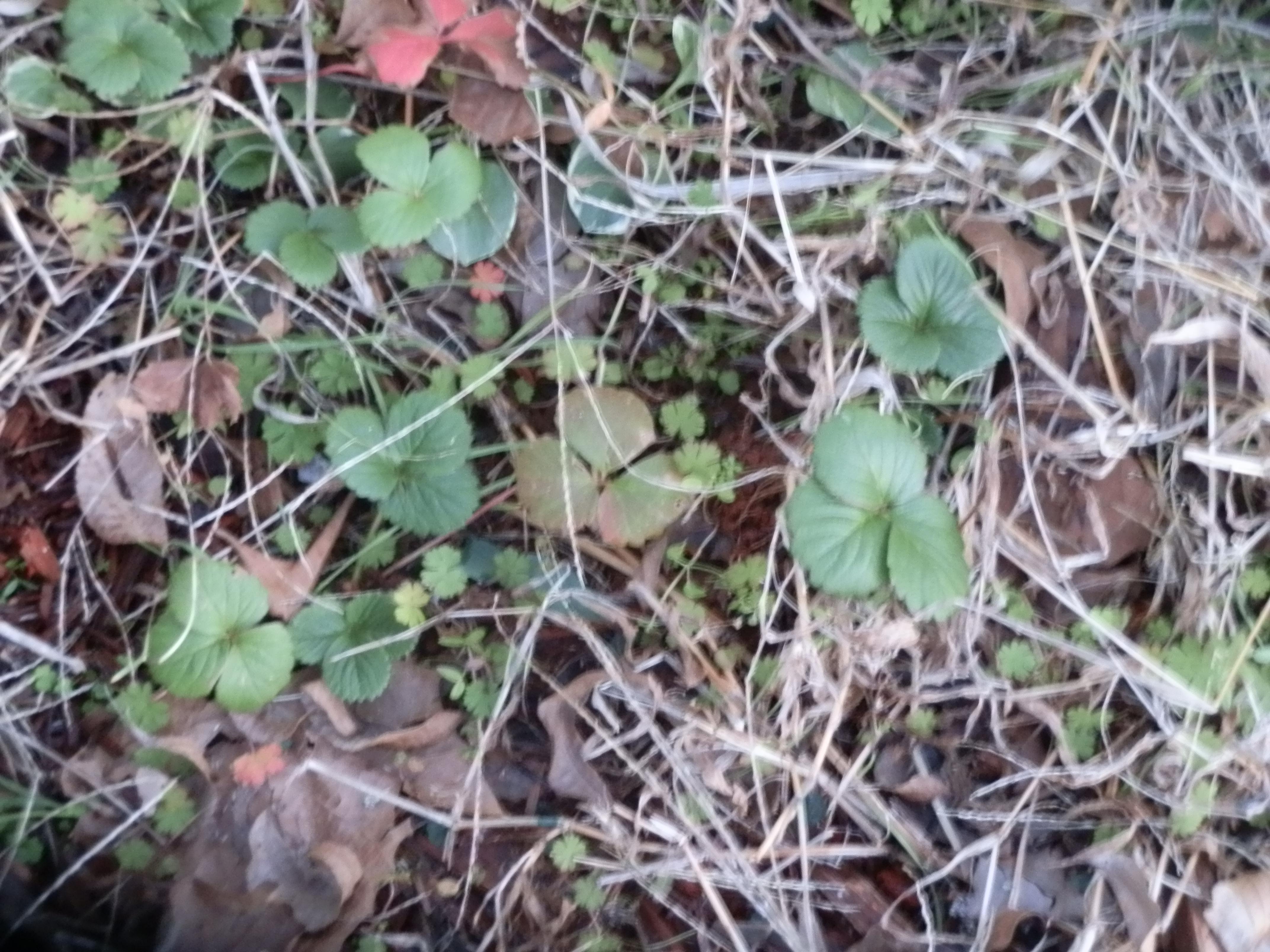
Strawberry foliage in mid-January

Strawberry foliage in mid-January

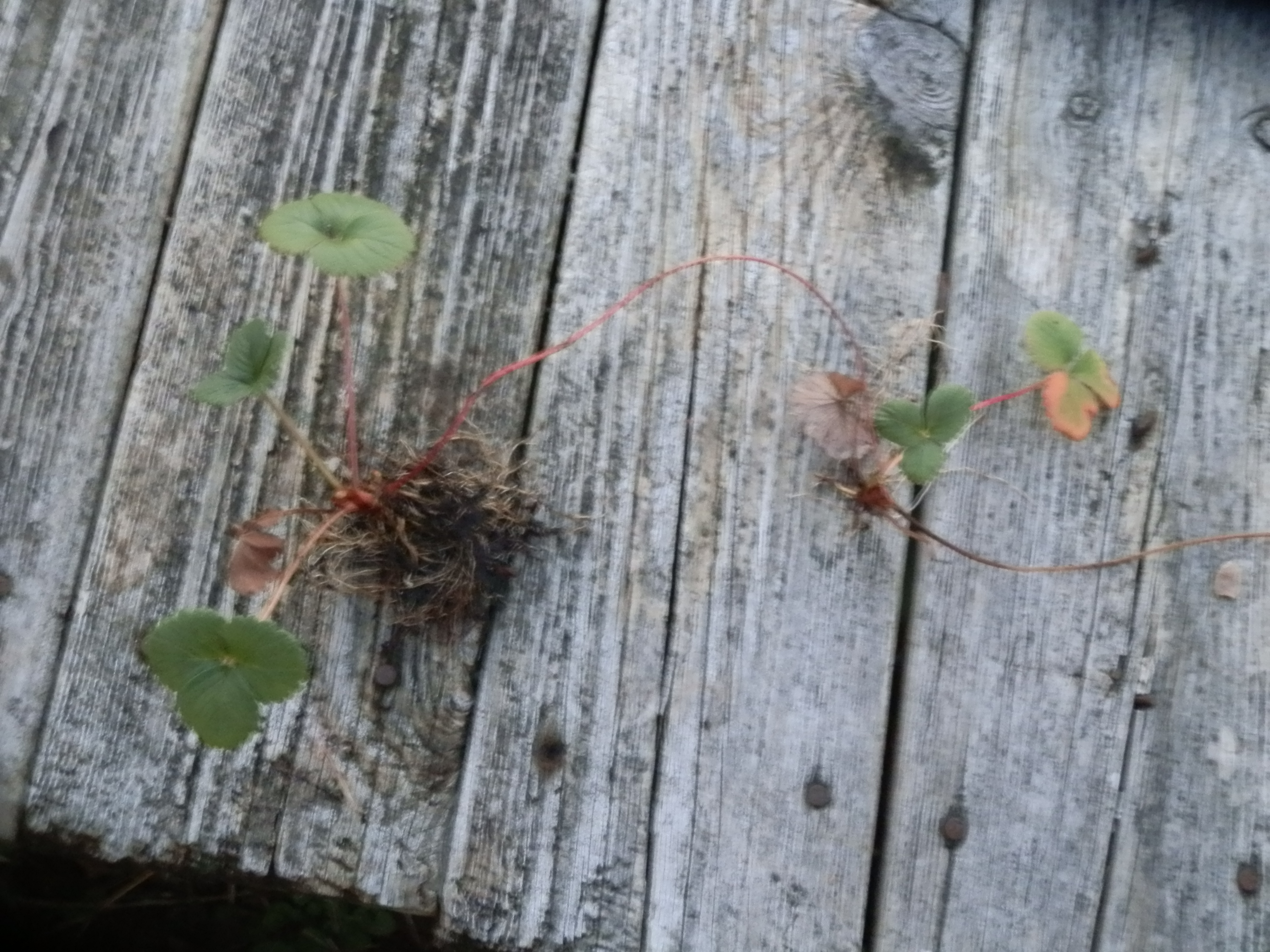
Wild strawberries dug up and ready for transplanting

Wild strawberries dug up and ready for transplanting

Ted Manzer teaches agriculture at Northeastern High School.
Posted in foraging | Tagged , , , , , | Leave a comment

It’s usually important to watch your spelling – Don’t lose a letter


Sometimes one letter can make a world of difference. Take the Yucca plant (Yucca filamentosa) for example. It is a common landscape plant for dry areas. You see it a lot in old cemeteries.  Some confuse it with the yuca, a cultivated cassava root found in grocery stores.

So what’s the problem? Yuca root is a major staple in tropical diets. Raw, it contains cyanide compounds. Don’t consume raw yuca root. When cooked it is used to make one of my favorite desserts, tapioca pudding. Some people like the roots cut in chips and fried. Others like them steamed, boiled or baked. Don’t plan on growing any around here as yuca is strictly a tropical plant.

Yucca is a relative of the agave plant used to make tequila. Roots have bitter chemicals called saponins in them. They are poisonous but make a good soap. Don’t dig them out of your landscaping and think they are the same thing. Prolonged cooking reduces toxic properties, but doesn’t increase palatability enough for table use. There are about 40 species of these tough sharp-leaved plants, but none have edible roots. They aren’t even remotely related to what you see in the store.

Above ground parts of the yucca plants have numerous uses. Flowers are edible but benefit from cooking. Leaves can be pounded and the fibers used to make rope. The sweet fruits are edible, but they have very strong laxative qualities.

Yuccas are great for landscaping in areas where water shortage is common. They are also superb where deer are a problem. Pets rarely tear them up either as leaves are usually tipped with sharp spines. They also require practically no maintenance, which is probably why we still see remnants from abandoned cemeteries over a hundred years old.

Plants produce large sprays of sword-shaped leaves that radiate from the central stem. Some stay low to the ground and others get quite tall with upright heavy stems. Leaves are usually bright green as few diseases affect these tough plants except on wet soils.

Yuccas have fragrant blooms in spring and early summer. The flower cluster is usually large. Many are more than three feet long and nearly as wide. Individual flowers are cream colored and about two inches long. Shaped something like tulips, they have six petals that face downward. Plants can grow quite well in shade but they require full sun to bloom.

Yucca extracts are part of many holistic medicines to treat a variety of ailments. Joint inflammation is probably the most common use. Some preparations claim to be effective for treating migraine headaches, colitis, ulcers, gout, and hypertension. Other sources suggest yucca preparations are effective for preventing of blood clots and for liver, kidney and gallbladder problems.

These extracts are derived from root tissue, so I would suggest caution. Overuse of saponins (chemicals largely responsible for the positive results) isn’t healthy. Always check with your health professional before using these formulations and don’t try to make them yourself. Also, when trying anything new, check your spelling.
 

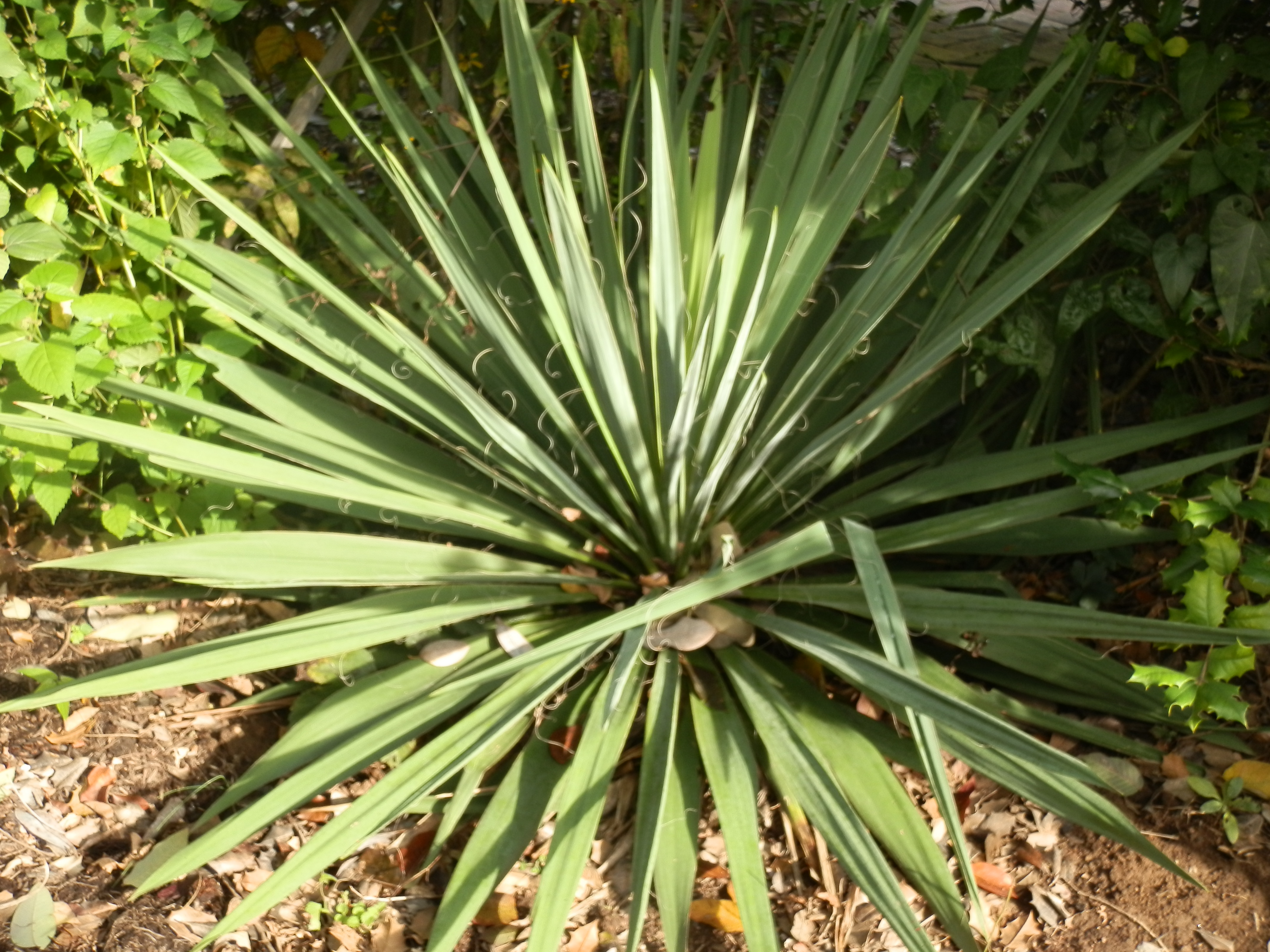
Large Yucca on the side of the road in eastern North Carolina in late January

Large Yucca on the side of the road in eastern North Carolina in late January

Young yucca in a landscape

Young yucca in a landscape

Ted Manzer teaches agriculture at Northeastern High School.

Posted in foraging | Tagged , , , , , , , , | Leave a comment

Loquat – A prolific subtropical fruit


Back in mid-June of 2013 I took several students on a plant identification outing to prepare them for competition. Loquats weren’t on the list of plants they needed to learn, but the kids were attracted to them. Fruits were at their peak of ripeness and we ate a bunch of them.

They argued about the flavor but all described it as very sweet. Some said the pulp tasted like apricots, while others pegged the flavor more like a mixture of mango, peach, pineapple and orange. Nobody who mustered the nerve to try them was disappointed.

Loquats (Eriobotrya japonica) grow in clusters and are yellowish orange, nearly round and about one and a half to two inches in diameter. Each fruit contains anywhere from two

to five large brown seeds. For best results allow loquats to ripen on the tree. Skin is slightly fuzzy but edible. Ripe fruit had a refrigerated shelf life of less than two weeks.

Trees may reach heights of 30 feet, but most of the mature specimens we saw were less than half that. Leaves are fairly large. Some were close to a foot long and three or four inches wide in the center. Leathery evergreen foliage is dark green and glossy on the upper surface with white to rusty colored hairiness on the underside. New growth is sometimes tinged with red.

Loquats are native to China but thrive in Japan and have been cultivated there for more than a thousand years. They don’t grow well in extremely hot climates but can’t tolerate temperatures of less than about 15 degrees. Fruit can be damaged or killed at temperatures below 20, so in some years trees might not fruit.

Trees are wind tolerant and grow best in full sun, but also do well in partial shade. They draw interest, which makes them a great specimen tree for landscapes. Loquats thrive on sandy soils to those containing mostly clay, but good drainage is crucial. They aren’t heavy fertilizer users.

Flowers are pollinated by bees and other insects. Usually fruit set is enhanced by crosspollination, so if you plant commercial cultivars you might want to plant two different ones. If plants are grown from seed this isn’t necessary as long as you plant two.

Fire blight, caused by a bacterium, is the major disease of loquats and infections can be severe. Many pears have similar problems. Timely pruning and sanitation are the best remedies as bacteria diseases are usually difficult and expensive to control in plants.

Loquats are great when eaten fresh. However, since they have a short shelf life it is often necessary to preserve some. They bake and can very well. Possessing high pectin content similar to apples makes them a great candidate for jams and jellies. These sugary fruits are also quite suitable for making wine.

Herbalists state that consuming loquat leaf tea or helps regulate blood sugar levels and break down blood alcohol. Numerous other claims are touted. The reassuring part here is that even if benefits are exaggerated no side-effects have been found.


Young loquat tree showing some winter injury

Young loquat tree showing some winter injury

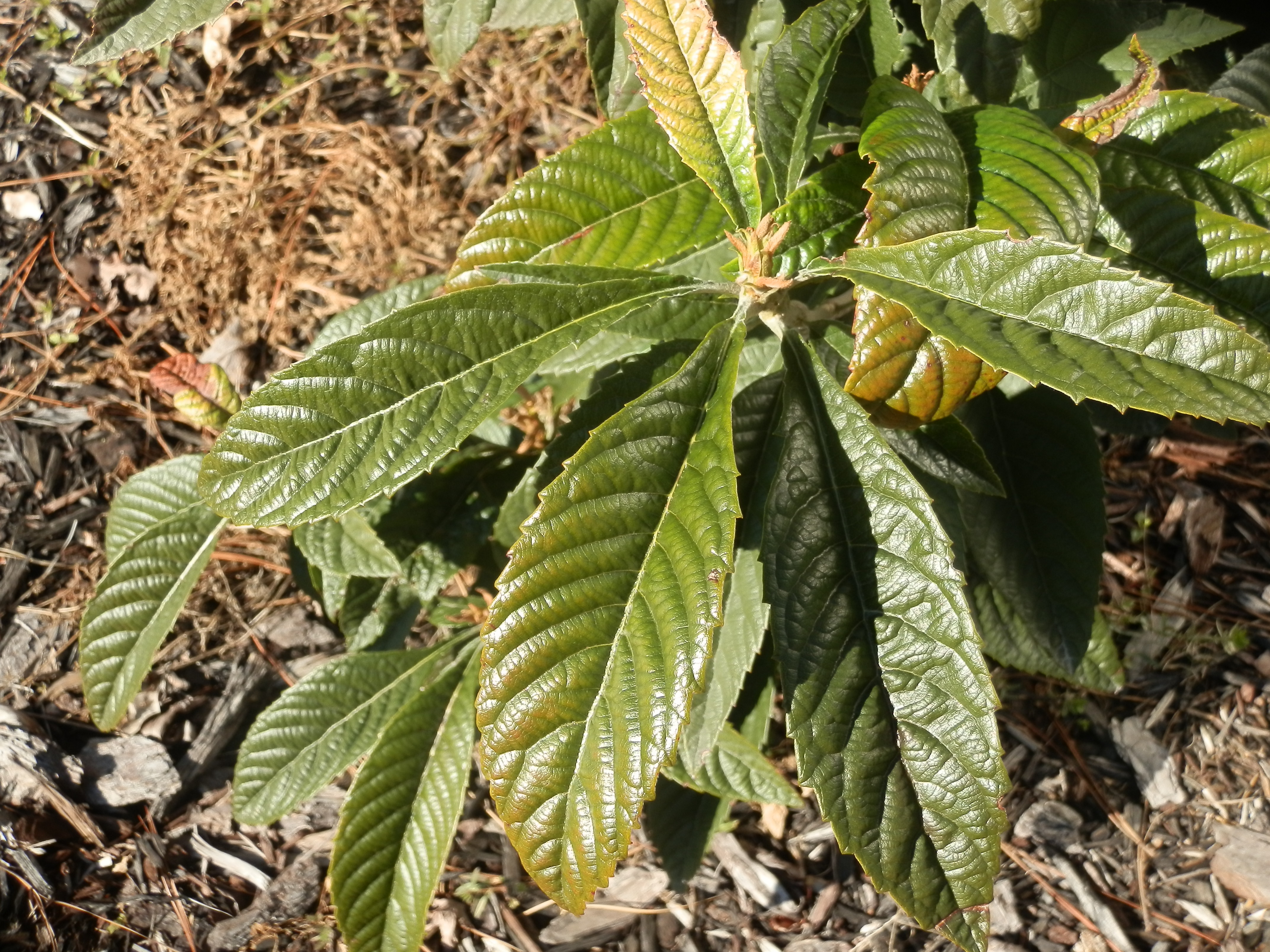
close-up of loquat foliage

close-up of loquat foliage

Ted Manzer teaches agriculture at Northeastern High School.
Posted in foraging | Tagged , , , , , , | Leave a comment

Sometimes I wonder how people come up with crazy plant names


A common garden and lawn weed in the Southeastern US is Asiatic false hawksbeard

(Youngia japonica). That’s a pretty unusual name considering hawks don’t even have beards. I honestly can’t begin to understand that one.

Numerous plants have crazy names but false hawksbeard is about the most unusual. It’s a herbaceous plant with soft crepe paper textured leaves growing in a circular pattern. We call this growth type a basal rosette and it’s common to members of the composite family.

This family is highly evolved and contains lettuce, sunflowers, dandelions and many other plants. Flowers are comprised of a ring of rays that resemble petals. Some can be difficult to distinguish. There are thousands of yellow flowered composite weeds, sometimes prompting botanists to curse them.

This one has foliage that strongly resembles young Gerbera Daisy plants. Flowers are dandelion-like but smaller and in clusters up to two feet tall. Unlike dandelions, flower stalks are solid and not hollow and latex filled. Yellow petal-like rays dry up and fluffy seeds are blown by wind. To compound matters, plants are prolific seed producers.

False hawksbeard grows well in sun to partial shade. It’s what we call a hardy annual and it tolerates substantial subfreezing weather. It’s also non-native and invasive, but preventing plants from flowering can go a long way toward controlling them.

False hawksbeard has no underground structures which can perpetuate new plants. This makes control easier. Plants are nuisance weeds in lawns and gardens but certainly not noxious ones. They seldom spread in large numbers to wilderness areas.

When plants are young they make tasty and tender salad greens. If cooked greens are more your passion they are fine for that too. Just don’t overcook them. I think false hawsbeard greens far exceed dandelion for texture and mild flavor, and gathering enough for a meal is rarely a problem.

Once plants flower the foliage can be bitter and I suggest pursuing other table options. Leaves are the only edible parts of this plant and they should be young. Plants grow pretty much all year, but greens seem to be most palatable in cooler weather.

Many medicinal uses are listed for this plant, but specific information is sketchy. I’ve never collected this species for anything other than salad or cooked greens. Several sources claim it has been used to treat snakebite, conjunctivitis, skin disorders, tonsillitis, toothache and urinary tract infections.

I would refrain from using any herbal medicine without consulting a medical professional. Too many people post information on the internet that they simply parroted from someone else. Avoid chain letter holistic medicine. It discredits legitimate herbalists.

That said, Asiatic false hawksbeard foliage is completely safe. Plants show no toxicity to pets and they aren’t difficult to control even though they are aggressive. Most broadleaf herbicides will kill them. However, they are normally only prolific in the winter when mowing is limited, so why worry about them unless you want the perfect lawn. Something with a name that strange needs a little love.


This one is growing under the benches of our greenhouse and it is a little past its prime as food

This one is growing under the benches of our greenhouse and it is a little past its prime as food

False hawksbeard showing the yellow flowers

False hawksbeard showing the yellow flowers

Ted Manzer teaches agriculture at Northeastern High School.

Posted in foraging | Tagged , , , , , , , | Leave a comment

Shiny cudweed and rabbit tobacco: Weird names, same plant


I wandered my yard on Thanksgiving Day and found the most obvious plants still green and growing I’d already featured in this column. Then I noticed a low growing annual herb that had to join the rest. I smiled since it doesn’t just have one weird common name. It has several.

Shiny cudweed ( Gnaphalum americanum), also called rabbit tobacco, has basal leaves that grow flat against the ground. This plant is also another member of the composite family. Foliage is white on the underside due to fine white hairiness, and the leaves have a smooth edge. Overall foliage color tends to be light green.

In spring stems elongate and plants are more distinct. Faint purple flowers are not very showy. They give way to fuzzy seeds as do many composites. Another related species sometimes found here is purple cudweed( Gnaphalum purpureum), which has pale

greenish purple leaves that seem to contrast more with their surroundings.

Shiny cudweed was introduced from South America and thrives on sandy soils. It tolerates a wide variety of light and pH levels and will grow on infertile sites. It’s common in the Southeastern US but is absent in much of the country.

A third and less peculiar common name for this plant is life everlasting, which implies it has medicinal value. Other bizarre names are fussy gussy, white sweet balsam, Indian posy and cats foot. Many different names often indicate many different uses. For centuries this invader of our landscapes has been consumed in different forms to treat a variety of ailments.

One method is to dry and smoke the leaves. Supposedly this will lessen the effects of the common cold and believe it or not, asthma. This use is probably where the tobacco reference came from. Early settlers and Native Americans consumed the herb this way. I suspect some people smoked it because they didn’t have the real thing and not specifically for medicinal reasons.

Inhaling smoke is not something most modern doctors would prescribe, but the plant is no relative of tobacco and contains no nicotine. Instead of inhaling the smoke, some people make a simmering potpourri to inhale vapors for this purpose.

My only experience has been to make tea out of the leaves.  Some commercial herbal teas contain it too. It’s widely accepted as helpful to treat cold symptoms too. The tea is useful as an expectorant and also soothes the mouth and throat. Some also use it for hay fever.

Several sources claim shiny cudweed can control insects and spiders. No special treatment other than drying is necessary. Plant material should be placed where pests frequent. Some even use it on the floor of birdcages and pet bedding. There wouldn’t be any danger from chemical residue, but my biggest concern would be dealing with the mess of dried leaves, stems and flowers everywhere.

If you consider this plant a weed and want it removed from your lawn, it’s not difficult to control. Most inexpensive general use broadleaf herbicides kill it, usually in a single application.


Shiny cudweed on shaded turf in January

Shiny cudweed on shaded turf in January

Ted Manzer teaches agriculture at Northeastern High School.
Posted in foraging | Tagged , , , , , , | Leave a comment

Aromatic tree from down under


I recently pruned my eucalyptus tree (Eucalyptus polyanthemos) at school. It has grown into a gorgeous specimen in the last ten years or so. Several times I’ve been tempted to buy a stuffed koala to stick in its branches and see if anyone notices.

We get regular requests for clippings by gardening enthusiasts who want to try their hands at propagating this Australian beauty. The problem is that eucalyptus won’t propagate by cuttings at any time of year or stage of growth even using rooting hormones.

Mine hasn’t started producing seed yet, but even when it does it’s not like planting garden seeds. Germination time of my silver dollar eucalyptus species is over 80 days. That’s plenty of time to make a mistake and lose the seedlings. Weeds will creep in too.

Eucalyptus grow well in full to partial sun and are quite drought tolerant. Take care to choose a protected spot as they are marginally hardy here. Recognizing microclimate will pay dividends. This past winter though it took a heavy hit. Temperatures hovered in the low teens and it has struggled this year but it’s now on the mend.

In its juvenile stage, nearly round leaves emerge from the stem in groups of two and look like silver dollars. Blades connect to the stem directly, much like a zinnia, with no stem-like petiole. Color is a brilliant greenish blue. My tree is a little over 20 feet tall and growing fast.

Eventually the leaves begin to change. Some develop short petioles and blades become more elongated and pointed. This is the adult foliage and the metamorphosis is not unique to eucalyptus. Many junipers change texture as plants mature.

Our specimen treats us to the strong aroma of menthol, but it hasn’t quite made it past the juvenile stage yet. I keep looking for small flowers in clusters of three and some changing foliage, but I’ve yet to find any.

More than 500 species of eucalyptus thrive throughout Australia and much of the South Pacific. They are among the tallest trees in the world.

Most people are familiar with eucalyptus as it is a common component of flower arrangements and a familiar addition to cough drops. Some people use the foliage as simmering potpourri to freshen stale air.

Eucalyptus oil is easily extracted and contains chemicals that help control pain and inflammation. Hence, it is marketed in large quantities. Extracts generally concern me and this one is no exception. The attitude that if a little is good then more is better is dangerous. Undiluted eucalyptus oil can burn the skin and half a teaspoonful taken orally

in one dose could kill you.

Eucalyptus leaves contain chemicals that might help control blood sugar. They also contain cineole, which helps kill fungi and bacteria. Their ability to clear nasal passages has made eucalyptus leaves a staple for respiratory maladies. Eucalyptus has even been used to treat genital herpes, bleeding gums and ulcers.

There appear to be many interactions to prescribed medications. Most deal with the liver’s ability to break down foreign chemicals in the body. Checking with your doctor or pharmacist would be crucial before ingesting significant quantities of eucalyptus, particularly extracts.


Eucalyptus foliage sprouting after some winterkill

Eucalyptus foliage sprouting after some winter kill

Our eucalyptus tree after a hard winter

Our eucalyptus tree struggling after a hard winter

Ted Manzer teaches agriculture at Northeastern High School.

Posted in foraging | Tagged , , , , , , , , | Leave a comment

Prickly Pear is a Desert delight


Anyone who has ever walked the dunes of the outer banks has seen them. Prickly pear cacti (Optuntia sp. and Nopalea sp.) are something you definitely want to notice. I remember over 25 years ago when my oldest son came running to me with an ankle full of spines with leaves still attached. He wasn’t impressed.

These cacti can make a great addition to landscaping. Some people like to design plantings that require little irrigation. We call this xeriscaping. With a little imagination yuccas, agave, sedums, certain types of grasses and various cacti can make an interesting landscape.

Prickly pears are common in dry places. We normally see plenty at the beach, but they may congregate any droughty area. Isolated patches can be found in almost every state and parts of Canada. There are numerous species which vary greatly in size, growth habit and prickly armor. Most of the eastern types have yellow flowers, but some from the desert southwest can be pink, orange or red. Many ornamental types have spread to the wild.

The flowers are exquisite but many don’t know these desert type plants are edible. Both leaves and fruits can be eaten, but it takes a little care and patience to prepare them.

It’s easy to notice the big spines, but the ones that can be especially irritating are the little ones. These hair-like spines are called glochids. They resemble potato eyes and can detach from the leaves with little effort. From there, they can work their way into your skin in a hurry.

Preparing leaves for the table involves removing any large spines and scraping the skin surface of smaller ones. One loosened hit the leaf pieces with a blast of water. Brush and rinse them again just to make sure. They remind me somewhat of okra, since they contain sticky mucilage. Use them like you would okra or surf the web for some great Mexican recipes.

The fruits are the pear-shaped structures beneath where the blossoms were. They contain several crunchy seeds in a gelatinous media much like tomatoes. Color varies, but when ripe these berries are usually some shade of pink. Cleaning them is every bit as tedious as preparing the leaves. Tiny glochids are the biggest headache.

Flavor of the fruits resembles raspberries, though it’s not quite as strong. Prickly pears are great raw or cooked. Just a few can add interest to a fruit salad. Sweeten them and simmer the pulp into a sauce to serve over ice cream. That’s nice too.

Many sources claim health benefits from eating leaf pads and fruits of the prickly pear. They contain chemicals called flavonoids that can reduce inflammation. Consuming prickly pear cactus can also lower blood sugar levels.

Diabetics should monitor their blood sugar carefully if consuming moderate amounts of prickly pear. Check with your doctor about adjusting medication. Abnormally low glucose levels aren’t desirable either. Anyone on prescription medication should consult a medical professional when taking any herbal extracts. It’s not wise to self-medicate, but don’t be scared of new things.


Prickly pear growing on the side of the road in eastern North Carolina

Prickly pear growing on the side of the road in eastern North Carolina

A few prickly pears growing in our propagation house

A few prickly pears growing in our propagation house

Ted Manzer teaches agriculture at Northeastern High School.

Posted in foraging | Tagged , , , , , , , , , , | Leave a comment

Magnolias are fixtures of the south


Is there another plant that symbolizes the southeastern US more than the southern magnolia (Magnolia grandiflora)? No other tree has such large shiny leaves or larger flowers. Fragrant white blooms can be as much as a foot in diameter. No North Carolina landscape is complete without one of these gorgeous trees even if they are a bit messy.

Southern magnolia is basically a lowlands tree that can grow more than 80 feet tall. It is seldom found at elevations above 500 feet. It occurs naturally from coastal North Carolina southward to Florida and westward to eastern Texas. It will grow in much of Virginia and parts of Maryland, West Virginia and Kentucky but it is not native there.

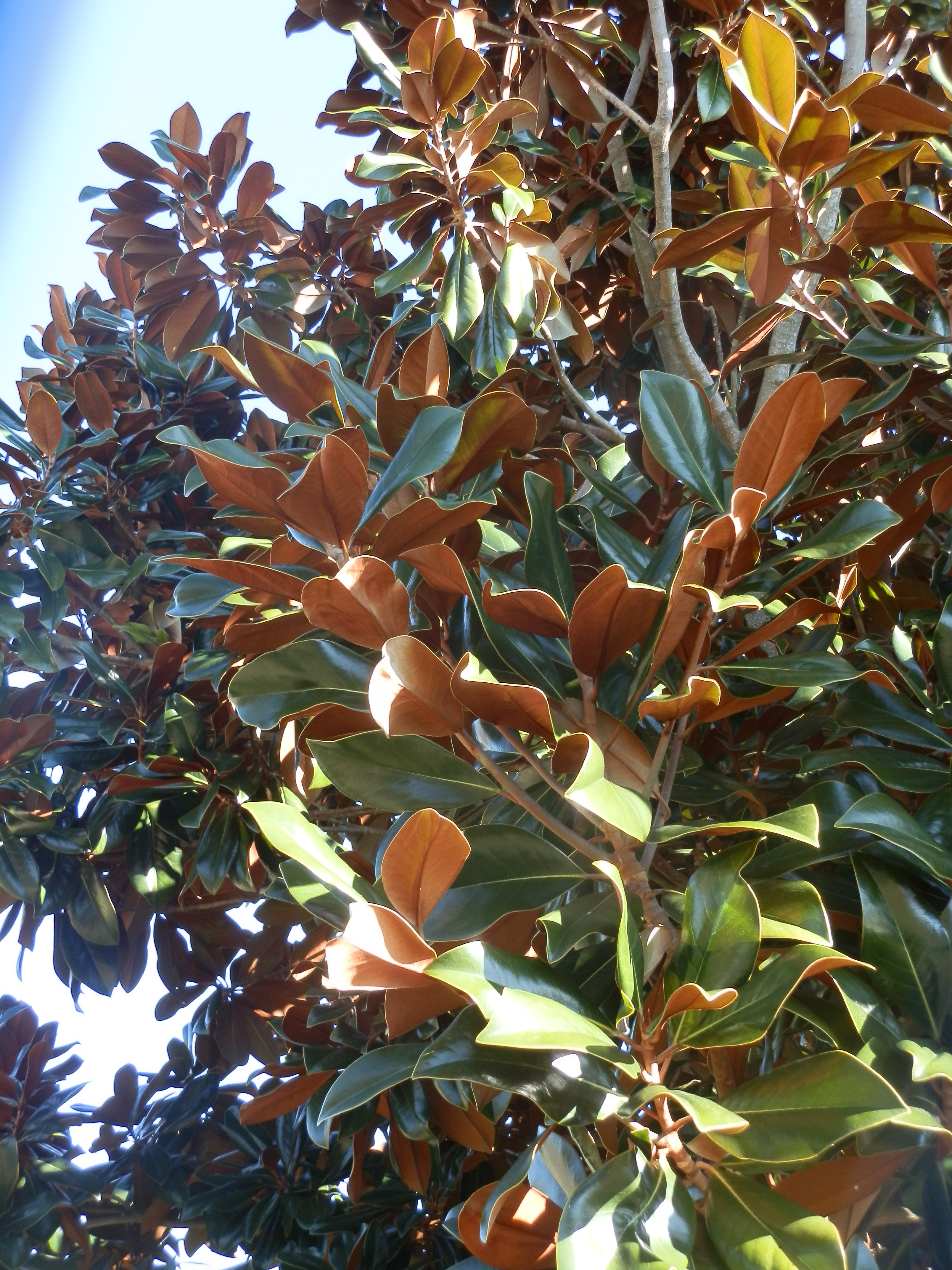
Trees thrive in full sun but will live under the canopy of other trees for several years. Young seedlings often struggle in full sun, so they benefit from some shade for a few years. Usually when other trees die or are cut down the magnolias assert themselves. Most ornamental types have dense brown pubescence on lower leaf surfaces, but many wild types are greenish underneath.

Magnolias require little pruning and offer dense shade. Despite their thick canopy Magnolias aren’t greatly prone to wind injury like some trees are. Wood is close-grained and hard. They also show some resistance to acid rain and other airborne pollutants. Magnolias also thrive on sandy soils and we have plenty in eastern North Carolina.

Another great reason to have them in the landscape is that they are extremely deer resistant. I’ve never heard of deer browsing southern magnolia trees. They don’t even touch the flowers even though they smell sweet.

Those huge white petals are not simply aromatic. They are edible, although they aren’t much of a treat when eaten raw. They make good spice for soups and sauces and are used like bay leaf. Some folks pickle the petals and report them to be quite good. I’ve never tried that. Flowers do make great potpourri which can be used fresh, dried or simmering.

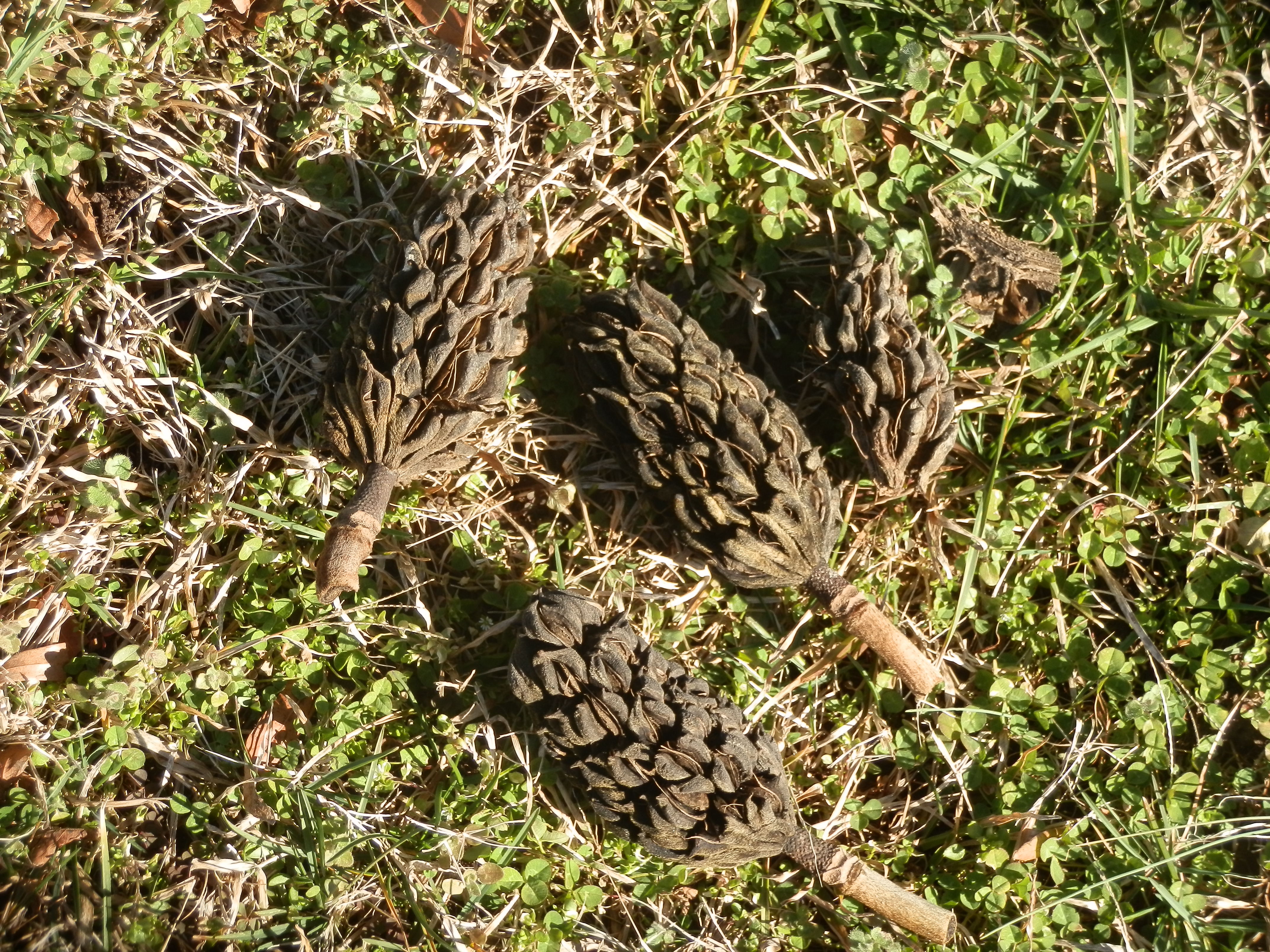
Shiny foliage is utilized by floral designers for greenery. Flowers and fruits are also useful in dried arrangements. Some people refer to fruits as cones, but they are more correctly aggregates of follicles. True cones are found on pines, firs, spruces and other non-flowering trees called gymnosperms. Magnolia seeds are bright reddish orange and are poisonous. Don’t eat them.

Magnolia bark preparations are used medicinally for numerous ailments. It’s even a component of certain weight loss formulations. Magnolia contains anti-inflammatory compounds and also chemicals that reduce stress. They act somewhat as a sedative and this is what likely reduces appetite and promotes weight loss in some people. Magnolia is also used by herbalists to treat insomnia, anxiety and depression. Magnolia flower extracts are used as topical skin care treatments.

When taken internally, magnolia preparations interfere with most sedative medications. It’s also not a good idea to consume alcohol when using magnolia. Check with your health care professional if you take Valium, Ativan, Donnatal or Ambien. Interactions are likely.

Healthy magnolia I planted 11 years ago

Healthy magnolia I planted 11 years ago

Closer view of the foliage showing the distinctive brown leaf undersides

Closer view of the foliage showing the distinctive brown leaf undersides

Magnolia fruits sometimes incorrectly referred to as cones

Magnolia fruits sometimes incorrectly referred to as cones


Ted Manzer teaches agriculture at Northeastern High School.

Posted in foraging | Tagged , , , , , , , , , , | Leave a comment

Aloe plant is useful for more than treating burns


Aloe Vera is a succulent houseplant in the lily family, so it’s related to onions and garlic. Many people keep it around to topically treat various types of skin problems especially burns. If that was its only benefit Aloe would still be a valuable plant, but it offers much more.

It’s easy to grow and very forgiving. Most that die probably received too much care. Don’t overwater them. Most literature suggests that they must receive large amounts of light, but there’s a big difference between high interior light and direct sunlight. Don’t place them in a large south facing window or sunny patio. Direct light sunburns them and they won’t be healthy enough to treat yours.

Should you put your plant outside for the summer, find a shady place. Aloes also like well-drained soil. Temperatures should be above 50oF. Indoors in winter they require very little water. When placed outside in summer they use much more. Plants are full of water and top-heavy like jade plants are, so they benefit from a soil with some sand for ballast. Clay pots are also helpful.

Root rot is the worse disease you’ll encounter with Aloe Vera and overwatering exacerbates it. Test the soil with your finger and if it feels moist hold off watering. When plants are growing vigorously they’ll produce large quantities of plantlets around the base. These can be removed and new plants established. Plants also can be propagated by leaf cuttings. Let freshly cut leaves heal for a day or so for best results.

So what are its other uses besides a salve for treating burns and dry skin? It’s used topically for frostbite, psoriasis, cold sores and bedsores. It helps restore healthy collagen. Aloe also has antibacterial and antifungal properties. Some people even make an eye-drop solution from aloe.

Internally, common uses are to treat constipation, intestinal worms and hemorrhoids. The part used is the latex which is in and right under the leaf skin. It’s also sometimes used as a component to treat high cholesterol. The active chemical is beta-sitosterol, an anti-inflammatory which is used to treat prostate problems. Aloe latex also interferes with blood clotting, so people on these types of medicines should not take aloe internally.

The clear gel in the leaf centers has no major side-effects. In fact it can be eaten and it is rich in vitamins. It even contains vitamin B12, normally not found in plants. Aloe also is what we call a complete protein as it contains all the essential amino acids.

Several companies make a commercial juice from aloe and many people swear by it. It’s supposed to be a great weight loss aid. Likely that has something to do with its efficiency as a laxative. I’m still skeptical of any so called miracle cure. There are too many possible side-effects from prolonged internal use of the latex in the leaf skin, particularly in high doses. Smaller doses of the clear gel appear to pose no health problems.


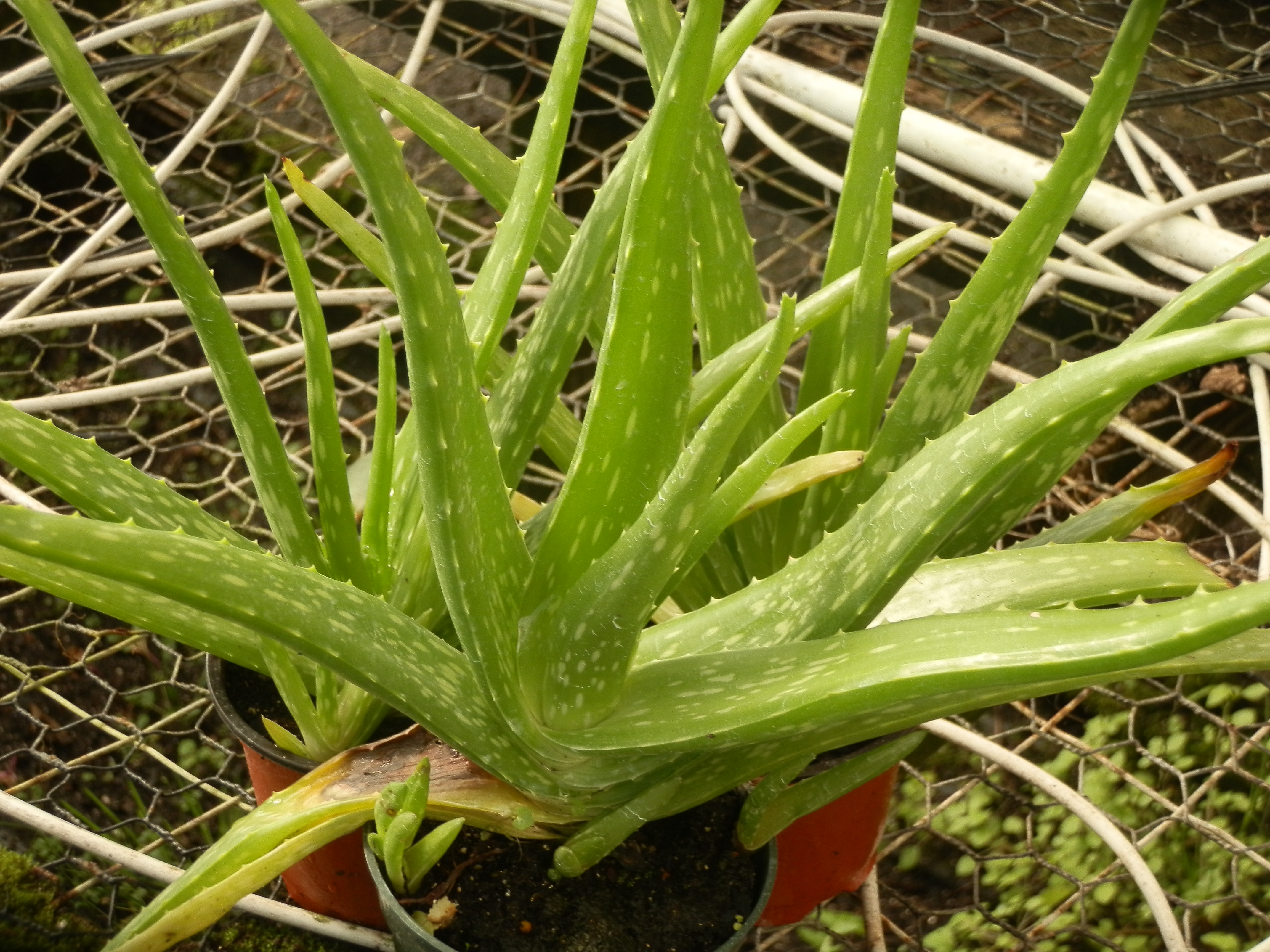
Some aloe plants growing in our school greenhouses

Some aloe plants growing in our school greenhouses

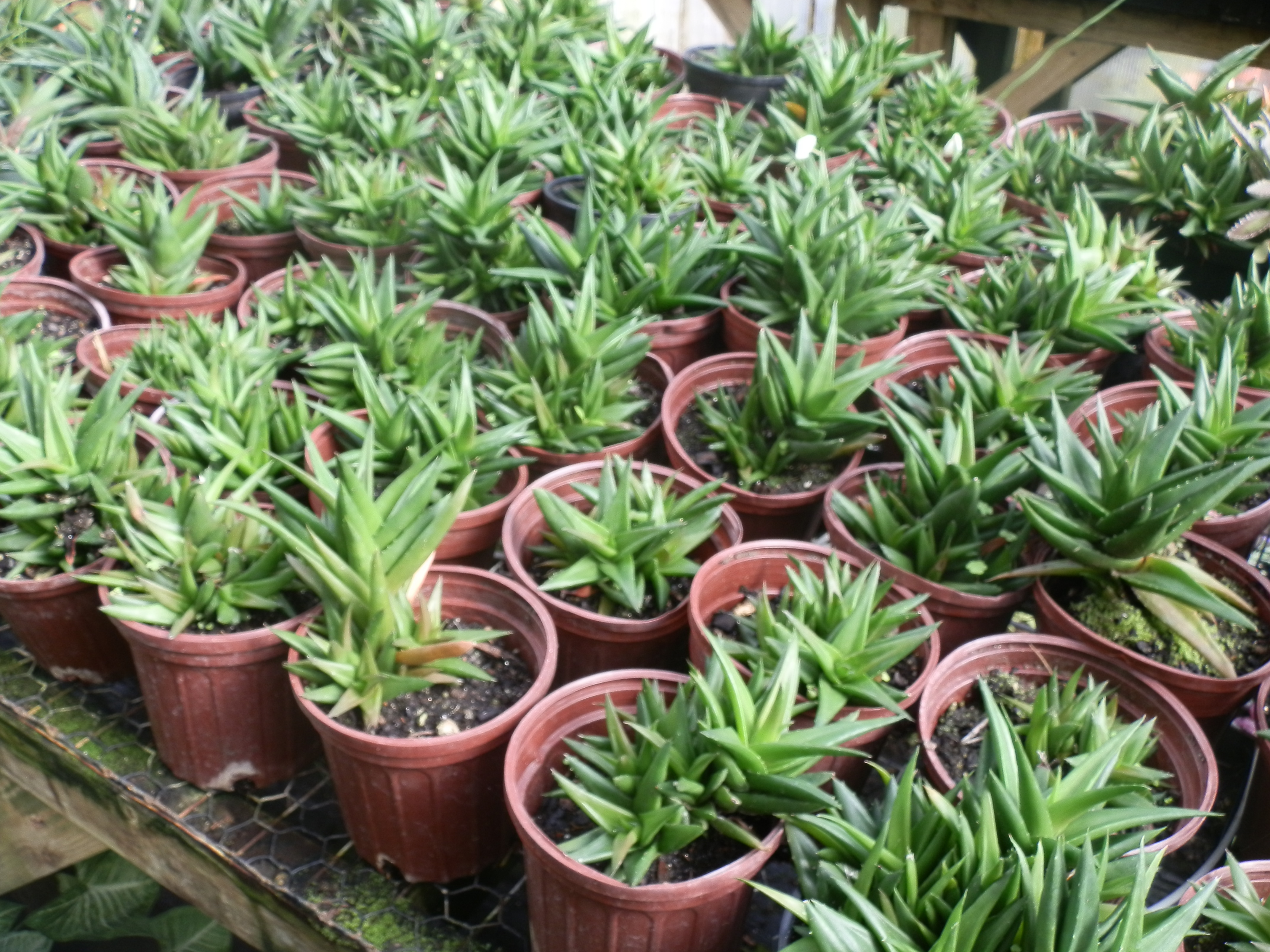
A different Aloe ecotype for our school plant sales

A different Aloe ecotype for our school plant sales


Ted Manzer teaches agriculture at Northeastern High School.

Posted in foraging | Tagged , , , , , , , , , , , | Leave a comment