Selecting deer resistant trees and shrubs


People ask me about this all the time. I wish I had a fool proof answer. The problem is that many factors can influence whether deer will eat shrubbery or not. White tailed deer, (Odocoileus virginianus), are beautiful and graceful, but they are a nuisance.

Some plant species have chemicals in them that deer don’t like. Daffodils, are highly poisonous to deer. Tulips are another spring flowering bulb. However, deer will tear them up and devour everything.

Plants containing bitter white latex sap are a general turnoff. Thorny plants aren’t usually appetizing either. Deer seldom like plants that have fuzzy leaves or strong smells.

The most common factor that makes plants attractive to deer is the general availability of food. Deer will eat almost anything if they are starving. During periods of drought, deer will eat many plants they otherwise wouldn’t. Harsh winters cause deer to eat outside their comfort zone.

Some plants go through periods of succulent growth. This can be made worse by overwatering or overfertilization. Succulent growth usually increases palatability. Some species might be consumed in spring and avoided the rest of the year.

Among the native trees deer avoid are pines, magnolias, American holly, live oak and bald cypress. They aren’t particularly crazy over red cedar, river birch, buckeye or devil’s walking stick. Other trees deer don’t like that are commonly sold in nurseries are honey locust, Vitex, crape myrtle and ginkgo.

By contrast, deer love redbud, crabapple, dogwood and most fruit trees. Barriers are often needed to protect these. The same goes for blueberries. Electric fence can be effective. Invisible fence and a good dog can also deter them.

Several common evergreen shrubs are favorite foods of deer. Arborvitae, euonymus, azalea, pittosporum, Indian hawthorn and Japanese aucuba are evergreen shrubs to avoid near high deer populations. The critters don’t particularly like abelia, gardenia, wax myrtle, nandina and oleander. Spicy shrubs like wax myrtle, anise shrub and rosemary aren’t prized by deer either.

Deer aren’t crazy about most of the holly shrubs. An exception is that they occasionally damage Japanese hollies, like ‘Helleri’, ‘compacta’ and ‘soft touch’ cultivars.

Among popular deciduous shrubs, perhaps one of the biggest surprises is that deer like to eat thorny roses. They especially love them during periods of new growth when the prickles are still soft.

Deer even eat the popular knock-out roses. However, their pruning usually doesn’t damage the plants that much. Depending on the season, the pruning can even be beneficial if the deer population isn’t prolific.

Deciduous shrubs deer don’t like are Japanese barberry, beautyberry, butterfly bush and bridal veil spiraea. Fragrant deciduous shrubs like sweet shrub and fothergilla aren’t favorites of deer either.

This is obviously a partial list, even of the trees and shrubs. I decided to profile woody plants first, as they form the foundation of most landscaping.

The main thing to remember is that no plants are deer proof or rabbit proof either. Other strategies should be employed in addition to planting landscaping that generally deters them. Within city limits it’s not possible, but out in the country acquiring a taste for venison can be part of the solution.
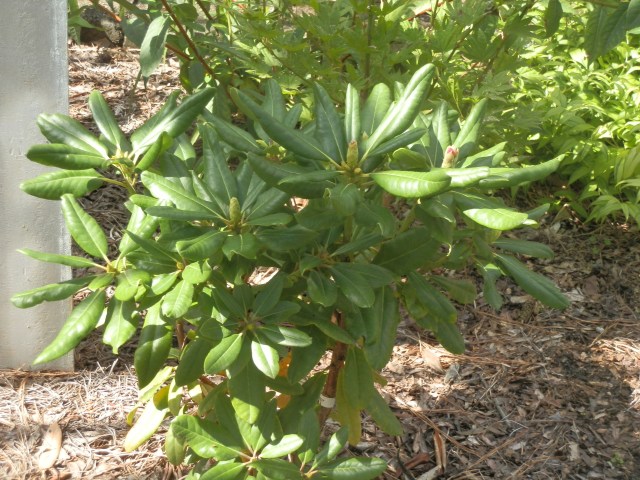
Deer love Rhododendrons and azaleas

They also will devour arborvitae

They’re not crazy over Abelia
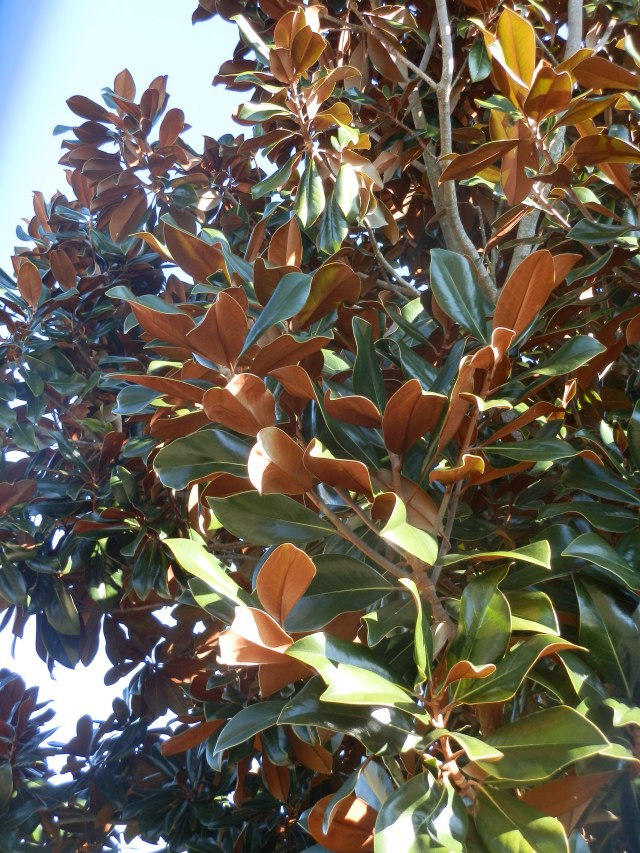
Magnolia is not on the menu of Odocoileus virginianus either

Ted Manzer teaches agriculture at Northeastern High School.
Posted in general nature | Tagged , , , , , , , | 5 Comments

Clary Sage is an important crop in northeast North Carolina


Most folks have seen it from their vehicles.  Few likely know what it is or why it’s grown. Some might say that the flowers look like those of salvia. They’d be right.

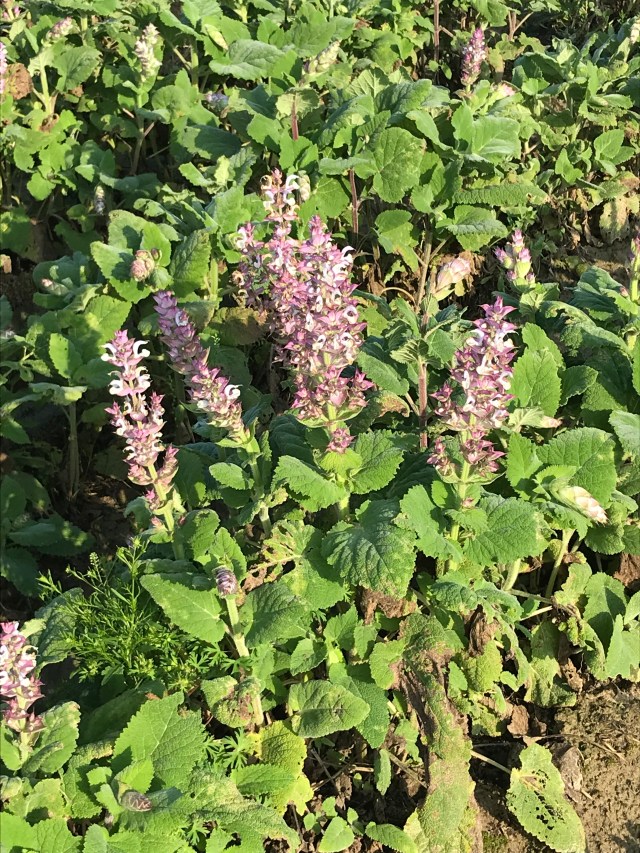
The plant in question is clary sage (Salvia sclarea). Take a drive down Route 17 into Bertie County and you’ll see a lot of it. You might even be tempted to cut a bunch for a flower arrangement. I strongly advise against that.

Not only is that stealing, but you’ll regret being a plant thief. Plants are beautiful in the field. However, their aroma will likely force you to heave your bouquet out the window within a few miles.

The big surprise is that the major use of that crop resides in its ability to make pleasant aromas linger. It might not smell very sweet, but it contains a chemical called sclareol that is used in soaps, perfumes, deodorants and the like. It enhances their fragrance and duration.

Clary sage is a biennial plant. That means it produces only foliage in its first year. Plants flower and complete their life cycle during the second season.

Farmers trick the plant and can make fields flower every year. They do this by planting seeds in late summer or fall and letting plants go through a winter. The following year clary sage flowers and is harvested.

Though a true biennial, many folks consider clary sage to be a short-lived perennial. When planted in flower gardens it often persists for several years. It’s also hardy to zone five. I have not spoken to any farmers to see if they have had much success carrying fields over from year to year, but I understand it can be done.

This plant grows best on sandy soils with good drainage. We have plenty of those in eastern North Carolina. Clary sage tolerates drought but not wet soil, especially in winter. Full sun is necessary for optimal growth.

Pollinators love the stuff. When in bloom I’ve noticed gobs of bees and other insects working the flowers.

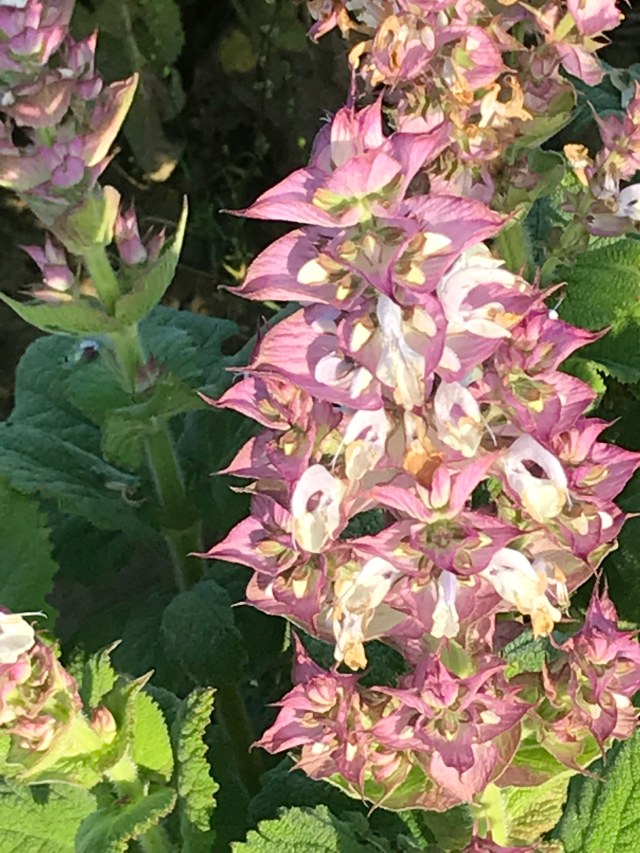
From a distance fields appear lavender when in bloom. However, individual flowers run from off-white to pink to purple.

Clary sage is a large plant, sometimes reaching heights of more than five feet. Typical size is probably more like two thirds of that.

Due to its aggressive nature, some environmentalists are concerned that clary sage might become invasive. It’s classified as a noxious weed in some states. So far, North Carolina is not one of them and planted acres continue to increase.

In recent years this salvia has exploded in popularity. It has long been used as a medicinal herb. Uses and claims are numerous and varied. The most common uses are for stomach and kidney problems and to cleanse and soothe the eyes.

Clary sage has contributed greatly to the whole science of aromatherapy. Sometimes it’s used by itself. Generally, it enhances other fragrances.

The greatest importance of clary sage is how it affects other things. It might not smell or taste appetizing in and of itself, but it makes other products smell and taste better.

Clary sage flower cluster up close

Clary sage plant

Field of Clary sage


Ted Manzer teaches agriculture at Northeastern High School (tmanzer@ecpps.k12.nc.us).

Posted in foraging | Tagged , , , , , , , , , , , | 3 Comments

How hot is that pepper?


My wife can’t tolerate any heat in her peppers at all. Even mildly hot peppers have too much fire. I’m sure she’s not alone.

There are hundreds of pepper cultivars on the market and we often can’t decipher too much from the name alone. Obviously, there are some. Carolina reaper and ghost pepper are two names I will avoid, but dozens of names are unclear until I check the all-important Scoville chart.

The Scoville chart is an indicator of the degree of heat in a pepper. Pure capsaicin, the chemical that makes hot peppers hot, is 15 to 16 million units. Pepper spray used by law enforcement usually runs about 2.5 to 5 million units.

Some folks can’t get enough Scoville units and hotter peppers are being developed all the time. The hottest one currently on the market is the Carolina reaper at a little over two million units. Bhut jolokia, commonly called ghost pepper, is about half that.

The heat units are grouped in ranges as hotness can vary tremendously even within a cultivar. In other words, not all jalapenos are the same. Time of year, fertilization, water stress, and preparation influence how hot a pepper is. Hot dry climates produce the hottest peppers.

As hot peppers go, jalapenos are not particularly hot. They usually run from about 2500 to 10,000 Scoville units. Poblanos are popular for chili rellenos, a favorite of mine. They usually run slightly less hot. Hungarian wax and Serrano are in this range as well.

Paprika, pepperoncini and cherry peppers are a bit milder than that. They seldom top 1000 on the Scoville chart.

Marzano peppers run about twice as hot as jalapenos. Cayenne and tobasco peppers are about double that at 30 to 50 thousand units. Habaneros are simply too hot for me. They can be as high as 350 thousand Scoville units.

For those who love the taste of peppers but like to limit the heat, being careful to remove all seeds will help. Much of the fire resides in the seeds. Removing the veins helps too.

Soaking peppers in lemon juice can take some of the fire out of them. Someone once told me sprite soda worked even better. After rinsing, the peppers have no tainted taste. They are less hot, however.

Whenever working with hot peppers, it is important to wear gloves. I learned this the hard way a little over 35 years ago. I was canning peppers and had to sleep with my hands wrapped in ice. My bed was soaked but I was finally able to sleep.

A few years ago, we grew some habanero peppers at school. The students were curious, and I told them that anyone who touched the fruits should go to the bathroom and thoroughly wash their hands.

One student decided to go ‘number one’ first. That was a mistake and the whole class was treated to screaming. The student wound up calling home for new jeans as his were now soaked with water.

The simple lesson is this. When it comes to peppers, people need to be smart and not macho. Trust that Scoville scale and beware.


Ted Manzer teaches agriculture at Northeastern High School (tmanzer@ecpps.k12.nc.us).

Posted in foraging | Tagged , , , , , , , , , , , | 2 Comments

Flowers have critical temperature requirements, too


Last week I discussed temperature requirements for different vegetable crops. Flowers are not all the same either.

Some hardy annuals like pansies are usually planted in the fall around here. They tolerate cold soils and temperatures below freezing. Snapdragons aren’t as cold hardy as pansies, but they’re close. Both tend to melt out in summer in eastern North Carolina.

Calendula and dusty miller withstand significant frost. Dusty miller are biennials. They live through winter and bloom the following spring. Torenia is another one that can be planted early in cold soils.

Geranium and petunia resist some frost if they are well established. Their growth is slowed dramatically by cold soils though. In fall when soils are warmer they continue to grow after several freezes.

Some flowers simply need warmer temperatures and pushing the limit is seldom successful. Marigolds and zinnias don’t adapt well to cool soils or strong spring winds. They’re heat lovers. Many full sun plants are like that.

Flowers need not be sun-loving to be cold sensitive though. Wax begonia and impatiens prefer shady conditions. They even grow prolifically in cool temperatures, but they don’t handle frost well at all.

Celosia, ageratum, salvia, cosmos and vinca are fine planted in pots early in the season. Avoid putting them in the ground until things have warmed up a little.

Portulaca likes things hot and sunny. It should never be planted in cold soil. It holds well into fall when soils are warm, but wet soils in spring are a problem. Phosphorus fertilization is also important as plants don’t extract phosphorus efficiently on cold soils.

In spring, wet soils mean cold soils. Plants need to be watered, but it’s dancing a fine line when gardeners try to push the spring. In summer it can be hard to keep some plants wet enough. When soil temperatures are in the 40s, like most are now, routine watering without checking first can mean root rot among other things.

One consideration for planting bedding plants is whether we’re talking about seeding or setting plants. If we sow seed, soil temperatures are more important than air temperatures. Air temperatures are more critical when setting out seedlings.

In this area another important consideration is wind. The Wright Brothers didn’t come to this region for nothing. Wind can dry plants out. It also can whip tender seedlings around, breaking them off and shredding their leaves.

For this reason, hardening plants off before planting is critical. Generally, bedding plants should not go directly from the greenhouse to the field this early in the season.

I like to find a protected spot where plants can be in a milder environment than their final planting spot. It must be out of the wind. During the hardening off period plants should receive less water than they otherwise would in the greenhouse.

By this I mean they should be slightly water stressed. This will promote a stronger root system and that will make a difference when they are transferred to the bed.

The greatest asset a gardener can have is patience. A few days of patience in the spring will continue to pay dividends all the way to fall.


Ted Manzer teaches agriculture at Northeastern High School (tmanzer@ecpps.k12.nc.us).

Posted in general nature | Tagged , , , , , , , , , , , , | 1 Comment

So, when do we plant?


I hear that question so often. The obvious answer is another question; what do you want to plant? Things can get complicated.

Shrubs and trees can be planted pretty much any time the ground isn’t frozen. Dormant perennials can usually be put in that category too. Flowers and vegetables are a little more complicated.

In general, the calendar is a bad guide for figuring planting time. This year certainly bears that out. Soil temperature is a much better indicator. Soil moisture to a large extent influences soil temperature. Therefore, in spring when soils are wet, they will be cold.

The reason for this is simple. Water has a high specific heat. That means it takes a lot of energy to change its temperature. Dry soils heat up rapidly, so usually sandy soils can be planted earlier.

Raised beds should drain well because of gravity alone. Amending them with coarse sand or porous materials like those found in potting soil helps too. These beds will be ready to plant earlier.

In general, soil moisture should be measured at a two to three-inch depth. This will encompass the seeding zone and the bulk of the feeder roots for young plants. If the soil temperature is too cold you should delay planting.

So, what is too cold? That’s a loaded question. Peas can tolerate very cold soils. Onion sets can too. Forty degrees is warm enough.

That’s fine for potatoes, too. However, potato foliage can be more sensitive to hard spring frosts and wet soils, since they’re planted deeper.

Cabbage, broccoli, cauliflower, kale and other crucifers perform better at slightly higher soil temperatures. I like to shoot for 45 degrees. Carrots and lettuce can tolerate 45-degree soils.

Beets, spinach, Swiss chard and seeded onions should have slightly warmer soil temperatures before planting. I suggest somewhere in between 45 and 50 degrees. Warmer is better.

I like to see soil temperatures up above 50 degrees for sweet corn and beans, and maybe a little warmer for most beans. For example, lima beans are more susceptible to cold temperatures. Field corn is a little tougher and can usually withstand slightly cooler soils. As with all crops, cultivar is an important consideration, too.

Soil temperatures should be near 60 degrees before planting tomatoes. We’re not there yet. Soils should be even warmer before setting out peppers.

Vine crops, like all the cucurbits, are even more warm-natured. Watermelons and cantaloupes shouldn’t be set out until soils have warmed well into the 60s.

In Maine we rarely could grow these. Summer temperatures were adequate, but soils would never warm sufficiently unless we used plastic mulches or cloched the area. Sandy soils on south-facing slopes were slight exceptions.

Eggplant, okra, southern peas and sweet potatoes were a waste of time up there too. Soils weren’t warm enough and the season was too short. Surprisingly, we always could grow the heck out of pumpkins and winter squash.

This is just my opinion on garden vegetables. I wish I had column space to profile all the flowers we like to plant in our beds. That’s a story for next week.


Ted Manzer teaches agriculture at Northeastern High School (tmanzer@ecpps.k12.nc.us).

Posted in Uncategorized | Tagged , , , , , , , , , , | 3 Comments

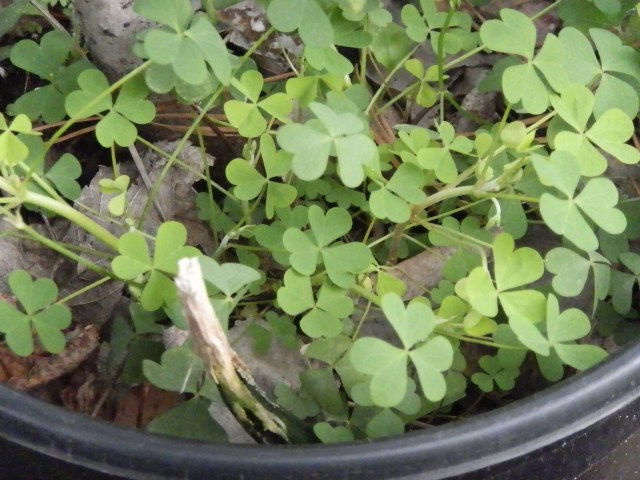
Wood sorrels are edible clover lookalikes


I wish I had a dollar for every time I had to explain to a student the difference between clovers and wood sorrels. Having leaves with three equal blades does not make a plant a clover.

We usually refer to wood sorrel as Oxalis, it’s genus name. Both clovers and Oxalis have three leaflets per leaf. Both frequently wind up in our nursery pots, but that’s where the comparison ends.

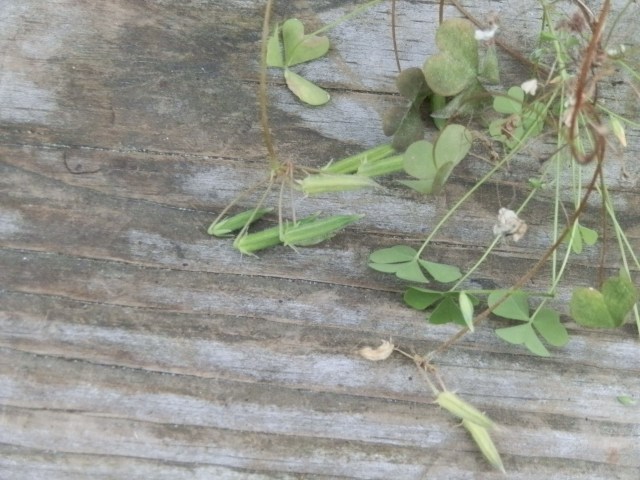
Clovers are members of the pea family and have ball-shaped clusters of tiny flowers on their flower stalks. Oxalis flowers are larger, single and have five identical petals. Flowers are usually yellow, but they can be pink or white. Fruits look like miniature okra pods and are filled with dozens of seeds. A single plant could produce hundreds of seeds.

Oxalis leaves are heart-shaped and have a smooth edge. Clover leaves have a toothed edge and are not heart-shaped.

There are over 500 species of Oxalis. Most are adapted to shady places and don’t invade sunny areas as much. Most species are perennial, and they tolerate a wide range of soil types.

In general, this plant doesn’t grow well in wet soils. When conditions are dry for long periods, wood sorrels go dormant. However, they don’t die and will resume growth when favorable conditions return. This makes them very adaptable.

Wild wood sorrels are a nuisance in lawns, flowerbeds, vegetable gardens and greenhouses. They are more difficult to control than clovers with herbicides.

Most types have either aggressive spreading rhizomes or bulblets. This makes them difficult to restrain because they have different ways to reproduce. Pre-emergent chemicals will keep seeds from growing, but they have little or no effect on rhizomes or bulblets. Using only post-emergent herbicides opens areas up to new plants growing from seeds where soil is exposed.

Cultivated versions have been developed recently. They are often used in flowerbeds and hanging baskets. Vigor, color and the ability to handle adverse conditions are assets. Keeping them from invading places where they aren’t wanted can be a problem.

I have a pink perennial type that has invaded my lawn. It has large leaf blades and a high percentage of 4-leaved plants. It almost looks like it has been planted there. For this reason, I have not declared war on it. It’s pretty and is only conspicuous in spring.

With a name like Oxalis, one might expect plants to be high in oxalic acid. They are. Leaves are edible and have a sour taste which is pleasing to many people. Foliage can be consumed directly or made into an herbal tea. Drying the leaves and grinding them into a powder makes tasty seasoning for grilled foods. It’s a great lemon substitute.

Since plants are high in oxalic acid they might pose a problem if eaten in any quantity by people who have trouble with kidney stones. Other than that, this weed has positive nutritive properties. Leaves are high in vitamins A and C. The only other drawback might be pesticide residue. Never collect from areas that might have been sprayed.

Oxalis plant showing seed pods

This ubiquitous weed finds its way into nearly every pot.

Ted Manzer teaches agriculture at Northeastern High School.
Posted in foraging | Tagged , , , , , , , , , | 3 Comments

Blueberries come in many types


In Maine, when one mentions blueberries tiny lowbush ones are the subject. These plants usually grow shorter than 12 inches. They occur naturally and are harvested by raking and winnowing the fruit.

Farmers employ weed, insect and disease control measures. They also mechanically prune or burn the fields, but they don’t tear up and replant. Lowbush are the hardiest blueberries.

All other blueberry types are much taller. Some require two different varieties for cross pollination. Common types are northern highbush, half highs, southern highbush and rabbiteye blueberries. All blueberries belong to the genus Vaccinium.

As one might expect half high types were crosses of lowbush and highbush types. They stand about four feet tall and are also very hardy. Snow usually protects most of the plant in a typical northern winter. This type isn’t adaptable to our hot summers.

Northern highbush types were collected from the wild and bred for fruit quality and fruiting season. While mainly considered northern blueberries, some common cultivars adapted to this area are: Blue Jay, Blue Ray, Patriot, Chandler and Darrow. Their advantage is that they don’t require cross-pollination. As one would expect from the name, a disadvantage is that our summers are sometimes a bit hot for optimal production. Plants might be stressed.

Southern highbush blueberries might be a better choice. They are generally self-fertile but almost always benefit from cross-pollination. Plant at least two different varieties. Another thing to consider is that the blueberry cultivars flower at the same time. Many don’t. O’Neal, Blue Ridge, New Hanover, Croatan and Bounty are cultivars adapted to coastal North Carolina.

Rabbiteye blueberries also will grow well here. They are nearly self-sterile, meaning cross-pollination is necessary. These are primarily grown in the Piedmont region as they are well adapted to upland clay soils.

Plants are generally taller than southern highbush varieties. Some plants might eventually reach 15 feet. This could pose a problem for people wanting more compact bushes. Popular varieties of rabbiteye blueberries are: Climax, Premier, Onslow, Powderblue, Tifblue and Columbus.

Rabbiteye types tolerate hot weather better than any other blueberry. Thay also are the least winter hardy. Usually this isn’t a problem for our area, but this past winter might have generated a little winter kill on some rabbiteye blueberries here.

All blueberries require soils with acid pH and high organic matter. Soil pH 4.5 to 5 is best. Plants require moist soils, but poorly drained ones should be raised, amended in some way or avoided. Blueberries are not heavy fertilizer users, so more is not better. Also, for best results, any nitrogen should be in the ammonium not the nitrate form

It’s difficult for some folks to remove fruit, but for best long-term results flowers and fruit should be removed in the establishment year. If plants become well established, they should begin to fruit heavily by their third year.

Plants should be pruned in the dormant season. Remove old and weak canes and generally shape the plants. Don’t be afraid to remove some fruit buds as fewer flowers generally means larger fruit. Another thing to consider is to always encourage pollinators.

Blueberry blossoms among muscadine grape vines


Ted Manzer teaches agriculture at Northeastern High School (tmanzer@ecpps.k12.nc.us).

Posted in foraging | Tagged , , , , , , , , , | 3 Comments

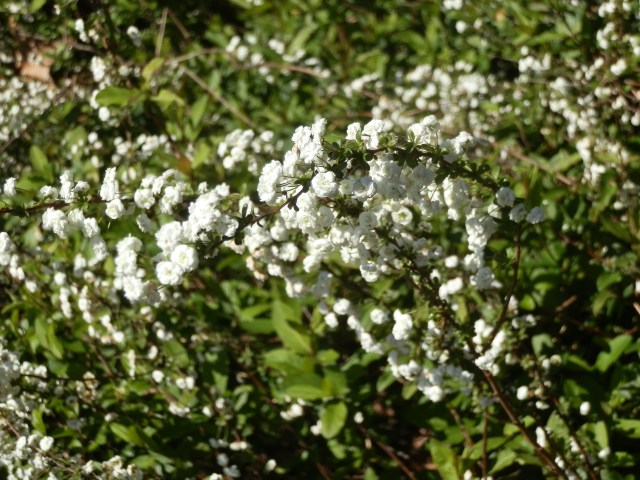
Bridal veil spiraea is a showy shrub that handles cold


Bridal veil spiraea (Spiraea prunifolia) is one of my favorite spring flowering shrubs and it will thrive when winter temperatures dip into the -30s. The most common type of these white spring flowering shrubs is usually referred to as Vanhoutte spiraea (Spiraea × vanhouttei) and it’s blooming right now. White flowers emerge before the leaves do.

This is an old-fashioned shrub. Quite often it can be found on the edge of old cemeteries or homesteads. Flowering can be so dense that patches of it are visible for long distances. This easy to grow plant makes a great deciduous hedge. Fall foliage is yellow to bronze or purple.

Bridal veil is not native, but it’s not invasive either. Plantings are usually long lived but don’t spread far from their origin. Plants dug while still dormant are easy to transplant.

Spiraeas are members of the rose family just like apples, cherries and many other common landscape ornamentals. This one is generally upright and usually four to eight feet tall. Fragrant flowers attract songbirds, butterflies and other pollinators.

Shrubs grow in full sun to partial shade. They flourish in acidic soil and tolerate drought once established. Plants aren’t heavy fertilizer users.

Pruning is a personal thing. Some folks let them sprawl. Their natural growth habit is like that of forsythia. Like forsythia, they flower on the previous year’s growth. Most spiraeas such as ‘Anthony waterer’ or ‘little princess’ bloom on the current season’s wood. These types can be pruned anytime.

Should a more formal look be more to your liking, these versatile shrubs can fit the bill. Be it a large rounded specimen plant or a tightly manicured hedge, these rose relatives work fine.

Pruning spring flowering plants should be done right after bloom. Cutting them back in the fall or winter will remove the flowers. However, after flowering this spiraea can be cut to the ground if that’s what you desire. It will still be a sea of white next year. Often renewal pruning keeps plants vigorous.

Spiraeas have few insect problems, but deer will eat them. I’ve never seen deer decimate these shrubs though. Spiraea grows and recovers quickly.

There’s a patch in my neighborhood where deer are plentiful. This place has never been browsed to the point it’s not attractive. Moderate browsing tends to make plants thicker and more vigorous.

This shrub isn’t just for outdoors either. Branches can be cut and brought inside. Flowers are great in arrangements and last a long time. They’re great for use in early spring weddings.

This hardy shrub even has medicinal uses. It contains salicylates like willows do, so herbal teas can be used in place of aspirin. Leaves, roots and flowers can be used to make tea.

One advantage of spiraeas over willows is that the concentration of salicylates is more consistent from plant to plant. Overdoses are far less likely to occur.

One thing to keep in mind though is that people allergic to aspirin are also likely to be allergic to internal use of spiraea tea. If you have any questions about herbal medicines, you should ask your medical professional.

White spiraea branch

Bridal veil spiraea growing next to a small family cemetery


Ted Manzer teaches agriculture at Northeastern High School.

Posted in general nature | Tagged , , , , , , , , , , | 7 Comments

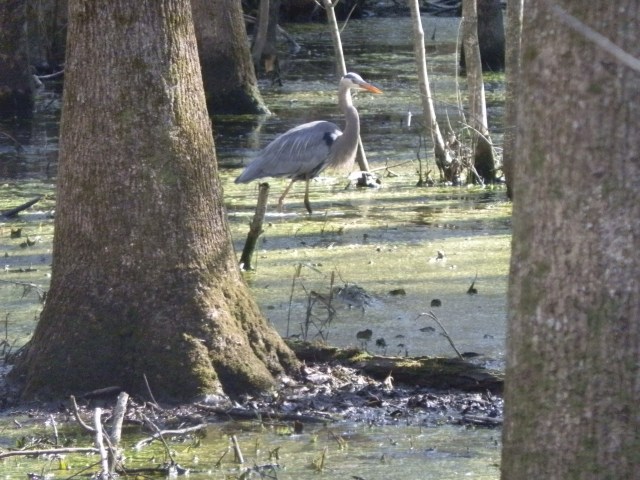
Great Blue Heron is the king of the wading birds


I love to watch blue herons standing motionless while waiting for prey. They are such graceful and focused hunters. They also must be quite adaptable, since they have such a large native range.

In eastern North Carolina they can be found in every month of the year. I even can recall seeing a few as far north as southern Maine in the winter. That’s rare, but they are a tough bird. Usually from New York northward they fly south for the winter.

Herons are long legged birds that stand about three feet tall. They have a wingspan of about six feet and I swear I’ve seen bigger ones. They look huge but only weight five or six pounds. Sometimes the neck feathers are preened to look smooth and other times the neck feathers look frayed. This is normal.

Herons are often mistaken for cranes by some people. Many folks confuse herons with egrets. If you see a greyish bird with an s-shaped neck, it’s a heron. Cranes have shorter necks and egrets usually have longer necks than cranes and straighter ones than herons.

Egrets are normally white, but there is a white form of great blue heron. It’s not native north of Florida, so most of our white long-legged birds are egrets. Another way to tell these birds apart is that egrets have black legs and herons have lighter colored legs. Sandhill cranes have dark legs too, but not as dark as egrets. All three of these can be large birds.

We have a ton of herons on our coastal plain rivers, marshes, ditches and swamps. They wade in the shallows and are quite adept at catching frogs, crayfish and small fish. Herons catch larger fish by impaling them with their sharp beaks. These skilled hunters also catch snakes and turtles. Herons can even hunt at night as they have great eyesight even in low light.

Unfortunately, they are also efficient at catching fish from aquaculture facilities too. These amphibious birds are protected, so killing them is out of the question. Other techniques must be used, like employing a few border collies to harass them so they go elsewhere.

Herons like to nest in dead trees, but they will nest in live ones or on the ground if trees aren’t available. Male herons are the initial nest builders, collecting sticks and other debris. The female then joins in the nest construction and knits everything together. Nests are usually two to four feet in diameter.

Females lay from two to six pale blue eggs about the size of large chicken eggs. Incubation time is approximately four weeks and heron pairs usually raise one to two broods per year. Young birds begin to fledge at about two months and are gone from the nest in three.

Habitat destruction is the biggest threat facing herons. Habitat has actually improved in many places in recent years. This is partly because of the resurgence of beavers in many areas of its range. We have more in this area.

Blue heron picking its way through a Tupelo swamp


Ted Manzer teaches agriculture at Northeastern High School.
Posted in general nature | Tagged , , , , , , , | 2 Comments

Potatoes and sweet potatoes can be a genetic challenge


It’s time to cut and plant those spuds. Potatoes (Solanum tuberosum) are different than most vegetables we eat. They aren’t propagated by seed. Plants are grown asexually, meaning they are clones. All plants in a field are genetically identical to each other. Sweet potatoes (Ipomoea batatas) are propagated slightly differently, but they are still asexually reproduced.

Few people would even give this a second thought, but it creates a potentially catastrophic situation when it comes to disease control. Large scale operators are aware of this and pay close attention to weather that could cause a suitable environment for certain disease organisms.

Favorable environment, susceptible host and virulent pathogen are the three corners of the disease triangle. Should any be absent, a disease would not occur.

Enter the potato. Should conditions be right for a disease to develop all plants in a field could be attacked. Late blight is a common potato pathogen.

Inoculation is at its peak under moist conditions and night temperatures between 50 and 55 degrees. Should late blight spores land on dew soaked susceptible leaves under these conditions, disease will spread. The Irish Potato Famine was a great example of this.

That’s why farmers must spray to control these problems. Regular fungicide sprays will control fungus diseases like late and early blights. Insecticide treatments to kill insects that carry viruses is also critical.

Planting resistant varieties is also another strategy. The problem is that market demands certain eating qualities of the crop. Avoiding disease is fine, but if proper specific gravity and other factors aren’t right, the final product may not be what the public wants.

For most seed propagated crops there is a certain degree of genetic variation. Self-pollinated crops like wheat are an exception. Back in the 1930s black stem rust of wheat consistently decimated wheat crops. Plant breeders developed resistant varieties to eradicate the disease, but it wasn’t easy.

Fruit trees are reproduced by grafting, so lack of genetic diversity is a problem too. It’s not like the Johnny Appleseed days when a broad genetic base of seedlings hedged against total crop failure.

Certain pear varieties can’t be grown in the eastern states because of a bacteria disease called fire blight. It’s rarely cost effective to chemically control bacteria diseases in plants. This is largely due to the speed that bacteria reproduce and adapt.

Overcoming disease pathogens that constantly adapt to our systems of crop managements provides more than enough challenges to crop breeders and plant pathologists. Add to that quality factors that the public demands, and the job is even more daunting.

Different geographic regions pose different challenges. As far as potatoes in eastern North Carolina are concerned, a potential selection characteristic is resistance to cold waterlogged soils. Weather can suddenly turn hot and dry and those conditions aren’t great for growing spuds either.

It’s somewhat true for growing anything. However, when raising clonal crops like potatoes and sweet potatoes, experience is the best teacher. Farmers and gardeners become familiar with strengths and weaknesses of certain cultivars. They can predict the best course of action when problems arise. Right now, prepare for muddy fields or wait.


Ted Manzer teaches agriculture at Northeastern High School (tmanzer@ecpps.k12.nc.us).

Posted in general nature | Tagged , , , , , , , , , , , | 1 Comment