Amaryllis aren’t just for indoor viewing


I won’t deny that amaryllis (Hippeastrum sp.) is one of the most striking flowering houseplants. Huge clusters of flowers are dramatic and that’s why people pay so much for a single bulb. Most people don’t realize those huge bulbs are hardy in our area. However, many people struggle trying to grow them.

Raising amaryllis outside requires different management than daffodils and other Dutch bulbs. Most bulbs should be planted several inches deep. I generally figure about three times the diameter of the bulb.

That’s not true for amaryllis. The tip of the bulb should actually rest above the soil surface. That’s usually most people’s first mistake. Planting them in areas with inadequate drainage is the second. Sometimes raised beds are necessary.

Those living in slightly cooler climates can still grow these impressive blooming plants outdoors. However, the bulbs must be dug in the fall and allowed to dry down indoors. Cool temperatures are best, but don’t let them freeze. When soils begin to warm in spring plant the bulbs back outside but leave at least a third of the bulb above ground.

Regardless of whether we dig the bulbs or leave them in the soil, amaryllis must be planted on well drained sites. Bulbs may require frequent watering in their first year, but established plants are fairly tolerant of drought.

They also need full sun for much of the day. Hot afternoon sun should be avoided if possible. However, too much shade will cause reduced bloom. In fall, mulch the beds with at least two to three inches of shredded mulch or pine straw. Rake the mulch away from the bulbs in the spring.

Unlike most bulbs which don’t require much feeding, amaryllis responds to regular applications of fertilizer. Avoid turf type fertilizers. These plants should not be fed too much nitrogen. A 1-2-2 ratio like 5-10-10 or 10-20-20 is better.

Fertilize them when green first appears, then when plants begin to show buds, and one more time after flowering. Slow release fertilizer is good too. Only one application is usually necessary.

As with all bulbs, encourage foliage to grow as long as possible. When leaves turn yellow and fall over, it’s fine to cut them off.

Amaryllis responds to separation every few years. Dig them and break offsets from the main bulb. Leave them attached to the mother blub if they aren’t very large. Tiny offsets may take several years to bloom.

If plants fail to bloom you likely have one of three problems. First, there may be inadequate light. Second, soil drainage might be poor. Finally, post bloom foliage growth might be insufficient to provide energy to the bulb. This could result from the first two reasons or the product of impatience. Sometimes we get in a hurry to remove yellowing leaves.

The next time you receive an amaryllis as a gift, plant it outdoors when you’re through enjoying it. It will come back in your garden year after year. Just remember not to plant it too deep and make sure the soil is loose and well drained.

This huge two toned amaryllis always draws attention
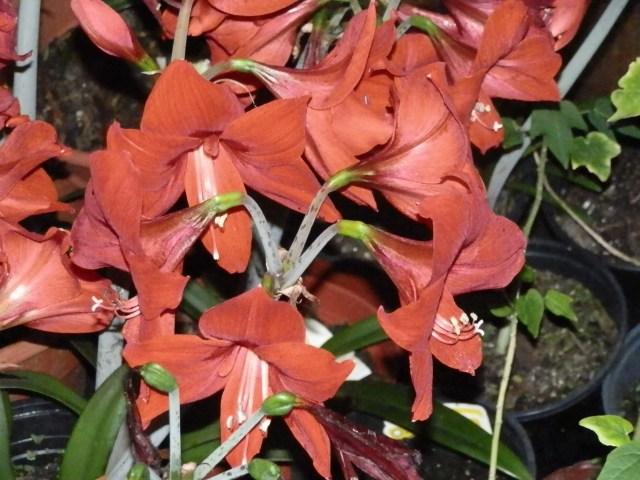
I wish I’d planted these beauties in the ground.


Ted Manzer teaches agriculture at Northeastern High School.

Posted in general nature | Tagged , , , , , , , , | Leave a comment

Bats have far more positives than negatives


Many people see bats fluttering around at dusk and get nervous. Some get downright scared. There’s no need for this hysteria. Bats fill an important role in the ecosystem and provide us comfort at the same time.

I wish I had a dollar for every time I’ve heard someone accuse bats of diving and trying to hurt them. This is never true. Bats are going after the mosquitoes and other biting flies that are attacking humans and other animals. Bats have no interest in humans and won’t get tangled in people’s hair. Also, they’re not blind. Bats navigate mostly by sound waves, but they can see.

It’s true that bats can carry the rabies virus, but very small percentages are infected. The only time I’d be nervous is if I saw a bat active during the day. They’re naturally nocturnal, so seeing a solitary one when they should be sleeping might throw a flag.

However, one is far more likely to contract rabies from raccoons, skunks or foxes. They are all basically nocturnal too. Even feral cats would be a greater risk as people would be more likely to come in contact with one.

Also, the only way to contract rabies from bats or other animals for that matter is to get bitten by one. The rabies virus is passed through saliva. Coming in contact with bat droppings won’t inoculate someone with the virus.

I realize people don’t want bats making homes in their attics. Getting rid of them can be complicated. First of all, since they are active at night, sealing up entrances and exits during the day might serve to seal them in. That’s not good.

If you have a bat problem, it might be best to call a professional. They have some techniques that could solve the problem without harming the bats. Bat waste is not something we want in our homes. It has a smell similar to that from mice, so it’s not aesthetically pleasing.

North Carolina is home to 16 species of bats. Some can consume as many as 600 mosquitoes per hour. Mosquito borne diseases are a major problem worldwide. Bats also consume insects that damage farm crops. They also help pollinate plants too.

We can help establish a healthy bat population by planting flowers that attract insects. This will give bats a food source to supplement their appetite for mosquitoes. We can also build bat houses. This can also lure them out of places we don’t want them, like our attics.

Why should we be concerned about bats? More than a third of all bat species are either threatened or endangered. Once we lose them they are gone forever.

I remember when I was a kid we used to throw rocks in the air at dusk and see if we could get the bats to follow them. It was cool to watch these tiny mammals fly around. I was always amazed at how quick they were and how it never took them long to realize our rocks were a false alarm.

This family treasure in Gray ME built in 1855 has seen its share of bats.


Ted Manzer teaches agriculture at Northeastern High School.
Posted in general nature | Tagged , , , , , , , , | Leave a comment

Don’t be afraid to modify a recipe


I love to cook. Maybe it’s because I love to eat. Food has always been something I’ve analyzed. People might say I’m arrogant, but I’ve never seen a recipe I couldn’t alter and make it better at least for me.

I have a favorite chocolate cake recipe. My mother let me make it from scratch all by myself when I was seven. Ever since then, I’ve modified it and baked that cake in at least 30 different flavors. My favorite is wild persimmon.

I’ve got a fudge recipe I’ve adapted to several flavors as well. I made it in mocha recently and it was okay. The next time I’ll double the coffee and it’ll be better.

Simple flavoring is only part of the story. Experimenting with texture can make cakes, cookies and other foods even more interesting. Adjusting the amount of oil or fat changes texture. So does increasing, reducing or eliminating eggs. Avocados often can substitute for cream cheese. A key lime pie can have richer color and creamier texture if you add a couple avocados.

Experimenting with spices opens up a whole new avenue of taste sensations. Some spices just seem to go together. I never use tomatoes without adding a little basil. Even when I drink tomato juice I include a pinch of basil. Fresh is better but dried is still better than nothing.

Garlic is arguably my favorite spice. I include it with any type of meat. People have told me that garlic has no place in North Carolina Barbecue. I beg to differ, and I always add some to mine. Nobody’s ever complained.

My father has always taken pride in his fish chowder recipe. I always add a few spices to it. One of them is garlic. The other is ground bay leaf. If that’s not available ground wax myrtle leaves will do. When I make some for him he always gives me rave reviews and I never tell him I changed his recipe.

Sometimes it’s not even changing an ingredient that’s important. I think pancake texture is improved by not whipping the batter too much. I like to combine the components by gently mixing them with a spoon, leaving lumps in the batter. Letting this mixture stand for a few minutes is the key to tender fluffy pancakes. I save my sifter for cake flour, so I can get that uniform texture.

For those who like to grill, have at it and use your imagination. You can’t go wrong with grill spices. If you like a certain flavor, go with it.

When marinating meat, always remember the rosemary. It’s even great in your jerky recipe. As with anything new, start out by including a small amount and increasing it until it suits you.

I’m a cheapskate nature lover. Tasty spices are everywhere. Wax myrtle leaves are great for steaming shrimp. No early spring salad is complete without bittercress leaves, and the wild onion and garlic greens in your lawn are not poisonous. They’re also pretty good in a salad or sauce.

Have fun with your cooking. Play around. Experimentation is the best way to learn. Sometimes your creations may be a flop, but you’ll never know until you try. Life’s too short not to try new things, especially when it doesn’t cost much.


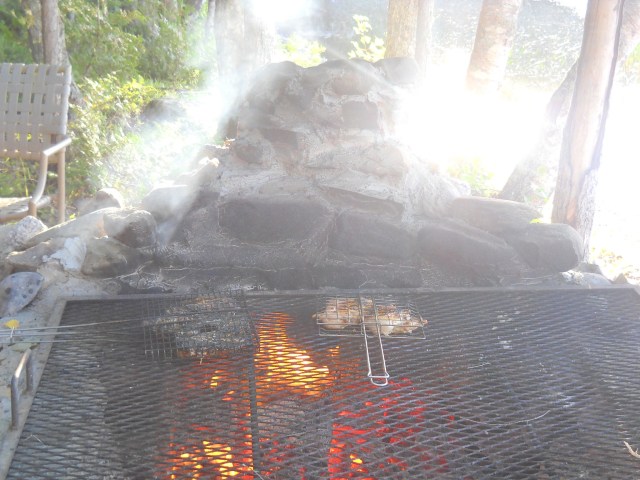
you can’t go wrong with a real wood fire.

Especially with this kind of setting

Ted Manzer teaches agriculture at Northeastern High School (tmanzer@ecpps.k12.nc.us).

Posted in general nature | Tagged , , , , , , , , | Leave a comment

Crows are among the smartest of all the birds


We watch them and listen to their irritating call. It certainly doesn’t sound very intelligent, but crows are so intelligent it’s almost scary.

Drive, walk or jog down the road without any weapon and crows won’t pay you any mind. Cary a shotgun and you can’t get within a hundred yards of one. Crows soon learn who they can trust. If you ever threatened them in the past they will remember you.

This sounds a bit crazy, but crows have fabulous memories. Research on them bears that out. Crows will drop nuts onto the road so cars will run over them and crack them open. They’ve been known to knock squirrels off wires for the same result.

Other research indicates that crows make and use tools. Some animal behaviorists claim crows can bend a piece of wire into a hook to grasp objects. That sounds a little farfetched to me but I’ve never studied them that closely.

Crows inhabit nearly every environment. They live in wilderness areas, yet are totally comfortable to life around humans. They are adept at foraging but equally comfortable with thievery. Stealing the hard earned quarry of another doesn’t bother them.

They have a well-earned reputation as agricultural seed thieves. A flock of crows can virtually destroy a new corn planting. Even if few crows were evident during the planting process, hundreds could show up to pull up fresh seeds or young corn plants. I’ve seen this.

Crows aren’t given much credit for eating insects that damage crops. They like to eat corn borers and other damaging caterpillars.

Crows spend much of their time in open spaces, but they usually nest in thick evergreens. They go out of their way to conceal their nests, but they have no problem stealing eggs or young chicks from another bird’s home.

They are good parents and often continue to parent chicks over a year old. Both male and female crows help build the nest. Offspring from the previous year sometimes help too.

Nests are constructed of twigs and pine needles. Sometimes softer material like hair is used to line the nest. Females lay three to ten eggs per clutch, so nest size can vary.

Crows are highly social birds and are often seen in large groups. They work together to protect each other and sometimes ward off large predators through well-coordinated attacks. They also communicate with each other constantly, so sneaking up on them is difficult.

Mosquitoes cause them problems at least indirectly. The American Crow is extremely susceptible to West Nile virus, which has been around in this area for less than 20 years. Crows infected with West Nile usually die within a week. Death rates from this disease are higher than for any other bird species.

I must admit I’ve never been a big fan of crows. I do respect them though. I doubt they like me much either since I can’t get close to them. I haven’t been in shotgun range of one in years. Thank God for rifles.


Ted Manzer teaches agriculture at Northeastern High School (tmanzer@ecpps.k12.nc.us).

Posted in general nature | Tagged , , , , , , , , , , | Leave a comment

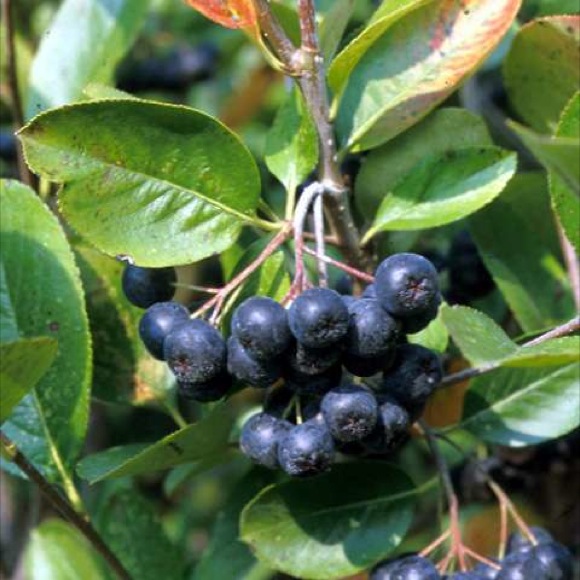
Aronia is a native super-fruit


A few years ago I wrote a column about chokeberries. They were common in the places I picked blueberries in Maine. Huckleberries were too, and they’re great, so maybe they can be a future column.

The Genus name for chokeberry is Aronia. I guess that sounds more appetizing than chokeberry. Maybe that’s why nutritionists and landscapers are pushing it.

Three native species exist in the eastern US. Red chokeberry (Aronia arbutifolia) has smaller fruits and is quite sour. Black has larger fruit, similar in size to most highbush blueberry cultivars. There is also a purple berry species (Aronia floribunda), intermediate in size, color and taste. The red type grows in our area but it’s not overly common.

I remember collecting the black ones (Aronia melanocarpa) and using them for jelly. As far as fresh market goes, these fruits are a little leathery and quite tart. My dad said they weren’t poisonous, so I ate them. With a little sugar, their pleasant taste is realized. Rhubarb lovers know what that’s like.

Recently, someone emailed me about growing them as they are one of the latest in a line of promoted super-fruits. I’m not sure how they’d perform in the coastal plain. They’re adapted to less brutally hot summers. Travel to the Carolina Mountains, and you will find all three species of Aronia growing wild.

I’ve often thought about trying to raise some because the dried fruits remind be of currants. Currants are illegal to grow in North Carolina and many other states. Gooseberries and currants are alternate hosts to the white pine blister rust fungus that at one time put the white pine timber industry in jeopardy. Consequently, it’s often hard to find currants, and they are an essential ingredient to authentic mincemeat, a favorite of mine.

So why do people consider Aronia a super-fruit. Remember the buzzword, antioxidants. Antioxidants help keep our bodies running efficiently. The black ones have more than the red, so they would have greater potential as a fruit crop.

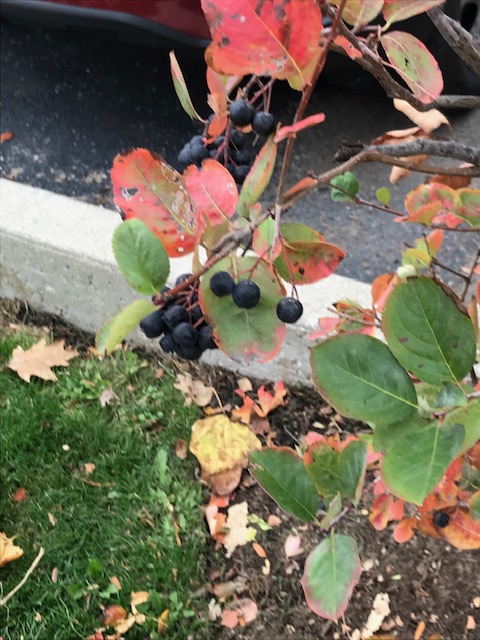
However, all types have beautiful clusters of white flowers and would make attractive landscape shrubs. Bees love these flowers almost as much as they love Abelia blooms. Fall color reminds me a lot of winged euonymus. It’s bright red.

That’s where I see Aronia’s greatest potential. It would make a great naturalizing shrub, particularly if deer damage isn’t a concern. Deer like them. Rabbits do too. Both eat the fruit and use the deciduous branches for winter browse.

In the northern states and eastern Canada, Aronia grow best in full sun and likely fruit yields would be much higher there. Here in the southeast, we would have to plant them in similar locations as we plant lilac or rhododendron. They need sun to flower, but too much will lead to their downfall.

Aronia performs best in well-drained soil. That said, it’s not especially tolerant of drought. That can be a problem in the coastal plain, so be prepared to water them if rain is absent for a prolonged period. Our climate might be a stretch for this shrub, but challenges are fun.

ripe chokeberries

ripe chokeberries

I found this in a landscape planting in Indianapolis recently.


Ted Manzer teaches agriculture at Northeastern High School (tmanzer@ecpps.k12.nc.us).

Posted in foraging | Tagged , , , , , , , , , , | Leave a comment

Traditionally, flowers do say it all


Valentine’s Day is over, but we can look back at what our gifts supposedly mean. First off, I don’t really buy into flower meanings. If you and your significant other like a particular species and color that’s all that matters. However, some traditionalists want to do things according to the etiquette rules.

Let’s start with roses, especially since that’s the flower we most associate with Valentine’s Day. Red roses are associated with love and passion. I don’t think that surprised many people. Yellow roses are associated with friendship and pinks supposedly indicate grace and sweetness, beauty, or secret love. As one might expect, white roses signify purity and innocence. Lavender roses mean love at first sight.

When you receive carnations, be cautious of the yellow and striped ones. They both indicate rejection and disappointment. Red is safe as are pink, which express undying love. Once again, white implies purity and good fortune.

Mums are another common species used by florists. In general, chrysanthemums signify cheerfulness and optimism. Specifically, if love is your goal, go with red. White might be a good choice for reconciliation, as it means truth and loyalty. Yellow suggests slighted love.

Daffodils are a pleasant exception to the yellow tendency. Yellow daffodils mean chivalry, love and respect. Tulips are another flower where color can’t steer you wrong. Nearly every hue denotes love and/or beauty. Remember that, guys.

My personal favorite flower is lilac. The purple ones are my most cherished. Their aroma brings back so many loving memories. According to flower gurus, lilacs proclaim love. How convenient.

Sometimes a living plant can make a great substitute for a flower arrangement. Ferns are popular and suggest confidence, fascination, magic and sincerity. We have plenty at our school greenhouse.

I’ve always liked red Anthuriums. According to several sources they are considered the little boy flower. They represent heart, hard work and hospitality.

Calla lilies look somewhat similar but are white instead of red. They suggest beauty and purity. You can’t go wrong with that.

I was surprised to learn that cacti were considered high on the love ladder. I always considered their sharp thorns adverse. Cacti signify bravery, endurance and maternal love. They also stand for riches and beauty, so don’t hesitate to give a loved one a cactus.

Some might wonder if any wildflowers blooming right now could make a good cheapskate gift and could we score some points at the same time? Yes, common camellias are blooming and usually come in white, pink and Red. All colors are supposed to draw positive vibes.

Buttercups and violets are blooming too. It might be difficult to construct a suitable bouquet, but sentiment is positive. Buttercups supposedly are rich in charms and cheerfulness. Violets symbolize love and faithfulness.

When you get right down to it, I don’t think anyone can go wrong with a gift of flowers or a live plant. Plants brighten up their surroundings. They can remind you of happy times and places. Furthermore, they won’t chew up your shoes or pee on the floor like a puppy.

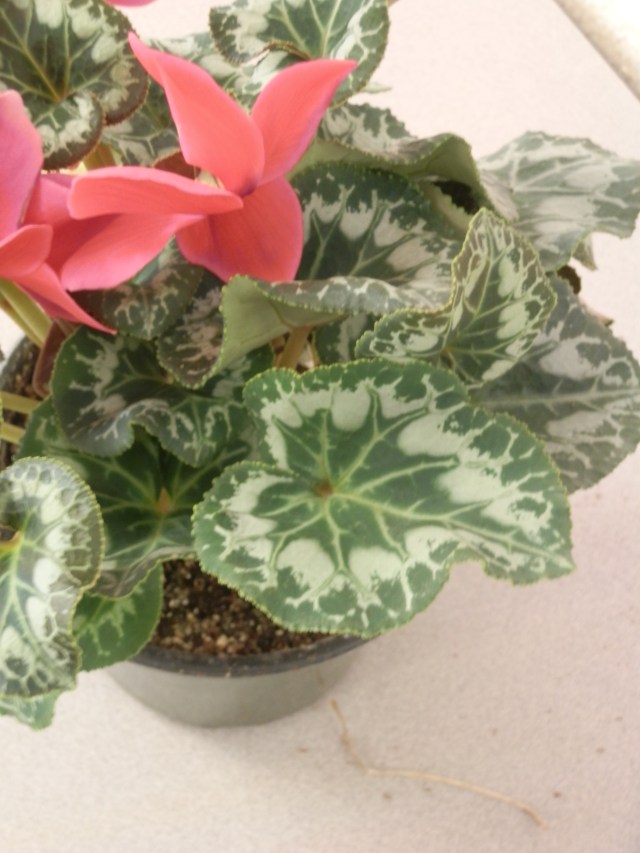
This little cyclamen may look cheerful, but it signifies that all good things must come to an end.

This little cyclamen may look cheerful, but it signifies that all good things must come to an end.

Ted Manzer teaches agriculture at Northeastern High School (tmanzer@ecpps.k12.nc.us).

Posted in general nature | Tagged , , , , , , , , , , | Leave a comment

Persimmons aren’t always what you think


I’m a big fan of wild persimmons (Diospyros virginiana). I try to hit the woods this time of year and procure a good mess of them. Sometimes the deer and other animals beat me to it. Wild fruit are seedy and a lot of work, but the sweet pulp is worth the effort.

These unique fruits, which are about an inch in diameter or slightly larger and have a cross-shaped calyx on the stem end.  Trees are large with dark brown blocky bark.  Once you find a persimmon tree you will be able to locate them from a distance just by the bark.  The leaves usually have noticeable white veins.

In fall leaves are often covered with a black powdery substance called sooty mold.  It is unattractive and depresses the yield, but it doesn’t affect fruit quality.  There is one other item to note, however.  In your quest to find these tasty morsels you will notice that not all trees bear fruit.  Wild persimmons are dioecous.  This means that some trees are male and some are female.

Most people think wild persimmons have to be exposed to frost to be palatable, but this is not necessarily the case.  They do have to be ripe, however.  Anyone who has ever bit into a firm persimmon isn’t likely to forget the experience.

They can be ripened off the vine the same way green tomatoes can and aren’t edible until they are soft and somewhat wrinkled.  Their color is usually some shade of orange and the sweet pulp inside is orange as well. This goes for some of the cultivated types too.

Asian persimmons come in two main types. Some are astringent and these are usually the elongated ones. Korean, Giombo and Hachiya cultivars are examples, although the Korean is flatter bottomed. Most flat bottom persimmons are non-astringent and can be eaten even when they are firm. Fuyu is probably the most common cultivar of this type.

The astringent types are good for cooking and are less work than the wild ones. They have no seeds and are much larger. Yields can be very high, so you can have loads of pulp to can or freeze. As is the case with wild persimmons, the texture can turn people off of they are eaten fresh. Ripe fruit is mushy and sticky.

Enter the non-astringent types. These keep longer and can be eaten when crunchy and firm. At this stage the flavor reminds me of a cross between apricot, pear and cantaloupe. Over time they soften and the flavor begins to approximate a typical persimmon.

Persimmons are easy to grow and the Asian types begin to bear fruit much faster than the wild ones. Yields are also much higher and disease problems are less. Also, trees have both male and female flowers on them, so all will bear fruit. Their biggest problem is winter hardiness. Wild persimmons can handle temperatures as low as -20F, but an exposure to 10F could cause winterkill on the Asian types.

'Fuyu' non-astringent persimmon

‘Fuyu’ non-astringent persimmon


Ted Manzer teaches agriculture at Northeastern High School (tmanzer@ecpps.k12.nc.us).

Posted in foraging | Tagged , , , , , , , , , , , | Leave a comment

There are three types of kiwis and we can grow them all here in eastern North Carolina


Nearly everyone is familiar with the fuzzy green fleshed kiwi fruits (Actinidia deliciosa)  in grocery stores. Their taste is sweet and tart at the same time. The flavor reminds me of blackberries. Best of all, kiwi vines grow well in our climate and usually aren’t damaged by winter temperatures.

There are two other types of kiwi that tolerate extremely cold temperatures. The Issai kiwi (Actinidia arguta) is extremely cold hardy, smooth skinned and self-fertile. Most kiwis require a pollinator to produce fruit. Issai kiwis are about the size of a large grape, but they may be eaten skins and all.

Another hardy type is only slightly larger than the Issai, but like commercial kiwis, plants are dioecious. One male needs to be planted for each six females in the garden or landscape. Flavor of all kiwis is similar and most have green flesh. Red, orange and yellow fleshed varieties are less common.

Flowers of all types usually appear in May and are white and quite fragrant. Aroma is similar to orange blossoms. Despite this pleasing scent, kiwi flowers are not great bee captivators.

All kiwis require some type of trellis. They have vigorous heavy vines that need support or they will sprawl everywhere. Any type of sturdy posts with heavy gauge wire works well. Vines also make an effective privacy screen.

Regardless of the kiwi type, don’t expect plants to produce fruit for about five years. Vines are usually planted between four and ten feet apart, depending on the desired use. Best fruit yields are usually obtained with wider spacing.

Kiwis should be planted in direct sun for best fruit yields. When grown in shady spots they eventually lose vigor and die out. Soil should also be well drained. Wet soil inhibits root growth. Plants also should not be fertilized too much at one time. They do respond to relatively high rates over the course of a season.

Kiwi vines require a lot of pruning. Most of the time, this is done in winter when plants are dormant. Occasionally plants can be kept under control during the growing season by minor trimming. This is especially useful for ornamental use where a stray branch can be unsightly.

One disadvantage with growing these plants is that they must be pruned regularly. Neglecting to prune them is even more problematic than not pruning grapes enough. Kiwi vines will sometimes wrap around each other. Branches will crisscross. Both of these scenarios are bad and will require major pruning. The good thing is that plants bounce back well.

Another problem, especially with the extremely hardy types is that if fruits are not harvested the vines could become invasive. Vines that spread to the wild can climb and damage trees. If no trees are available they will run along the ground until they encounter something they can climb on.

Kiwis have few insect or disease problems other than root knot nematode. Mulch is helpful to control weeds while plants are young. Once established these tough vines usually hold their own.


Ted Manzer teaches agriculture at Northeastern High School (tmanzer@ecpps.k12.nc.us).

Posted in foraging | Tagged , , , , , , , , , , | 1 Comment

Winter can be a good time to prune certain trees and shrubs


Pruning is an important task to perform on our landscaping. Too often it is done in an untimely manner. Many folks prune their trees and shrubs based on convenience instead of what is in the best interest of the plants.

With very few exceptions, fall is a bad time to prune. Pruning has a tendency to encourage growth. This can make tender plants much more susceptible to winterkill. For deciduous trees hardy in colder climates that usually isn’t a problem, but fall pruning can make them more prone to disease.

We are now entering a good window for several reasons. Trees and shrubs should be fully dormant by February. It’s easy to observe branching patterns of deciduous plants when the leaves are gone. We can choose which limbs we wish to keep and which ones we’d like to eliminate.

Branches growing straight up or straight down should be cut off. So should branches growing back toward the center of the tree or shrub. We want all leaves to have access to light. This will keep them from becoming parasitic and eventually dying. It’s also important to encourage wide-angle branches. They’re stronger.

Some plants flower in spring. If preserving bloom is important, we might wish to wait until after flowers go by. If flowering isn’t an issue, we can prune in winter and not limit a plant’s beauty.

Certain plants, such as maples, birches and grapes are heavy sap producers. We have to be careful not to prune them too late in winter as they will bleed and this makes them look unsightly. It can make them more prone to insects and disease but it rarely kills them. I suggest pruning high sap plants once leaves first appear but before canopy develops.

Sometimes evergreen plants get ahead of us and outgrow their space. When this happens to coniferous plants, often the only remedy is removal. The same is usually true for boxwoods.

Broadleaf shrubs and trees can often be severely pruned and respond terrifically. The problem is that if we do it too soon we have to look at butchered plants all winter. They also could break dormancy and experience winterkill.

When performing renewal pruning, always wait as long as you can. Evergreen and semi-evergreen plants like Photinia, Osmanthus, privet, Abelia and Nandina can be severely pruned and recover to look better than ever. Around here I like to prune most of these in late February. Landscape roses can be pruned then too.

Generally, when we trim plants we always want to cut back to a bud or a fork. We never want to leave a stub as this affects health as much as it hinders appearance. When we prune to a bud we need to be cognizant of bud orientation, as this will affect the direction of the new growth.

The recent ice storm might have damaged several of your trees and shrubs. Removing unsightly or damaged branches is often necessary regardless of the season. If it’s already broken, cut it off cleanly.


Ted Manzer teaches agriculture at Northeastern High School.

Posted in general nature | Tagged , , , , , , , | Leave a comment

Turmeric is more than a bright yellow spice


Turmeric is an herb likely not in most people’s spice racks, at least by itself. Curry powder is roughly 50% turmeric. Mustard owes much of its yellow color to turmeric. I like to use turmeric in most relishes and pickles because of its beautiful bright yellow hue. It’s also great in rice.

Turmeric is not a strong flavored spice. I would call its taste a mild combination of citrus, ginger and cinnamon. I’ve even used it in pumpkin and sweet potato pies to brighten the color without affecting the flavor. While it might sound surprising, a little ground turmeric mixed in orange or pineapple juice is delicious.

We think of it as a tropical spice, but turmeric can actually be grown in our climate either in large pots or in the ground. It’s perennial here. Plants form thick fleshy tubers, which can be eaten fresh or dried and ground. These tubers are great in a stir-fry.

Fresh turmeric is gaining popularity. Often turmeric tubers can be found in grocery store produce sections. They keep well in the refrigerator.

Plants look a little like ginger lilies and have beautiful spike-like white or pink flowers. They make a great addition to the perennial garden. A large pot of them is also breathtaking on the patio.

Sometimes you might see them referred to as Curcuma, since there are several species of turmeric. All thrive in warm conditions. Plants also like moist but well drained soil and usually grow two to three feet tall. If you are growing them for ornamental use, soil texture isn’t critical. A sandy soil mix is best for harvesting tubers.

Herbalists tout this plant as one of the top superfoods around. It’s rich in antioxidants. Curcumin is just one of them and is a strong anti-inflammatory compound. It’s extracted from turmeric and used for a variety of ailments.

Not surprisingly, turmeric and specifically curcumin are used to treat different types of arthritis. It’s used to alleviate of other types of inflammation like ulcerative colitis, heartburn and stomach pain.

Turmeric supplements are also linked to improved brain function and better heart health. Herbalists recommend turmeric preparations to help fend off Alzheimer’s. Some people take it to help regulate blood sugar. Also, testing is ongoing to see if turmeric can help fight off cancer too.

Turmeric is not totally without its drawbacks. Large amounts might lower testosterone levels and decrease sperm movement. Men probably shouldn’t take this in large quantities if they are trying to father children, as curcumin can reduce fertility.

Turmeric also slows blood clotting. People on blood thinning medications probably should not take high concentrations of it. When used as a spice, levels of curcumin would likely not pose any problems but extracts very well could.

Most herbs that are not concentrated usually don’t cause major health concerns. It’s when we isolate certain chemicals and take huge doses that we have problems. As with all herbal medicines, please consult your doctor. This is especially true when taking highly concentrated forms. That’s not really natural anyway.

Healthy turmeric ready for eating or division

Healthy turmeric ready for eating or division

Ted Manzer teaches agriculture at Northeastern High School (tmanzer@ecpps.k12.nc.us).

Posted in foraging | Tagged , , , , , , , , , , , | Leave a comment