Houseplants like the outdoors, but don’t rush it


Most of us look forward to a little more living space in summer. The houseplants go to the porch, patio or deck. Some folks don’t do that because of bad past experiences. The friendly patio becomes the patio of death.

That can easily happen if we place plants outside too early or at least don’t climatize them first. The same can be said for those tomato seedlings. Taking them from the warm humid greenhouse to the garden is a harsh change.

We all can relate to temperature. It doesn’t take a genius to realize plants going from 70 degrees to perhaps 40 might encounter difficulty. Wind is also an issue we readily understand. Anyone living here knows damaging winds are always a concern.

Probably the most important variable and one often not considered is light. Many people think plants kept in a bright window have no problem adjusting to outdoor light. That’s ridiculous. Most plants in our greenhouse sunburn when we put them outside in nearly full sun.

Plants in full sun on a typical sunny day encounter a light intensity of about ten thousand foot candles. High interior levels might approach about a tenth of that. Even a sunporch which will drive you to another room can’t begin to match light intensities of outdoor conditions.

So how do we deal with it? We gradually harden our plants off. Place them on a covered porch or provide shade by placing them on the north side of the house. Otherwise they will sunburn, which usually won’t destroy them long-term. However, it does hurt their appearance. It might even force you to severely prune them back.

Many houseplants must be kept under low light conditions outside or they suffer. A structure with a solid roof is probably best for these. Ficus, Boston ferns and many palms can eventually handle nearly full sun.

Water is another concern. Plants kept outside will require more water than they did in their indoor location. This is especially true of plants in windy locations.

We must also be cognizant of rainfall. Too much water is usually a greater threat than too little. Feel the soil and keep an eye on the drain pans. Once root rot starts it is tough to control.

Also, when moving plants outside it is sometimes necessary to add a little potting mix. Most potting mixes are largely comprised of organic matter. This organic material decomposes over time.

Finally, if you don’t want to see a floor full of leaves this fall, you have to acclimate your plants in reverse when the weather cools. Ficus trees going from full sunlight to interior conditions might lose over half of their leaves. Even when well climatized they still might shed a third of them.

Perhaps this could discourage you from moving your houseplants. It shouldn’t. Houseplants can add to our outdoor environment. All we have to do is think about what we’re doing. Plants adapt to changing environments. We just can’t force them to adjust too quickly.


Ted Manzer teaches agriculture at Northeastern High School (tmanzer@ecpps.k12.nc.us).

Posted in Uncategorized | Tagged , , , , , , , , | Leave a comment

Bonsai artists are patient, persistent and observant


I recently attended a bonsai presentation by Julian Adams, a renowned authority. Mr. Adams stressed that the art of bonsai is not without extensive thought. Every cut, every wire, every drop of fertilizer and every pot must have a reason for its selection.

The art of bonsai is like life. Everything we do influences our next move. Planning is critical. Certain actions also produce predictable results.

Training plants to our desired growth outcome is not a quick process. Our lives are similarly molded by many experiences. We can’t expect to be an expert concert pianist or painter after just a few lessons any more than we can expect to turn a plant from our local garden center into a bonsai with a few strokes of our pruning shears.

Producing a bonsai with features of an old tree can be even tougher. Plants are living organisms. They are susceptible to attack from insects, fungi viruses and other environmental hazards. Proper lighting is sometimes difficult to control.

The serious bonsai artist has a goal in mind. Reaching it requires knowledge of how plants grow. Imagination and patience are critical, but one must also be observant and willing to modify the plan, at least temporarily.

Sometimes modifications are too severe and the plant may need to recuperate for a while in an environment that is less harsh. Occasionally it’s best to plant your bonsai in training back into the ground to recuperate.

The ultimate goal of the bonsai artist is to produce a miniature version of an old tree. To do that we must first visualize what an old tree looks like. The trunk must taper from a thick base to a thin top over a short distance. Trees don’t normally do that naturally or quickly.

Here’s where the horticultural knowledge comes in. We start with a partially trained plant which we’ll call a pre-bonsai. We don’t want to stunt its growth just yet. We want it to generate wood.

Every branch containing green leaves or needles produces food for the tree. This food is translocated downward in tissue called phloem. Eliminating too many lower branches will lessen the taper of the trunk, so we don’t want to do that. We want to concentrate growth near the base.

Once we decide that the tree’s shape has been modified sufficiently, the transformation from pre-bonsai to bonsai begins. Roots are pruned and the specimen is transferred into a smaller pot with a lower profile. Some of those lower branches that helped generate the thick trunk are now removed too.

The bonsai artist selects which branches should remain and they can be trained with wire. Copper wire works best. Individual buds are selected which also can produce a dwarfing effect. Needles can be clipped and shortened. At this point the growth rate has been slowed and the bonsai requires frequent observation.

One thing Adams stressed was that while it is important to understand the concepts that determine plant growth, bonsai is an art and the ultimate judge is the owner. That piece of artwork is your creation and your satisfaction is the most important element. Sounds like life to me.

A Japanese 5-needle pine bonsai by Julian Adams

A Japanese 5-needle pine bonsai by Julian Adams

A collection of bonsai specimens by our local bonsai artists in the Albemarle Bonsai Society

A collection of bonsai specimens by our local bonsai artists in the Albemarle Bonsai Society

Ted Manzer teaches agriculture at Northeastern High School in Elizabeth City, NC (tmanzer@ecpps.k12.nc.us).

Posted in Uncategorized | Tagged , , , , , , , | 2 Comments

Sweetgum is one of our most common wild and cultivated trees


Sweetgums are everywhere. Walk through any southern neighborhood and you’ll see them. Take a hike into any woodland in the southeastern United States and you’ll have no trouble finding them.

One reason sweetgum (Liquidambar styraciflua) is so prevalent in the wild is that it is not high on the logging priorities list. Sweetgum timber is not highly sought-after even though individual trees might produce hundreds of board feet of wood.

It also is commonly found in mixed stands. Mixed stands are usually harvested selectively. This leads to the problem where sweetgum dominates and often shades out more desirable timber species.

As shade trees in our yards, sweetgums have many good points. They grow fast, generally require little pruning and tolerate a wide range of soil conditions. They even tolerate flooding fairly well. Shallow soils are a problem, but all our soils in eastern North Carolina are deep. Only in mountainous places with shallow rocky soils do they struggle. Sweetgums also live for a long time and have beautiful fall foliage.

As landscape trees they also have some troublesome features. Those nasty gumballs quickly come to mind. Plant breeders have somewhat rectified that problem by developing fruitless cultivars. If you’re considering incorporating sweetgums into a new landscape I suggest seeking these improved varieties out.

The other main landscape drawback is their aggressive root system. It’s one reason they grow so well and have such value as conservation trees. Planting them too close to pavement is problematic as roots will crack concrete or asphalt roads and sidewalks.

Establishing them too close to the house is also a bad idea. I’d suggest no closer than ten feet from sidewalks and maybe double that from foundations. They are big trees so they need to be further out into the yard anyway.

Sweetgums are prolific seed producers. They also reproduce profusely from root sprouts. Many come up around the edges of our property and are often allowed to grow. A while ago someone told me he was clearing a bunch of sweetgums from the back of his lot and asked me about their use as firewood. I laughed, which didn’t exactly please him.

In theory, sweetgum trees would make decent firewood. They have moderate density and are usually fairly straight and buck up pretty easily with a chainsaw. The problem is that their best use as firewood is as a chopping block. Sweetgum wood is very difficult to split.

As I discussed a few weeks ago, proper seasoning is essential to produce good firewood. Any type of wood that is difficult to split will not season well. Green firewood will not burn hot and efficiently, which means material will build up in the flue. That’s bad.

A hydraulic log splitter does a decent job splitting sweetgum small enough to season well, but the pieces still fray and twist, making stacking difficult. When properly seasoned the wood burns quickly and doesn’t produce strong overnight coals, so it’s better for use when it can be tended regularly.

Many young specimens like this volunteer have thick corky ridges on the stems

Many young specimens like this volunteer have thick corky ridges on the stems

Even in late winter the gumballs still litter the streets

Even in late winter the gumballs still litter the streets

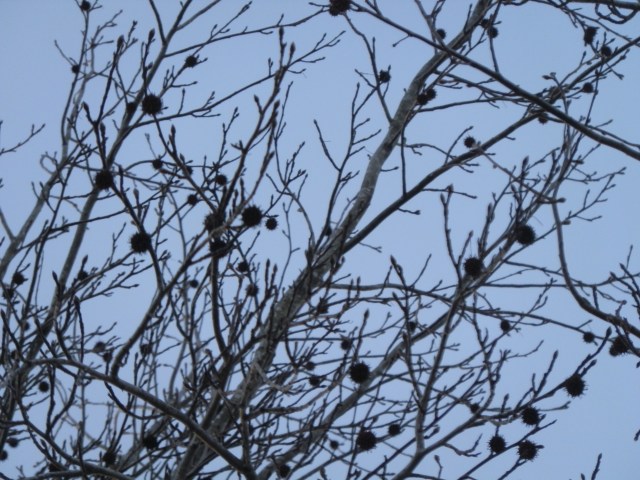
Even on the last day of February more prickly fruits still reside in the trees

Even on the last day of February more prickly fruits still reside in the trees

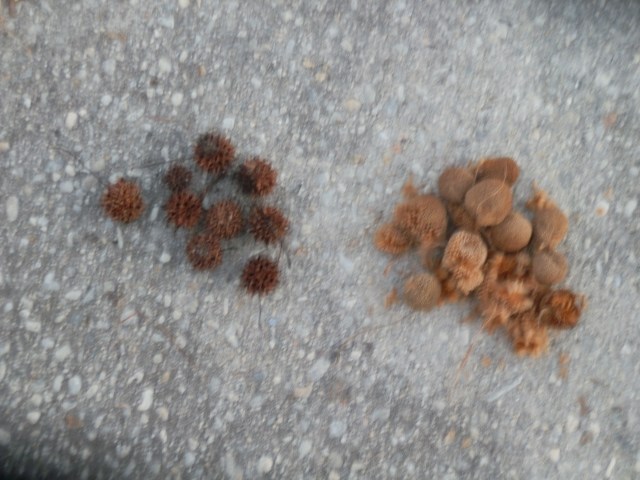
Sweetgum and sycamore fruits on the side of the road

Sweetgum and sycamore fruits on the side of the road

Plenty more sycamore fruits still rest in the trees too

Plenty more sycamore fruits still rest in the trees too


Ted Manzer teaches agriculture at Northeastern High School in Elizabeth City, NC (tmanzer@ecpps.k12.nc.us).

Posted in foraging | Tagged , , , , , , , , , , | Leave a comment

Winterberry Holly is a striking deciduous shrub


Too often people choose not to include shrubs that lose their leaves when landscaping their homes. They want their grounds to be green all year. I agree that landscaping should enhance property during all seasons, but there are some deciduous plants that fit in quite nicely.

I drove up to Maine at Christmastime and noticed a wild shrub at the peak of its attractiveness. It had no leaves at all. That same shrub grows well in eastern North Carolina and is native, albeit uncommon. It’s called winterberry holly. The wild version is often called possumhaw.

Winterberry holly is a medium sized to large shrub. Like other hollies it is dioecious, meaning that male and female flowers generally reside in different plants. Actually, most hollies aren’t truly dioecious. More properly they are polygamodioecious, meaning some plants are mostly male or mostly female but have a few hermaphroditic flowers as well. Flowers containing both male and female parts are called perfect flowers.

To achieve maximum fruit set, plants from both sexes must be present. However that doesn’t necessarily mean you have to plant male shrubs in your landscape. Hollies break a lot of botanical rules. They can be polygamodioecious and they can cross with other holly species. American holly is one example with compatible pollen and there are wild American hollies everywhere. Generally, one male for every five to ten females is sufficient for adequate pollination.

At any rate, female winterberries are striking when the foliage drops. Usually one hard frost is enough to accomplish this. If you observe them before leaf fall you will notice they are covered with bright red berries. However, since holly berries are poisonous to humans and most wildlife except birds they remain on the plants all winter. Color is a coveted commodity during winter and winterberry holly is a tough and tolerant species.

Like most hollies, winterberries are adapted to sunny places. When I drove northward I consistently saw them on the sunny side of the highway but rarely on the shady side. Also, they were growing on wet and I assume acidic soils. Does that sound familiar?

Winterberry hollies work well as foundation plants. They are most effective mixed in on the east, south or west sides of a building. Avoid them on the north-facing side. They also naturalize well around the edges of properties.

These deciduous shrubs have few insect or disease problems. Other than scale and sooty mold there are few pest issues. However, these are two prevalent obstacles in this locale. One notable point is that scale damage normally occurs later in the year and sooty mold follows scale infestations. Depending upon the first hard frost this problem might last only a few weeks.

A few weeks ago I wrote about yaupon holly and its uses in the landscape and for tea. Yaupon holly tea is rich in caffeine. Winterberry tea is also made from the leaves and has similar flavor but contains no caffeine. Fruit from either species is toxic so let the birds have the berries. They’re bitter anyway.

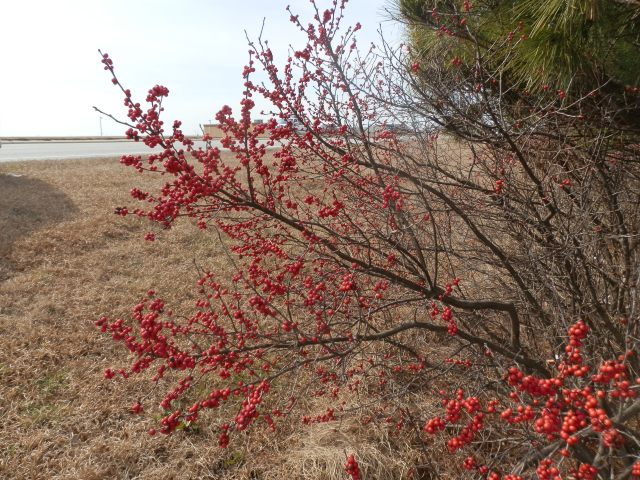
winterberry holly bush being taken over by pine trees

winterberry holly bush being taken over by pine trees

Prolific clusters of winterberry fruits

Prolific clusters of winterberry fruits


Ted Manzer teaches agriculture at Northeastern High School.

Posted in Uncategorized | Tagged , , , , , , , , , , , | Leave a comment

It seems that frugality is not what it used to be


We all think we struggle to make ends meet and it’s harder all the time. Many complain about the economy and the price of everything. Still, I see big lines in front of eating establishments most of the time and I’m guilty too. At the grocery store there’s no shortage of high dollar items in shopping carts.

Now I’ll probably anger a lot of people with this column, but I remember as a child we saved everything. My family wasn’t rich but we certainly weren’t impoverished either. Yet my parents saved and sacrificed like every nickel was our last.

We never wasted food. Nobody did. I remember eating leftovers several times until they were gone. When bread or some similar starchy product got stale we didn’t throw it away. Mom made bread pudding and we kids considered it a treat. Food dropped on the floor was rinsed and eaten.

I don’t think we ate at a restaurant more than a couple times a year, and if something was leftover it went home with us. Sorry if that offends local restaurant owners, but it was just what things were like fifty years ago. We didn’t have a fast food restaurant on every corner. The closest one was in Bangor, and that was ten miles away. I doubt there were fifteen percent of what we have today.

Most people had gardens and if you had any produce leftover you canned, froze or pickled it. If you still had excess you gave it to your neighbors or left it on a bench by the road with a sign for passersby to help themselves. I don’t remember too many pumpkins or cucumbers being smashed on the road either.

My grandmother probably set the record for frugalness. She used to save the wrappers from margarine quarters in a shortening can and use them to grease pans.

We all wore hand-me-down clothes although after I was through with them they usually went in the rag bag to be used as patches, quilts, rugs or something else. People back then never threw away zippers or buttons. My mom had cans containing buttons of different sizes, styles and colors. She even traded them with her friends.

When outfits got ripped my mom patched them. One time I caught her wrath when I wore my favorite pants in public. They contained more patches than original fabric but that’s another story.

When things were broken we fixed them or had them repaired. Now it’s a throwaway world and I admit it’s largely not our fault. Oftentimes now it’s cheaper to buy a new television than fix the old one. Of course back then we had only one and not one in every other room.

I know we still remember how to be frugal, at least I know I do. At my cabin in Maine there are no amenities or services. My dad originally built the place largely with straightened nails and reused lumber and shingles. We separate all our garbage and try not to use too many cans since they can’t be burned. Any trash that can’t be thrown on the fire must be carries back up the hill and into town. Then you might have trouble finding a public trashcan. When you get down to it, the challenge of frugality can be fun.


Ted Manzer teaches agriculture at Northeastern High School (tmanzer@ecpps.k12.nc.us).

Posted in Uncategorized | Tagged , , , , , , , , , , , , , , | Leave a comment

Hornbeam is another native tree with winter landscape appeal


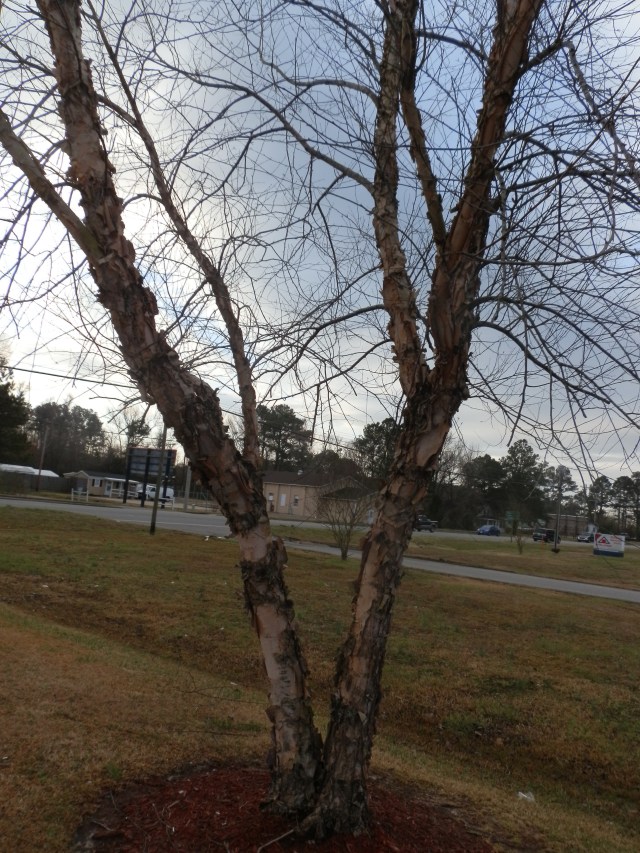
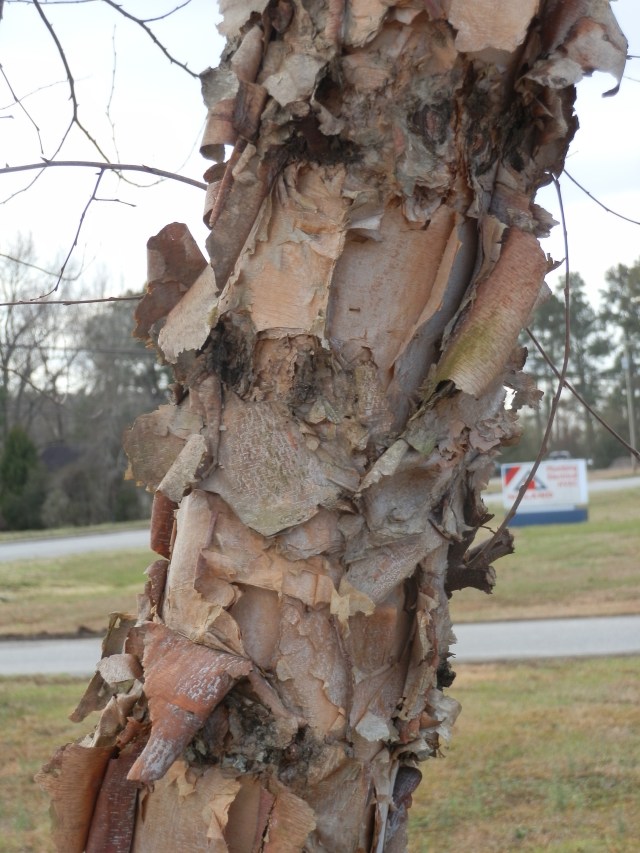
A couple weeks ago I wrote about river birch and its beauty in winter. It’s just one of several useful native species. Many are underused in my opinion.

One of my personal favorites for naturalizing is a birch relative with many different common names. Carpinus caroliniana is called American hornbeam, ironwood, blue beech, water beech and musclewood. Musclewood comes from the rippling trunks resembling well-muscled arms or legs. These stems with smooth gray bark are especially showy in winter when all leaves are gone. Bright orange fall color is attractive too.

American hornbeam is a small tree that usually grows as an understory tree in the eastern half of the country. The wood is very hard and rarely splits, but it dulls woodworking tools and is not used very much commercially. Historically, it was used to make tool handles, mallets, croquet balls, bowls and longbows.

Trees are often multi-trunked with a spreading growth habit. Branches resist wind and winter damage very well. Roots hold firm in the soil too. I think hornbeams make a great substitute for Japanese maple, particularly on wet sites where Japanese maple often strugles.

Around here ironwood is usually found in wet places with shade or only partial sun. Often you’ll find it growing around the periphery of your property or on the fringe of swampy spots.  These are places I like to accentuate its use.

Ironwood doesn’t transplant easily once plants are well established, so field growing and digging them could be problematic. That’s likely one of the biggest reasons they aren’t used more in the landscape industry.

Trees are also slow-growing. Individual specimens could remain healthy in a landscape for well over 50 years. That’s good for homeowners but bad for nurseries and many don’t raise them.

I’d like to see that change for three reasons. First, American hornbeam is a native species. Second, we could incorporate more variety into our landscapes. Finally, they resist damage by wind and winter storms.

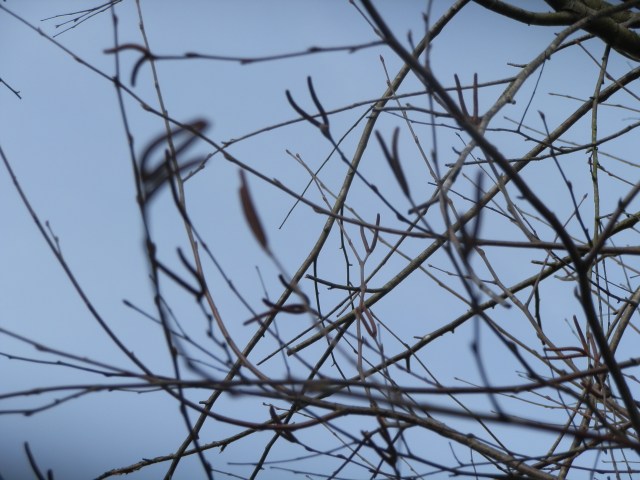
Trees usually don’t flower until they are about 15 years old. Hornbeams have separate male and female flowers but both reside on the same plant. Flowers aren’t especially showy but the seed clusters are. They usually persist until early winter.

These clusters contain structures called nutlets. They are edible and have flavor similar to hazelnuts, but they’re small and cleaning enough for a meal would probably burn more energy than you’d derive from them. Squirrels and other wildlife like them though.

While squirrels and birds eat the seeds, few animals feed off the foliage. Deer generally leave hornbeam alone unless nothing else is available. Rabbits don’t fool with them much either. Beavers sometimes eat the bark, but beavers aren’t a major landscape menace, at least in most places.

Relatively few insects and diseases are a problem for this species. Drought tolerance is not

Naturalized hornbeam showing fluted bark

Naturalized hornbeam trunk showing fluted bark

particularly good, especially in sunny locations. However, productivity under wet conditions balances that out. Trees also require little pruning. Also, several species of butterflies are attracted to them. Plusses definitely outweigh minuses.

Hornbeam in mid February growing under a loblolly pine canopy

Hornbeam in mid February growing under a loblolly pine canopy


Ted Manzer teaches agriculture at Northeastern High School (tmanzer@ecpps.k12.nc.us).

Posted in foraging | Tagged , , , , , , , , , , , , | Leave a comment

Several factors determine quality firewood – You might be surprised


Some people burn wood to save a few bucks. Others relish the atmosphere of a crackling fire. Still others burn wood to rid their property of unwanted or blown down trees.

Quality firewood is a loaded term. Many factors are involved. In general, hardwoods are denser and contain more energy than softwoods. However, it’s definitely not that simple and I always like to keep some softwood logs handy. Dry softwood makes great kindling. It catches fire quickly.

Pines, cedar and cypress are examples of what we call softwoods. We call broadleaf trees hardwoods even though some are less dense than some conifers. Density of dried wood determines the amount of energy in firewood.

Many people claim it is unsafe to burn pines and other resinous trees in a woodstove or fireplace because they deposit creosote in the chimney. This is true if the wood is burned slowly and inefficiently. However, well-seasoned softwood and adequate oxygen will generate a fire that burns hot enough to keep this from happening. The wood contains resins but dry wood creates hot fires which burn efficiently and clean.

Proper seasoning is related to the amount of water in the wood. It should be as dry as possible. Dense hardwoods like oaks, hickories, and beech make great firewood but only if they are dry and solid. Green oak is far dirtier and produces less heat than dry pine.

Water must be boiled off and this is a costly process. When any wood burns at low heat more smoke is produced. Smoke is full of unburned particles and these collect in the flue. Smoldering fires are dangerous. At high temperatures the burn is cleaner. This is great, but not if thick deposits are already present in the chimney. It should be checked regularly.

How do we know if wood is seasoned properly? Seasoned wood will have many cracks on the ends and will probably display somewhat of a gray color. Whittling off a piece usually reveals a bright fresh color underneath. If it doesn’t or the wood shaves off too easily, then it might not be sound and that’s not good either. Punky (partially decomposed) wood may be plenty dry, but it doesn’t contain much heat.

Proper seasoning takes several months. Freshly cut wood is never worth burning right away. Even if the wood was cut down several months earlier, if it was only bucked into stove length pieces and split recently it should be considered green wood.

When properly seasoned, dense woods like oak, hickory and beech contain more heat than pines. For that reason they are preferred, especially at night when tending a fire is inconvenient. Most well-seasoned softwoods burn hot but they burn quickly.

I can’t stress enough that dry softwoods are safe if the stove or fireplace assembly is in good condition. They burn hot and clean. They don’t produce a good bed of coals which will provide heat for a long period of time, but they’re much safer and produce more heat than partially or unseasoned hardwoods. That’s a fact.


Ted Manzer teaches agriculture at Northeastern High School. (tmanzer@ecpps.k12.nc.us)


Posted in foraging | Tagged , , , , , , | Leave a comment

Many wild and commercial foods require processing – Have patience


I’ve always said that success is sweeter when you’ve had to work for it. The same is true with food. Convenience foods just can’t match the culinary quality of vittles produced with tender loving care. This is true with most conventional cuisine as well as foraged table fare.

Take chocolate for example. Numerous convenience foods are made from chocolate, but the ingredient itself is far from a quick preparation. The finished product is so far removed from the raw ingredient it’s almost inconceivable how it was ever refined. Bitter cocoa beans must be fermented and then dried. After that the beans undergo several more steps before the product shows any resemblance to chocolate we recognize.

Olives that we consume bear little resemblance to the raw ingredient. They can’t be eaten fresh. Aging and curing are essential whether olives are devoured green or ripened, and I personally can devour either type. Curing is usually accomplished with a brine solution, but fruits can also be prepared with lye or even cold fresh water.

I could elaborate on many other traditional foods, but I’d prefer to concentrate on my passion of wild edibles. Acorns are a good example and they’re plentiful and easy to identify. Theoretically, any acorn can be made edible. However, some species require more preparation than others. Acorns contain bitter substances called tannins. These tannins must be leached out or the nuts become indigestible.

My favorite species and the only one I bother to collect is live oak. They usually fruit heavily and are one of the tamest. Often nuts can be eaten without any leaching at all. Acorns are also fairly large and crack open easily.

So how do we leach them? I usually shell the acorns, place them in a five gallon bucket and fill the bucket with clean water. Acorns that float should be removed. Either the meat has not developed properly or they have been invaded by insects. Set the buckets in a shady place and change the water periodically.

After a few water changes I check the nuts for bitterness. If they pass the test they’re ready to be dried. Some sources suggest sun drying. However, acorn harvesting season seldom coincides with good drying weather. I place nutmeats in a dehydrator or the oven at 200 degrees until they are very firm.

Nuts can be roasted but they’ll never have the taste or consistency of nuts we’re accustomed to eating. Where they become valuable is as a carbohydrate source. A small minority of foraged foods are high in starch that can be used as flour.

Acorns are usually ground into flour and can add character to some of your favorite recipes. They can even be crushed but not ground and make awesome ‘acorn grits’, which are truly unique with butter and salt or milk and maple syrup. All this is a lot of effort and it’s not likely many people will take the time to do it. I derive a certain satisfaction from self-sufficiency.

Acorn products are just one example of anti-fast foods. Cattail pollen pancakes can be even more work but they’re worth it. Natural is seldom convenient.


Ted Manzer teaches agriculture at Northeastern High School in Elizabeth City, North Carolina.

Posted in foraging | Tagged , , , , , , , , , | Leave a comment

A productive garden depends on healthy soil


Winter is not a typical time to think about gardening. Usually the only thoughts involve ordering seeds for the upcoming season.  However, soil often can benefit from winter care.

Thus far this winter has been mild. Many people are already anxious to head for the garden. The questions remain. What chores can we do now and what harm could we cause?

Virtually any soil benefits from added organic matter. Organic material helps soils hold nutrients. Winter is also a great time provided the area isn’t saturated with water. Too often we tear up and/or compact soil and destroy its structure by disturbing ground that is too wet. People with raised beds or sandy well-drained soils have more winter options.

It might be dry enough to apply compost or other organic material, but around here incorporating it in winter might pose problems. Physically incorporating organic matter now isn’t even necessary. Natural and gradual influx of nutrients and microorganisms into the soil is best. A layer of organic material also encourages infiltration and discourages water and nutrient runoff. I don’t even have a problem with the winter weeds that might be enhanced. They help reduce nutrient runoff and many such as common chickweed and hairy bittercress make great table fare.

Contrary to numerous sources, incorporating organic material immediately isn’t necessary. Only at planting time do I even recommend it. Well decomposed organic materials are usually the best. We often refer to them as compost.

Composts vary greatly, depending upon their initial composition and how we process them. Organic materials such as leaves, food wastes, manure and straw break down into simpler components better if we keep them in an oxygen rich environment. In short, we want to create an environment to support the good microbes and suppress the bad ones.

Compost quality also varies depending on the degree of decomposition, pH, presence of weed seeds, concentration of toxic substances like pesticides, and the population of soil-dwelling organisms, such as earthworms, insects and microorganisms. Higher quality compost is not too wet, is completely broken down and has good water-holding capacity and nutrient availability.

Composting is something everyone can do. However, depending upon our garden size we can’t usually generate enough by ourselves. Local gardeners are fortunate to have a fine source of compost nearby.

Carolina Compost in Camden supplies a wide variety of materials in any quantity. This business arose from Silver Star Farms, who boards horses. The compost facility makes highly desirable organic fertilizer largely from horse manure and bedding. They also incorporate grass and other vegetation.

One of their products is compost tea. Compost tea is popular among organic growers and is prepared by steeping the product in water. Don’t try drinking this stuff. It’s used as a root drench or for foliar application to supply nutrients and suppress diseases. Usually air is bubbled into the tea to increase aeration and activity.

Good compost tea is mature, meaning that compost material is decomposed fully and the degree of free soluble salts is low. Beneficial microbes in the tea are supposed to compete with pathogenic ones. Considerable debate is ongoing as to how much benefit the gardener can expect, but there’s no doubt increasing organic matter increases soil productivity.


Ted Manzer teaches agriculture at Northeastern High School in Elizabeth City, North Carolina.

Posted in foraging | Tagged , , , , , , , , , , , , | Leave a comment