Duckweed has many uses but brings many problems


That green stuff all over our still waters is probably not algae like most people think. It’s a floating flowering plant without stems called duckweed (Lemna sp.). Its growth rate can be phenomenal. Under good conditions duckweed can double its biomass in less than 24 hours. This means it can cover an acre of water in less than a month and a half.

As one might suspect this aquatic invader is eaten by many species of ducks. The problem

is that the birds don’t really control it. They spread it to other waters. These floating plants cover the surface and eliminate light to submerged aquatic plants, causing their demise.

Anything that dies, whether it is plant or animal, must decompose. This generally requires oxygen, which in aquatic environments is less available than in terrestrial ones. The result is a decrease in dissolved oxygen of the water and that causes problems for many aquatic animals including fish.

But duckweed has many redeeming qualities. It helps purify water by extracting nutrients from it. It has the potential to remove fertilizer nutrients from hog and other animal waste. When skimmed off lagoons and processed it has great feed value for fish and livestock. It’s high in protein and highly digestible.

It’s probably not a great human food source as high oxalate content could pose a problem for kidney stone formers. Small quantities are fine in survival situations as it’s not poisonous and is easily digestible. Bacterial contamination might concern me though. I don’t eat it.

Use of dried duckweed as a fertilizer has potential. It decomposes quickly and provides organic matter, nitrogen and other nutrients to the soil. Skimming it off the surface is a simple process, but removing all of it this way is impossible. Don’t expect to cure your duckweed problem simply by mechanical removal.

Duckweed research is ongoing. Its potential as a biofuel is well documented. Phenomenal growth rate make it better suited for the production of carbon-based fuels than any of our agricultural crops. Several sources claim gasoline produced from duckweed would be competitive with a $72-$100 per barrel crude oil price.

It tolerates a wide range of water conditions too. Duckweed can thrive at a pH range of 4.5 to 7.5. Fertilization is unnecessary. In fact, duckweed removes runoff fertilizer from our waterways, which cleans the water.

All this talk about livestock feed, fertilizer and biofuels mean nothing to you if you have a farm pond and don’t want it overrun with duckweed. There is hope. Several approved herbicides including Diquat will kill it. Proper pesticide certification is necessary, so if you don’t have it please hire a professional. He can also deal with algae, which could result from killing the duckweed.

One problem still remains. If duckweed wants to grow prolifically it means that the water has a high nutrient content. Duckweed may grow, but it doesn’t thrive in clean water. Fertilizer nutrients are coming from somewhere and eliminating the source is the only way to truly eliminate the problem.
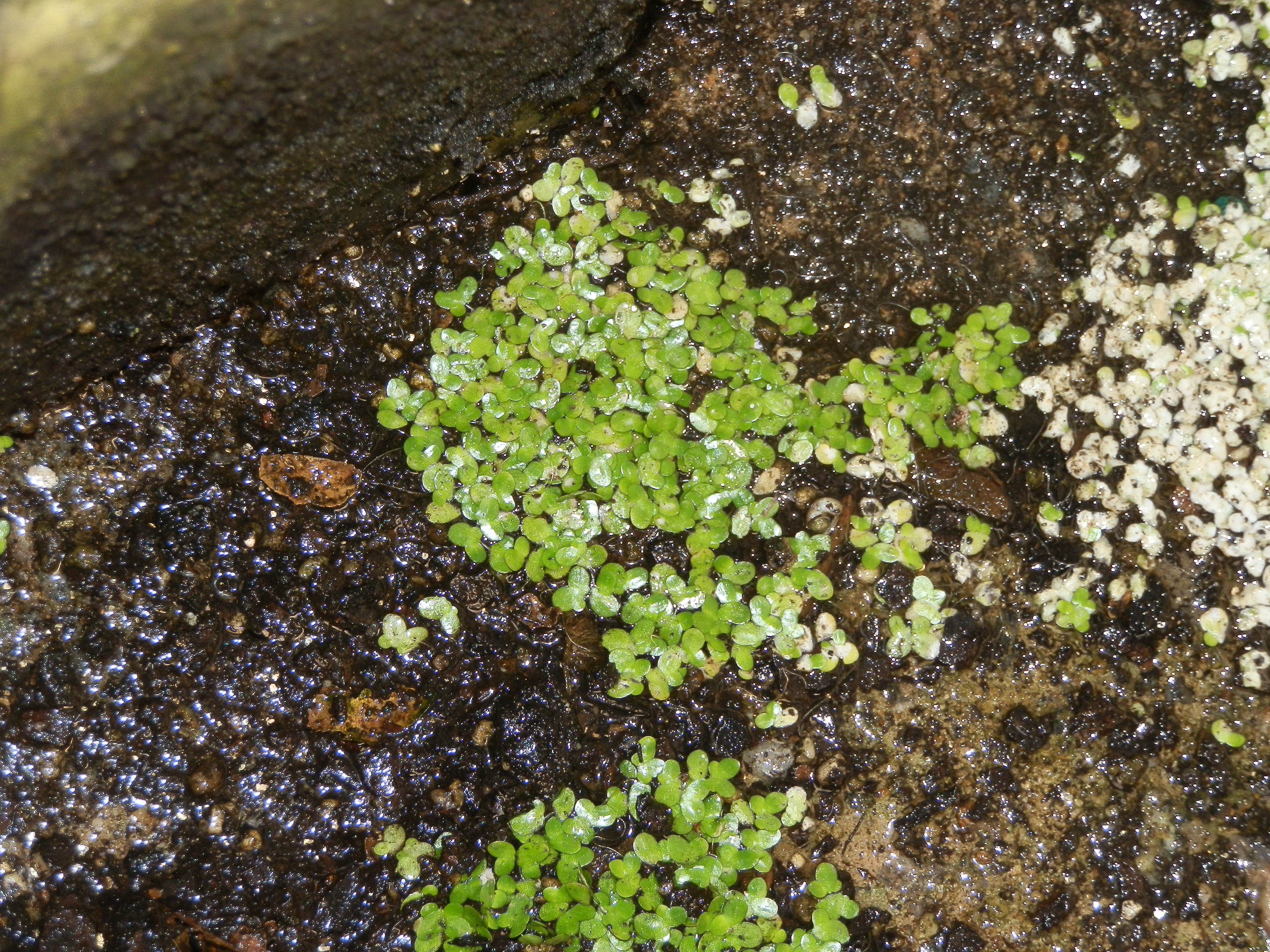
 

Duckweed also often grows on my greenhouse floor.

Duckweed also often grows on my greenhouse floor.

Ted Manzer teaches agriculture at Northeastern High School.
Posted in foraging | Tagged , , , , , , , , | 6 Comments

Wetland foraging – River cane is a useful resource


A while ago a gentleman visited me and asked me about useful swamp plants. I realized that I hadn’t given this ecosystem much ink. I’ve written about cattails and alligator weed some time ago, but not much recently.

We have two common native species of wetland canes that inhabit our shaded swampy areas. River cane (Arundinaria gigantea) and switch cane (Arundinaria tecta) form thickets called canebrakes. Virtually indistinguishable by the novice except by size, these two lowland species form an important component of the wetland ecosystem.

Both types have greenish stems, but river canes can grow taller than 25 feet, though they usually are not more than half that. Canes are useful for baskets, fishing poles and plant stakes. With a little imagination, numerous crafts can be constructed from them.

They make great homemade tent frames. Just stick both ends of several in the ground and you can easily construct your own tent from a tarp or piece of plastic. Switch canes are rarely taller than six feet and are too small to be of use for more than basket weaving.

Both species reproduce mainly by underground stems called rhizomes. Plants rarely produce seed. This probably contributes to why their range and frequency are shrinking. Years ago large expanses of canes were far more common. Native Americans had numerous uses for them, including arrow shafts, spears, blow guns, torches and musical instruments, but they have been cleared over the years to increase farmland and cut down on mosquito problems.

Individual stems survive less than 10 years, but plants sprout profusely from their bases and from rhizomes. Canebrakes benefit from fire, which limits competition from other wetland species. Fire also stimulates sprouting of new shoots.

Tender shoots and leaves are quite palatable to grazing animals. However, overgrazing from livestock and wildlife can thin them out drastically. Large populations of feral pigs can uproot rhizomes and destroy whole stands of them.

Shrinking canebrake ecosystems mean less filtering of pollutants, particularly fertilizer runoff. Too many nutrients in surface water mean less light penetration and ultimately less dissolved oxygen for aquatic life. Erosion is a greater problem around streams when canes vanish. Sedimentation slows water movement, increasing the scope of flooding. Nesting birds also face greater losses from predators.

Exotic bamboo species also threaten river and switch canes. Golden bamboo (Phyllostachys aurea) is highly invasive and can overgrow the native types. It has been used as an ornamental, but it often escapes captivity. This type can get huge.

Wildlife rely on the native canes for food and cover. Many species of butterflies do too. I like young shoots in stir fry. They can be sautéed in the young tender stage just like the commercial bamboo shoots. Quality is similar. You can also chew on the stems and suck the juice out. It tastes like raw sweet corn.

These native bamboos are high in potassium and antioxidants. They’re not calorie dense, which is a plus for dieters. It’s probably a minus for survivalists although the other uses for these native canes make up for it.


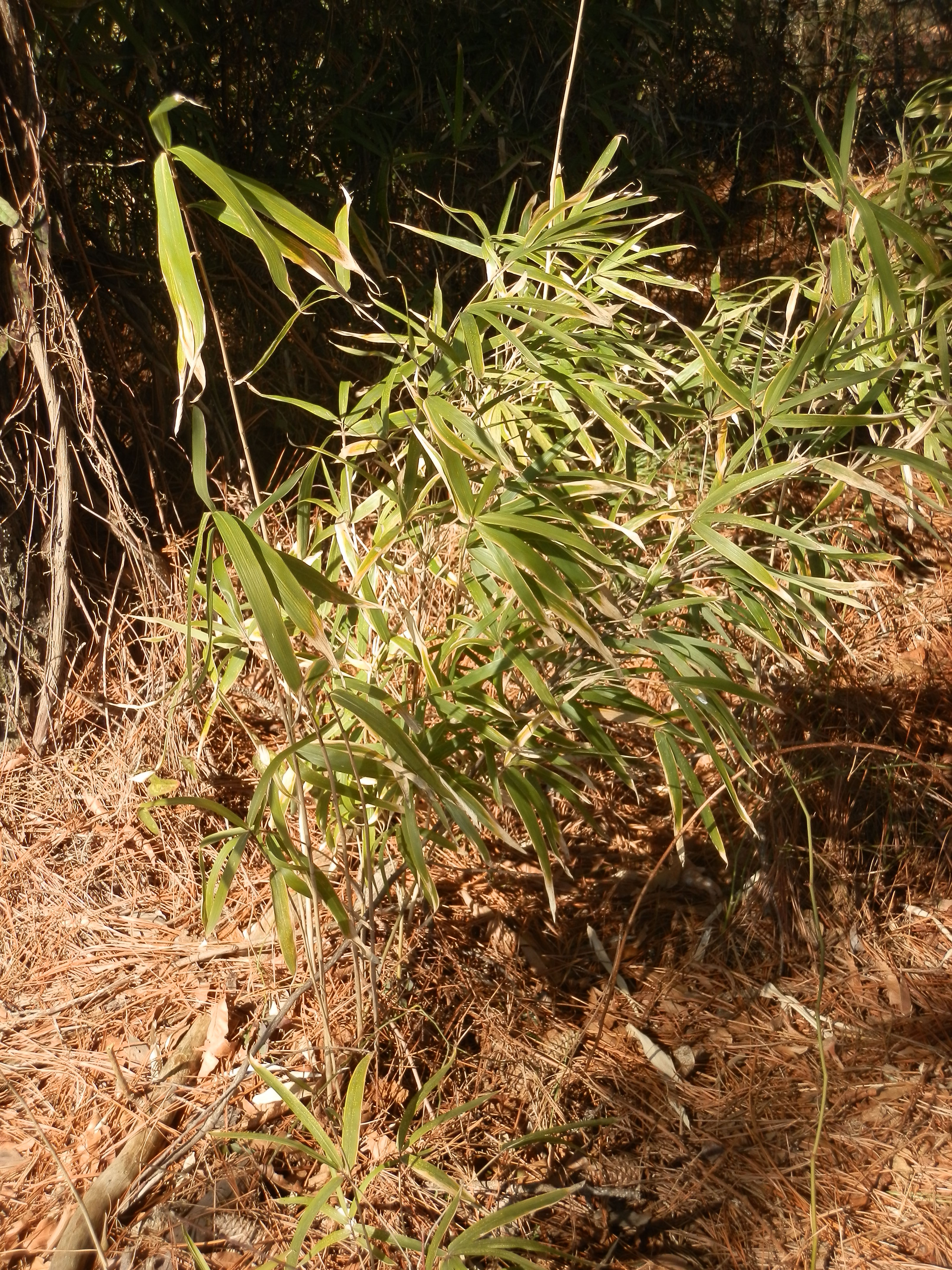
Small cane patch on the edge of some loblolly pines

Small cane patch on the edge of some loblolly pines


Walking the canebrakes along a tupelo swamp in late January

Walking the canebrakes along a tupelo swamp in late January

Ted Manzer teaches agriculture at Northeastern High School.

Posted in foraging | Tagged , , , , , , , , , | Leave a comment

Sweet nectar from the southern swamps


Some time ago I wrote about black gum (Nyssa sylvatica). This week I’d like to elaborate a little about its swamp dwelling cousin, the water tupelo (Nyssa Aquatica). Along with the bald cypress, it comprises a large volume of the standing timber raised in our coastal plain swampland.

Tupelo is an easy tree to identify. The base of the trunk is greatly swelled as is the bald cypress. However, cypress trees are fluted near the ground while tupelo gums taper smoothly to a wider base.

Large broad pointed leaves are often eight or more inches long and emerge singly on the stems. Leaf edges are basically smooth with the occasional serration. Unlike black gum, the fall color is less than spectacular. Leaves turn yellow and do not persist long once they do. They also don’t all turn at once, so their impact is less.

Generally, water tupelo occurs in pure stands of roughly even aged trees. The main reason is that tupelo is what foresters call an intolerant tree. Young seedlings can’t develop under a canopy of dense shade, so unless taller trees are removed younger ones can’t grow. Many species share this trait.

Tupelo is a heavy seed producer. In mid to late fall a deluge of grape-sized green oblong berry-like fruits fall from the branches. Each contains a single large seed. In fact, the fleshy part comprises far less of these drupes than the pits. Most people call them berries, but since each one contains a single seed they more properly called drupes.

Numerous wildlife species eat them. Thousands of fruits collect and float around in the swamp water, settling in large masses. A local forester I know collects them behind the high for school and can scoop out a whole truckload with ease to use for conservation purposes.

This fruit is edible and not as astringent as sour gum, but I regard them as strictly a survival food. Furthermore, when one considers the swamp environment and that these drupes can only be collected once they fall, cleaning them up enough to make them sanitary might be difficult. I have no desire to deliberately subject myself to giardia or any other waterborne parasite or pathogen.

I will partake in the honey though. As I wrote earlier, black gum makes a fine honey, but that made from the water tupelo is truly Cadillac. Color is light and resistance to crystallizing is incredible. From what I’ve read, honey from the white tupelo in Florida is even better.

Not all trees will produce fruit. Likewise, nectar can’t be obtained from them all either. This is another of those dioecious trees. Some are male and some are female.

Some specimens are even what botanists call polygamodioecious, meaning that certain individual flowers can have both male and female parts. This explains why some trees have a sparse fruit set while another growing nearby is loaded with fruit.

Male trees can produce so much pollen that people with pollen allergies can have major flare-ups without knowing the source of their discomfort. Flowers are high in the trees and inconspicuous. Leave it to those males to be an irritation.

An eastern North Carolina tupelo swamp in late January

An eastern North Carolina tupelo swamp in late January

Water surface of this swamp is littered with tupelo fruits and empty bottles

Water surface of this swamp is littered with tupelo fruits and empty bottles and cans

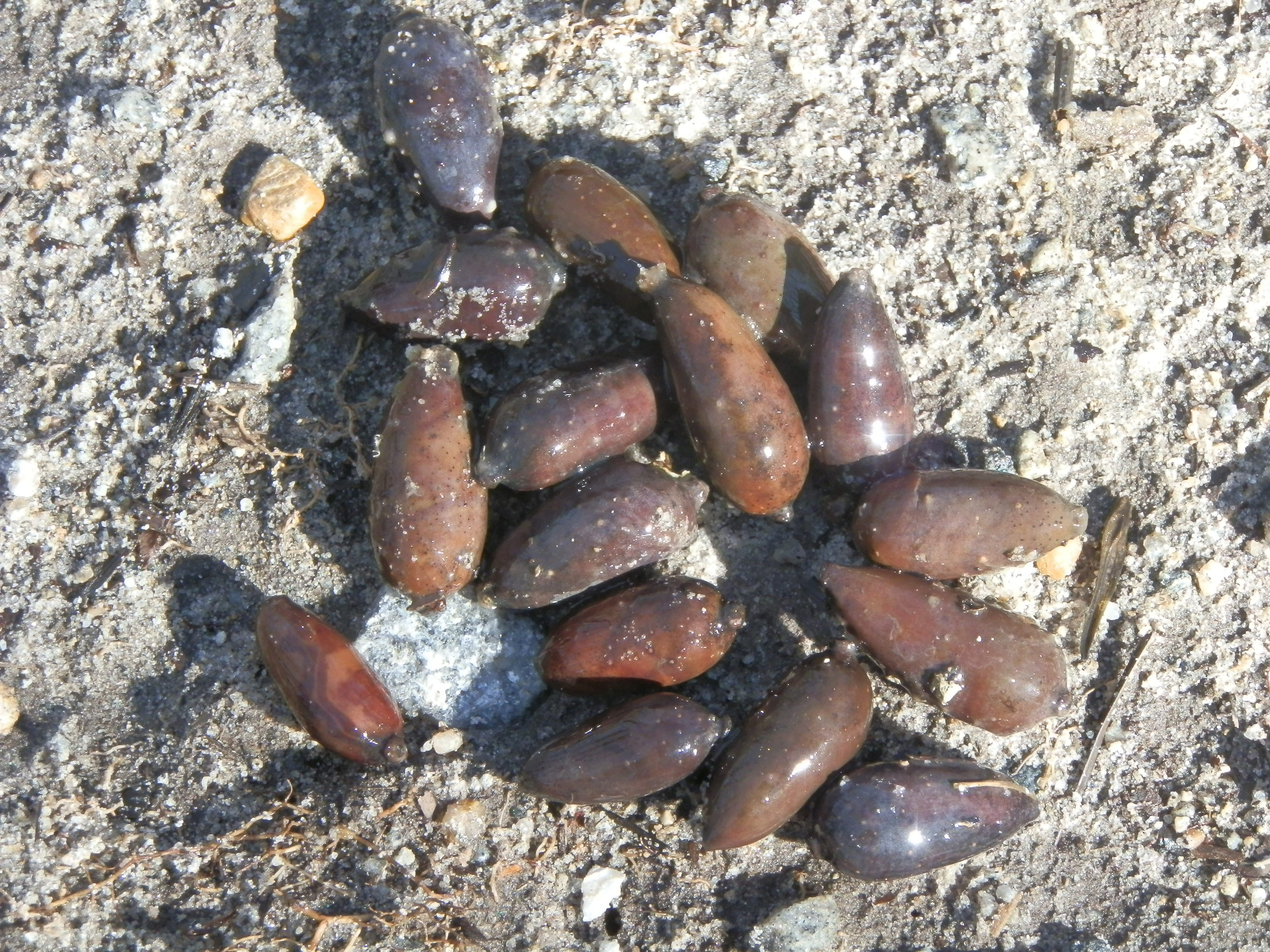
Close-up of the berry-like drupes

Close-up of the berry-like drupes


Ted Manzer teaches agriculture at Northeastern High School.

Posted in foraging | Tagged , , , , , , , , , | Leave a comment

Tick-trefoil is a wildflower that will stick with you


There’s nothing like a nice brisk walk in the woods and fields in the fall. Leaves have developed their seasonal colors and some of the undergrowth has been singed by frost. Hiking is also more comfortable now that temperatures have dropped. The problem is that when you look down at your clothes you often find they are covered with little green triangles.

The plants are called tick-trefoil (Desmodium sp.). My father-in-law used to call them turkey peas, since wild turkeys and other game birds often ate them. These tiny pods are slightly less than a quarter inch long and they have tiny hooked hairs that adhere to most clothing. They are a real nuisance to remove. Ask anyone with a longhaired dog that likes to romp among the wildflowers.

These little hitchhikers are somewhat inconspicuous until you’ve tromped through a patch of them. You usually find tick-trefoil when you’re looking for something else. Sometimes it can be as frustrating as stepping in a big pile of fresh manure.

When in bloom tick-trefoil plants have sparse delicate pea-like flowers. These develop into short pods with triangular shaped segments. Botanists call these specialized pods loments and usually there are three or four segments per loment. Once mature they will attach onto anything that brushes against them.

Members of the bean family, these plants have leaves in threes near the ground that resemble bean foliage. Some might even say they favor poison ivy. These perennial herbs usually grow on woodland edges and can tolerate substantial shade and still fruit heavily. There are dozens of Desmodium species in North America and North Carolina is home to about twenty.

Flowers are usually sparse and don’t telegraph where they all originate, so plants camouflage into their surroundings well. Plants also flower over a long period of time, so seed set can be quite high even though bloom is seldom showy. Individual specimens are usually shorter than three feet tall.

Many Wildlife species like them. Most livestock eat them too and nutritive value of both foliage and seeds is quite good. Bumble bees hit the flowers hard when they’re in bloom, so pollination is usually efficient and seed set is good.

Plants often are more common on wet sites but they tolerate dry conditions well. Once plants establish they curb erosion quite efficiently. Roots develop nodules caused by Rhizobia bacteria, which provide plants with nitrogen for improved growth in areas of low fertility.

Plants aren’t poisonous, but they aren’t used for human food either. They are also rarely used in herbal extracts for medicinal use. Native Cherokee people once used them to treat periodontal problems. Patients chewed on the roots which helped reduce the pain and soothe their gums.

I see their value to the ecosystem, but I try to avoid them when I can. The problem is unless my mind is fixed on these unwanted guests I usually don’t notice them until they have found me first. Then I spread them along the countryside for all the wild creatures to enjoy. One thing is for sure. I’m not curtailing any nature walks just to avoid tromping through them.


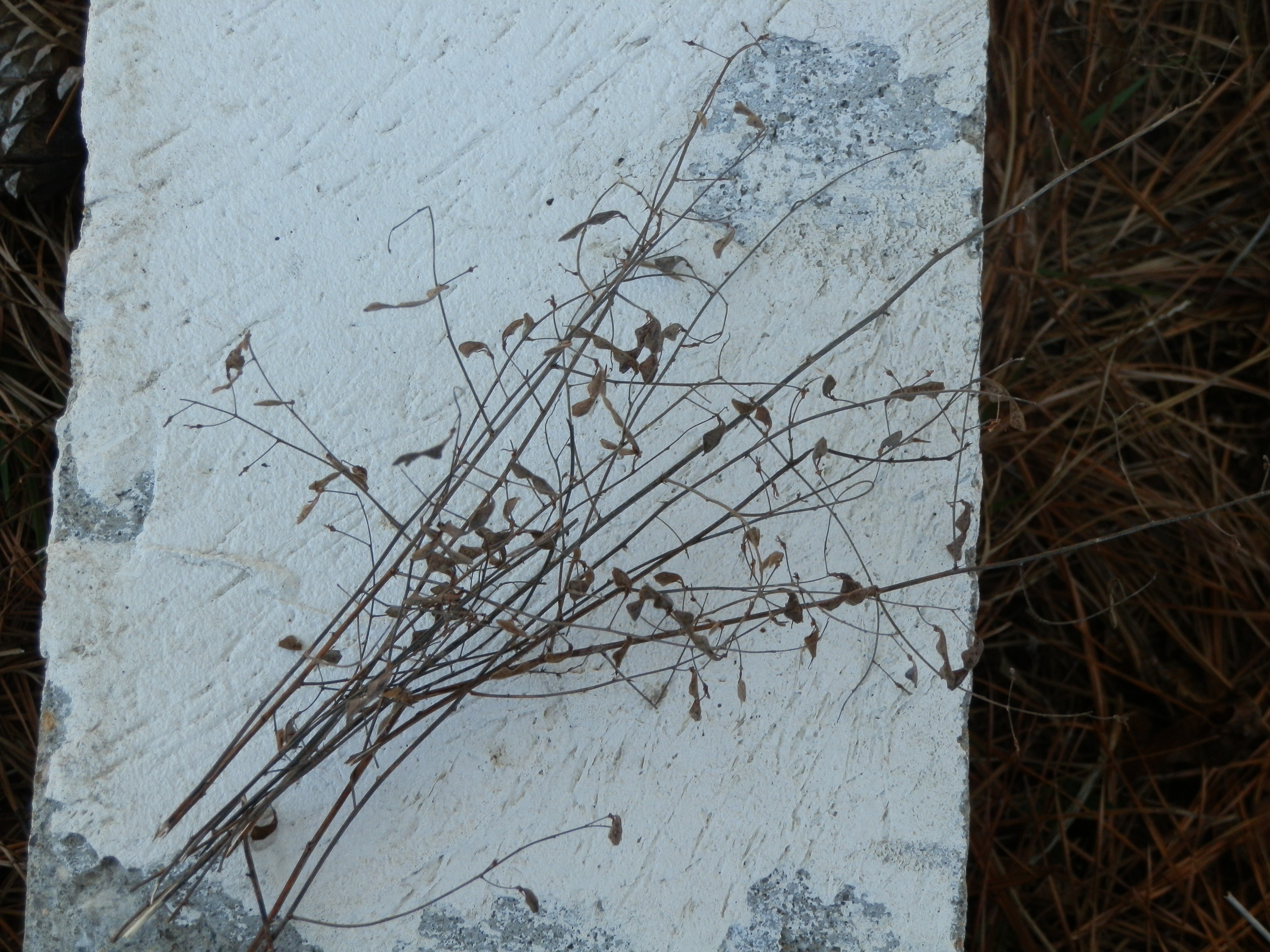
by late January most of the pods are gone. Those remaining are brown and desiccated.

By late January most of the pods are gone. Those remaining are brown and desiccated.


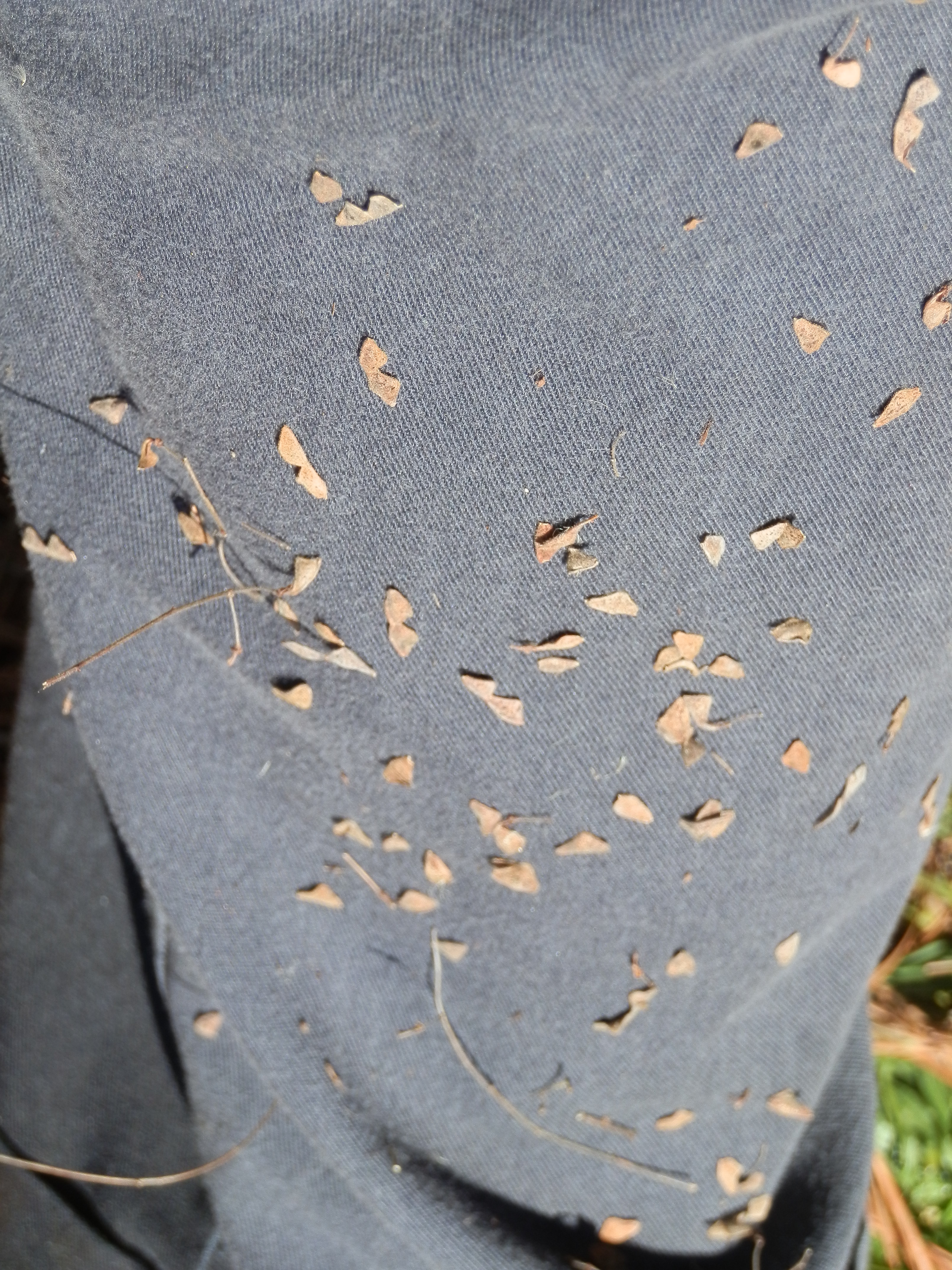
But they still stick to your clothes.

But they still stick to your clothes.

Ted Manzer teaches agriculture at Northeastern High School.

Posted in foraging | Tagged , , , , , , , , , | 5 Comments

Bedstraw is an interesting and clingy winter weed


Have you ever entered an otherwise empty field in late winter or early spring and left with uninvited sticky stems clinging to your clothes? They are bedstraws and often find you before you find them. They find your pets too. Bedstraws (Galium sp.) are often plentiful in your gardens.

Most Bedstraws are what we call winter annual weeds. They thrive in cool weather and can grow any time temperatures are above freezing. A few species of bedstraw are true perennials. Bedstraws can grow in nearly all types of soils, pH ranges and light levels. They prefer moist soils.

Creeping stems have tiny hairs with hooked ends on them. They act just like Velcro. Foliage radiates from the stems in whorls and has these hair-like structures too. I show this plant to my students by throwing it at their clothing. They’re fascinated by how it clings but leaves no residue.

In a couple months sometimes yellow but usually white flowers give way to two-lobed fruits a little smaller than garden peas. These fruits have sticky hairs too. They can be dried, roasted and used as a coffee substitute. I admit I have never done this yet.

Flower color varies because there are numerous species of bedstraw and several inhabit this area.  Many are edible. Young leaves and stems can be eaten fresh or gently cooked. Flowers make a delicate herbal tea.

One of the more common species in this area is the stiff marsh bedstraw (Galium tinctorium). It is a perennial and not considered edible. It’s not listed as poisonous either. Roots yield a red dye that is effective on many materials.

Another common use for bedstraw stems is as a straining filter for fresh milk. Old-time farmers collected gobs and poured the milking bucket over their makeshift sieve into a different container. Hairs and other debris got snagged by the foliage and were removed from the final product.

Many species of bedstraw have been used medicinally for centuries. Plant extracts are strongly diuretic. Herbalists have used them to treat skin disorders such as psoriasis, seborrhea and eczema. The problem is that plant juices can also be a skin irritant to some. Always test a small area with mild dosages to determine sensitivity.

In addition to numerous other chemicals, bedstraw contains a substance called coumarin. It is a precursor to warfarin, a common blood thinning drug. Too much bedstraw, particularly a species called fragrant bedstraw (Galium triflorum), especially high in this anticoagulant, could be a problem for some people.

Once weather warms a little, this plant will go into overdrive. When plants mature they quickly die back, but not before leaving their seeds behind for next winter. Individual plants produce a few hundred seeds. If you want this winter weed removed from your premises you can hand weed them before they go to seed. This can be effective for small areas.

On larger tracts numerous broadleaf herbicides will control bedstraw. However, in cold weather they are far less effective, since they aren’t taken up by the plants very efficiently. Fortunately, desirable plants are affected less also.


Ted Manzer teaches agriculture at Northeastern High School.
 

Tick trefoil growing under a bench at school in January

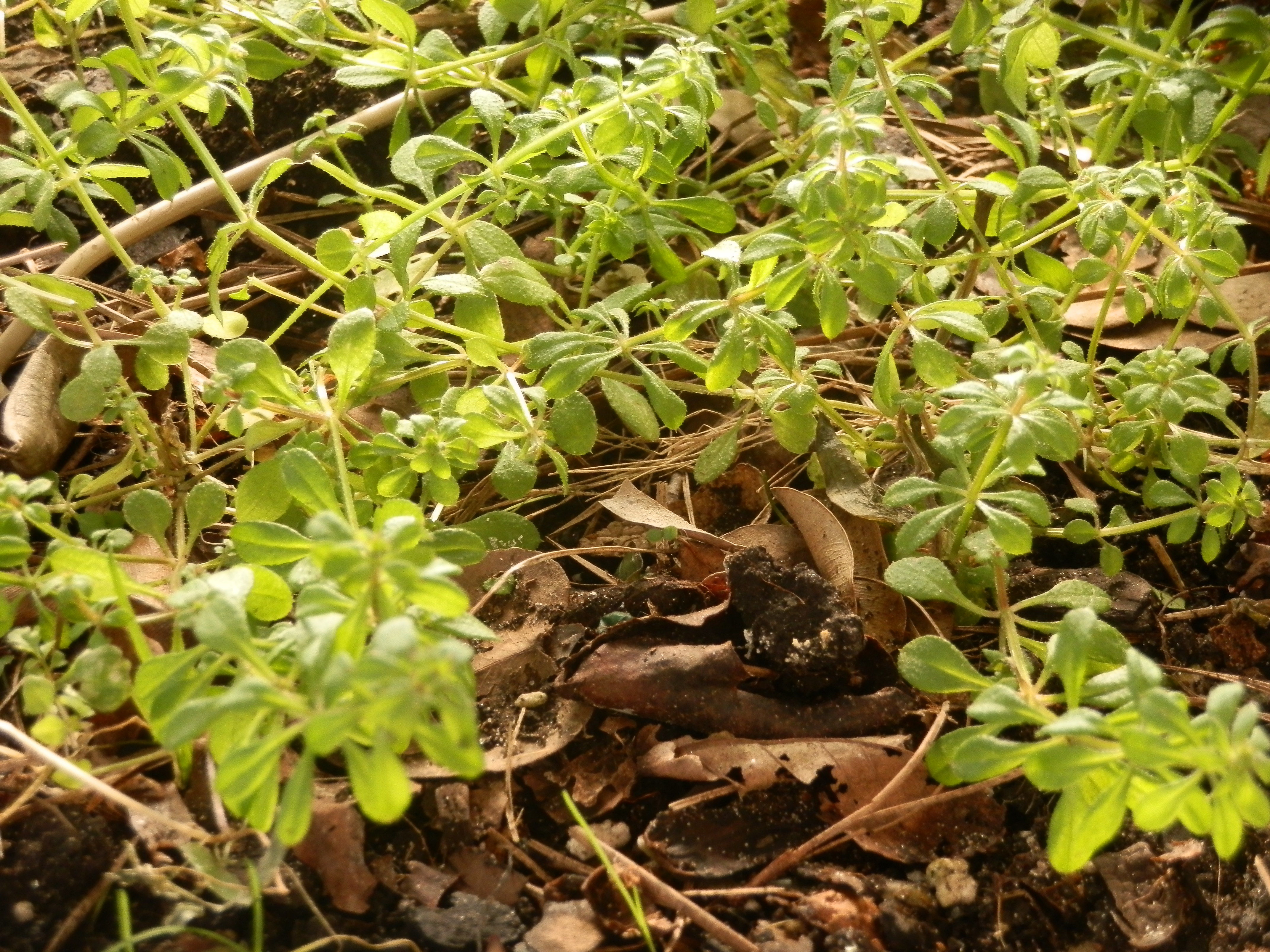
Bedstraw growing under a bench at school in January


Close-up of tick trefoil stem showing whorled leaves

Close-up of bedstraw stem showing whorled leaves. Rough stem surface is barely visible.

Ted Manzer teaches agriculture at Northeastern High School.
Posted in foraging | Tagged , , , , , , , , | Leave a comment

Where have all the generalists gone?


Centuries ago everyone was a generalist. People had to grow their own food, fix their own tools, doctor their animals and to a large extent, themselves. The industrial revolution changed much of that and urbanization naturally made us more specialized.

As time passed, our education also became more specialized. Career paths became narrower and skillsets more defined. We want our children to choose a career before many have an inkling of what they want to do. Moreover, few even really know what they’re good at.

I often chide students about their desire to improve their written and oral communication skills. “I’m going to be a mechanical engineer, I need to be good at math not writing,” one might say.

Excuse me? Writing and speaking effectively are important for everyone. Broadening horizons can also help one ace an interview, too. Well rounded people better adapt to a changing world, but still it seems everyone wants to be a specialist. We do need them, but we need people who can connect seemingly unrelated dots too.

My great grandfather and namesake had a blacksmith’s shop. He also raised silver foxes and like everyone else at the time, he farmed. He also made himself into a proficient mechanic. Those old guys could do it all. They had to.

My father-in-law had only an eighth grade education, but he amassed more practical veterinary skills on a shoestring budget than anyone else I’ve ever known. When he was a kid he attached himself to the local vet and had no inhibitions about applying what he saw. He was the first one neighbors called when they had sick livestock.

He basically worked for free, but his results were consistently positive. Old school country people were also adept at tasks such as canning, butchering and smoking meat. They also knew what wild plants they could gather. Self-sufficiency is becoming a lost art.

Some say being a jack of all trades means being a master of none. Others say you won’t succeed at interviews unless you show a single special skill. I disagree. You can be a master of many, maybe not a world authority, but I believe one can be effective at many things and better adapt to a changing world. Look at da Vinci or Benjamin Franklin.

Acquiring multiple skills makes life more interesting. I enjoy not doing the exact same thing all the time. Pursuing the dollar isn’t all bad, but it should not be one’s primary focus. Quality of life encompasses intangibles that can’t be satisfied by material things.

Despite the questionable reputation of many of our young people I love going to work every day. Each one is different. In any given day I may teach about horticulture, veterinary science, or natural resource management. None of these areas is probably my strength.  I’m much more competent at my wild plants than the cultivated ones. Sometimes I even see myself as a dinosaur.

However, the focus is not to make kids experts at these fields. That would be nice, but I simply want to teach them how to think. Then they have a better chance to succeed either as a generalist or a specialist. It’s also a pretty cool thing to be able to learn to utilize more of the bounties surrounding us.


Ted Manzer teaches agriculture at Northeastern High School.
Posted in foraging | Tagged , , , , | Leave a comment

Heartworm kills: Test your dog and use preventative medicine


Heartworms are serious and dangerous canine parasites spread by mosquitoes. When these insects bite your dog they can transmit this parasite which can cause suffering and death. These worms travel to the heart and when mature can be a foot long. Adult heartworms are difficult to treat, so a good prevention program is necessary.

Dogs and cats in the Southeastern US are far more likely to contract this deadly parasite than pets in North Dakota or Montana. If you have not already done so you should get your pets screened. Don’t procrastinate just because mosquito season has passed. Your dog might already be infected.

Dogs get heartworms from female mosquitoes and mosquitoes get them from infected dogs. The parasite can’t complete its life-cycle without both animals. Young larvae called microfilaria live in the bloodstream. There are a total of six developmental stages. L1, L2 develop in infected dogs which become L3 larvae in mosquitoes. This process in mosquitoes takes about 10-14 days.

When an infected mosquito bites a dog it can transmit the L3 larvae into the new host canine. These can now become L4, then developing adults (L5) and finally mature adults (L6). Mature adults reside primarily in the right atrium of the heart. The entire lifecycle can take as long as seven years.

Most dogs with heartworm will be anemic, lack energy or be prone to coughing. They may also have high blood pressure, difficulty breathing and extremely rapid heart rate. Once the disease has reached this stage it is difficult and often dangerous to treat.

Your veterinarian can give you heartworm preventative. This will kill the L3 and L4 larvae and keep them from reaching later stages. This medicine must be administered monthly at regular intervals or L3 and L4 larvae will become adults. Once the next developmental stage is reached the preventative is ineffective.

At this point all is not lost. Your veterinarian can often still treat the problem but it’s tougher. Usually multiple treatments are necessary. Medications required to treat adults come with precautions. Activity should be reduced, for example.

Infected dogs are classed 1-4 with 4 being the worst. These dogs show serious heart problems and killing the adult worms too quickly could hasten death rather than prevent it. Globs of dead heartworms could clog the heart and lungs. Immature larvae are usually attacked first. Your veterinarian can give you more specific information, but this disease is nothing to ignore.

Mosquito season has passed, but heartworm larvae can live in your dog for a long time. However, there’s no need to be paranoid either. If your dog is receiving regular treatments he is safe even if you have another animal with heartworms. They can’t directly pass the parasite. It must go through a mosquito first and regular treatment will combat reinfection.

If some of this confuses you, talk to your veterinarian. That’s always the best policy. Cats and ferrets can also get the disease. Keep that in mind. Heartworm can infect people, but it is rare and the parasites can’t complete their life-cycle in humans, so you don’t have to worry about that.


Ted Manzer teaches agriculture at Northeastern High School.
Posted in Uncategorized | Tagged , , , , , , , | Leave a comment

Believe it or not pine trees have a rich tradition of edible uses


I remember watching Euell Gibbons in the old grape nuts commercials. On one he held out a pine branch and remarked how pine trees were edible. They never seemed too appetizing to me, but if someone were lost in the woods I guess they could gain enough sustenance to survive for a while.

Seeds of all pines are edible, although most eastern species have very small ones. It would take considerable effort to extract enough calories for a decent meal. Pinyon pines (Pinus edulis) grow in the Southwest and they have rather large seeds. As the scientific name indicates, they are edible. These are sold as pine nuts in grocery stores.

Pine needles of all our native types can be used to make a vitamin C rich tea. Vitamin A levels are high too. If this sounds intriguing to you it’s easy to do. I might caution that you don’t boil the needles. Steep them in near boiling water for a few minutes. Boiling will release terpenes and your beverage will taste like turpentine. Boiling also destroys vitamin C, but add sugar or honey if you like.

Pine needle teas have been used medicinally for centuries to treat colds and respiratory infections. The tea acts as an expectorant. It also has decongestive properties. Inhaling the vapors from the tea or using needles as a simmering potpourri may break up mucus in the lungs.

Pine tea contains a chemical called shikimic acid. This compound is one considered antiviral and is a major ingredient of Tamiflu.

White pine (Pinus strobus) probably tastes better but loblolly (Pinus taeda) and longleaf (Pinus palustris)pines more common around here are fine. Some of the western pines are toxic to livestock so I wouldn’t recommend them. Firs and spruces are good. Eastern hemlock (Tsuga canadensis) is even acceptable. It is not related to the poison hemlock (Conium maculatum) often found along our ditches. Avoid yews (Taxus sp.) because they contain a chemical called Taxol. This is used in treating some types of cancer but otherwise is considered poisonous.

Inner bark of pine trees is also edible. The best way to fix it is to fry it in oil until golden brown. If you use your imagination the flavor might resemble potato chips. I think it’s a stretch, but that’s the only way the bark is very palatable. This inner bark is thin and will burn if you’re not watching closely. Again, white pine probably has the best flavor and texture. We have few around here.

Pine resin also makes a suitable chewing gum. When I was a kid we used to chew spruce, fir or white pine sap. It wasn’t too bad. There were a few country stores that actually sold spruce chewing gum, but we were cheap skates and collected our own.

The best part of collecting pine seeds, bark or needles is that these things are easy for anyone to identify and they are plentiful. You can camp out in the backyard and your kids can pretend to be pioneers. There’s very little chance they could be hurt by pine products, allergies aside.


Ted Manzer teaches agriculture at Northeastern High School.

Posted in foraging | Tagged , , , , , , , | Leave a comment

Homemade maple syrup was a great project for my boys


I once owned a farm in West Virginia and in late winter we collected maple sap to make our own syrup. It started as a school project for my oldest son and we continued it. Every morning we visited the ‘sap trees’ and collected several gallons of liquid. The first year we were able to produce five gallons of syrup.
We had an old incinerator in the garage to boil down our sap that we collected over a two week period. The garage was a good place for the operation as making syrup can be a messy process and the extreme increased humidity isn’t welcome in most kitchens. Forty gallons of sap are needed for each gallon of syrup, so it’s no wonder real maple syrup is expensive.
Most people only collect from sugar maples (Acer saccharum), which are very rare around here. They were abundant on my farm, but we also tapped red maples. The sap from them has less sugar, but we noticed little difference in quality of the finished product.
Red maple (Acer rubrum) is very common in eastern North Carolina. In fact, it has the largest geographic range of any North American tree. Red Maples grow from Alaska to Mexico. Once red maples were rarely used, but now many syrup producers routinely utilize them. Pure syrup from red maple has a slight nuttier flavor. Sap from silver maples (Acer saccharinum) can be used too. Even birch trees make fine syrup with a unique flavor.
We drilled each tree to a three inch depth at a slightly upward angle. I used an old fashioned brace and bit and made our collection taps about four feet off the ground. After that, we attached short pieces of copper pipe that fit snugly about an inch into the holes. We used two or three tap sites if the trees were large. Covered buckets kept out rain and dirt.
Commercially made taps are available but we fabricated our own out of materials we already had. Some people even use plastic. I always made sure to remove the taps every year as copper can be phytotoxic over extended periods.
The best time to tap trees is when day temperatures are above freezing and night temperatures are below. Forty degree day and 20 degree night temperatures are ideal. Our season in eastern North Carolina is shorter than in the northern sugar producing areas. Once buds start to swell yield withers and a bitter taste develops in the sap. Sugar producers call this flavor ‘buddy’ and it also makes the syrup cloudy.
Once we collected our sap we placed it in large canners to boil it down, and we reduced 10 to 20 gallons of liquid every day. I loaded the large incinerator with wood in the morning and in the evening when I returned. Once liquid gained viscosity we transferred the sugary mixture to the kitchen where we could closely monitor it. Burning a batch, making a mess and negating a lot of effort were lessons we only had to learn once.
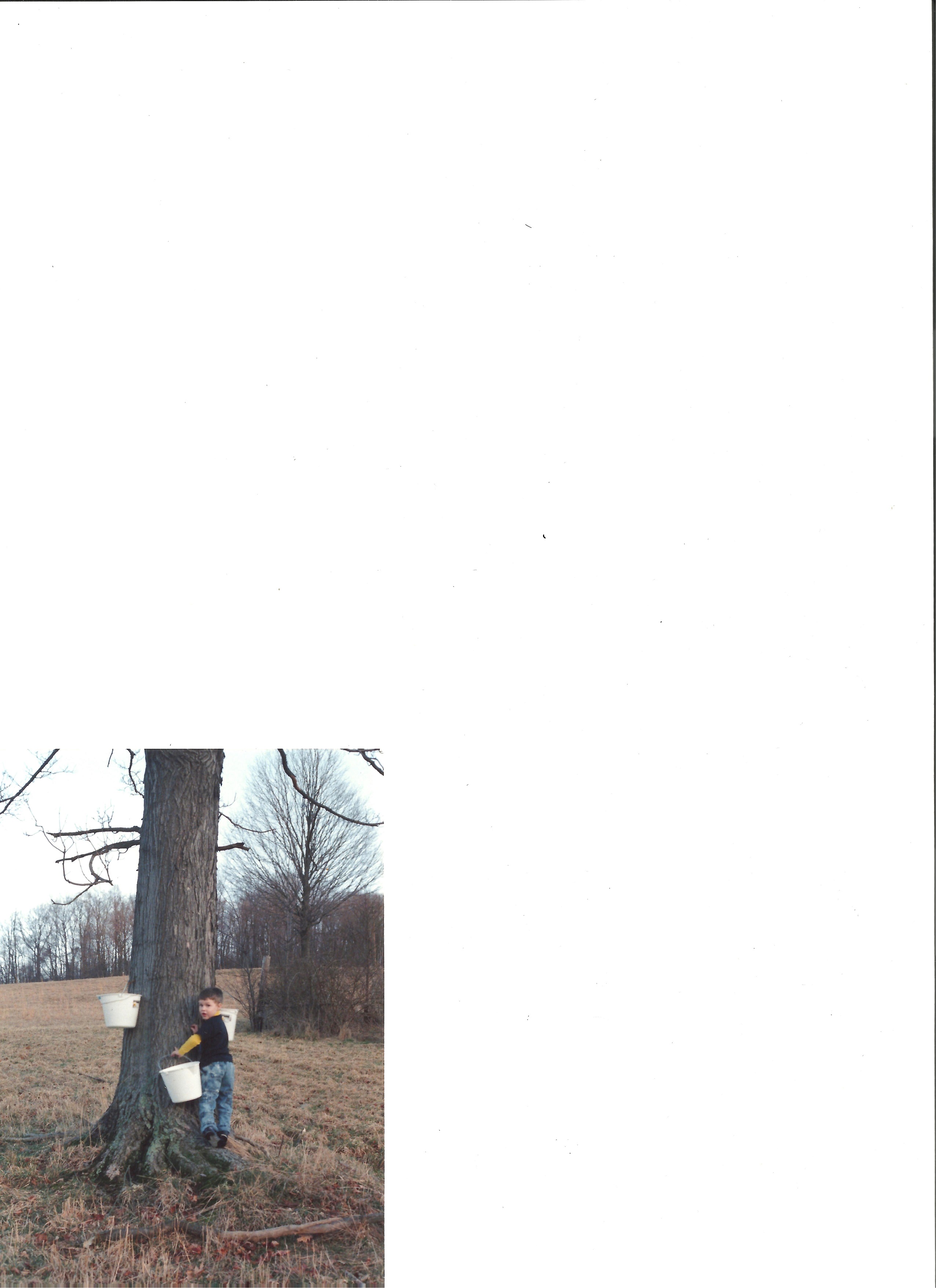
The picture below is my son Daniel collecting sap 25 years ago. Those were fun times.

Ted Manzer teaches agriculture at Northeastern High School.Daniel 1989 001

Posted in foraging | Tagged , , , , | Leave a comment

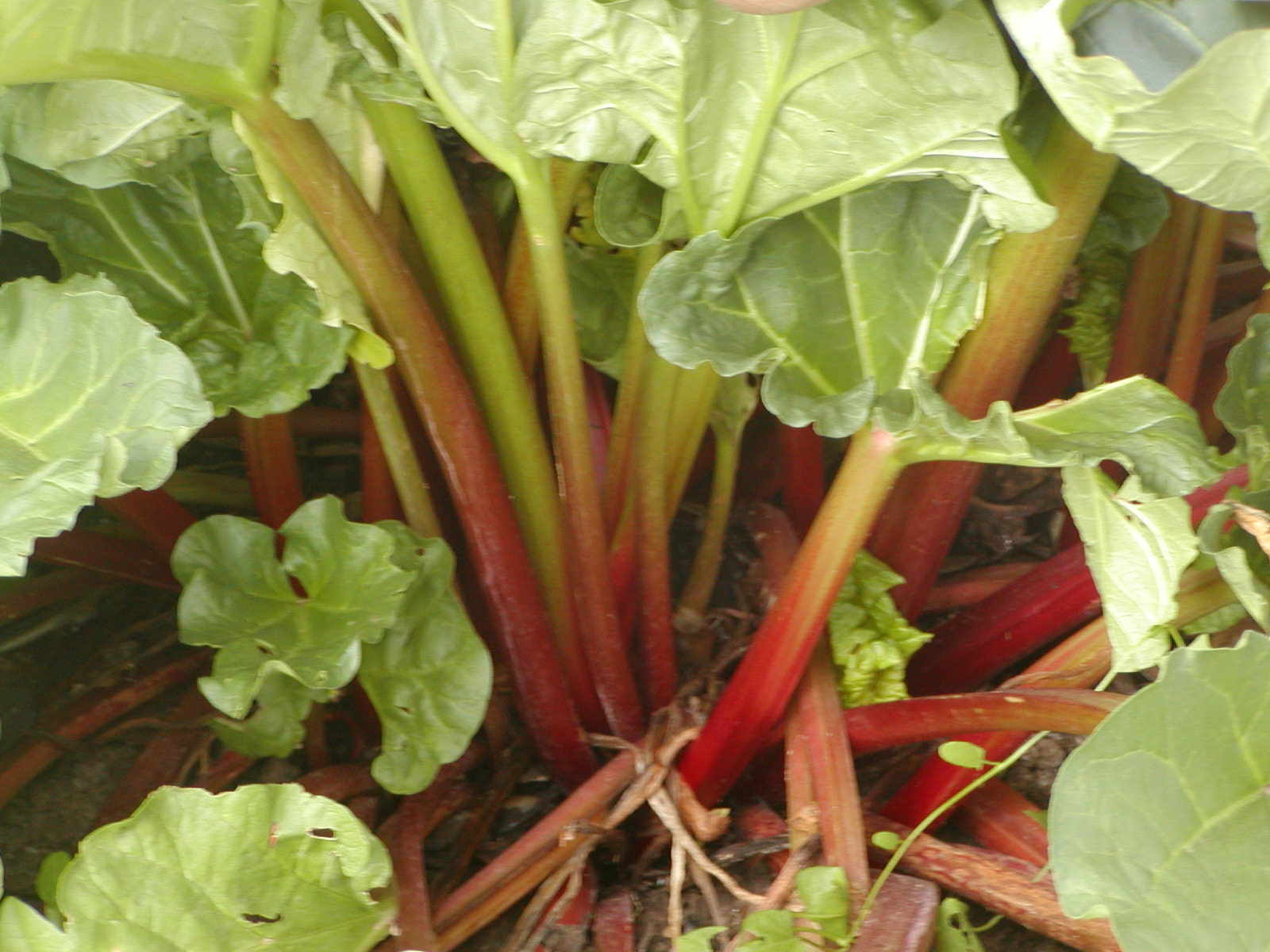
Rhubarb is a vegetable fit for dessert


Last week I wrote about asparagus. Rhubarb (Rheum rhabarbarum) is another perennial vegetable that requires little care. Few people grow it around here. Likely, it’s because our hot summers take their toll on it. You have to pick the right place for your patch or you’ll not be successful.
This past winter was harsh, but it was a great winter for rhubarb. It grows best where the ground freezes and temperatures remain below 40 degrees. This spring I have an impressive crop of healthy thick reddish stems. Last year it struggled.
Consequently, rhubarb is more common in the coldest parts of the country. We can grow it here, but it requires some protection from the hot afternoon sun. That can come from a well-placed tree or some taller annual or perennial plants. The problem is that rhubarb is a sun loving species. Your goal is to protect plants from extreme heat while giving them ample light.
Harvesting before the third year might stress the plants. But after that time stalks may be cut freely. Make sure not to remove more than about a third of the stalks at any one time. Cutting too many weakens roots for the next season.
Early spring growth seems to have better flavor and texture than that harvested later in the year. The part of the plant you eat is actually called the petiole, which is part of the leaf. Harvest them as close to the ground as possible either by pulling them or cutting them off with a sharp knife. Remove the leaf blades and use the petioles in your favorite recipes. I consider maximum high quality shelf life less than a week. After that you should either freeze or can your rhubarb.
When you see flower stalks, cut them off close to the ground. They rob the plant of energy. Beds will need to be divided every six to eight years. Do it when plants are dormant or at least haven’t grown very much in the spring.
I love a rhubarb pie mixed with fresh strawberries. A big bowl of rhubarb sauce is a treat too. If you’ve never eaten it before and you have a sweet tooth, be ready to use copious amounts of sugar. Rhubarb stalks are very sour but they have a delightful flavor once you get past that.
Some people use preparations of rhubarb roots to treat many digestive problems and cold sores. Roots are a potent stimulant laxative. Only older mature plants should be used as removing roots weakens general plant health. Leaf blades should not be consumed as they are very high in oxalic acid and can be especially troubling for people who form oxalate kidney stones.
Chemicals in rhubarb roots also interfere with some anti-inflammatory medicines, most notably corticosteroids like prednisone. Root extracts also can interact with many blood thinning medicines. Keep that in mind when sources discuss rhubarb for medicinal use they are most likely discussing root tissue. The stalks contain very little medicinally. They just make a great pie.


Healthy rhubarb stalks

Healthy rhubarb stalks

Huge rhubarb leaf blade

Huge rhubarb leaf blade

Ted Manzer teaches agriculture at Northeastern High School.
Posted in foraging | Tagged , , , , , , | 2 Comments