Hazelnuts


The holiday season is upon us again and familiar goodies abound on store shelves. Mixed nuts have always been a favorite of mine ever since I was a kid. I always enjoyed cracking them and extracting the sweet meat. Pecans, English walnuts, almonds, Brazil nuts and hazelnuts suddenly appear in the produce section.

I love them all, but the hazelnuts are probably my favorite. Wild ones were hardy in the cooler climates where I was raised. Since I spent much of my free time in the woods, I soon scoped out several small thickets of them. These were great spots to flush a grouse or two.

Two species are common throughout North America. The American hazelnut, rare in the lower coastal plain, is larger and more similar to the domestic filbert. Beaked hazelnuts, found in the mountains of North Carolina, have still smaller fruits. Both of these birch relatives thrive in a variety of environments but fruit better if exposed to sun.

Called filberts by many, nuts from the American hazelnut are light brown and acorn-like. They are half to three quarters of an inch long and slightly wider.  Two leafy coarsely toothed husk-like bracts enclose the shells.

In Eastern North America, hazelnuts have not been commercially successful. This is largely due to a disease called eastern filbert blight, a fungus disease which invades the twigs and eventually kills the plant. The native hazels are resistant, some are even immune to this disease.

Susceptible European types are the ones favored for the table. They have larger nuts and thinner shells but are adapted to drier areas, such as eastern Oregon, Washington and British Columbia. Some are also raised in parts of the upper Midwest.

Hazelnuts make attractive naturalizing landscaping. Ruffled doubly toothed oval leaves turn orange to red or purple in the fall. Trees are small and seldom grow taller than 12 to 14 feet. Some cultivars are even shorter. One ornamental cultivar called the Harry Lauder’s walking stick has twisted branches and is very attractive in winter.

Male and female flowers are separate, but both reside on every plant. Flowers bloom in early spring, but are not overly showy. Sometimes a late frost can kill the young fruits. Nuts ripen in October but can be kept for long periods.

Some people confuse hazelnuts with chestnuts. However, chestnuts are larger, shinier and don’t rattle when you shake them. The trees look nothing alike and are not closely related.

The beaked hazelnut is the species I have collected most from the wild. Nuts are much smaller than the commercial filbert. Shells are slightly thicker. I think the taste is a little sweeter. Long beak-like husks cover the shells, hence the name. One problem I encountered was that the squirrels, jays and crows harvested them before they were completely ripe.

Blue jays and squirrels are the major thieves to both species of hazelnuts. However, if attracting wildlife is part of your reason for planting them it’s not a problem. You can always buy some at the store.
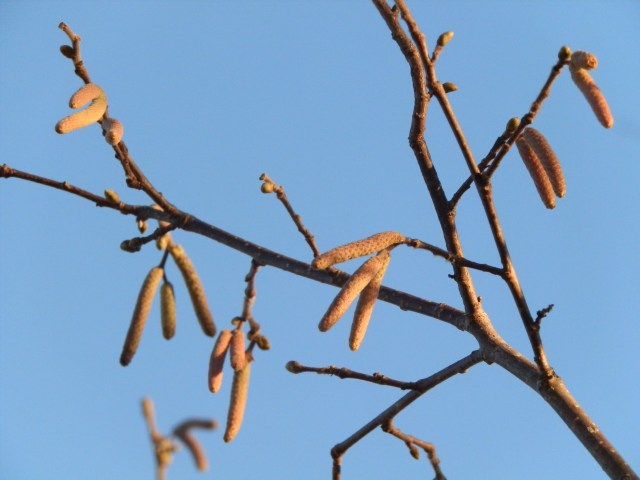
OLYMPUS DIGITAL CAMERAAmerican hazelnut catkins in the winter sun

Ted Manzer teaches agriculture at Northeastern High School.

Posted in foraging | Tagged , , , , , , | 15 Comments

Beautyberry


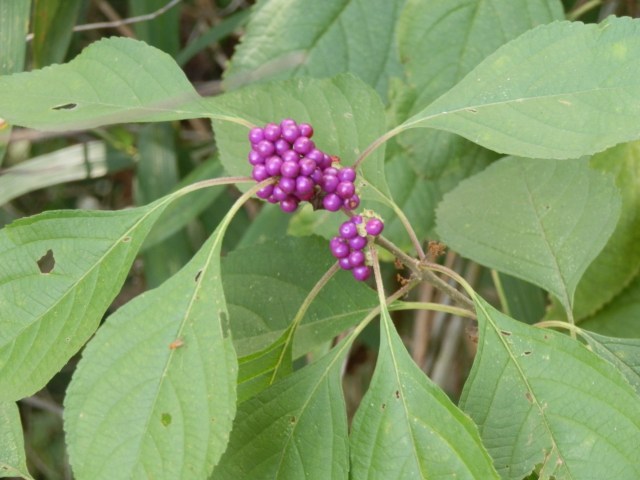
Take a walk on the edge of the woods in the fall, particularly near an old cemetery or abandoned landscape. Your eyes will likely zone in on some iridescent purple to magenta berries. They encircle the stems in clusters and their abundance will impress you.

Beautyberry (Callicarpa americana) is a native shrub not used much these days, but its fall color is as unique as any you’ll see. The fruits really live up to their name.

They grow in full sun to quite shady conditions. Fruiting is more prolific when plants receive adequate sunlight and moisture. Quite often they can be found on the edges of swampy areas. Beautyberries are a low water user and can tolerate drier sites as well.

These deciduous shrubs can grow to eight or nine feet but four feet is more typical. Growth habit is loose and spreading. Plants respond well to pruning and can be kept where you want them. Pruning also makes their growth more dense, which is pleasing to many.

Serrated leaves emerge from the stems in pairs. Fall foliage is yellowish green, but the berries are the real treat to look at.

Squirrels, deer, bobwhite quail and many songbirds love them and can eliminate the gorgeous color in short order. Deer are fond of the foliage as well. Flowers are rich in nectar and attract butterflies.

They can be a culinary treat also. Many people think they are poisonous, but they’re not. When consumed fresh the berries have little taste other than being somewhat astringent and sour.

Cooking changes things. They make a fabulous jelly with a delicate flavor somewhere in between apple and cherry. The color loses some of its vibrancy during processing, but jams and jellies still are a pleasing bright pinkish red.

Odor of crushed foliage is not what I would consider delicate. Beautyberry is related to lantana. Foliage from many lantana cultivars can offend our olfactory nerves and so can beautyberry leaves.

All is not lost, however. Chemicals inside the leaves are highly effective for repelling mosquitoes and biting flies. Research has even shown compounds isolated from beautyberry to be effective in controlling fire ants.

Simply crushing the leaves and rubbing the juice on our skin is safe. It’s probably less dangerous than lathering our skin or our pets with DEET, the active ingredient in most commercial repellants.

I’d say a little bitter smell beats getting eaten up by mosquitoes or ticks. In this slow economy the price is right too.

Researchers at the University of Mississippi are working with this native shrub in hopes of making a buck from it. They have identified three compounds with strong repellant properties. Maybe we’ll see a beautyberry insect repellant on the shelves of our local stores in the future.

Don’t look for it anytime soon. Approving a chemical for use is a tedious process. The EPA has many regulations, meaning it might take several years to get something licensed. In the meantime you can collect your own and maybe enough berries for a batch of homemade jelly.

Beautyberry shrub

Beautyberry shrub

Beautyberry close-up

Beautyberry close-up


Ted Manzer teaches agriculture at Northeastern High School.
Posted in foraging | Tagged , , , , , , , | 14 Comments

Appalachian Christmas


Sometimes our fondest memories are simple things that didn’t cost much. I know they are for me, because Christmas doesn’t come from a store.

My wife is from rural West Virginia. Her parents were tenant farmers, meaning they worked long hours running someone else’s farm for very little pay. Fancy gifts were never an option.

That said, Christmas was always special. Roberta and her younger brothers scoured the local woods for a tree each December. By the time they dragged it home it had lost numerous needles.

Their dad would build a wooden stand for the sparse white pine and the whole family helped decorate. They used whatever lights they had, usually gaudy multicolored blinking ones. Sometimes Roberta’s parents stayed up several evenings removing and replacing bulbs until the strands would light.

Countless evenings were also spent cracking hickory nuts. Some they sold and others they used in some of the best mincemeat cookies imaginable. More were wrapped up as gifts.

Her dad hunted raccoons by night. He also trapped foxes, muskrats, and just about anything else that would bring in a few bucks. The whole family collected black walnuts to sell at the farmer’s market.

One sunny fall afternoon the children’s trip up the hill for walnuts proved costly. A chair perched upon the wheelbarrow so the youngest could reach the lowest branch was not a good idea. His broken arm consumed all their walnut money that year, but the homemade gifts still made Christmas great.

Lack of funds never interfered with their Christmas spirit. Caroling on a hay wagon with other church members was always a big event, even though nobody possessed a stellar singing voice. One of the church ladies crocheted crosses every year for all singers to use as bookmarks for their bibles and hymnals.

The Minney’s never had much money, but you’d never know it if you arrived at their house at dinner time. Elloise had a hard earned reputation as one of the finest cooks in the area. Her country fried venison steak was a treat nobody ever turned down.

The whole family helped process produce from the garden and apples, berries and nuts from nearby woods. Every year they canned over 300 jars of green beans alone. Homemade chunky applesauce and tomato juice were also staples.

Then there were all the relatives. Ezra was one of 21 siblings and Elloise one of seven. Company was inevitable. Food was plentiful. It made for great fellowship.

Whether the coon hunting and trapping were productive or lean, it made no difference. Late spring frosts sometimes eliminated the walnuts and hickory nuts. That didn’t matter either. Christmas was always a joyous occasion.

Many people today might consider my wife’s family poor. They lived in a house with no central heat, drove a clunker and seldom went shopping. What they had was love for family, friends, the Lord and life in general. They were one of the richest families I’ve ever met and I’ve been fortunate to be a part for nearly 30 years.


Ted Manzer teaches agriculture at Northeastern High School.

Posted in foraging | Tagged , , , , , | 3 Comments

Mistletoe


Christmas is getting closer and bunches of mistletoe again adorn doorways. The tradition of kissing under the mistletoe is one that originated with the Druids. A white berry-like fruit is removed after each kiss. When all are gone kissing is no longer allowed.

One legend states that a couple who kisses underneath mistletoe will have good luck, but a couple that doesn’t will have bad luck. Kissing under the mistletoe supposedly ensures a long marriage and fulfilling life. Legend also states that an unmarried woman not kissed under the mistletoe will remain single for another year.

Kissing under the mistletoe is fine, but eating any part of the plant, especially the fruit is not. In general, avoid any plant with white berries. Poison ivy, oak, and sumac are prime examples.

Mistletoe fruits technically are not berries. They are drupes, like cherries or peaches, since they contain only one seed. That doesn’t change their toxicity. They contain a poison called phoratoxin, which can cause blurred vision, nausea, abdominal pain, diarrhea, hypotension, and even death.

Some people hear that mistletoe lowers blood pressure and they think that they can self-medicate themselves with just a few fruits. It’s not that simple. Don’t let the lower blood pressure symptom convince you to try some.

Studies vary and some people show no toxicity symptoms other than an upset stomach, but it’s crazy to eat things well documented to be toxic in moderate or lower levels. Keep it away from children, since all plant parts are toxic.

Several commercial extracts contain mistletoe. I strongly suggest consulting your doctor before using them. They could interfere with medication.

Cancer and arthritis research on mistletoe is ongoing. Much of this has been in Europe and with the European mistletoe. American types have not been studied as extensively.

Mistletoe is a unique parasitic plant. It’s what we call a hemi parasite, because it produces much of its own food through photosynthesis. It also taps the tree for all its mineral nutrition, and large infestations can severely weaken a tree.

Successful parasites do not kill their hosts, and mistletoe alone rarely kills trees. It does make them more susceptible to other problems. Eventually the tree will probably die prematurely.

Observant folks might notice that not all mistletoe plants possess fruits. Entire plants are either male or female. They form on trees when a single seed is deposited on a branch. Usually this is accomplished through bird droppings.

The name mistletoe comes from two Anglo-Saxon words which translate to ‘dung twig.’ In earlier days people thought it was the birds themselves and not the seeds they dropped that caused mistletoe.

These sticky seeds send out roots that penetrate bark and then wood of the tree. Over time they weaken the branch and often limbs break.

Mistletoe can be pretty, especially in winter, but I suggest removing plants from your trees if possible. The best time to notice you have a problem is when the leaves fall, so pull it off your trees and stick it above your door.

Honeylocust tree loaded with mistletoe

Honeylocust tree loaded with mistletoe

OLYMPUS DIGITAL CAMERAcloseup of mistletoe and white fruit


Ted Manzer teaches agriculture at Northeastern High School.

Posted in foraging | Tagged , , , , , , , | 16 Comments

Witch hazel


I was out for a drive after Hurricane Sandy and noticed the storm had speeded up the leaf drop a little. Because of that I was able to see some of the most interesting late fall flowers in the landscape.

Wild witch hazel has yellow flowers with long ribbon-like petals. Usually these bloom after the leaves drop, but in the southern part of its range leaves persist a little longer and sometimes mask the beautiful blooms. This shrub is rare in most of the counties around the Albemarle Sound but is more common elsewhere in our state.

In some parts of the country witch hazel attains heights of 25-30 feet, but it rarely gets that large around here. I have never seen specimens remotely close to that, which is why I refer this multi-stemmed plant as a shrub and not a tree. It has toothed leaves which emerge from the branches singly. Foliage looks similar to that of the hazelnut tree, which may partly explain the name.

Another interesting feature of the shrub is that the previous year’s fruit matures at about the same time as the present year’s flowers appear. When mature and dried, the fruits can violently shoot a pair of black edible seeds as far as 30 feet. Keep this in mind if you are inclined to bring some inside for a fall flower arrangement. Also, if you wish to grow new plants from seeds they require a cold treatment and can take as long as 18 months to germinate.

Witch hazel is normally an understory plant and it thrives in shady locations. If soil is moist it grows well in sun, particularly in the northern reaches of its range, which runs into many provinces of Canada. It can tolerate low temperatures of minus 35 degrees.

When grown in sunny locations, fall color is richer. In our area it makes a fine border shrub as it has few disease and insect problems. It provides food and cover for wildlife. One problem is that it is shallow rooted and doesn’t tolerate drought very well.

Early settlers used a forked branch of witch hazel for dowsing or divining rods to find water. Some even swore they helped find gold too. Many still swear by witch hazel dowsing rods. This might also explain the witch hazel name. These individuals who sought out water with a forked stick were sometimes called ‘water witches.’

A more proven use for witch hazel is found in all drug stores. Many aftershave products contain it. Witch hazel extract has been used for itching, burns, swelling, inflammation, diarrhea, hemorrhoids, excessive bleeding and many other maladies.

Witch hazel contains bitter astringent chemicals called tannins. They are antimicrobial styptic compounds. When applied directly to the skin these extracts reduce swelling and help fight bacteria.

When overused as a topical treatment, dry skin is common. As far as internal use is concerned I suggest consulting your doctor. Many frequently encounter upset stomach, nausea and constipation if overused internally. Large doses can also cause liver problems.


Ted Manzer teaches agriculture at Northeastern High School.
Posted in foraging | Tagged , , , , , , , , , | 13 Comments

Don’t trust the birds


Recently I’ve written about some obscure brightly colored fruits many think are poisonous. Beautyberries and firethorn are edible and birds love both. Don’t let the latter fool you, because you can’t trust the birds.

Now that leaves are beginning to fall, their persistent fruits and those from evergreen plants are more noticeable. I am a fan of many ‘out of the mainstream’ fruits, but don’t experiment unless you know what you’re doing. You can’t assume wild or ornamental fruits are safe because birds or wildlife eat them.

All hollies are poisonous. They contain cyanide producing compounds as well as other toxic substances. We have numerous holly species in our landscape and many readily escape cultivation. One beautiful one is called winterberry holly.

Like all hollies it has separate male and female plants. This means that some plants will be loaded with fruit while others have none.

Most people know hollies are poisonous but few recognize this one as a holly species because plants lose their leaves in the fall. This exposes clusters of beautiful tempting red berries. These fruits are toxic to people, livestock and pets. Winterberry holly’s most potent toxin is a chemical called theobromine. It causes severe nausea and diarrhea, but death is unlikely.

Some hollies have red berries and some have black ones, but none can be consumed by humans. They do draw birds. Usually birds don’t eat them until they’ve been softened by numerous frosts. This likely makes them more palatable.

Another common landscape plant with bright red berries is Nandina, also known as heavenly bamboo. This shrub is commonly used in local landscapes and also escapes into adjacent areas. Some types grow to be over 10 feet tall and in full sun can produce copious fruit.

Nandina is only mildly poisonous and the toxins are in the seeds not the berry pulp. This is small consolation as far as I’m concerned. I still suggest people and pets should not eat these fruits.

Some sources list Nandina fruits and foliage as edible, but the tedious rinsing necessary to remove bitter compounds renders them low on my foraging list. Berries usually persist late into the winter before birds finally run out of other options.

Another bright red inedible fruit in our local landscape is the cotoneaster. The two main species are rockspray and bearberry. Neither is considered edible, nor are they dangerous. They will give you an upset stomach and a little nausea if you eat very many. However, they are quite bitter and it is unlikely you would care to do that if other options are available.

Lastly, another plant with attractive red berry-like structures is the yew. These soft hollow balls are actually cones and not fruit. All parts of the plant are poisonous but the seeds in these unusual soft cones are highly toxic. The genus name for yew is Taxus, which means toxin, but many birds eat the seeds with no problems. Keep children and pets away from them, since they can be a curiosity.


Ted Manzer teaches agriculture at Northeastern High School.
Posted in foraging | Tagged , , , , , , | 14 Comments

Nutria


I’ve heard them called muskrats on steroids. They’re the kudzu of the animal world, an uncontrollable pest introduced from South America. These semi-aquatic rodents can grow to 30 pounds. In the process they eat a lot of vegetation.

Many introduced species have changed the existing habitat for native plants and animals. Nutrias do more than that. They consume habitat.

Adult nutrias are about 14 inches long from the nose to the base of the tail.  Their round hairless tails are slightly longer than the bodies themselves. Coloration is brownish, and both sexes are similar in appearance and weight. They have numerous long whiskers and orange teeth. Hind feet are webbed except for their baby toes.

Reproduction is prolific. Nutria may breed in any month of the year. One male usually has 2 or 3 mates which share the same burrow. Female nutria mature by six months of age and female nutria usually have two litters per year.  Many females breed within two days after giving birth to a litter. Litter size varies but averages about five offspring.

Their appetite is insatiable and they yank out vegetation by the roots. They can eat up to 25 percent of their bodyweight each day. This, along with their constant digging causes soil to enter our waterways, setting in motion a destruction of living conditions for our native species of mammals, birds, reptiles, amphibians and fish.

Murky water and dead vegetation soon leads to lower oxygen levels and a change in the type and number of aquatic invertebrates. Sometimes what we don’t see can be even more damaging to a habitat that what we do see.

Nutrias are shy creatures and prefer to spend much of their time in their burrows when not eating. They seldom are seen sunning themselves out in the open, so we often don’t notice how many there are in an area.

When food supply in marshes and ditches is depleted these vegetarian eating machines move on to nearby cropland. In water they are graceful and elusive, but on land they are less formidable and easier prey for land predators including people.

Nutrias were introduced into this country back in the 1930’s. The goals were to clear out aquatic vegetation and provide a source of fur. There are two problems with this. First, nutria won’t graze underwater vegetation or algae. Second, the fur industry has taken a huge hit since the popularity of the animal rights movement.

We could cut down their population by including them in our diets. I’ve never eaten nutria, but I’ve been told their meat is similar to muskrat. I’m a big fan of that rodent, so I’ll have to try nutria sometime soon. They eat a healthy diet and meat is lean.

One obstacle encountered with nutria infested areas is something called ‘nutria itch.’ This is caused by a nematode. This parasite is not found in nutria meat, but it is present in waters where they live. I suggest washing thoroughly when encountering nutria infested waters, but don’t be paranoid of the outdoors.


Ted Manzer teaches agriculture at Northeastern High School.
Posted in foraging | Tagged , , , , , , , | 6 Comments

Groundsel tree


Groundsel tree

October to November is the time of the year when cotton bales are seen in bunches as we drive to and from work. Despite that, there’s still a lot of white out there. Large feathery shrubs dominate the roadside scenery.

I call them groundsel tree (Baccharis halimifolia), but other common names are sea myrtle, salt bush and silverling. The fluffy white stuff is attached to the seeds like dandelion down. In a few weeks the wind will spread them around the same way.

Semi-evergreen toothed leaves emerge from the stem singly. Size varies from less than an inch long to nearly three. Bark is brown with intersecting ridges.

Groundsel tree plants can be identified at quite a distance. One of the few shrubs flowering now, they are often 10 to 15 feet tall. This makes them difficult to ignore.  No other member of the sunflower family in North Carolina gets this big.

This weedy shrub is well adapted to wet areas. We often see it interspersed with wax myrtle. Groundsel trees also tolerate salt quite well and can stabilize disturbed sites near the coast. They make a great naturalizing backdrop for a landscape.

They also establish easily. High seed germination percentage and prolific seed production are the main reasons why.

Flowering is much more prolific in sunny areas, but plants can survive in the shade. Thinning of a dominant tree canopy will encourage them to flower.

Plants are dioeceous, meaning that male and female flowers reside on different plants. Male plants are smaller and much less noticeable than the female ones. Female plants can produce viable seed within three years.

Other than retarding erosion and providing pleasing fall interest, Groundsel trees have little agricultural value. There’s nothing on the plant suitable for human foraging. Livestock and wildlife don’t even eat them. This is good, since foliage contains chemicals toxic to livestock. Pastures can fall prey to their invasion if farmers allow animals to overgraze and create bare places.

Although groundsel tree apparently has little or no value as a good food source for game animals, it serves as cover and nesting habitat for various species of birds.  Nectar from male flowers provides abundant food for bees and small butterflies. Songbirds then feast on the insects.

These fast-growing shrubs can pose problems during reforestation. They compete with young tree seedlings for light and usually dominate. They don’t respond well to fire, so incorporating prescribed burns into a forest management plan can eliminate this competition problem.

Chemical control is difficult. Many herbicides that will control groundsel tree will also kill desirable hardwood species. Spot treatments might be the best option for homeowners, but that’s tedious.

When in flower this plant can be a nuisance to some, because the airborne pollen is a potent allergen like ragweed. Susceptible individuals should avoid it in the fall. Likely the shedding down will irritate nasal passages also.

This is one species that is great when it is in its proper place. The cottony masses can be breathtaking when cruising down the highway in mid to late fall.


Ted Manzer teaches agriculture at Northeastern High School.

Posted in foraging | Tagged , , , , , , | 4 Comments

Firethorn


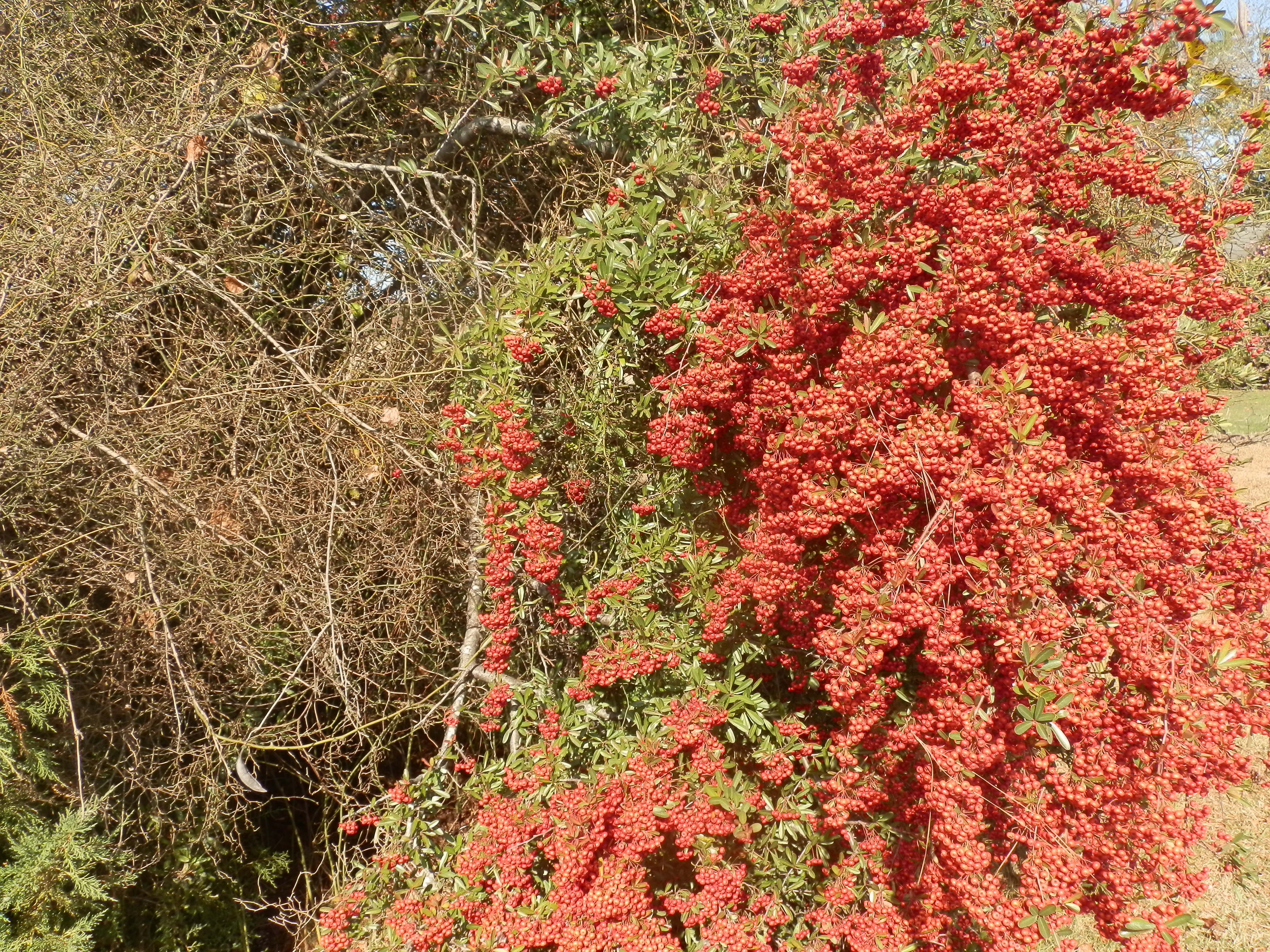
If anyone has experience with this shrub they know how aggressive the sharp thorns can be. Pyracantha (Pyracantha coccinea), otherwise known as firethorn, is a climbing woody shrub that produces bright reddish orange berry-like fruits. They persist late into the fall until the birds devour them.

Many songbirds, especially blue jays gorge on them. Robins, primarily worm eaters, also hit them hard. Fruits become a favorite for wild turkeys if you live on the outer edges of our communities.

This apple relative has semi-evergreen leaves, meaning in the northern parts of its range plants lose their leaves. Around here it is pretty much green all year and in the mountains of North Carolina plants often lose a portion of their foliage.

Pyracantha can be grown as a specimen shrub, a hedge or a climbing vine. It is one that is often trained to grow up a wall, particularly a south facing one. Training to a particular shape such as flat against a wall often requires meticulous pruning.

Pruning this plant can be hazardous to one’s body. The woody thorns can be inconspicuous but penetrate deeply if you grasp too tight. Sometimes trimming is necessary, but if you cut plants back in the fall or when dormant you will eliminate much of the white fragrant bloom and therefore the beautiful fruits.

Try waiting until plants bloom in spring and adjust shape from that point. This shrub is tough. You can cut it to the ground if you want to, but you will sacrifice flowers and fruit for a while. It is also adaptable and will grow almost anywhere. It won’t flower much in the shade and growth will be spindly, so don’t plant it there.

In areas where plants have spread into the wild, they usually don’t become well established under shady canopies. While not overly invasive, these shrubs are quite conspicuous in fall. Often there’s plenty of fruit, which is not poisonous to humans. Many think otherwise, so they aren’t used much.

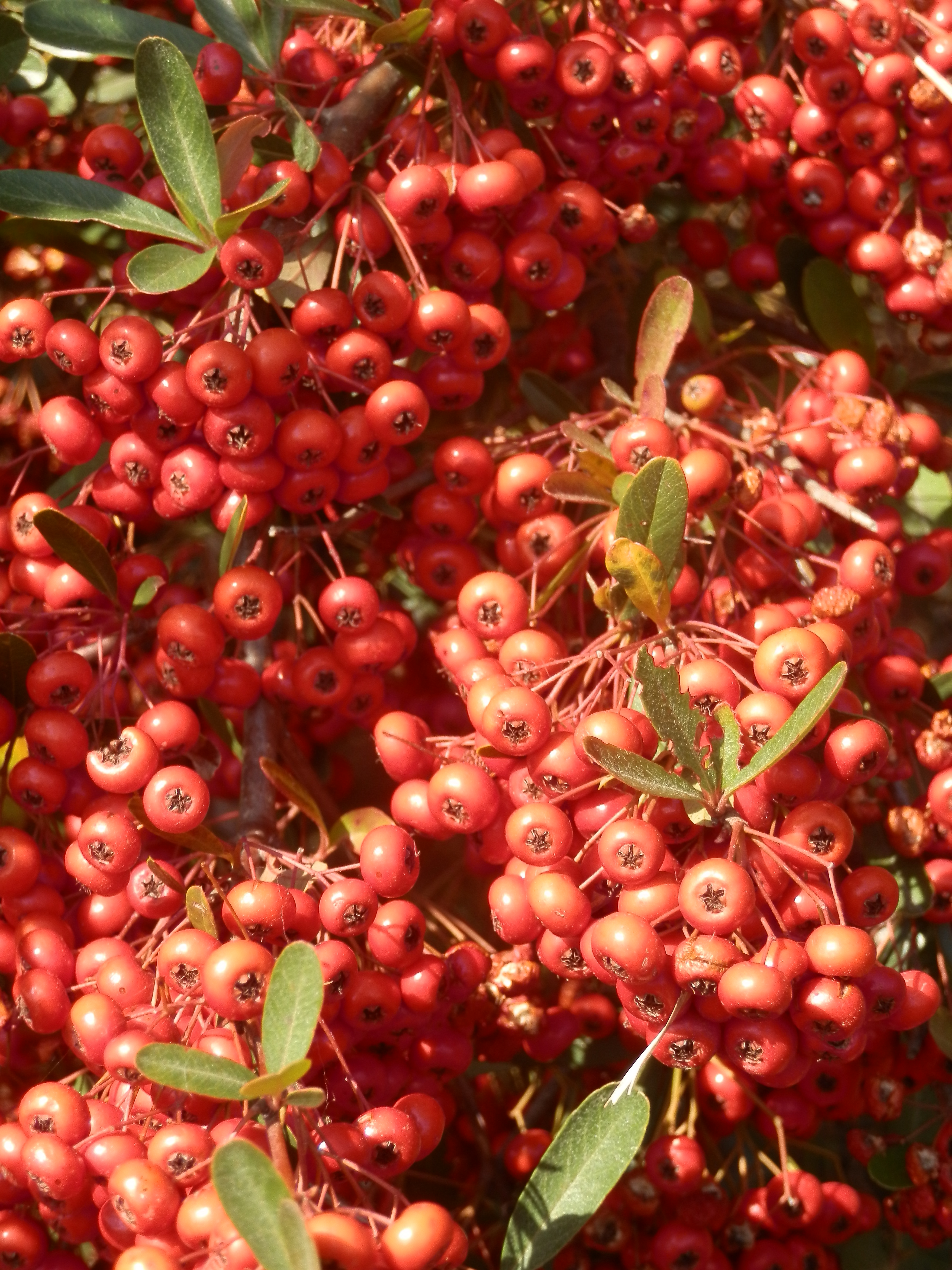
Pyracantha can be loaded with fruit when grown in sunny locations. We call the fruit berries, but they are really more similar to miniature apples. Correctly, they are termed pomes, as they have a core which contains the seeds.

These pomes are rather sour but won’t hurt you. In fact, they make great jelly if harvested when they are fully ripe and begin to soften. One problem with this is birds become well aware when their palatability increases as well. Once you notice birds helping themselves you must act quickly if you want fruit for jelly.

My preference is to strain the seeds from the juice when making jelly. Firethorn seeds contain cyanide compounds, which in large quantities could pose problems if crushed finely. Swallowing seeds whole presents fewer risks and removing them eliminates the variable.

Jelly flavor is similar to apple or pear. Some people like to put hot pepper in jelly and this might present a clever marketing tool for some entrepreneur. Adding hot pepper juice might create a true “firethorn jelly.”

pyracantha with fruit

Large Pyracantha loaded with fruit

pyracantha coccinea pomes

Close-up of Pyracantha pomes


Ted Manzer teaches agriculture at Northeastern High School.
Posted in foraging | Tagged , , , , , , | 24 Comments

Dog fennel


Everyone has seen those lacy fern-like spikes with the tiny daisy-like flowers in the summer. This time of year what’s left of the flowers turns white and they can be quite attractive if they are not invading our flowerbeds.

This weed is dog fennel or wild chamomile (Eupatorium capillifolium) and it can have many uses aside from its looks. Many think it adds to a perennial garden. If you’ve ever pulled any, you noticed a strong odor. Some like the smell and others don’t.

Mosquitoes generally don’t like it. Native Americans used this perennial to repel them and some folks still use it today. I haven’t noticed much benefit, but likely additional preparation might be helpful. Juice from the entire plant can be extracted and applied topically to treat bites of reptiles and insects.

Dog fennel can grow six or seven feet tall and can take over an area if not kept clipped. Its leaves are hairless, but stems are quite pubescent.

It grows best on moist fertile soils and invades quickly. This upright aster relative tolerates dry conditions and does well on sandy soils. It also tolerates a wide pH range.

Regular mowing generally keeps dog fennel from becoming a problem in our lawns. It generally self-pollinates, but wind spreads pollen and seeds meaning plants could pop up anywhere. Dog fennel is not difficult to control chemically. Numerous herbicides will kill it.

One reason I chose to write about dog fennel is because there is much confusion surrounding it. Some foragers and herbalists speak in glowing terms. It is also useful for lost hunters to recognize, because the dried down from flowers and foliage makes great tinder. Being able to start a fire could save lost hunters, hikers and fishermen.

Other folks, especially livestock farmers consider this plant poisonous and a nuisance. Toxicity problems are not common since dog fennel has poor palatability. Even deer don’t usually eat it unless there is no other food left.

The major culprit is an alkaloid called pyrrolizidine. As a general rule, alkaloids are bitter-tasting compounds. This one in significant quantities can seriously damage the liver. Leaves also contain low levels of tremitol, which causes dehydration when ingested by cattle.

I do not recommend eating this herb. It is not a substitute for domestic fennel. The two species aren’t even related. Fennel is in the carrot family.

Some use the foliage in small quantities as a spice and many sources list it as edible. Some call it wild chamomile, but I wouldn’t recommend brewing any tea from it if you value your liver. Common names of plants can be dangerous.

I consider dog fennel useful only when used externally. Oils in the foliage can soothe sunburn and other skin irritations. Numerous sources document its insecticide potential. To many it also has aesthetic value.

The green lacy stems are attractive in flower arrangements as filler material. In fall the dried flowers make a nice accent also. Dried stems resemble florist Caspia but don’t last as long before shedding.

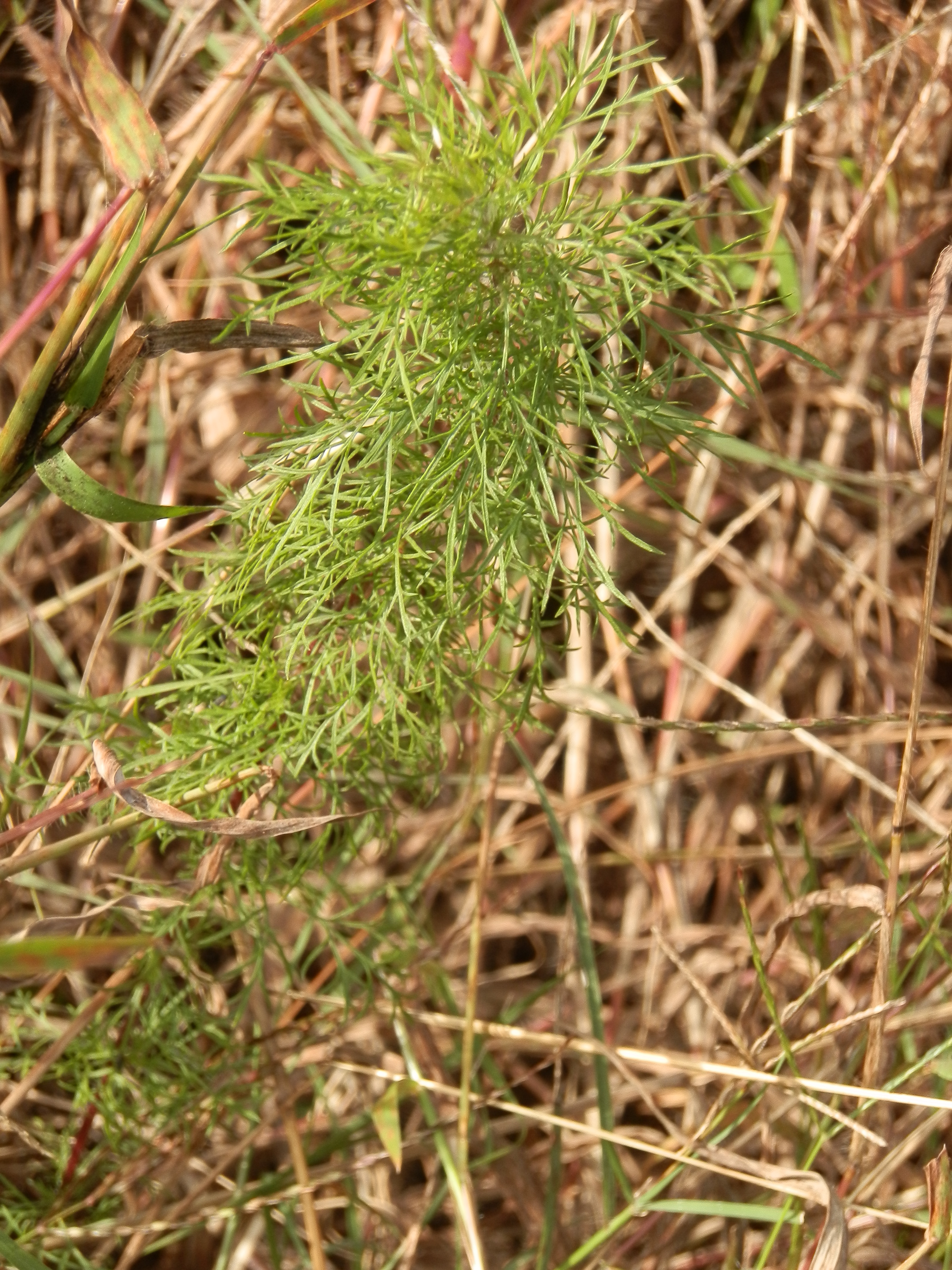
young dogfennel plant in fall

Above is a young dog fennel plant in fall. Normally young seedlings like this are more prolific in the spring.

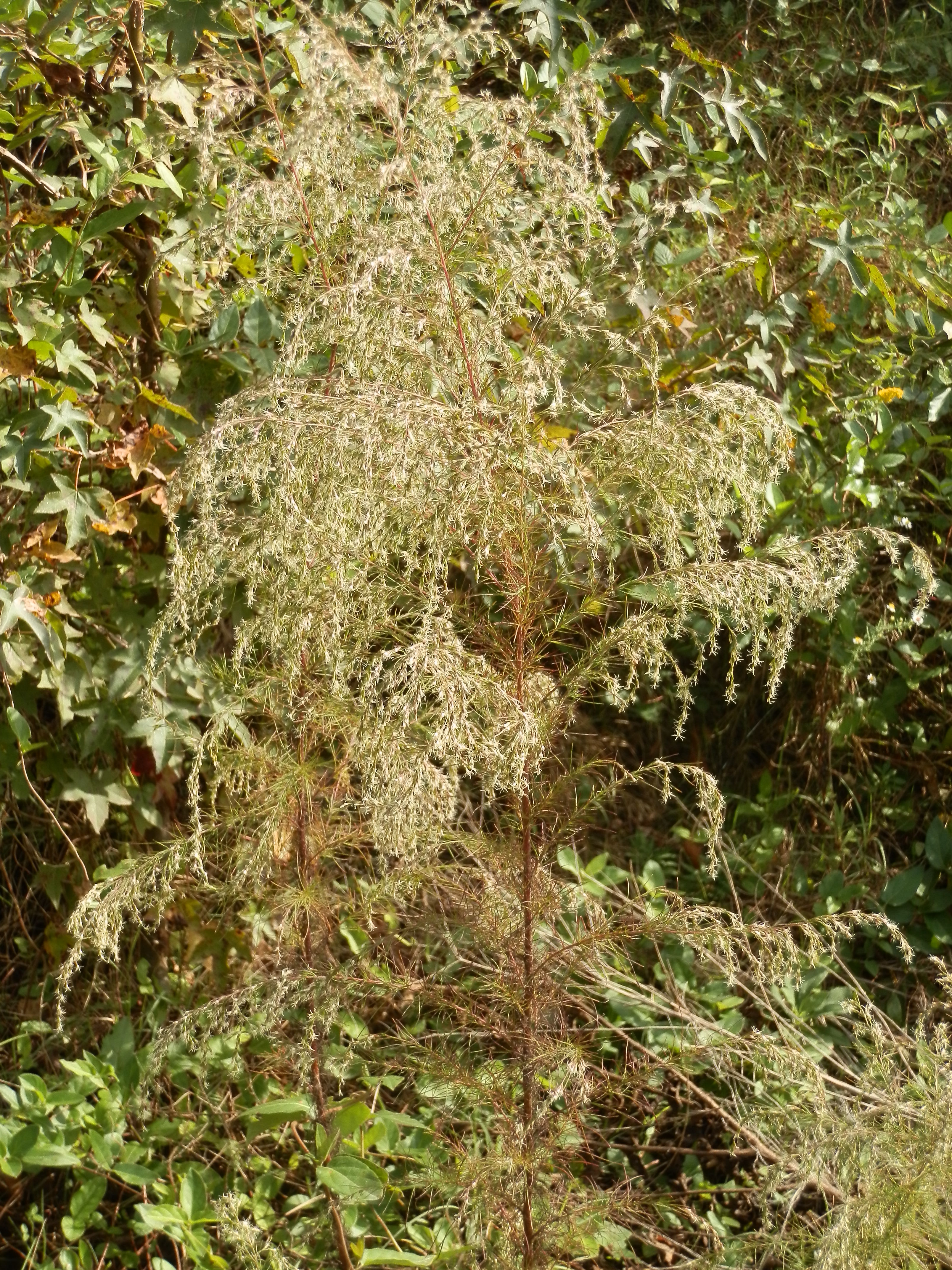
Older plant in the fall having shed most of its white petals and seeds

Another mature dog fennel plant showing a bit more white chaff


Ted Manzer teaches agriculture at Northeastern High School.

Posted in foraging | Tagged , , , , , , , , , | 32 Comments