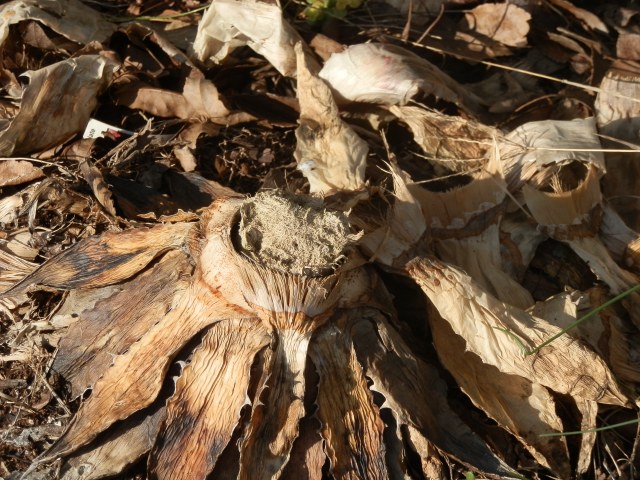
Oyster mushrooms are a common fungus on deciduous trees


A friend of mine brought in a mushroom sample recently for me to identify. I smiled when I saw it. When I was a teenager, it was one of my favorites to collect. My dad and I usually found it on dead or dying elm trees.

It’s called oyster mushroom (Pleurotus ostreastus) and it’s one of the most abundant in North America. These mushrooms are tree rotting fungi, but they don’t kill healthy trees. Usually trees are already stressed and dying before oyster mushroom spores invade them.

These fungi are saprophytic. That means they break down tissue that is already dead. Parasitic species attack living tissue.

I have been hesitant to write about collecting wild mushrooms for fear I might encourage someone to partake some without proper training. Many edible species are abundant, but so are many questionable ones. One mistake is all it takes to stumble into a disaster.

Even this oyster mushroom has one lookalike that could pose a problem for mycological newbies. It’s called the angel wing mushroom (Pleurocybella porrigens) and it grows strictly on pines and related conifers. Both these mushrooms have a clam-shell appearance. Angel wing fruiting bodies are white with a white spore print. Oyster mushrooms are cream colored to tan, also with a white spore print.

Angel wing fungi have much thinner flesh than oyster mushrooms do. They also have very little odor. Some mycologists describe oyster mushroom scent as anise-like. I think they have a seafood smell when raw. That’s why I always thought they were called oyster mushrooms. Most literature reports their overall physical appearance to be oyster-like, and that’s the reason for the name.

Oyster mushrooms and angel wing mushrooms both have what we call gills (lamellae) on their lower sides. Gills are parallel slits on the undersides of the fleshy caps. Both also don’t have a true stem-like structure called a stipe. Parallel gills run the entire length of the cap on both.

I like to collect oyster mushrooms for several reasons. Usually they can be found in great abundance. A bushel or more on a single tree is not uncommon. They have nice flavor and freeze and can well. I think they are too thick fleshed to make good drying mushrooms. My experience is that once dried they become leathery.

They are best if cooked. Raw ones are too chewy. I sauté them in butter or olive oil and season them with a little salt and garlic. According to many sources they are a rich source of antioxidants and even contain chemicals that reduce bad blood cholesterol. Research also indicates blood glucose levels can be reduced by this fungus.

Except for the angel wing mushroom, I can’t think of anything else that resembles oyster mushrooms. Oysters only grow on deciduous trees. Around here we find them mostly on beech, cottonwood and sweetgum. They are sometimes spotted on oak, hickory and other hardwoods.

As with any type of food, even if you trust the source don’t ever eat much the first time. Some people have no reaction while others could get quite sick. Mushrooms especially are nothing to play with. Always confirm the identification with an expert or maybe two.

Oyster mushrooms showing the upper and lower sides
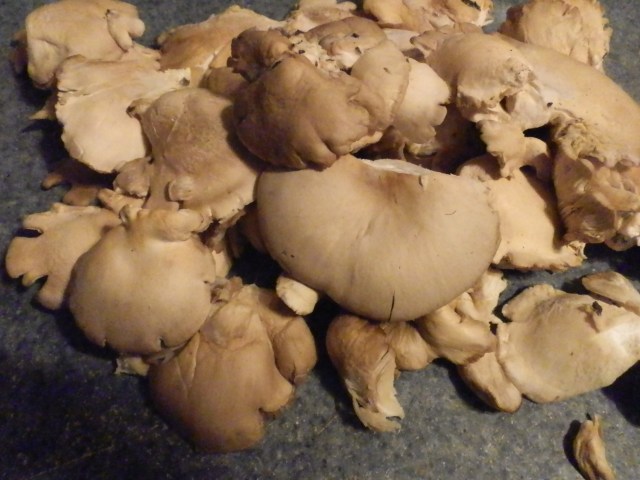
A nice mess of oyster mushrooms
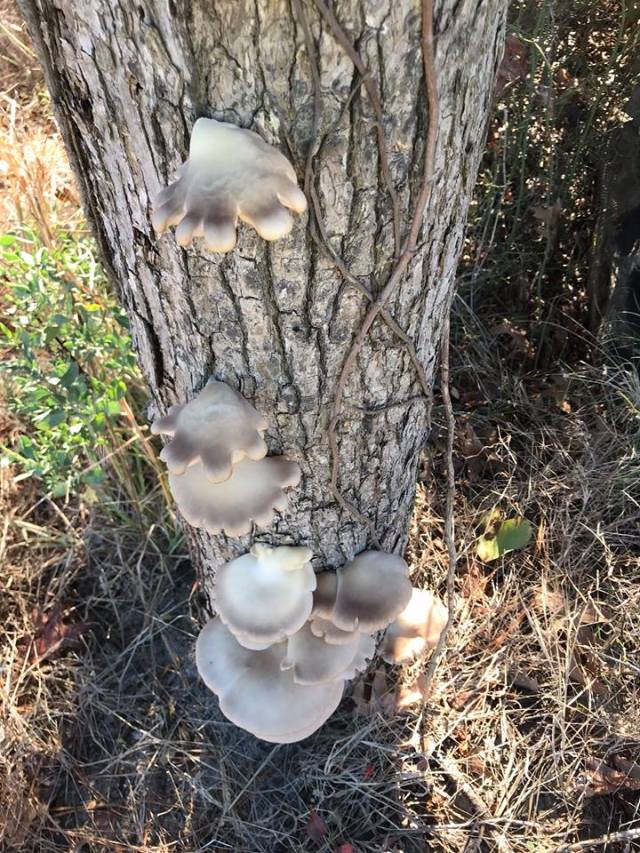
Oyster mushrooms on tree


Ted Manzer teaches agriculture at Northeastern High School.
Posted in foraging | Tagged , , , , , , , , , , , | 3 Comments

Grape Holly is a shrub with winter appeal


Recently, someone asked me about shrubs that were showy in winter. Obviously, camellias fit that bill as do winterberry holly and a few others. Mahonia, often known as grape holly, is an underused adaptable shrub that also has winter attributes.

I have one that is in full bloom right now. It has bright yellow flowers which will give way to purple grape-like fruits later. Broad, multibladed leaves are spiny and shiny. Cut off a twig and you will find the wood is yellow. That shouldn’t be a surprise as this is not a holly at all. It’s a member of the barberry family.

Barberries have yellow wood, not that it’s used for anything commercially. Several years ago, my daughter conducted a science project using natural plant dyes that could be collected in winter. Mahonia wood makes a beautiful colorfast yellow dye for fabric.

There are many species of Mahonia. The most common is Oregon grape holly, but numerous others are commercially available. One gaining popularity is called ‘Soft Caress’. It is a spineless cultivar that has a palm-like appearance. It also doesn’t get too tall, making it useful in more situations.

‘Wintersun’ and ‘Charity’ are taller cultivars that make great specimen plants. They usually attain heights of 10-15 feet. Yellow flowers adorn these plants from late fall to late winter.

These evergreen barberry cousins thrive in moist but well-drained soil. Soil pH is not very critical. Grape hollies also are best in partial sun but will tolerate substantial shade. One thing to consider is that they will bloom less in shadier locations.

Most literature list hardiness as zone seven or possibly six in sheltered locations. Some sources claim it to be hardy to 30 below (zone 4), but I think that’s pushing it.

I have one planted next to a loquat. The loquat was nearly totally killed by last winter’s extreme cold during the first week of January. The grape holly wasn’t hurt a bit.

Sometimes they are difficult to establish. However, once ensconced into their new home they require very little care. They aren’t heavy fertilizer users and they don’t require much pruning. However, plants can be encouraged to grow prostrate if taller canes are removed. In some situations, this can be effective.

Few diseases or insects attack Mahonias either. Deer usually leave them alone, but in winter if food sources are short, deer will nibble at them, especially the flowers.

Colorful fruits are edible but quite sour. With a generous influx of sugar, they do make a flavorful jelly or jam. Usually no pectin needs to be added as fruits are rich in it already.

Medicinally, grape holly is a major player. Stem and root tissues are used to treat stomach ulcers, acid reflux and other digestive system maladies. Herbalists prescribe topical formulations to combat psoriasis.

Grape holly also contains a chemical called berberine. This is often used to treat high blood sugar. Holistic practitioners also use berberine to combat high blood pressure. Those with low blood pressure or people with organ transplants should avoid it.

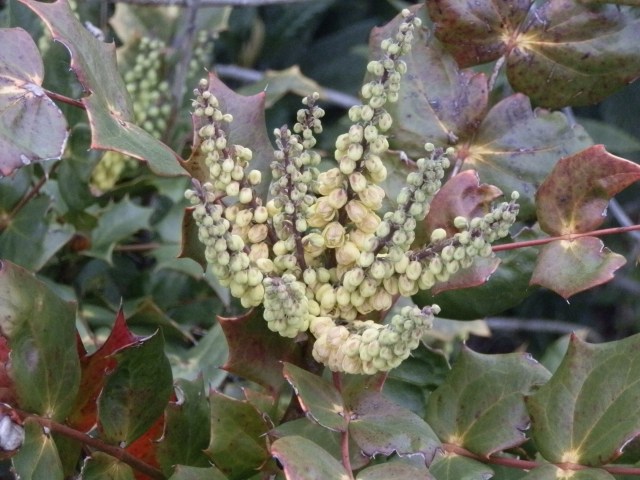
Close-up of Mahonia inflorescence. This specimen is in full sun and still doing well.

Ted Manzer teaches agriculture at Northeastern High School (tmanzer@ecpps.k12.nc.us).

Posted in general nature | Tagged , , , , , , , , , , , , | 5 Comments

Sweetfern is a spicy northern cousin


I was trimming a wax myrtle the other day when I caught a whiff of its sweet fragrance. It reminded me of my many treks through the Maine wild landscape. Walking through waist-high patches of sweetfern gave my clothes an aroma that lasted all day.

Sweetfern (Comptonia peregrina) is not actually a fern at all. It’s a flowering plant in the same family as wax myrtle, sweet gale and bayberry. Similarly, it can be used as a spice, too. This shrub has an even stronger taste and aroma than any of those. It also has the same insect repelling properties.

According to some sources, it can be found in our area, but I’ve never encountered it. I have seen it in a few open places in the mountains of western North Carolina though. However, it’s not a major species there either.

It’s a common staple to sunny waste places in northern regions of the US and is hardy as far north as central Canada. It also has a unique quality which enables it to thrive on infertile soils.

Like legumes, sweetfern can derive nitrogen directly from the atmosphere through bacteria that live on its roots. The bacteria can split nitrogen molecules and combine them with hydrogen to form ammonium compounds plants can use. In exchange for the nitrogen fertilizer, sweetfern roots provide sugar to the bacteria.

This relationship makes sweetfern a great conservation species. It quickly colonizes disturbed sites and thrives in full sun. Plants also form mats of underground stems that help keep soil from eroding. Sweetfern tolerates drought well, and this further enhances its conservation qualities.

While sweetfern is a flowering plant, the flowers are not showy. Separate male and female flowers are found on the same plant, and the tiny nutlets that form are edible and very palatable. I’d consider them survival food though. They’re good, but it would take considerable effort to procure enough to save for future use.

The fern-like foliage is the attractive feature for this species. Plants make a great naturalizing border in their native range. Here in eastern North Carolina we are probably a little too far south for this wax myrtle cousin to adapt. Plants are also deciduous, and many folks prefer most of their landscaping to be evergreen.

Foragers traveling to northern states or eastern Canadian provinces might wish to collect some foliage from this shrub. It makes a tasty tea and simmering potpourri. Herbalists prize sweetfern for medicinal use.

Wildlife utilize sweetfern for food and cover. Small birds and mammals make homes in its thick undergrowth. Several butterflies rely on its foliage to complete their life cycles. Deer and rabbits use sweetfern for winter browse. It’s not their favorite food, but it provides sustenance when food supplies are limited.

Sweetfern is the alternate host of the sweetfern blister rust disease caused by the fungus Cronartium comptoniae. This affects pine trees with needles in groups of two and three. This includes many of our native pines. White pine isn’t susceptible. Economic losses for the trees are small, even in sweetfern’s native range, but the disease could be a consideration for some wishing to establish sweetfern here.


Ted Manzer teaches agriculture at Northeastern High School.
Posted in foraging | Tagged , , , , , , , , , , , | 1 Comment

Bushy bluestem is a native prairie grass


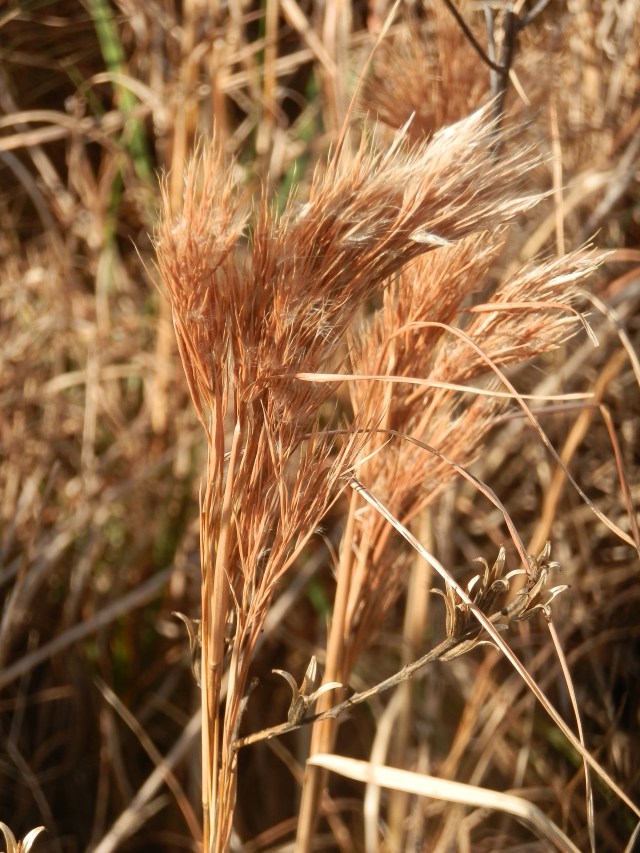
This time of year, along the highway in full sun we see a tan upright grass with thick feathery tops. When other vegetation is growing, we rarely notice it. Until seed heads develop, this grass is easily ignored.

It’s called bushy bluestem (Andropogon glomeratus) and it’s one of the native warm-season grasses that grows around here. In fact, it grows all over the eastern US. It’s even common in the southwestern states. Other common names are bushy beardgrass, lowland broomsedge and bushy broom grass.

Bushy bluestem is a bunch-type grass that forms upright clumps from two to six feet tall. Summer foliage is a blue-green color, while persistent upright stalks are copper colored in winter.

Plants are quite pest resistant, and few diseases or insects attack them. Bushy bluestem also tolerates air pollution well and grows in nearly any soil pH range.

Economically, it has no major value. As a forage grass, its nutritive value and palatability are low. It’s important from a conservation standpoint in that it can grow in wet places where many plants struggle. Most of its close relatives grow better on drier sites.

Wildlife, especially birds, use it for cover and to make nests. Songbirds eat the seeds in the late fall and winter. It occasionally becomes food for deer when snow covers the ground, but it’s not one of their preferred foods.

Bushy bluestem is a great choice for naturalizing in wet areas. It requires very little care and it’s not necessary to add additional fertilizer. Mowing bushy bluestem makes it grow thicker, but it detracts from the upright ornamental effect.

While this prairie grass is a plant that often grows in waste places, I think it has a place in the ornamental landscape. Its upright stiff growth habit makes an interesting contrast to most flowerbed residents. The flower stalks are showy throughout winter until spring, far more than those of broomsedge and other Andropogon species.

This plant is not even remotely approaching threatened status, so I would have few reservations transplanting it from the wild. Proper permission from the landowner would be my biggest concern. It is a heavy seed producer, so if anything, harvesting some from the wild might reduce its natural spreading.

The stiff flower stalks make great filler material to stretch out dried or fresh cut flower arrangements. Floral paint adheres well too. I wouldn’t think it would be difficult to get permission to cut some stems along rural roadsides.

This grass also has another use. The dry stems and flowerheads make great tinder for starting campfires. In areas where snow is more prevalent, these clumps emerge above the white stuff and tinder can be collected with ease. Starting fires with this material is easy, even for amateurs. When hiking or enjoying any outdoor winter activity, a good fire can make the experience safer and more pleasurable.

This grass has no food foraging value. Modern use as a medicinal herb is limited, too. At one time native Americans made an infusion from the roots to treat poison ivy, but it’s not used anymore to any degree.

Nice stand of bushy bluestem along a ditch with groundseltree bushes in the background

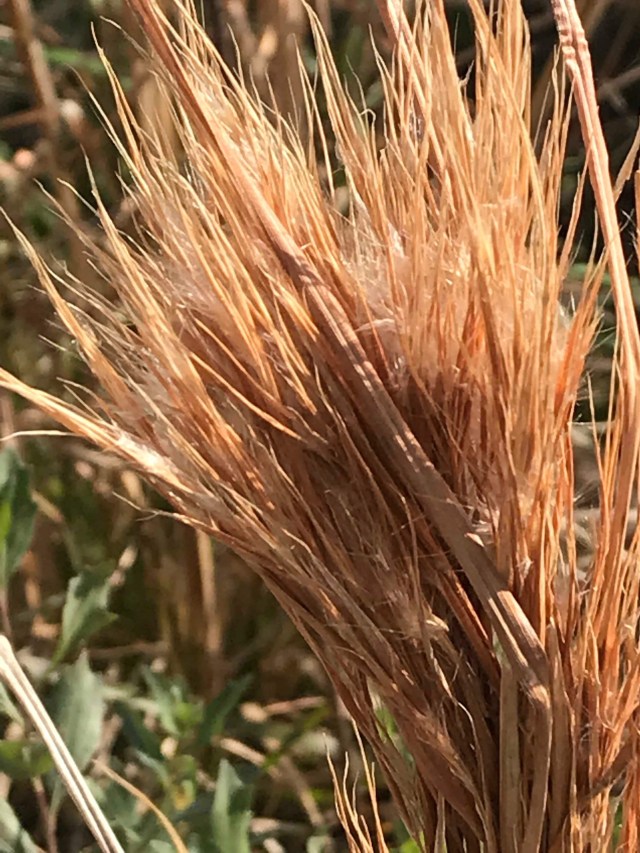
Close-up of a seed head

Another close-up of a bushy bluestem seed head


Ted Manzer teaches agriculture at Northeastern High School.
Posted in general nature | Tagged , , , , , , , , , , , , | 2 Comments

Christmas and Thanksgiving Cacti can be confusing.


These flat-leaved plants with pretty and normally red flowers are everywhere during the holiday season. Most folks see one and call it a Christmas cactus. Actually, many are Thanksgiving cacti.

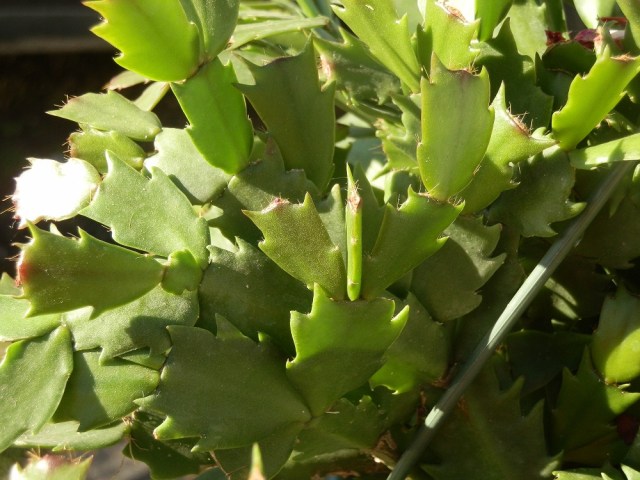
The true Thanksgiving cactus (Schlumbergera truncata) usually blooms earlier and has leaves with points on them. Some people call that type ‘crab cactus.’ Christmas cactus (Schlumbergera bridgesii) has more rounded leaves and usually blooms a few weeks later. In the wild, both are rainforest epiphytes, which means they usually grow on other plants.

There is still another similar species called Easter cactus that usually blooms in spring. It has rounded leaf edges like Christmas cactus, and its blooming is more dependent on soil moisture levels.

Both Christmas and Thanksgiving cactus have photoperiod requirements. That means they must be exposed to a critical short daylength for a few weeks or they won’t initiate flowering. Temperature is important also. Night temperatures of 55 to 60 degrees are ideal for flowering.

Initiating buds doesn’t mean they will develop. Temperature and moisture levels have a lot to do with that. That’s why we can get a pretty specimen with buds in the fall only to have it drop all its flower buds by Thanksgiving or Christmas.

On the positive side, once buds are evident, daylength is no longer important. That’s good, because your plant is probably in an environment where it receives more than 12 hours of light per day. It also is exposed to night temperatures above 60.

If you recently bought or were given one of these plants, there are four main things to remember if you want it to thrive. First, give it plenty of light but keep it out of direct sunlight. Second, don’t fertilize it. That should be done in spring. Third, keep it in an area where it won’t get too hot, and finally, don’t overwater it but don’t let it dry out.

All these conditions probably explain why many folks buy a new one every year. Wet soil is usually the biggest killer followed by improper lighting. Moving plants is always a risk as well.

Long-term care requirements of both Thanksgiving and Christmas cacti are different from most plants. They grow better if they are rootbound, so don’t feel you have to repot them very often. Always avoid repotting them while they are in bloom.

Plants shouldn’t be pruned when they are blooming either. After blooming they can benefit from some heading back, but this is only if they are in a high light situation. Pruning encourages growth and low light levels will cause weak growth. This is true for most of your houseplants.

In summer, these cousins can be placed outdoors out of direct sunlight. This is the time to fertilize them. Next fall, around the equinox, remember to place them in a location where additional light can be avoided for at least four weeks.

This will enable them to bloom at the proper time. If you are a little late, your Thanksgiving cacti will bloom at Christmas and not Thanksgiving. Is that really so bad?

Christmas cactus showing rounded leaf sections

Thanksgiving cactus showing leaf segments with points on them


Ted Manzer teaches agriculture at Northeastern High School.
Posted in Uncategorized | Tagged , , , , , , , , | 1 Comment

Christmas fern is a native plant with landscape potential


Now that we’ve had several hard frosts, many of the herbaceous wild plants have withered. There is one native woodland fern that is still bright and green. It’s called Christmas fern (Polystichum acrostichoides) and it’s a native with untapped potential.

In wilderness areas I’ve seen it grow in soils that are commonly flooded. I’ve also found it on steep rocky sites. Usually, Christmas fern is found in places somewhat in between these extremes, but it’s an adaptive pterophyte.

Soil pH is not critical, but plant growth is more vigorous at near neutral pH ranges. That’s probably why it’s common on limestone influenced soils. It grows best in shade, but it tolerates significant sun too.

Christmas fern is common all over the eastern US. It even can be found as far west as Texas. It’s probably more prolific in northern areas, but it is still abundant here. The plant gets its name because its foliage is usually still green at Christmas, even in northern areas.

Plants achieve heights up to two feet, but generally they are somewhat shorter. Individual leaves (fronds) are leathery and glossy. They have many leaflets and can be three feet long. Some of the fronds have a spreading or cascading growth habit, while others are more upright.

These upright fronds are often the fertile ones. Leaf backsides have clusters of spores on the upper third to half of the leaflets. These fertile leaflets near the frond tips are shorter than the sterile ones at the frond bases.

Plants have an extensive underground rhizome system, but they generally don’t take over an area. One would expect them to form dense mats, but they usually form small mounds instead. I’ve never heard of their becoming invasive.

I’ve seldom seen them planted as ornamentals, but I’ve dug them from the wild and they transplant well. The best time to gather them is in spring before weather gets too warm.

Some nurseries are beginning to grow Christmas fern for sale, so I expect it might get more popular in the future. It’s a low maintenance plant, and that’s a selling point too.

Once established these hardy ferns have inconsequential enemies. Few insects bother them, and they’re not prone to disease problems. Best of all, deer don’t like to eat Christmas fern. Dogs and other pets generally leave it alone too. It’s not listed as poisonous to them either.

I don’t recommend this one for human consumption either. It probably won’t hurt you if you cook it, but plants contain an enzyme called thiaminase that robs the body of B vitamins, particularly Vitamin B1. Cooking denatures the enzyme rendering it harmless.

Tea from Christmas fern leaves has been used by native Americans in the past to treat digestive issues and joint problems among other things. It’s used very little today.

While culinary and medical uses are limited, leaves of this fern are useful in floral designs. Shiny leaflets and showy spore clusters add character to an arrangement. They hold up well too and can be dried for year-round use.


Ted Manzer teaches agriculture at Northeastern High School.

Posted in general nature | Tagged , , , , , , , , , | 7 Comments

Agrimony is more than just a sticky nuisance


Anyone who has ever taken a walk in a brushy pasture in fall has probably encountered agrimony (Agrimonia sp.). Often, people run into it before they see it. Before you realize, you’re covered with little spiny balls that stick to everything. Dogs are adept at getting covered with them too.

I remember amassing these sticky little burrs all over my clothes numerous times while bow hunting. There’s something about them. I know they are around, but I never see them until it’s too late. Later in the season the burrs become less of a problem. By that time, they’ve wound up on a hunting dog or someone else’s clothing.

This camouflaged wildflower, agrimony, grows one to two feet tall and has hairy leaves on upright stems. Toothed, rough textured leaves contain multiple blades. Plants remind me of an upright growing potentilla. Flowers are similar too.

Agrimony is a perennial herb in the rose family that grows in full sun or light shade on well-drained soil. It tolerates dry conditions well. Plants require little fertilizer but don’t thrive in wet places.

Spikes of yellow flowers develop in summer and are long gone by fall. That’s when these plants blend into their surroundings and unfortunate pets and hikers encounter the spiny burrs.

When in flower, agrimony attracts numerous pollinators. However, plants don’t need these pollinators as they can self-pollinate and still produce viable seeds. Still, bees and butterflies love them. That may be one reason some folks plant agrimony for ornamental use.

It has been a recent trend for people to plant natives in their perennial gardens. This one may attract pollinators, and it has become naturalized, but it is not native. It’s from Europe.

Agrimony makes a fine perennial provided plants are cut back prior to developing those clingy seeds. Constant pruning is necessary to keep them flowering and prevent them from developing the dreaded burrs. Otherwise plants will look weedy and seeds will spread everywhere animals travel.

Those seeds are edible, but I have no interest in partaking of them. Agrimony is not used extensively by foragers for food, but tea can be made from the leaves and/or flowers, and it is reported to be quite good. Supposedly, the taste favors apricots, but I have never tried it.

Herbalists use agrimony leaves to treat sore throat, upset stomach, mild diarrhea, irritable bowel syndrome, diabetes, gallbladder disorders, and fluid retention. The liquid is sometimes swallowed and sometimes used as a gargle. Additionally, people steep the leaves and use them topically to treat skin disorders.

Some chemicals isolated from agrimony have antiviral properties. Leaves contain tannins, which are useful to combat inflammation and diarrhea. However, because of the high tannin levels repeated use or high dosages can lead to constipation. Continued long-term used is associated with kidney and liver problems.

Agrimony use has also been found to reduce blood sugar. While this sounds helpful it could cause problems to diabetics currently taking medicine to control blood glucose levels. Always remember to consult your medical professional before consuming herbal medicines, particularly ones you’ve collected.


Ted Manzer teaches agriculture at Northeastern High School (tmanzer@ecpps.k12.nc.us).

Posted in foraging | Tagged , , , , , , , , , , | 2 Comments

Citrus greening disease threatens the entire citrus industry


I always look forward to this time of year when citrus supplies are plentiful. My favorite one has always been the tangelo, but that is changing. It’s not because I like them less, it’s because they are nowhere to be found.

The reason for this is the citrus greening disease, sometimes called huanglongbing disease or HLB. It’s caused by a bacterium spread by a tiny sucking insect called a psyllid. Bacterial diseases are difficult to control in plants.

Bacteria reproduce extremely fast, so host plants must be treated constantly. That’s impractical for large acreages. The bactericides and insecticides also must be systemic and enter the plant tissue to be effective. Chemicals also can’t be toxic to the consumer.

Tangelos are among the most susceptible of all citrus types. Grapefruit, key lime, and clementine are more resistant. If you have been surprised to not find tangelos in the store, there’s good reason.  There are none.

Perhaps you’ve noticed more mandarin oranges at grocery stores than in past years. Mandarin types like clementines are somewhat more tolerant to the disease, and in recent years more farmers have planted them.

Once a tree is infected with HLB, there is no cure. The fruit yields in Florida are a fraction of what they were in 2000. Fruit prices have been on the rise to compensate for decreasing yields and everyone has suffered.

Plant pathologists have been working hard for over a decade to develop citrus that is resistant to these bacteria. They’ve also initiated programs to hinder the psyllid insect that carries them.

So, what does citrus greening disease actually do, you ask? Trees infected with the bacteria produce fruit that stays green even after it is ripe. It’s also bitter and poorly shaped. Sugar can’t be transported properly inside the plant, so fruit quality is poor and energy to the entire plant is limited. Infected trees usually die within a few years.

A few decades ago, another bacterial disease called citrus canker ravaged Florida. It’s still a concern. Entire orchards were quarantined and destroyed under government supervision. Many farmers were ruined, but it was minor compared to the present citrus greening problem.

Trees infected with that disease had fruits that had unsightly surface blemishes. They still were acceptable for much of the juice market. Citrus greening is different. Fruit quality is unacceptable for any human consumption. Sugars won’t translocate to the fruit normally.

Controlling both these diseases involves reducing the amount of disease inoculum available. That means destroying infected trees. Backyard gardeners must comply too. If either of these diseases is detected on any tree in a commercial orchard, nursery or private residence it must be destroyed.

Until recently the disease was limited to Florida and Texas in the US. It has now spread to California. Their problem has been less severe, but I suspect part of the reason is that the climate is less ideal for vector and pathogen growth.

Florida’s climate is hot and humid, while citrus producing areas in California are hot but far less humid. Whatever the case, we’re facing several more years of reduced citrus quality and yield. That’s a shame.


Ted Manzer teaches agriculture at Northeastern High School.
Posted in general nature | Tagged , , , , , , , , , | 3 Comments

Rose rosette disease is good for some and bad for others


Everyone has heard the expression to be careful what you wish for. Sometimes a cure for one problem can cause another. Rose rosette disease is a prime example.

Years ago, multiflora rose was planted as natural fencing and for soil conservation in the eastern US. It was also used as a rootstock for ornamental roses. Over the years, multiflora rose became one of the thorniest problems for livestock farmers. It also lowered pasture land value.

When I lived in West Virginia, multiflora rose dominated pastures. Some were so infested that livestock productivity was a fraction of what it could have been. Deer liked to eat them, and these roses provided great cover for deer and rabbits. Most farmers wanted the roses gone and overused pesticides to do so.

The last few times I have driven around in rural West Virginia I have noticed far fewer pastures dominated by multiflora rose. I suspect the major reason might be rose rosette disease.

I remember back in the 80s many agronomists and livestock scientists I worked with were discussing how this disease was reducing rose populations in the Midwest. These guys were interested in pasture and livestock production. They didn’t have much concern about the influence of rose rosette disease on ornamental roses.

However, this disease can be spread on ornamental roses like ‘knock out’ types mechanically through contaminated grafts. It also can be spread from plant to plant through natural root grafts. Likely the most common way the disease spreads is through a tiny mite. This mite transmits a virus. That virus is the major culprit in the demise of the wild multiflora rose population.

Virus diseases cannot be chemically controlled like fungus diseases can. Scientists continue to develop chemicals that can deactivate or inhibit viruses. However, viruses, particularly plant viruses mutate rapidly to overcome this. Basically, chemical control is difficult.

Knock out and other types of landscape roses are becoming increasingly popular. Because of this, I suspect we might be dealing with rose rosette disease more in the future. Roses with rose rosette disease develop clusters of bright red shoots in the spring. We call these clusters witches’ broom. This abnormal growth is easy to spot.

Many virus diseases can be controlled by removing infected tissue back to healthy wood. This is not one of them. Entire plants must be removed from the area or an entire rose planting might be in danger.

Homeowners might wonder what their best course of action might be if they don’t have any signs of this disease yet. I would suggest eliminating any wild multiflora roses that might be nearby. Cutting down canes and treating the surface with concentrated glyphosate seems to be the best method.

The good news is that multiflora roses aren’t very common around here. I know where a few patches are, but in general, interaction between wild and cultivated roses is limited. Still, this disease is something to keep in mind, especially since most roses are grown in areas where wild roses are more common.


Ted Manzer teaches agriculture at Northeastern High School (tmanzer@ecpps.k12.nc.us).

Posted in general nature | Tagged , , , , , , , , | 5 Comments

Agaves can be dual purpose succulents


It’s nice to be able to go on vacation and not worry about houseplants or flower gardens. There are two ways to accomplish this. The first is to set up an automatic watering system. The second is to choose plants that use little water.

Xeriscaping is becoming increasingly popular. Indoor succulents are also a hot commodity. Aloe, jade plant and ghost plant (Graptopetalum) are consistent sellers in our interior market. Hens and chicks, Sedums, prickly pears and ice plant tend to be the mainstays for exterior use.

Many agave cultivars are adapted to our climate. Still others will thrive indoors if given plenty of light. Some prosper in both environments. Often, people call them century plants.

Some folks might be familiar with agave as the source of tequila. The only agave I know of that is commercially used for tequila is the blue agave, and it isn’t hardy here. Agave syrup can be found in specialty stores, but it’s not a common sweetener used around here.

Agave plants basically have no stem until they bloom. Then, some varieties might shoot out a flower stalk more than 30 feet tall. Plants often don’t flower until they are decades old, hence the name century plant. Many folks have seen different agaves but didn’t know what they were.

Thick succulent leaves emerge to form a basal rosette. These plants may be variegated or any solid color ranging from green to grayish pink to blue. They look a little like Aloe vera or thick-leaved yucca plants.

Most agave are hardy to zone 9. Many are hardy to zone 7. My experience is that wet soils are a greater deterrent to survival than pure temperature. Last winter all my agave plants in pots survived, while my two planted in the ground perished. It was a wet winter as well as a cold one.

These succulents are great in decorative clay pots, and they perform well in raised sand mounded rock gardens. Their texture is conversational. In addition, many color patterns are available for this area. The best thing about them is that they require little care.

A problem could be that they don’t mix well with perennials typically used in our region. Too much water can be a major problem. Excellent soil drainage is a must.

On the culinary side, roasted agave hearts, leaves and stalks can often be found in authentic Mexican food stores, particularly in the southwest. They are frequently on the menu in restaurants there too.

Medicinally, agave has been used to treat many ailments. Constipation, jaundice, dysentery, scalp infections, and toothaches are just a few of the maladies that herbalists treat with agave. Sap and other preparations from both the roots and leaves can be used internally and topically.

Agave has anti-inflammatory and antiseptic properties. Hence it is often used to heal wounds, burns, and skin irritations. Native Americans in the southwestern states and in Mexico used agave root preparations to treat snakebites.

Agave sap can be a skin irritant to some people, much like that from mangoes. Most folks aren’t affected and there don’t appear to be any drug interaction problems with agave.

This one survived last winter quite nicely in an above ground container

This oe planted in the ground didn’t fare so well.


They make great house plants too

Ted Manzer teaches agriculture at Northeastern High School.

Posted in general nature | Tagged , , , , , , , , | 3 Comments