Winter lawns in eastern North Carolina – Green or brown


Around here we have two options for lawns. What determines them is the amount of work entailed and when we have the most time for it. Different grass species have different growth requirements.

Warm-season species like Bermudagrass, St. Augustine or centipede grass grow great in summer heat. However, as soon as night temperatures are consistently below 50 degrees F they turn brown. They stay that way until night temperatures are consistently warm in the spring.

Tall fescue, perennial ryegrass and annual ryegrass are the most commonly used cool-season species. Occasionally red fescue works well in dry shady places. Kentucky bluegrass is sometimes used but with limited success. These grasses stay green in winter but they don’t tolerate summer heat very well. Bluegrass has very poor tolerance to heat.

So we have a dilemma, or maybe we don’t. Personally, I don’t care if my lawn is brown in winter. I don’t have to mow it. I’m not trying to play ball on it either, so I’m not abusing the grass.

For those who want a green lawn throughout the year there are two options. The first and easiest involves establishing one of the newer turf-type tall fescue cultivars. There are several on the market and they are far superior in heat tolerance and uniformity to the old fashioned Kentucky-31 variety. They’re also less clumpy looking. The best time to plant fescue in this area is around the first of October, so we’re well past that.

Another method of generating a green lawn year-round is by overseeding. This works best with Bermudagrass. It’s less effective with St. Augustine or centipede because they are coarser and maintained at higher cutting heights.

In late summer mow the lawn slightly lower than normal and rough up the ground surface. Plant five to ten pounds of perennial ryegrass into 1000 square feet of existing Bermudagrass sod.

To get a good catch of ryegrass you must irrigate the turf for a few weeks. This will also help the Bermudagrass recover some before it goes dormant. A light fertilizer application at this time is also helpful. Monitor the water carefully as disease can be a problem.

Annual ryegrass establishes quicker than the perennial type. However, annual ryegrass is coarser textured and has a more upright growth habit. This means you’ll have to mow it more frequently. Seeding rate is usually slightly more than for overseeding with perennial ryegrass.

When soil temperatures rise above 50 degrees in spring the cool-season grass can be eliminated by allowing the turf to grow at least four inches tall and scalping it down to a height of an inch to an inch and a half. Bermudagrass plants will not be hurt by the abrupt razing, but the practice will stress the ryegrass so that the warm-season grass will take over.

If I wanted to maintain a healthy sports turf I’d do this. However, management of both species is tricky. Why risk injuring healthy turf? If I absolutely had to have a green winter lawn I’d go the fescue route.


Ted Manzer teaches agriculture at Northeastern High School in Elizabeth City, North Carolina.
Posted in Uncategorized | Tagged , , , , , , , , , , , , , , | Leave a comment

Native yaupon holly makes a great landscape shrub and nutritious tea


Native landscape plants are gaining favor these days. Most people also desire shrubbery that requires little water and has few pest or disease problems. We also like plants that tolerate rough handling and improper pruning.

Yaupon holly is commonly found in sandy areas near our coast. It’s also adaptable to places that sometimes get an excess of water. I’ve seen healthy stands of it along swamps and streams. Yaupon thrives on acid and neutral soils and it prefers sun but tolerates significant shade. Deer rarely cause damage either.

A plausible explanation of its adaptability might be its genetic diversity. Nurseries carry many different forms of this shrub or sometimes small tree. Some are upright, some are spreading and some are weeping. All are adaptable to our area and provide color in all seasons.

Yaupon is considered by many to be a poisonous species. However, only the fruits are poisonous. Refrain from eating them and ingesting the rest of the plant can actually be quite healthy. Tea made from the leaves is high in several antioxidants. Foliage also has the highest caffeine content of any plant in North America. Yaupon tea was a staple drink for many early settlers from Virginia to Georgia.

One thing I will say about using this species is that positively identifying yaupon holly is critical. Some could confuse it with wild Chinese privet or common boxwood, which are poisonous. In summer it also favors groundsel tree (sea myrtle), which isn’t edible either.

Scalloped edged dark green evergreen leaves are small, elongated and emerge from stems singly. Stems are a light gray color. Fruits are round, about a quarter inch across, bright red and plentiful. Not all plants produce fruit as most hollies are either entirely male or entirely female. Wild specimens can sometimes be 25 feet tall.

Marketing this plant to mainstream tea drinkers might be a little difficult. Its scientific name is Ilex vomitoria. Supposedly Native Americans used the plant medicinally to cause vomiting.There’s considerable argument about yaupon holly leaves and whether they are the sole ingredient of the famous “black drink” used by native Americans and early settlers as a purification aid. I’m not going to enter that fray other than to say it was one of the ingredients. Extremely large doses could possibly do this, but I have never heard yaupon tea to cause these symptoms. Ingesting several berries certainly could. Eating a big bunch of berries would likely do far worse than that.

You can make tea by steeping fresh green leaves or you can process the leaves by roasting them. Foliage is easily roasted in the oven under low to medium heat. When leaves turn brown they are ready to use. Roasted leaves can be stored for future use unlike fresh ones. Leaves dried without roasting don’t seem to preserve the flavor well either.

Yaupon makes a great naturalizing hedge for the outer perimeters of a landscape. Most nursery raised plants are female, because the bright colored fruit is a selling point. A few males must be used in the landscape for pollination or fruit won’t develop. Despite copious seed production plants are rarely invasive as seeds often remain dormant for long periods.

Yaupon hollies also tolerate close shearing and many lower growing types are used to make formal hedges. They are far easier to maintain than boxwoods. They can even be trained into unusual shapes. Taxonomists should have named it Ilex versatility.

yaupon holly shrub that has been butchered several times

Yaupon holly shrub that has been butchered several times and become quite thick


Ted Manzer teaches agriculture at Northeastern High School. (tmanzer@ecpps.k12.nc.us)

Posted in foraging | Tagged , , , , , , , | Leave a comment

Some of the best teachers aren’t paid to teach


It’s Thanksgiving time and we’ve all known some person who could teach us more than we ever learned in school. We need to thank them. Sometimes the person was a parent. Maybe it was a grandparent or other relative. It might have even been a neighbor or family friend, but the depth and broadness of our education depends on other people supplementing our teachers.

This past weekend I took four Northeastern High School students to Sanford to compete in the State FFA Veterinary Science competition. Fifty-eight schools were there including one from our sister school Pasquotank County High School. Northeastern placed first and Pasquotank collected third.

This was a rigorous competition and our local kids outshined those from other school districts with far more resources. Competitors took a general knowledge test, identified from lists of 76 dog breeds, 35 parasites, and 80 pieces of veterinary equipment. They also had to calculate proper doses of drugs to treat animals of various sizes and they had to perform common veterinary tasks. I’m extremely proud of both teams.

Neither would have been in that position without the tireless efforts of Dr. Darlene Lannon. Every Thursday after school she worked with both teams, showing them examples of parasites and teaching about the life cycles. Students learned to administer injections, restrain animals and identify and describe the usage of equipment. Students also learned how to culture and identify parasites at various stages of their lifecycles. Dr. Lannon broadened and reinforced their background in animal nutrition, physiology and general care too.

Those young people were privileged to have someone from the community give up personal and professional time for them. Dr. Lannon could easily have been earning herself more money by treating a few more patients. She also could have been getting some much needed rest. Our students know and appreciate that.

It’s so helpful for us teachers to have people like Darlene to help supplement our efforts in the classroom. Two years ago she worked with our Vet Science team that placed second nationally. Last year, she and Dr. Larry Cooper helped five of my advanced pre-vet students by giving them practical experience. That preparation enabled all five to pass the National Certified Veterinary Assistant test. Volunteers from the community can provide our students resources they can’t always get in school.

The whole experience also teaches our students that learning is a lifelong endeavor, and we always should help the upcoming generation. We also need to help wherever we can. Initially some of my students are puzzled as to why I help their competitors from other schools. It’s simple. The tougher competition they face the better they get. Facing national competition is hard enough without having been pushed as hard as possible first. These Northeastern students will get that opportunity in Louisville next October.

As a teacher I’ve learned to find other people who could help my students. I’m grateful our community is full of examples. Darlene is just one of many, but she surely helped these young people rise to the top.


Ted Manzer teaches agriculture at Northeastern High School. (tmanzer@ecps.k12.nc.us)

Posted in Uncategorized | Tagged , , | Leave a comment

Navel oranges are a successful genetic accident


We’re approaching the season where many citrus trees are producing ripe fruit. Perhaps no orange cultivar has been more successful for the fresh market than the navel orange. Valencia oranges are used more for juice and juice is the biggest use for oranges. Navels are a close second in total consumption worldwide.

Unlike most of the plants we grow for food, the navel orange was never selectively bred. The first navel orange emerged in Brazil around 1820. It was a type of genetic mutation called a sport. A single bud developed abnormally and this naturally genetically modified bud grew into a branch and began producing sweet fruit with thick easy to peel skin and the characteristic navel on the blossom end.

About 50 years later the USDA imported a few rooted cuttings. Many sources claim they were seedlings, but this would not be possible as navel oranges have no seeds, or at least no viable seeds. At any rate, the California navel orange industry was born. As the story goes, a pioneer woman named Eliza Tibbets obtained two of these plants. Supposedly one is still alive and producing fruit in Riverside, California.

Since navel oranges can’t reproduce by seed we make new trees by grafting a bud onto an existing tree. Nearly any common citrus tree will work. Believe it or not oranges, lemons, limes and grapefruits all are the same species (Citrus sinensis).

Navel oranges are not only all the same species, but they are also genetically identical. This makes disease epidemics potentially problematic. If one tree was susceptible to a pathogen every other one in the grove would also be. Plants propagated by seeds vary somewhat genetically.

In addition to bud grafting, navel oranges and all citrus trees can be propagated by cuttings. A small piece of stem can be removed, treated with rooting hormone and placed in soil to produce new roots. This method is fine for amateur gardeners, but most commercial growers prefer to bud desired cultivars on rootstocks, many of which show resistance to root diseases.

After flowering, navel oranges average about nine months before the fruits are mature. Color is not a critical factor and eating quality can be excellent even if fruits are largely still green. Most growers taste the fruit or check for sugar levels about seven months after flowering. Under ideal conditions fruits might be ripe enough to harvest.

Most citrus fruits are different than apples, for example. Apples ripen over a narrow time period. If ripe specimens aren’t picked they fall. Citrus fruits will hold on trees for a long time, but the younger developing fruits might be the first to fall. Trees also may have flowers and fruit developing simultaneously.

While folks will always argue for their favorite citrus fruit, the navel orange is truly unique. It’s a genetic mistake that became very popular. Who knows, the same thing might happen to those seedy tangerines. Can you imagine how much they’d be improved if we didn’t have to fight through all the seeds?


Ted Manzer teaches agriculture at Northeastern High School. (tmanzer@ecpps.k12.nc.us)

Posted in foraging | Tagged , , , , , , , , , | Leave a comment

It’s fall in eastern North Carolina but where’s all the color?


I love driving around and observing the fall colors. In most years the yellows, reds and oranges are spectacular. However, has anyone else noticed this is a subpar fall color year locally? Perhaps we should analyze the factors contributing to fall color and maybe it will give us a clue.

In general, warm wet springs mean dense tree canopies. More leaves provide a greater chance of a colorful fall. That’s the first part of the equation. If summers are neither too hot nor too dry those leaves tend to stay on the trees.

Fall weather is critical. Favorable color conditions are warm sunny days and cool but not extremely cold nights. In fall, the day length shortens and overall temperature falls, triggering the color changing process.

Chlorophyll is the substance in leaves that makes them green. It also is essential for photosynthesis, the most important chemical reaction in the world. Photosynthesis provides plants with sugar so they can grow and provide everything else with food.

Chlorophyll is not a very stable compound. Sun breaks it down and it must be replaced continually. In warm weather that’s not a problem. When day length shortens and temperatures fall chlorophyll doesn’t get replaced and leaves begin to lose their green color.

Green gets replaced by yellows oranges, reds and purples. In short, the xanthophylls, caraotenoids and anthocyanins start showing their true colors. How strong they develop and how long they persist depends largely on fall weather. Freezing temperature can halt the process and some pigments fail to emerge fully.

We often associate fall leaf color with frost, but cold temperatures don’t cause leaves to change color. In fact, hard frosts and freezes stop the process and leaves turn black. Locally, many leaves show signs from the frosts we had back a few weeks when temperatures fluctuated drastically for a few days.

In fall when day length shortens, lower sap levels trigger a process that creates a layer at the point where leaves meet stems. It’s called an abscission layer. Cells thicken and vascular tissue narrows, reducing the flow of liquids. Eventually the leaves fall.

Stress from disease can cause leaves to abscise prematurely too. I’ve noticed this on crape myrtles especially this year. Color change starts but within a few days all foliage is gone.

Various sucking insects were abundant this year. They led to a bad sooty mold problem in many locales. Upon closer inspection other foliage diseases developed as well. I found Cercospora leaf spot on most of the fallen leaves. Leaves are covered with brown speckles. This recent period of cloudy rainy weather probably contributed to it.

Some pockets still provide good color. Certain species such as southern red oak have yet to develop their color yet, so we still have some potential left. Nearly all sycamore leaves are on the ground and yellow poplars are getting there quickly. It seems this fall that many leaves fell without changing much and the rest are still green. Let’s hold out hope for some more clear mild days with some night temperatures in the low 40s.


Ted Manzer teaches agriculture at Northeastern High School. (tmanzer@ecpps.k12.nc.us)


Posted in foraging | Tagged , , , , , , , , , , , , , | Leave a comment

Topworking backyard fruit trees is challenging but rewarding


Last week I wrote about why fruit trees were grafted to produce shorter specimens. A few people asked me exactly how it was done and the best time to do it.

As usual, questions like that seldom produce a simple answer. There are several techniques and they generally aren’t all performed at the same time of year. Cleft grafting is probably the appropriate choice in most situations. Cleft grafting is best performed when the stock (lower part) is beginning active growth in the spring. The scion (upper part) should still be dormant.

The first step is to obtain dormant scion wood about as big around as a pencil from the tree variety you want a few weeks before grafting. Some people even collect scions in early winter. Store them in the refrigerator. Choose a spot on the existing tree where the trunk is about two to four inches in diameter and clear of any side branches.

When the tree’s buds begin to swell it’s time to graft. Start by sawing off the stock at a 90 degree angle. Split the trunk with a chisel, hatchet or specialized grafting tool. Install a narrow but thicker wedge in the middle to spread and hold the split truck apart. Now you’re ready to install the scions.

The next few steps are the ones that are critical to success. Clip your dormant scions so that when installed there will be two buds above the graft. Each graft requires two scions. Taper the sides of the lower two to three inches of the scions to form points. Make sure the tapers are slightly pie-shaped so that the thicker side can be toward the outside.

Now comes the most critical step. Press the two scions into the stock making sure the inner bark layer of the stock and scion line up perfectly. This region is what we call cambium tissue. It is a place of rapid cell division where tissues can merge because they are not specialized. Remove the center wedge so the stock will grasp the scions tightly.

Check to make sure scions are still straight and cover the entire area including scion tips with grafting wax. It has a low melting point. Tree wound dressing works but not as effectively. Try not to get any wax on the young buds.

In a few days inspect each graft, and apply more wax if necessary. Stocks will begin to sprout beneath the graft. These suckers should be removed. Remove side shoots from new scion growth too. This makes grafts less wind susceptible. Some people even stake the new growth. After the first season clip off the weaker of the two scions. Leaving both new stems results in a poor graft union. In two or three seasons the trees should begin to fruit.

Some people use this cleft graft technique to attach a single scion to a much smaller stock. Both pieces are usually about pencil sized and the scion taper is evenly opposite and not slightly one-sided.

This is only one of many techniques used to topwork fruit trees. Another is called t-budding. It is done during active growth. I’ll address that technique next summer.


Ted Manzer teaches agriculture at Northeastern High School.

Posted in foraging | Tagged , , , , , , , , , | Leave a comment

Dwarfing fruit trees is an old and effective technology


It’s apple picking season. Like most other people I love fresh apples and nearly everything we make from them. Like many of you I also have a few in my backyard. Mine are semi-dwarf types. We can also purchase standard and dwarf trees.

So, why do some grow 30 feet tall and others reach maturity at only five or six feet? It has nothing to do with the apple cultivar. We can find Granny Smith, Rome, or Pink Lady in any height range.

Apples and most other fruit trees aren’t propagated by seed. They are grafted onto some type of rootstock. The rootstock, or sometimes an interstem, determines tree size. Interstems can be used to dwarf trees with existing non-dwarfing roots.

Essentially, the lower part of the tree controls its height. The upper part controls fruit type. We call the bottom part the stock and the top part the scion. What we are doing is combining the desirable tree size of dwarf trees with the type of fruit we want.

In the case of interstems, we can take an existing standard sized tree and convert it to a dwarfed one by grafting a scion from a dwarfing rootstock onto it. Then we graft the desired fruit cultivar onto the interstem. We could graft several different cultivars on the same tree if we wanted.

The result of grafting a desired scion onto a dwarfing stock produces a combined organism, but it’s not a genetically modified one. I repeat, grafted fruit trees are not GMOs, not that it would necessarily be a problem. The rootstock and scion grow together but the fruit is entirely that of the scion. All the resulting apples are clones.

So what happens if you plant apple seeds? It’s hard telling since they would be a cross between two different types. Some seedlings might be pretty good. That’s how we develop new varieties. We cross two types and evaluate the results. The resulting seedlings would not inherit any dwarfing characteristics though.

Grafting is an extremely old technique. It’s been around for centuries. Horticulturalists have dwarfed apple trees commercially for nearly a hundred years. Dwarfing is not the only reason we use rootstocks. Some rootstocks offer disease resistance, greater drought tolerance and winter hardiness.

Dwarf trees have many advantages over standard sized trees. They are easier to prune, spray and harvest. Simply having everything closer to the ground makes them easier to inspect. It’s also safer to perform any of these chores when you’re not standing on a ladder or climbing a tree.

For the homeowner with limited space, several trees could be planted instead of just a couple. Dwarf fruit trees also begin producing at a younger age. Being smaller, they might also blend into the landscaping more effectively. Additionally, dwarf trees can be planted in containers for patio use.

I know it’s cheaper to buy them at the grocery store or farmer’s market, but growing our own fruit can be rewarding. Sometimes harvesting only a few is worth it.


Ted Manzer teaches agriculture at Northeastern High School.

Posted in foraging | Tagged , , , , , , , , , , , , , | 2 Comments

Have I ever told you how much I love October?


October is my favorite month. Air temperatures begin to drop into a comfortable range but the water is still warm. Usually in October here in eastern North Carolina I can go the whole month without using the heat or air conditioning. That’s a money saving experience I can really embrace.

I love cool nights and not having to mow the lawn as much. Daylight savings time runs through October, so there’s still daylight in the evening to spend outdoors. Even when the time does change and we fall back we still get an extra hour of sleep in the morning. That’s nice.

When I was younger, October always meant the start of hunting season. Sneaking around in the woods on a cool morning was always a pleasure even if game was scarce. Archery hunting was especially satisfying as it was always challenging. It was especially challenging for me as I was a penny pincher and hunted with a cheap Bear Whitetail bow and no release.

I like to watch and listen to all the migrating waterfowl invade our wetlands this time of year. Blue and green wing teal are usually already here by this time. Wood ducks stay here year-round, and many other species begin to show their presence now.  Black ducks, mallards, northern pintails, American widgeon and gadwall are making themselves at home.

Fall harvest season really cranks up in October. It gives me a warm feeling to see the machinery gleaning the fields and watching full grain carts heading for the silos, peanuts dug and drying in the sun and cotton harvesters getting the white fiber ready for the gin. In a good season it’s especially satisfying.

October is State Fair month. My daughter and many of my students showed livestock since they were small children. I’ve always enjoyed watching the kids and trying to guess the judges’ placings. Also, what’s a walk around the fairground without an ear of roasted corn and a smoked turkey leg? I always look forward to guessing how much the biggest pumpkin weighs and I enjoy perusing the honey displays.

In my younger days October was a great month for me to harvest some wild honey. Bees aren’t especially active in cold weather and several pounds of honeycomb could be pilfered from a bee tree before the bees could do me any harm.

Cool fall weather really brings out the forager in me. Black walnuts and pecans find their way into five-gallon buckets in my garage. Cool humid nights make perfect growing conditions for many edible mushroom species to proliferate. It’s quite a reward for me to stumble upon a thick stand of meadow mushrooms or a dead tree covered with Pleurotus.

October ends with Halloween. I always enjoy seeing the young kids in their costumes. It’s been several years since I walked around with my own kids, but recently Roberta and I were blessed with our first grandchild. I can’t wait to see Halloween pictures of him even if I can’t be there.


Ted Manzer teaches agriculture at Northeastern High School.

Posted in foraging | Tagged , , , , , , , , , | Leave a comment

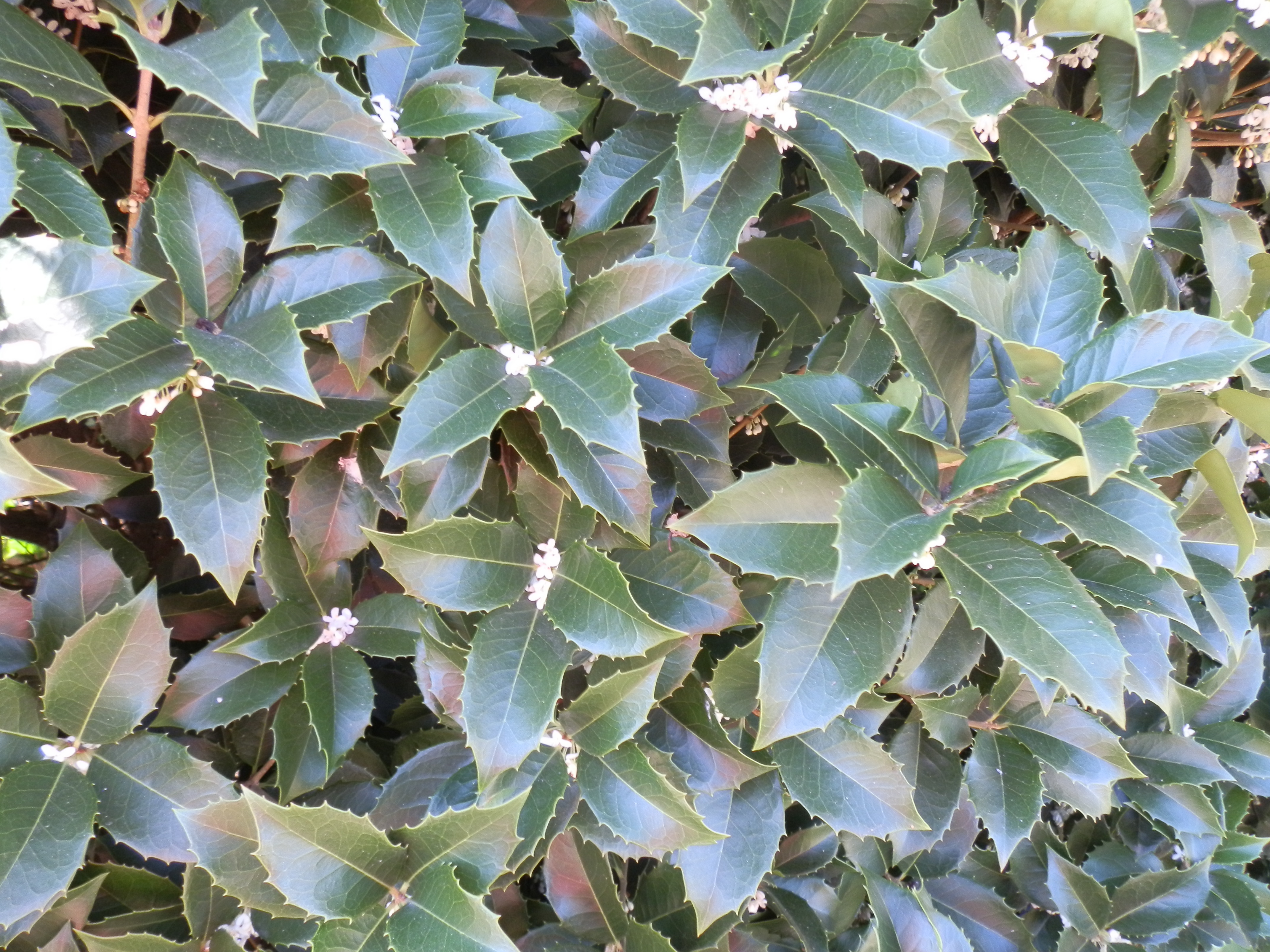
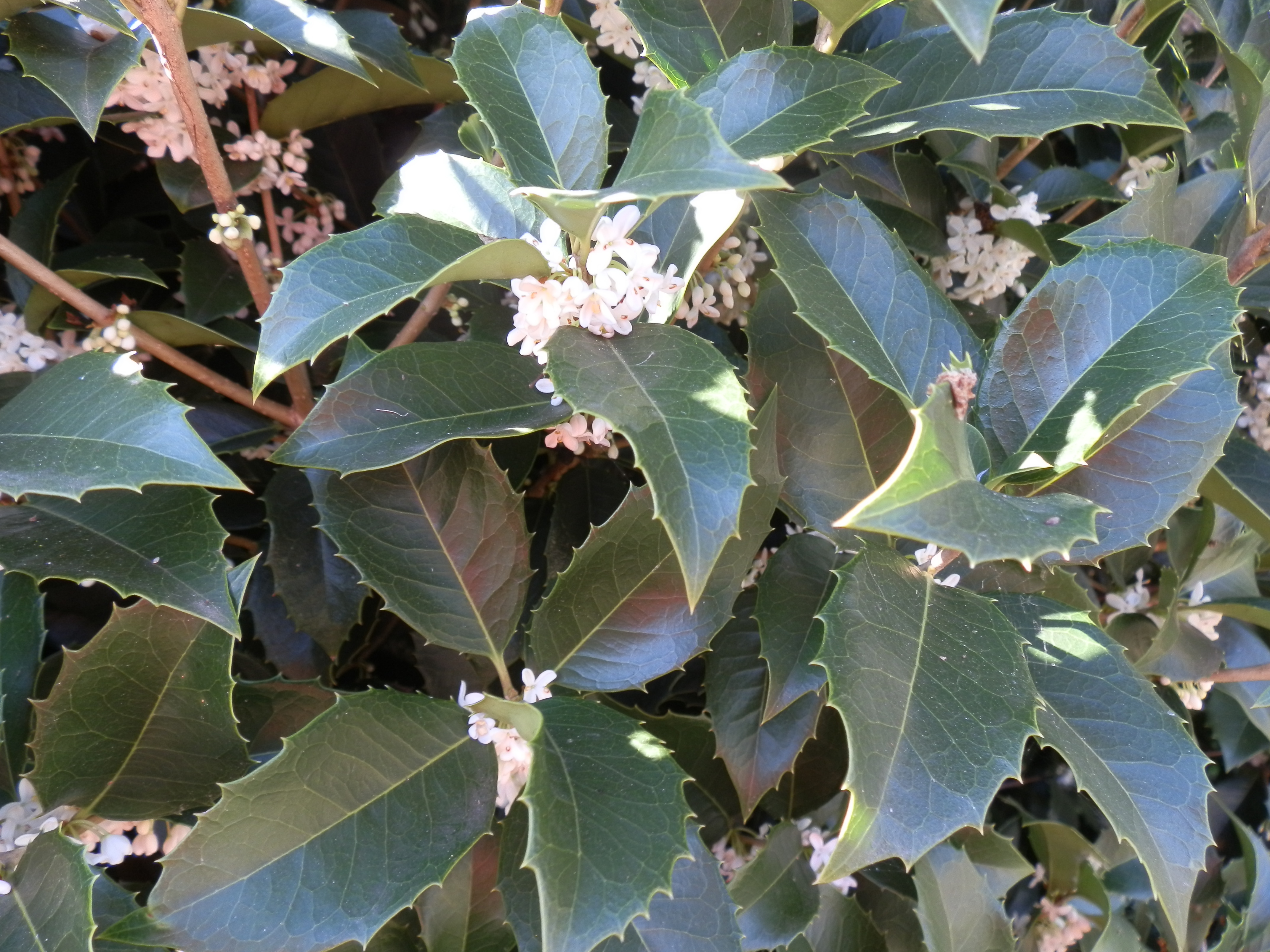
Fortune Tea Olive has unmatched fall fragrance


Sometimes spotting the fragrant plant is easy. Magnolias and gardenias have very conspicuous flowers. Nobody could miss them. Fortune tea olive is different.

Clusters of tiny white flowers are tucked among the foliage. They’re easy for our eyes to miss. Fortunately, our noses won’t. These flowers smell so sweet and delicate that I’ve never run into anyone that found them objectionable. Around here blooming season is usually October and most of November. In milder climates plants can bloom all winter.

It doesn’t end there. This versatile evergreen shrub grows fast but can be maintained as a five foot hedge. It also can be trained into a small tree. Fortune tea olive tolerates severe and improper pruning exceptionally well. It’s tough.

Many people mistake this shrub for a holly. When plants are young they have spiny leaves resembling American holly, but leaves emerge from stems in groups of two. Hollies have what we call alternate leaves, arising from stems singly.

Fortune tea olive is often referred to by its Genus name Osmanthus. Translated from Greek, it means fragrant flower. Many variegated and solid green cultivars adorn the North Carolina landscape.

Last winter dished out some cold temperatures, but I saw no winter injury on any local specimens. Most Osmanthus species are listed as hardy to zone 7 but we had a few days last winter below that temperature threshold.

Upon close inspection, most Osmanthus species have two types of foliage. Juvenile growth is spiny and holly-like. Adult growth more closely resembles Japanese privet as leaf edges are smooth.

All Osmanthus species require full or nearly full sun for optimal growth. Flowering is especially enhanced by sunlight. They are quite tolerant to a variety of soil conditions though and thrive in all but the wettest soils. Acid soils are not a problem either.

These shrubs display outstanding resistance to damage by deer, rabbits and other wildlife. Plants are also not invasive, so they are environmentally friendly. Best of all, they aren’t disease susceptible and have few insect pest problems either. This season, especially this fall has been tough on trees and shrubbery as far as pests and diseases go.

They seem to compliment so many of our other landscape plants. They make great screens and are dense enough to keep most unwanted guests out, both two and four legged. If they grow too tall they can be pruned back into place.

This evergreen has so many things going for it it’s a shame you can’t eat it. Well, in a way you can. Its flowers make a delightful herbal tea. They also can be added to regular black tea for a sweeter fragrance. Osmanthus flower extracts also create interest when folded into mild flavored cookie or cake dough.

Both the blossoms and the leaves of these plants are used by the perfume industry. I never realized how much until I started researching it. Numerous products are out there. The glowing reports I read almost made me want to go out and buy some. Maybe some other time.

fortune tea olive bush less than 3 years after being butchered by renewal pruning

fortune tea olive bush less than 3 years after being butchered by renewal pruning

close-up of Osmanthus foliage

close-up of Osmanthus foliage

close-up of Osmanthus flowers

close-up of Osmanthus flowers


Ted Manzer teaches agriculture at Northeastern High School.

Posted in foraging | Tagged , , , , , , , , , , , , | 3 Comments

Rabbits may be cute but they’re a garden menace


Often times the eastern cottontail rabbit is more visible in our neighborhoods than in areas where people normally hunt them. They’re cute and fun to watch until you find out they’re destroying your landscape and vegetable plants. Just a few can cause hundreds of dollars of damage.
Sometimes we catch them in the act, making identifying the problem easy. However, rabbits are usually somewhat nocturnal. Actually crepuscular is more correct. That means they’re most active around dawn and dusk. Consequently, we often don’t observe them destroying our plants.
So before we jump to conclusions we must know what rabbit damage looks like. Rabbit and deer damage are often similar. Deer, being larger, are able to graze higher and usually leave noticeable tracks. Damage from other small mammals, like groundhogs, often closely mimics that of rabbits. Groundhogs usually dig some type of den, which reveals their presence.
Rabbits have sharp teeth that cut cleanly. They graze patches often to the ground and prefer tender vegetation like leafy vegetables or delicate landscape plants like daylilies and Hosta. In winter they browse twigs and young tree bark.
So how do we stop this, especially in town where shooting them might not be an option? I’ve heard people recommend planting marigolds, but I’ve observed rabbits grazing marigold plants. Furthermore, there are few vegetable plants rabbits won’t damage if food sources are scarce. They generally do leave onions alone though.
That shouldn’t entirely discourage you. There are methods to reduce your damage. Organic fertilizers like blood meal are a general turn-off to these lagomorphs. Unfortunately, they can be a turn-on to dogs and can encourage canines to dig up these places.
Fencing often works. Also, if rabbits are the problem and not deer, fencing need not be tall and unsightly. Two to three feet high is sufficient, so you could step right over it. Fencing should be buried six inches or so, since rabbits are adept at digging.
Pets often keep these critters at bay. I once had a cat that kept our place pretty much rabbit free. Blazer fed our dog with them too. He loved her. Usually most pets are not quite as formidable ridding the yard of rabbits and other small mammals. She cleaned up the squirrels too, so I always had plenty of nuts in the fall.
I must admit when I lived in the country I shot my share of them, but I rarely ate them during hot weather. I was always afraid of parasites or tularemia, a bacterial disease that can be passed to humans. Cats can get it too, but Blazer loved being a cat and Trevor loved being a dog, so I took the chance and let them enjoy their harvests. They both lived into their teens.
Live traps can be effective and humane. You won’t kill the neighbor’s dog or cat. Planting something they like on your property’s edge can work for a while. However, I think for most people the best solution is finding a way to co-exist.

Ted Manzer teaches agriculture at Northeastern High School.

Posted in foraging | Tagged , , , , , , , , , , , , , , | Leave a comment