Devil’s walking stick


Anyone who has ventured into the fringes between fields and swamp or woods has seen this one. Devil’s Walking stick, (Aralia spinosa) also known as Hercules Club, prickly elder or prickly ash is a plant you’ll never forget. If you’ve ever grabbed hold of one the experience is lasting. Stout stems are armed with sharp prickles. Prickles are most dense near where leaves are attached.
This ginseng and English ivy relative generally grows less than 15 feet tall. Huge multi-divided feather-like leaves armed with spines are clustered at the tips of central stems. This arrangement makes the plants look like big umbrellas. Fall foliage color is yellow to reddish orange.
Emerging above these leaves are large clusters of tiny creamy white flowers. These flowers have a lemony smell and bloom in August and September. Nectar from flowers is a big food source for many butterflies including the tiger swallowtail.
Black pea-sized fruits develop on bright pink fruiting stalks later in the fall. Fruits provide food to birds and other wildlife. They’re edible to humans in small quantities if mature, but their bitterness deters most who would try them. Unripe or uncooked fruits are poisonous. Bark is poisonous also and even touching sap from the plants can be a skin irritant to some.
Devil’s walking stick is commonly found throughout the southeast. It’s also found in pockets throughout most of the eastern states since it tolerates -20F temperatures. It’s usually found on moist soils, but plants tolerate drought well. Plants spread by seeds and underground stems.
Young leaves can be eaten before prickles harden. They are more palatable cooked than fresh, but I regard this plant strictly as a survival species. Medicinally, it has been used for many ailments, but the only one modern herbalists agree on is toothache pain. Some herbalists call this plant the toothache tree. They recommend a tea from the inner bark and/or berries.
There is another tree found around here that is also called toothache tree or prickly ash and it is not related to Devil’s walking stick at all. It is related to oranges. Fruits ripen in summer and exude an orange-like aroma. These fruits are highly prized by wildlife.
True prickly ash leaves are much smaller and have far fewer leaflets. They don’t look anything at all like the ones from Devil’s walking stick. Also, when these leaves are crushed they smell like lemons. Yellowish flowers also appear before leaves emerge.
Prickles on the stem look different too. They are scattered on the stems, thicker and shorter than those on the Ginseng relative. Still, many people confuse the two species. I’m not just talking about your average Joe’s either. I’ve read postings from herbalists where the two unrelated species have been used interchangeably.
Medicinal uses for the two species overlap, too. Numerous sources list the same merits for both. For this reason I don’t recommend either. I haven’t found any drug interactions that might pose a concern, but whenever there is any question about positive species identification, I get nervous.

Ted Manzer teaches agriculture at Northeastern High School.
Posted in foraging | Tagged , , , , , , , | 2 Comments

Buttercups


Sometimes pretty things should be left alone. The buttercup fits that description. It’s very recognizable and grows everywhere. Every spring, young kids pick these attractive yellow flowers with five petals and play with them. I remember holding them under each other’s chins to see if we ‘liked butter.’
I don’t recall any bad experiences personally, but many people have strong skin reactions to buttercup flowers. Sometimes large welts resembling poison ivy blisters can form. In fact, all parts of the plant are poisonous. Simply touching leaves or flowers to sensitive skin can cause dermatitis rather quickly.
Livestock can become ill when grazing fresh foliage and flowers. They usually don’t because the toxins inside the plant taste terrible. For this reason children rarely eat them either. These poisons are called glycosides and are pungent and irritating. I don’t even recommend handling many buttercups with your bare hands. If you have sensitive skin you might want to weed your flowerbeds while wearing gloves if you have to pull many buttercups.
The main culprit, Ranunculin, causes no problems until plant tissue is crushed. When that happens this chemical turns into the bitter yellow oil that causes the problem. Even the smell is a turn-off, so animals seldom get desperate enough to eat this weed. Despite this, tons of buttercups wind up in hay bales every spring.
There is no need for concern though. The drying process renders these toxins harmless and animals can eat the forage without any chance of poisoning. Surprisingly few buttercup toxicity cases are reported each year.
Cooking would destroy these chemicals too, so eating the cooked greens could be safe. I don’t recommend it, since they’d likely still taste bitter and there are too many better things to eat this time of year.
Numerous buttercup species abound and all contain these toxic glycosides. The most prevalent one in eastern North Carolina is the bulbous buttercup (Ranunculus bulbosus.) Native to Europe, it is a common lawn weed and is also found in wet swampy areas. Most buttercup species prefer moist soil. In these places it can be quite attractive if left as a naturalizing ornamental.
Believe it or not, herbalists have been using concoctions of buttercups for centuries to treat various ailments including gout and shingles. Buttercup extracts have antimicrobial properties. I remember reading something about a year ago where scientists were studying bulbous buttercups to see if they could be used to fight MRSA, which causes dangerous antibiotic-resistant staph infections.
For those who want to rid their lawns of this plant, most common broadleaf herbicides are effective. Since buttercups start growing earlier than most lawn grasses they can be killed when the turf is often dormant and less susceptible to injury. Even cool-season grasses like ryegrass and tall fescue are rarely affected by 2,4-D and other common weed killers at labeled rates.
The best way to control buttercups in lawns is simply to use good general cutting, watering and fertilization practices. Keeping a thick healthy unstressed turf discourages most weeds and they never become established.

Ted Manzer teaches agriculture at Northeastern High School.

Posted in foraging | Tagged , , , , | 2 Comments

Chinaberry


Lately I’ve noticed more traditional livestock animals in residential areas. I’m sure 4-H has a lot to do with that along with selling cropland for development. Whatever the case, this new group of hobby farmers should be aware of a common invasive tree, the chinaberry.
Chinaberries are relatives to mahogany and were introduced back in the 1700’s as an ornamental. Since that time they have thrived. Invading adjacent areas, they limit species diversity by shading out other plants. They also contain chemicals that inhibit the growth of other plants.
These fast-growing weedy trees have few natural enemies, live on a wide range of soil types and can tolerate shade. Trees can attain heights of 50 feet, although few specimens approach that. My neighborhood is full of them as are areas around the high school.
Chinaberry has huge leaves finely divided into many tiny sections with toothed edges. Botanists refer to this leaf pattern as bipinnately compound. Yellow fall foliage is striking. After the leaves fall they seem to shrivel up and disappear. Raking is seldom necessary.
Plants bloom in early to late spring. Clusters of fragrant pinkish-lavender to white flowers cover these fern-like trees. The berrylike single-seeded fruits (drupes) are light yellow to white and appear from summer to fall. They often persist for most of the winter, occasionally getting blown of the trees by strong winds.
The fruit color should immediately set off a caution light in your brain. I know of no white berries (or in this case drupes) which are edible. In fact, chinaberry fruits are quite poisonous to humans, pets and livestock. Birds, such as chickens, turkeys and ducks appear to be unaffected by them.
Few animals eat the fruits as their bitter flavor is a strong deterrent. However, in situations where browsers like goats run low on other food sources, they might turn to chinaberry fruits, twigs, leaves and bark. This could pose a serious problem. I’d eliminate chinaberries in areas where pets or small children could ingest any parts of them.
My preferred method for permanent removal involves cutting them down and treating the stumps immediately with a concentrated solution of glyphosate (Round-up). Garlon is effective too. Always follow label directions when using any pesticide. Clean up all debris from the area before allowing grazing animals or small children access.
This plant may have an upside. Sometimes toxicity is not a bad thing. People have used chinaberry leaves to repel fleas. Some use crushed berries as a natural detergent to wash clothes. Hard seeds have been used for centuries to make rosary beads and bark extracts have even been used to stun fish.
Strong antimicrobial and antiviral properties and a long history of herbal use have encouraged medicinal research on chinaberry. Chinaberry leaves contain a protein called meliacine, which fights herpes simplex type 1. Aids research is also ongoing. Chinaberry extracts have also been used to treat intestinal worms. This is exciting, but please don’t self-medicate. While research presents intriguing information, this plant contains toxins that can kill you.

Ted Manzer teaches agriculture at Northeastern High School.
Posted in foraging | Tagged , , , , , | Leave a comment

Asian invader


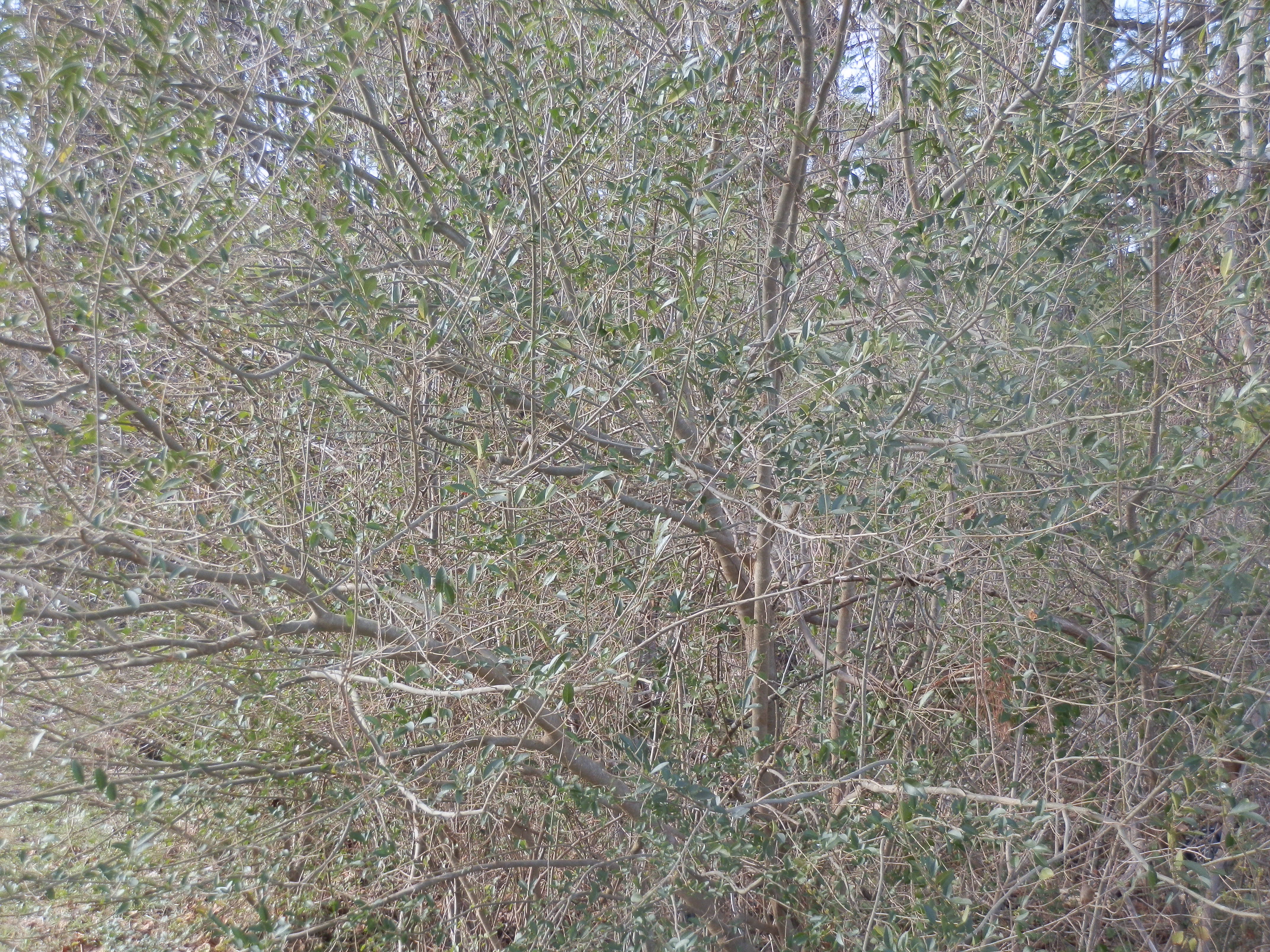
Now that most of our trees have lost their leaves we notice other plants in the native landscape. Especially in low areas the Chinese privet (Ligustrum sinense) dominates. Initially planted as an ornamental, this invasive olive relative has taken over many areas as has a related species the European or common privet (Ligustrum vulgare).

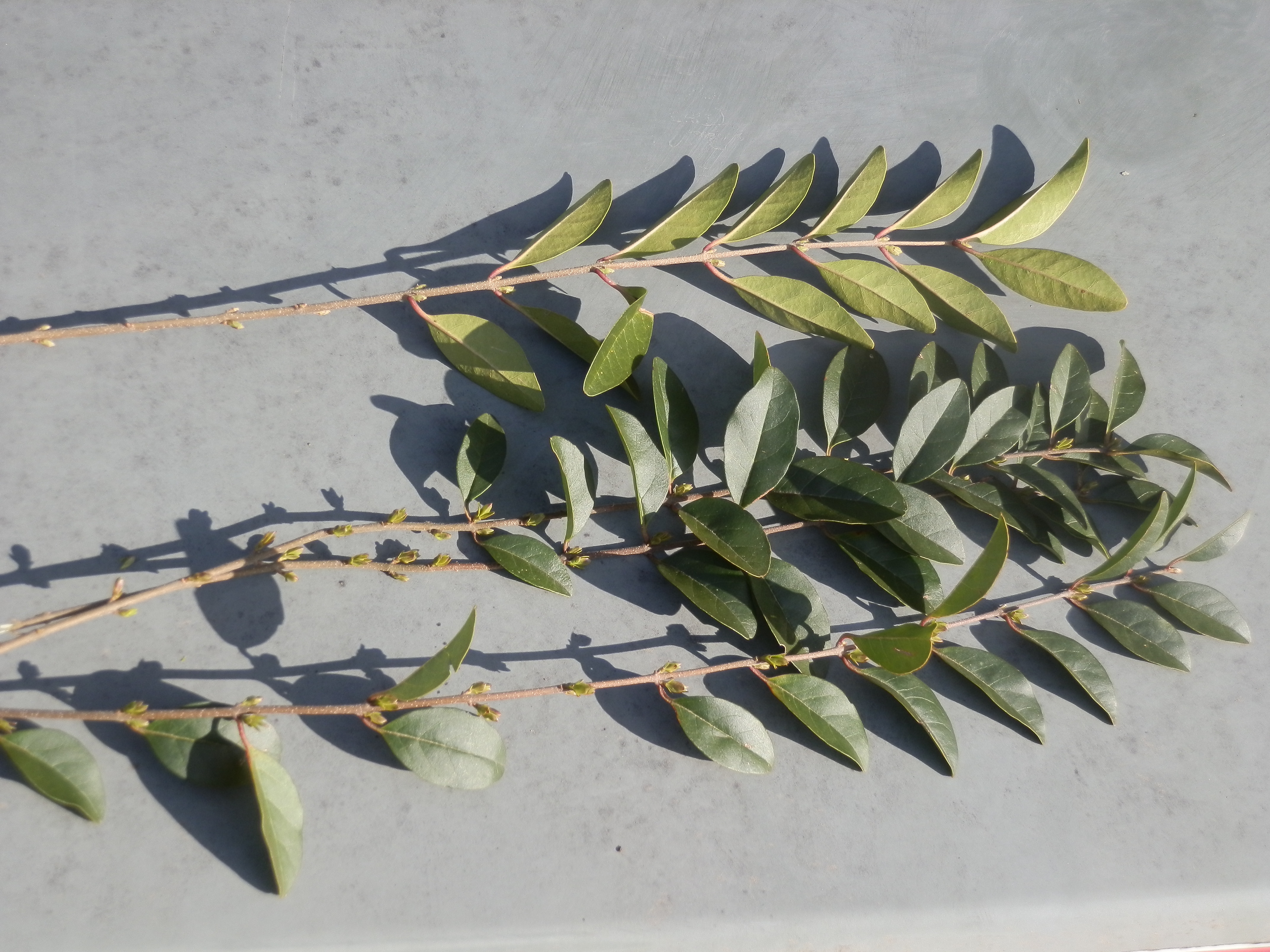
Small tightly spaced leaves emerge in pairs and are semi-evergreen to evergreen. Copious white aromatic flowers explode in mid to late spring. From these blooms numerous purplish fruits resembling small olives develop and ripen in the fall. Best growth is on the edges of woody areas. Plants tolerate significant shade, but in these places flowering is less to almost non-existent.

Chinese privet can grow up to 20 feet tall but is usually much shorter. Height isn’t the problem. It spreads like wildfire mostly from seeds dropped by birds. It’s very tolerant of wildfire too, since it prefers wet areas rarely damaged by it.

This dense shrub doesn’t have the reputation as kudzu, but it can dominate the lower layer of its habitat. This alters species composition and chokes out native plants. Privet shades out anything growing beneath it. Thousands of acres have been invaded by Chinese privet in North Carolina.

Young shoots and fruits make decent wildlife food, so its invasiveness is not a total disaster. It can be a major source of winter browse for whitetail deer when many other food sources are scarce. Bees love the blossoms. Honey yields and quality are good according to many apiculturists.

I’m not a fan of exotic species horning in on our native habitats, but if they do we can make the most of it. Chinese privet foliage makes an ideal greening material for floral arrangements. In early June the flowers also make great filler flowers too. Stems with prolific purple fruits can make interesting accents as well.

Bark teas from privet have been used for centuries to treat fever. Fruits have also been used in Asian medications for multiple ailments but beware. These fruits should not be consumed in large quantities as they contain toxins. Young shoots are safe to eat in small quantities, but they are last resort table fare.

Declaring war on them is a possibility, but they are a formidable adversary. Cutting them off or tilling them up is futile. They come back stronger than ever. The entire root must be removed or plants will continue to grow. For large specimens this is impossible.

Herbicide treatment is an option, but other species may be harmed. Weed killers containing glyphosate (Round-up) are effective and don’t persist long in the environment. Care must be taken not to spray non-target plants. This chemical is only effective during times of active growth.

I think the best way to kill large Chinese privet plants is a two-step process of cutting and immediately applying a concentrated glyphosate solution to the stumps. This lessens the possibility of harming other plants. Treatment can be a slow process, but it might be the best option. I’m not a big chemical guy, but often it’s necessary when exotic species take over.

Chinese privet thicket

Chinese privet thicket

Close-up of Chinese privet leaves

Close-up of Chinese privet leaves

Chinese privet: lower leaf surface (above) and upper leaf surface (below)

Chinese privet: lower leaf surface (above) and upper leaf surface (below)

Common or European privet

Common or European privet


Ted Manzer teaches agriculture in northeastern North Carolina.

Posted in foraging | Tagged , , , , , , , , , | 15 Comments

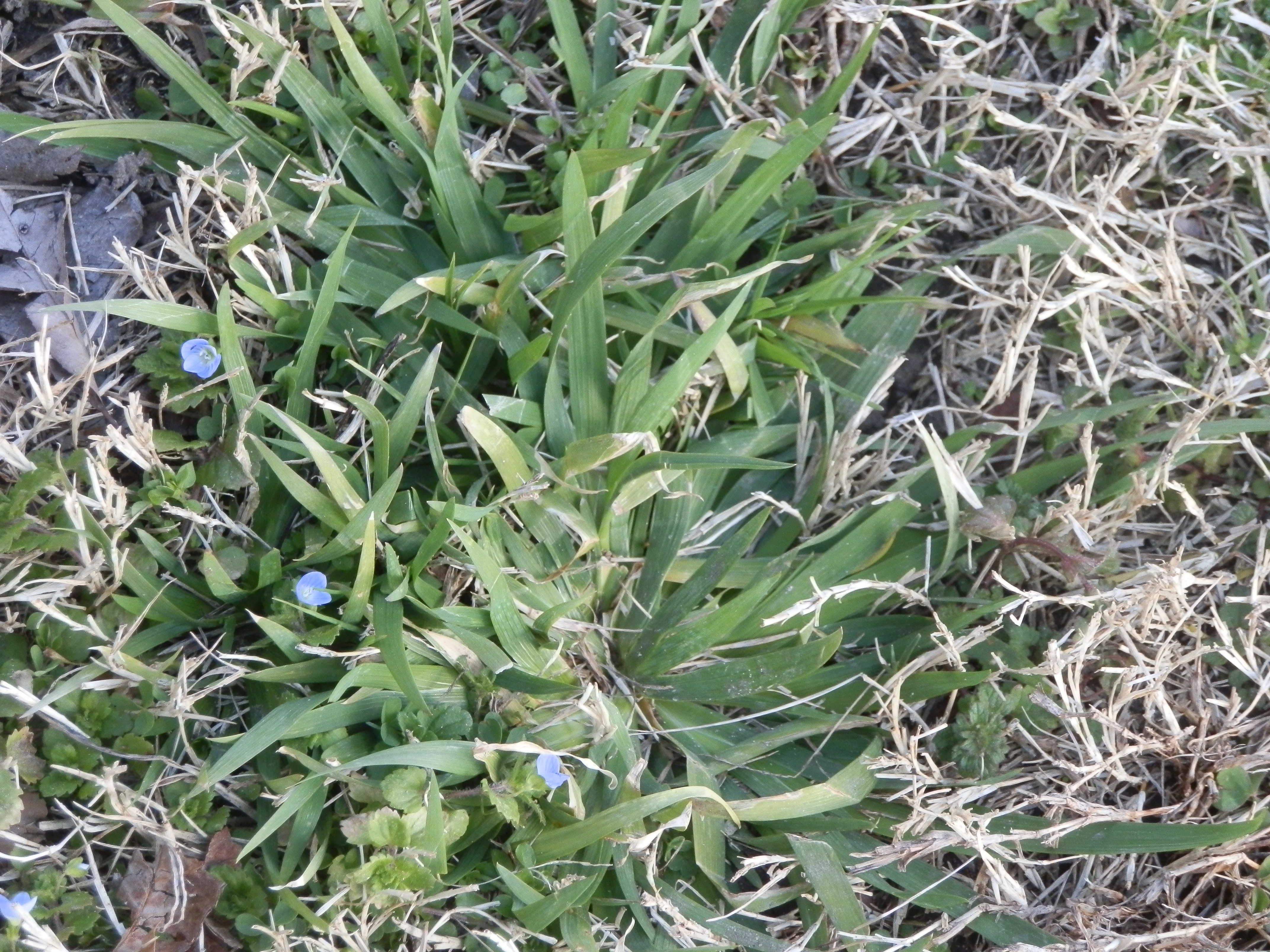
Blue eyed grass


For those whose lawns are bermudagrass, centipede, St. Augustine or another warm-season grass, you have a yard full of brown at present. If you look closely you might see what appears to be another grass creeping into it. Where turf becomes thin, this little invader appears, but it’s usually unnoticed.

In about a month if you’re observant you’ll realize this plant isn’t a true grass after all.  These prostrate light green stems sport pale blue flowers with darker throats. Three yellow tipped stamens surround a single greenish pistil. Some flowers are nearly white while others have more yellow in them. Plants continue to bloom throughout the spring. They are actually relatives of irises.

There are over 75 different species of blue-eyed grass. Some can get almost two feet tall and flower color can vary tremendously. Most live in dry sunny places, but a few species inhabit shaded swampy areas.

By far, the most common wild species we have is the annual blue-eyed grass (Sisyrinchium rosulatum). It actually is a short lived perennial in this range, not a true annual, but it spreads largely by seed as do most annual weeds.

This species was introduced from South America, but it has become well established along the coastal plain from North Carolina to Texas. It thrives in full sun on sandy soils and doesn’t require high fertility.

Plants rarely get taller than five or six inches. Most never achieve that height, since they have a running growth habit and get razed by lawnmowers regularly. Delicate flowers with six equal petals rarely get much more than a quarter inch in diameter.

Leaf texture is similar to St. Augustine grass and color closely mimics centipede. Plants blend in quite well, so I rarely find them objectionable in either turf. Once the grass greens up in spring most people likely won’t even notice the blue-eyed grass unless they see the flowers.

People who don’t like weeds in their lawn can attack blue-eyed grass in winter, when desired turfgrasses are dormant. If infestations are small, these weeds can be removed by hand, since they are quite easy to spot when the rest of the lawn is brown.

If you feel your lawn can’t coexist with blue-eyed grass and hand weeding is impractical, then chemical control is possible. Triazine herbicides are quite effective against it. Never exceed recommended rates. Pollution and turf injury can occur.

I know of no reports of this plant being desirable to eat, although many species of blue-eyed grasses have been used medicinally to treat diarrhea and other digestive problems. I also am unaware of any parts of it being poisonous either, although it would be if lawn chemicals were used recently.

I do think it has potential for ornamental use in rock gardens. Flowers are small, but they’re striking. They also bloom for a couple months and the creeping foliage adds interesting accent. Plants are easily transplanted as well as being prolific seed producers. They also tolerate dry conditions well. Maybe my students can propagate some for our spring plant sale.

clump of blue-eyed grass with a few birdeye speedwell flowers

clump of blue-eyed grass with a few birdeye speedwell flowers


Ted Manzer teaches agriculture in northeastern North Carolina.

Posted in foraging | Tagged , , , , | 14 Comments

Winter beauty


Few landscape plants make more impact in winter than camellias. The sasanqua types bloom in late fall and early winter, while the common or japonica types bloom from mid-winter to early spring. I have several at school that are blooming now and they are gorgeous.

These evergreen shrubs can grow to be rather large specimen plants and reach heights of 15 feet. They tolerate many different soil types but prefer rich, moist, slightly acidic, well-drained soil high in organic matter. Camellias are shallow-rooted, so they should not be planted deeply and the soil should not be packed down on their delicate fibrous roots.

It helps to mulch around the plants with organic mulch. This also moderates ground temperatures. Camellias aren’t heavy fertilizer users but sometimes benefit from preparations similar to those used on hollies or azaleas. They tolerate full sun but thrive in a partially shaded environment. Yellowish leaf color is more likely caused by too much sun than lack of fertilizer or disease. Too much fertilizer causes weak growth. It can also make them more susceptible to disease.

Plants normally require little pruning. The best time to cut them back is right after they bloom. Trimming them in fall is not a good idea, since it will eliminate much of their flowering.

Common camellia in February

Common camellia in February

Deer damage to camellias is variable. They are ravaged less than azaleas but are not immune to occasional browsing. Unfortunately, flower buds are the most likely parts deer eat and these develop at a time when other food is scarce.

Like many common landscape plants camellias have uses beyond mere beauty. Common and sasanqua camellias are close relatives of commercial tea plants (Camellia sinensis). These ubiquitous landscape ornamentals can be used to make tea as well. It can be fun to experiment.

Trim young shoot tips from new growth in spring. You should be able to accomplish this with your thumb and finger, so only pinch back what will easily snap off. No pruning shears are necessary.

Crush these leaves in your hands and put them in a cardboard box, basket or similar container. Separate and remove the stems and let crushed leaves ferment in a cool dark place for a few days. Make sure humidity is not too high or they will mold.

Now comes the roasting, which will cure the leaves and bring out the flavor. Place your leaves on a flat tray in a cool oven (no more than 220 degrees) for up to three hours depending on dryness. Don’t let it get too hot or your tea will have a burnt flavor.

Camellia flowers also make great tea. Its flavor is similar to green tea. Flowers are also cooked with gelatinous rice to make a Japanese food called mochi.

My greatest love for camellias is that they provide much needed beauty and life during a time when most plants are dormant. As far as I am concerned they are indispensable in the landscape. They may not have the aroma of cape jasmine, lilac or magnolia, but showy blooms from November to April (depending upon the type) are tough to beat.


Common camellia in full bloom - February 2013

Common camellia in full bloom – February 2013

Ted Manzer teaches agriculture in northeastern North Carolina.

Posted in foraging | Tagged , , , , , , | 16 Comments

A true geranium


Few people realize that those summer bedding plants with the round lily pad looking leaves and clusters of red, pink, salmon or white flowers are not actually true geraniums. They are more properly called Pelargoniums.

We have a wild species of cranesbill (Geranium carolinianum) that has been showing itself everywhere since late fall. Several wild geranium species thrive across most of North America from the far north to the Deep South. Plants grow in full sun to partial shade and tolerate drought well. They also perform well on compacted soils.

Another common wild geranium species (Geranium maculatum) is perennial and spreads by creeping rhizomes. Many confuse the two, but the perennial type is taller and lobed leaves are not as divided.

Our Carolina cranesbill is a winter annual. Plants grow about a foot tall.  Leaves are attached opposite of each other, and resemble garden geranium foliage except they are deeply dissected. Plants often look silvery because they’re covered with fine minute hairs.

Flowers usually bloom in spring. They are similar in size to the individual flowers on Pelargoniums but clusters are sparser.  There are five pink to lavender petals per flower.

The seed capsules split to release seeds.  Before opening, the seed capsule resembles the bill of a crane, thus the name “Crane’s bill geranium.” Seeds are a favorite food for the mourning dove.

Leaves are edible but they are high in tannins, so they’re bitter. Rinsing the cooking water helps, like with dandelions or collards, but they aren’t one of my favorite greens.

The most common and important use of this cosmopolitan weed is medicinal. The whole plant is astringent, not surprising since another common name for it is alum root. However, this cranesbill is not related to the true alum plant, although the two have similar medicinal properties. True alums are a type of coral bell in the Saxifrage family.

This true geranium also contains styptic substances, so applying them to wounds will stop bleeding. A medicinal tea from crushed roots can be used as a gargle for sore throats and mouth sores. This bitter concoction is also effective for controlling diarrhea and irritable bowel syndrome when consumed several times a day.

If you don’t want it in your landscaping, controlling this common cool-weather weed isn’t difficult. Removing plants by hand is effective for small areas. They pull easily, especially in well-mulched garden beds.

One reason Carolina geraniums are difficult to totally eradicate once established is that they have hard seed coats. Because of this, seeds may remain dormant for several years and pop up when conditions are right.

Several herbicides are labeled to control this weed. However, in a lawn situation the best way to control them is to promote conditions ideal for your grass to grow. A thick healthy turf resists weeds and lessens dependence on chemicals.

Wild geranium invasion doesn’t particularly bother me, because once warm weather hits it more or less melts away anyway. Besides, it gives the deer something in the winter to eat instead of ornamental shrubbery.


Thick clump of Carolina Cranesbill in early January

Thick clump of Carolina Cranesbill in early January

Ted Manzer teaches agriculture in northeastern North Carolina.

Posted in foraging | Tagged , , , , , , , , | 18 Comments

Birdeye Speedwell


Winter is not a time for growing crops, but some plants thrive in it. If you take a walk around your neighborhood in winter you’ll see a delicate creeping vine with fuzzy leaves and stems and small blue flowers. It can be quite showy.

This winter annual is called birdeye speedwell (Veronica persica). Some incorrectly call it bird’s eye speedwell. Flowers have four light blue petals with darker blue stripes that are fused at the base. Stems with toothed edged round to oval leaves sprawl along the ground and thrive in cool weather.

Also called Persian speedwell, it is common to improved soils. It responds well to lime and nitrogen and is far less common to dry waste places. Each plant can produce over 6000 seeds and each one can remain viable for 30 years. It’s not surprising these weeds are so common. They can be found all over North America.

Mulching landscape beds encourages this invader as the practice amounts to planting the seeds. In lawns, the creeping rooted stems often escape lawnmower blades. Most common broadleaf weed killers used on lawns aren’t very effective against this plant either.

Some might not consider this a problem. The main purpose of many lawns is to control erosion and keep mud from being tracked into buildings. I remember my father saying that as long as the lawn was green he didn’t care what was growing.

Birdeye speedwell certainly meets this criterion, and it does it while sporting delicate blue flowers. It also requires little mowing to maintain suitable turf height. Best of all, it is barely significant once warm-season turf species begin their growth in spring. That claim can’t be made for white clover. In flower gardens speedwell also provides winter color and holds tight to the ground.

It reminds me a little of verbena the way it spreads over an area and adds colorful blooms. I believe it could even be marketed as an ornamental for late fall through early spring use much like pansies are. Flowers aren’t nearly as large, but their numbers can somewhat make up for it.

Like many wild herbs, speedwell has a long history of usage. Introduced from Europe by early settlers this plant originated in Asia. Many different cultures utilized this and other speedwells for food and medicine.

Birdeye speedwell is high in vitamin C and can be eaten raw or cooked, but it’s too bitter for my palate. I much prefer chickweed, sow thistle or bittercress as cold weather wild greens.

A tea steeped from the flowers has a pleasing delicate flavor, but it is tedious to collect enough for more than a cup or two. Some claim tea from the flowers can suppress coughs, but I can’t personally substantiate the assertion.

Herbalists also claim consuming this plant can clear sinus infection, ease eye soreness, and help eyesight. Speedwell preparations have been used as muscle relaxants, too. Other claimed attributes are treatment of migraine headaches, mouth sores, and throat sores. I’m unaware of major research presently underway, so I’m skeptical.

Thick stand of birdeye speedwell

Thick stand of birdeye speedwell


Ted Manzer teaches agriculture in northeastern North Carolina.

Posted in foraging | Tagged , , , , , , | 10 Comments

A good Thistle


Don’t be turned off by the word thistle. I don’t think there is a more interesting perennial for your garden than the Cardoon (Cynara cardunculus). A veterinarian friend of mine has beautiful specimens in her yard. She gave me some seeds which are growing in our school greenhouses. I can’t wait until next season to watch them mature.

Cardoon is also a triple treat. It is a well-known leafstalk vegetable from the Mediterranean region. This thistle is closely related to the artichoke. Various recipes of stalks are traditional dishes for Christmas Eve festivities in Italy, Spain, Sardinia, Sicily, and France.

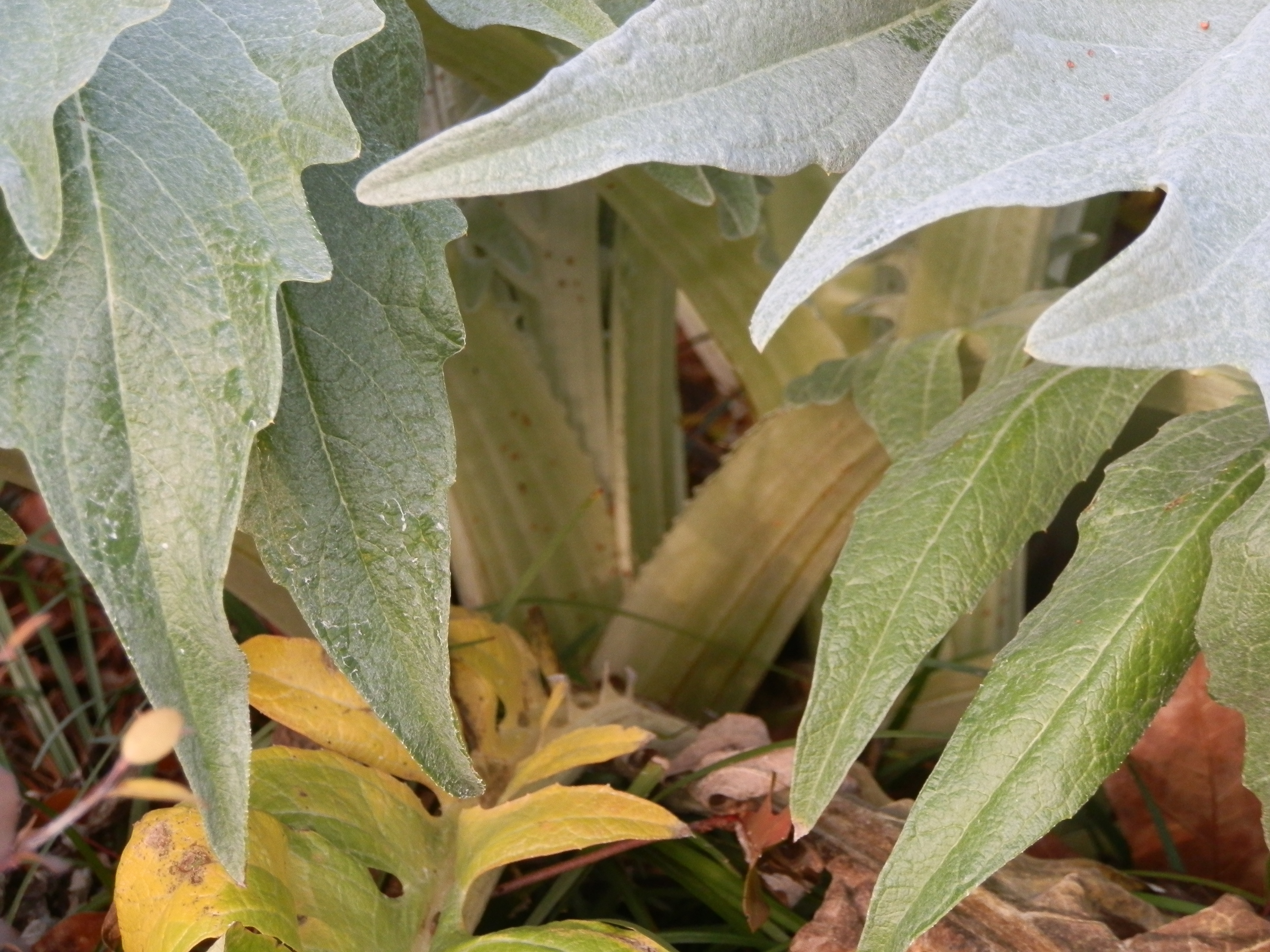
These stalks, properly called petioles, have a sweet nutty flavor. Unlike the artichoke, the flower globes are not the treat. They aren’t poisonous, but they’re too fibrous to be of use. Enjoy their beauty.

Gorgeous large purple flowers form at the tips of long stems. Plants bloom for a long time and can be real traffic stoppers. They also make great cut flowers. That’s the third course. Bees and butterflies love them too, and deer don’t like them at all.

Adapted to warm arid climates, this tall perennial tolerates drought very well. Plant it where the soil is well drained. It performs better in full sun, but it also handles some shade.

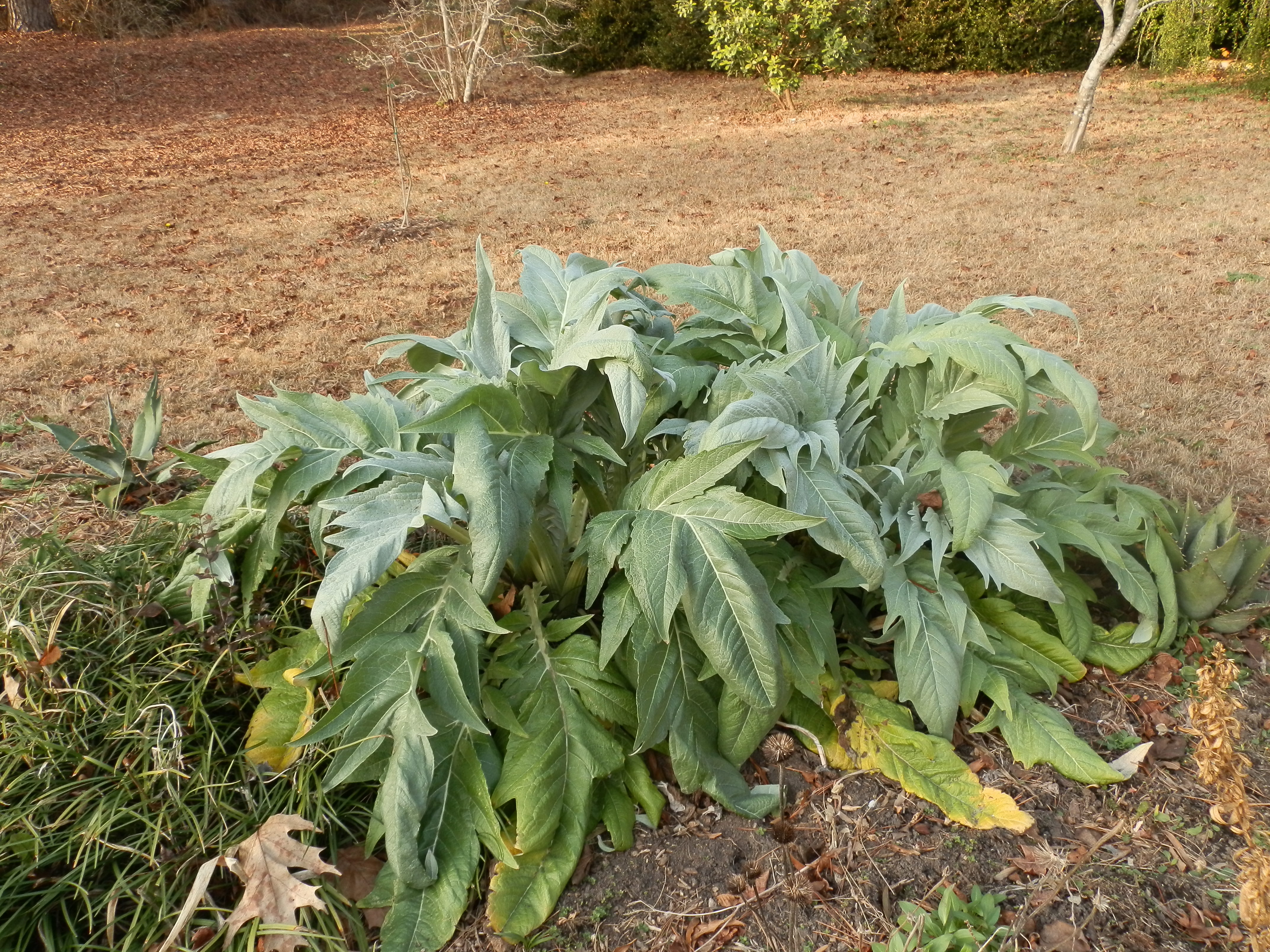
Cardoon is hardy to zone 7 and has large, prickly, almost dagger-shaped gray-green arching leaves that spiral around the stem. Early in the season, foliage provides interest. Later, the flowers steal the show. Plants are four to five feet tall and vase-shaped.

If you wish to eat this gorgeous plant I have a few pointers. Basal leaf stalks need to be blanched before they are harvested. This is done by tying each plant into a bundle, wrapping the bundles with straw, and mounding soil or mulch around the plant for about a month. This shields them from light and tenderizes them. It also removes bitterness. I blanch celery in a similar manner for the same reason.

Cardoons are usually harvested during winter months and often treated as annuals if they are grown for culinary purposes. Tender leaves and stalks can be cooked or eaten fresh in salads. Use the leaf stalks like celery in soups and stews or stir-fry them with snow peas, Vidalia onions and sweet peppers.

I suggest thinning your stand in the fall. Leave some to enjoy the following year. That also gives existing plants room to spread.

Those interested in losing weight might want to consider adding this vegetable to their list. Leaf stalks are high in antioxidants and B vitamins. Cardoon is also rich in minerals like copper, calcium, potassium, iron, manganese, and phosphorus.

Cardoon has only two major negatives. First, it is large, dominating and will crowd out smaller less aggressive plants. It also is a prolific seed producer and will volunteer profusely. Seeds can remain viable for seven years, which is good if you want to save some for the future. It is not so good if birds spread seeds to areas you don’t want them to grow.

Healthy stand of cardoons in early January

Healthy stand of cardoons in early January

Close-up of leaf stalks (petioles)

Close-up of leaf stalks (petioles)


Ted Manzer teaches agriculture in eastern North Carolina.

Posted in foraging | Tagged , , , , , , , , , | 8 Comments

Spicy Landscaping


Bay leaf has been a culinary staple dating back to ancient Greek civilizations. Cooks use it fresh or dry. Many won’t serve spaghetti sauce without it, but few grow their own.

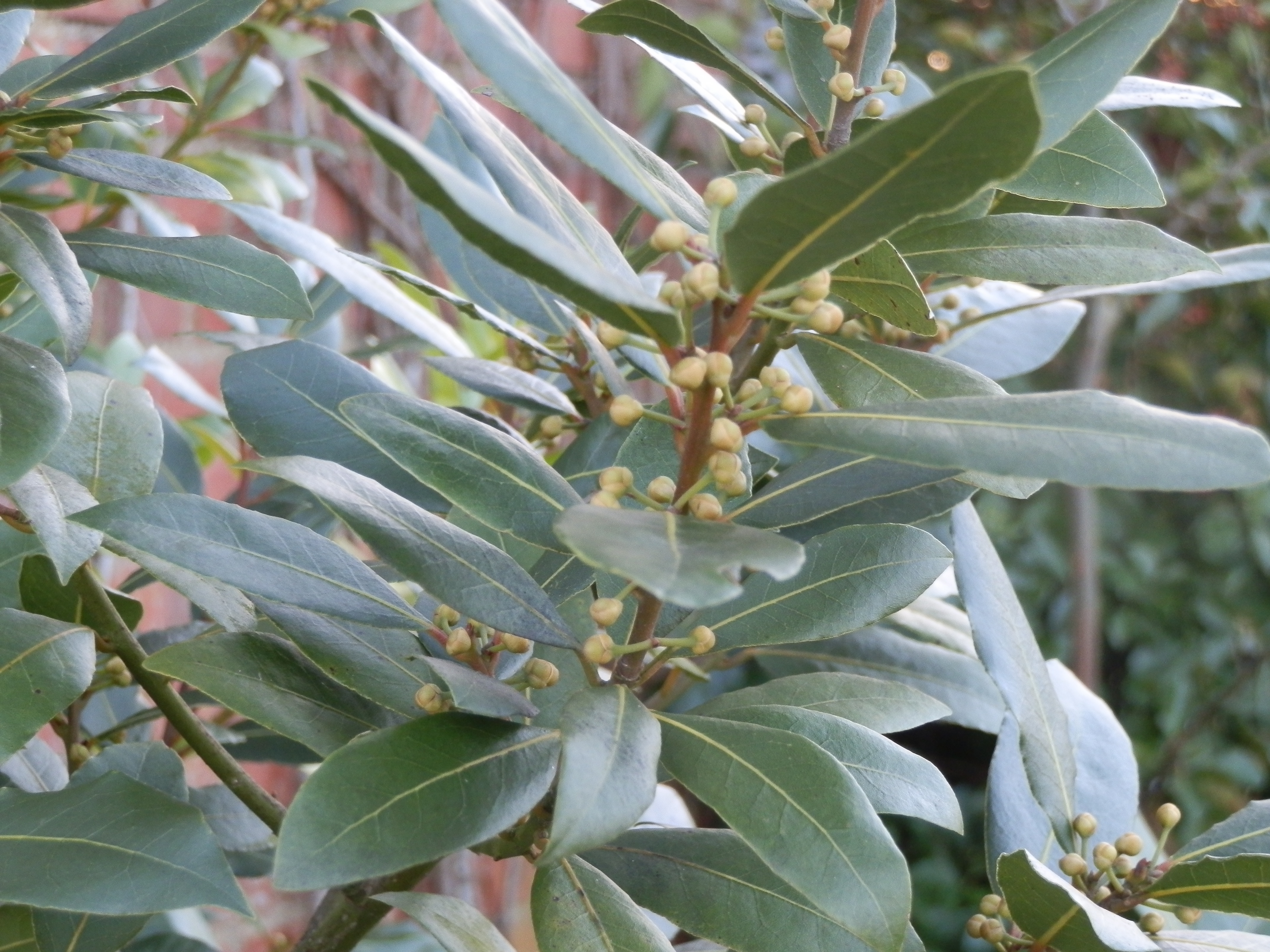
Bay leaves come from a medium to large evergreen shrub known as bay laurel. These woody plants can grow 10-12 feet tall. They are not a fast grower, which can be an advantage for their use as a landscape plant.

If your landscape were a comedy act, bay laurel would be the straight man. These shrubs don’t have dominating flowers or intriguing variegated leaves. Their aroma isn’t appreciated until we use them in cooking or simmering potpourri. They do have a dense growth habit which makes a great hedge or foundation plant.

Leathery leaves with a smooth edge emerge from stems singly. Flowers are pale yellow-green and less than half an inch in diameter. They are born in pairs beside a leaf. Plants are dioecious, meaning entire specimens are either male or female. Fruits ripen in early winter but aren’t used in cooking or as a major food source for wildlife.

Unless planted in a protected spot shrubs risk cold temperature injury in a harsh winter. Other than that they have few pest or disease problems. Bay laurel thrives in a variety of soils and tolerates shade but is more adaptable to sunny locations. Plants have extremely good drought and heat tolerance. Deer don’t like them either.

Sometimes called sweet bay, they are native to the Mediterranean region and are no relation to the sweet bay magnolias found in our swamps. Early Greeks and Romans used the aromatic leaves in many different ways. The leaves have maximum oil content during early and mid-summer.

I find they still give sufficient flavor to marinara sauce through their dormant season. Generally, leaves are removed before eating. They have sharp edges that can irritate gums and out digestive system. However, I have seen recipes where leaves are used in ground form.

In addition to culinary use, many people use extracts from sweet bay to fight dandruff. To prepare this herbal rinse, boil a quart of water and add about three level teaspoons of crushed bay leaves. Let the leaves steep in the covered pot for about twenty-five minutes.

To use this concoction, wash and rinse hair as usual. Then rinse again with this tea-like preparation. After some vigorous massaging, rinse with this solution again. Leave the concoction on the hair for an hour or so. Then rinse with plain water. According to numerous sources, regular use will keep dandruff from recurring.

This same tonic is sometimes used internally to treat an upset stomach and reduce gas. Its strong diuretic properties will rid the body of excess water. This could be a problem during hot summer days.

Many sources tout the high nutritional value of bay laurel foliage. High levels of Vitamins A and C as well as folic acid reside in these leaves. To take advantage of these vitamins chew on the fresh leaves as cooking denatures most vitamins.

OLYMPUS DIGITAL CAMERAVigorous sweet bay (bay laurel)


OLYMPUS DIGITAL CAMERA

Ted Manzer teaches agriculture at Northeastern High School in Elizabeth City, NC.

Posted in foraging | Tagged , , , , , , | 6 Comments